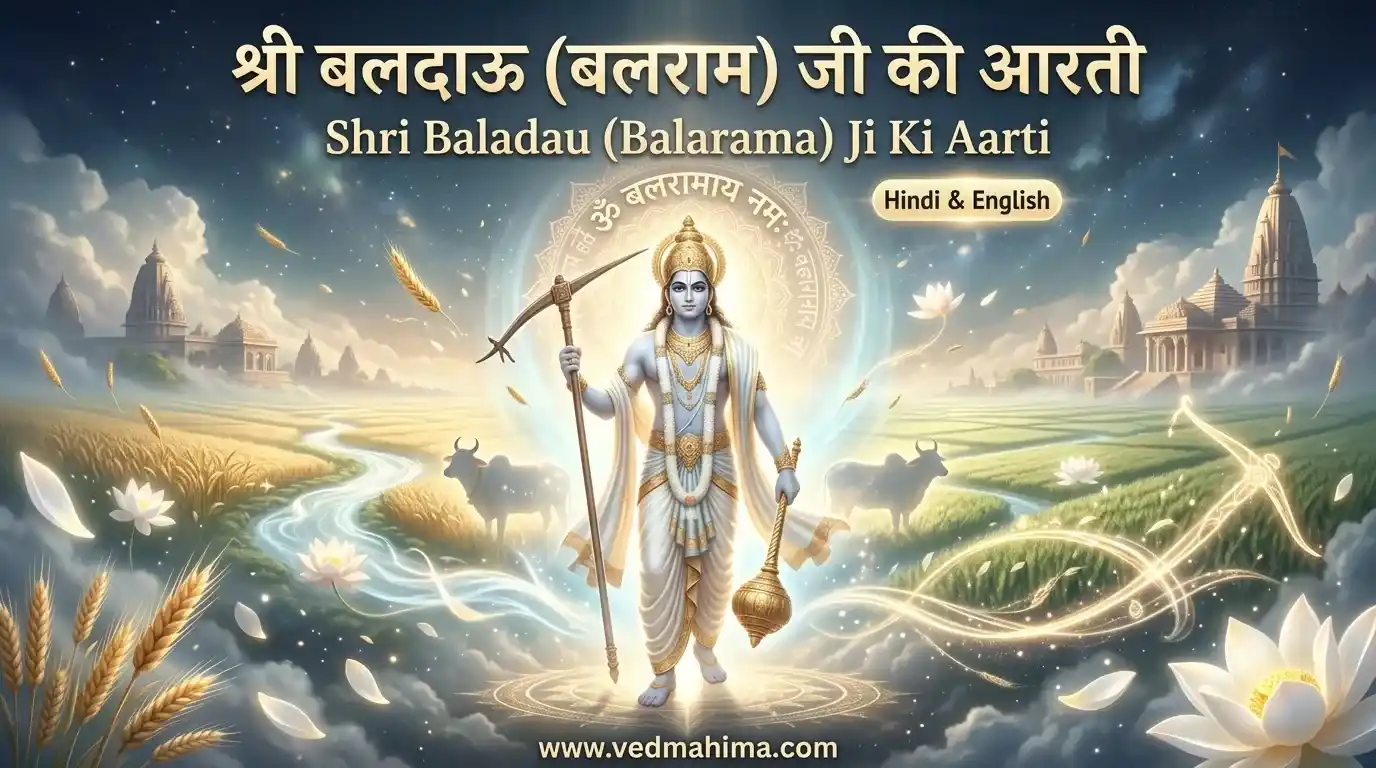
Shri Baldau (Balarama) Ji Ki Aarti
Strength, discipline, farming, protection, justice, devotion
Aarti Shri Baldau Ji Ki,
Aarti Shri Baldau Ji Ki.
Paap Shaap Triya Taap Nasaavani,
Bhavani Paavani Sukh Sarasaavani.
Parmanand Hiye Upjaavani,
Yadukul Bhushan Mukut Mani Ki.
Aarti Shri Baldau Ji Ki.
Harani Bharam Bhav Kand Nikandani,
Mod Charan Ur Anand Kandani.
Mangal Karani Sukhad Jag Vandani,
Param Pujya Priya Santan Hi Ki.
Aarti Shri Baldau Ji Ki.
Narad Sharad Bhanat Magan Man,
Santat Jahi Saprem Sant Jan.
Varnat Suyash Sukavi Kovid Gan,
Madhur Sukhad Rasdhar Ami Ki.
Aarti Shri Baldau Ji Ki.
Baldau Ki Aarti Gaavai,
Prem Sahit Jo Sunai Sunaavai.
So Nar Chari Padarath Paavai,
Virachit Vinay "Vichitra" Kavi Ki.
Aarti Shri Baldau Ji Ki.
⏰ Best Time
Reciting the Shri Baldau Ji Ki Aarti during the morning or evening hours, especially on Dev Chhat (Balarama Jayanti) or every Shukla Paksha Shashthi, is considered highly auspicious. Performing this aarti with a pure ghee lamp brings peace, mental strength, removes family disputes, and bestows the combined blessings of Lord Balarama and Lord Krishna.
🔗 Related Trending Aarti
About Shri Baldau (Balarama) Ji Ki Aarti
Shri Baldau Ji Ki Aarti (Aarti Shri Baldauji Ki) is a beautiful and soulful devotional hymn dedicated to Lord Balarama (Baldau Ji), the elder brother of Lord Krishna. Lord Balarama is worshipped as the incarnation of Adisesha (the cosmic serpent) and the symbol of strength, duty, and spiritual power. Composed by the poet Vichitra, this aarti glorifies the divine attributes and comforting nature of Baldau Ji, who is the crown jewel of the Yadu dynasty (Yadukul Bhushan).
The verses beautifully explain that singing or listening to this aarti completely destroys all sins, curses, and the three types of worldly miseries (Tapatraya). It fills the heart of the devotee with supreme bliss (Paramananda) and pure devotion. The aarti mentions that great sages like Narada and Goddess Sharada (Saraswati) remain immersed in his praises, and all saintly people constantly remember him with profound love.
The hymns describe Lord Balarama as the ultimate protector of saints and the destroyer of all worldly doubts and fears. The text concludes with a sacred promise (Phalashruti) that any person who sings or listens to this beautiful aarti with pure love and devotion will successfully attain the four ultimate goals of human life: Dharma (Righteousness), Artha (Wealth), Kama (Desire), and Moksha (Liberation).