Shri Radha Rani Temple Barsana
Shri Radha Rani Temple Barsana (Ladli Ji Mahal) Darshan Guide
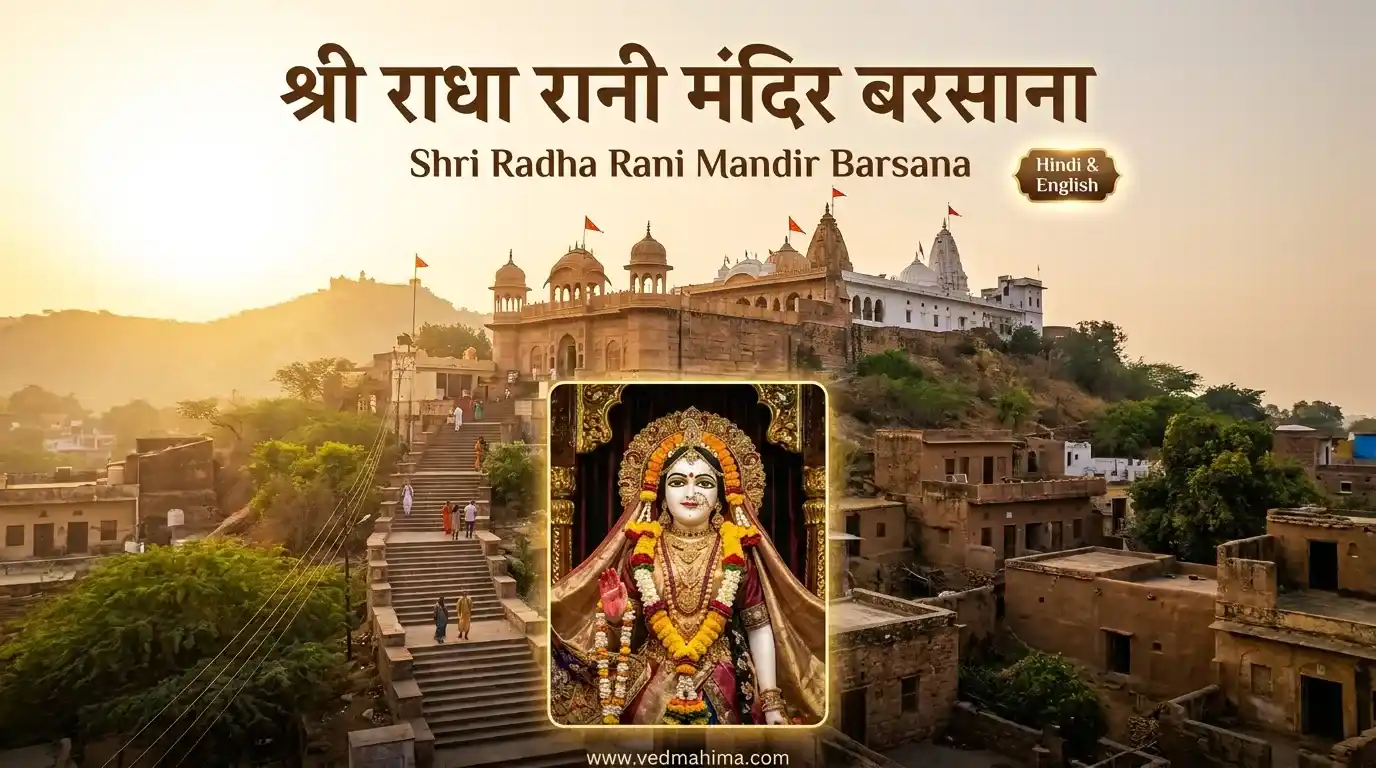
* The Monumental Bhanugarh Staircase: To reach the main courtyard, pilgrims climb a grand, scenic flight of over 250 stone steps cut right into the mountain rock. Winding past traditional sweet stalls and ancient structural points, the climb represents a spiritual journey of shedding material ego before reaching the feet of the Divine Princess.
* The Historic Lathmar Holi Epicenter: Ladli Ji Mahal is the global birthplace of the world-famous Lathmar Holi festival. Every spring, when the menfolk from Lord Krishna's village (Nandgaon) arrive in Barsana, the womenfolk (Huriyarins) of Barsana playfully rain thick wooden staffs (Lathis) on them in this very temple courtyard and lanes, a spectacle witnessed by visitors from all over the world.
* The Sacred Prem Sarovar & Kirti Temple: Nestled along the immediate foothills are associated holy sites, including the magnificent temple of Mata Kirti (Radha's mother) and Prem Sarovar. According to belief, Prem Sarovar was formed by the divine tears of separation between Radha and Krishna, and taking a holy sip here cleanses the heart of all impurities.
1. Mangala & Shringar Aarti (05:00 AM - 06:00 AM in Summer / 06:00 AM - 07:00 AM in Winter): The morning twilight awakening ritual. The palace doors open to the melodious sounds of Shehnai and traditional Haveli Sangeet. The deities are gently awakened, bathed with saffron water, and followed by a magnificent Shringar Aarti.
2. Rajbhog Aarti (11:30 AM - 12:00 PM in Summer / 12:00 PM - 12:30 PM in Winter): The grand midday royal feast. Following royal palace traditions, Kishori Ji is offered Chhappan Bhog and Satvik delicacies of Braj, which primarily include fresh cow butter (Makhan), mishri, and rabri, followed by the afternoon closure for rest.
3. Utthapan & Evening Aarti (04:30 PM - 07:30 PM in Summer / 04:00 PM - 07:00 PM in Winter): The evening phase opens as twilight settles over the hills. The entire hill palace lights up with modern illumination, while chief priests perform a grand aarti using camphor and heavy brass lamps, and the entire courtyard echoes with chants of Radhe-Radhe.
4. Shayan Aarti (09:00 PM in Summer / 08:30 PM in Winter): The final night ritual. A silver bed is decorated for Ladli Ji's rest, a silver bowl of fresh water and aromatic betel leaf (paan) is placed near the altar, and soothing lullabies are sung by priests before the heavy outer security doors are locked.
* World-Famous Lathmar Holi Mahotsav: Held on the Navami tithi of Phalgun month, tourists and photographers from all across the globe reach Barsana to witness this grand festival. The entire sky is filled with abeer-gulal and colors of Tesu flowers, accompanied by the singing of traditional folk songs dedicated to Radha Rani.
* Chhappan Bhog: From time to time, the temple trust offers wonderful Chhappan Bhog and Phool Bungalows (flower canopies) to Thakur Ji, which appear exceptionally divine to witness.
* By Air (Flights): The nearest international gateway is the Indira Gandhi International Airport (DEL) in New Delhi, located approximately 140 kilometers away. From Delhi airport, one can reach Barsana directly via taxi or private car via National Highway 19 in just 2.5 to 3 hours. The upcoming Noida International Airport at Jewar will be even closer to this location.
* By Train (Railways): The nearest small railway station is Kosi Kalan (KSV), situated just 21 kilometers away. The primary central railway hub is Mathura Junction (MTJ), located 45 kilometers away, which is seamlessly linked to all parts of the country via high-speed Vande Bharat and Shatabdi Express lines. Private taxis, buses, and shared vehicles are available 24/7 outside both stations directly for Barsana.
* By Road (Highways): Barsana is well-linked via excellent roads through the Mathura-Govardhan road and the Delhi-Agra Highway. Regular Uttar Pradesh state transport buses run continuously from New Delhi (Anand Vihar Bus Terminal), Mathura, and Vrindavan directly to the Barsana bus stand. For those travelling by private car, a massive and secure modern parking lot is built at the base of the hill, from where pilgrims can reach the main entrance of the ropeway or stairs via foot or e-rickshaws.
⏰ Best Time
The best time to visit the Shri Radha Rani Temple (Ladli Ji Mahal) is between October and March when the weather in the Braj region is beautifully cool and highly favorable for climbing the scenic hillside steps. To experience the ultimate cultural and spiritual ecstasy, visiting during the magnificent Radhashtami festival (August/September) or the world-famous Lathmar Holi celebrations (March) is highly recommended.
🛕 Temple Information
Shri Radha Rani Temple (Ladli Ji Mahal), Atop Bhanugarh Hill, Barsana Township, Chhata Tehsil, Mathura District, Braj Region, Uttar Pradesh - 281405
Summer Timings (April to September):
Morning Phase: 05:00 AM - 12:00 PM (Shringar Aarti: 05:00 AM, Rajbhog Aarti: 11:30 AM)
Evening Phase: 04:30 PM - 09:00 PM (Evening Aarti: 06:30 PM, Shayan Aarti: 09:00 PM)
Winter Timings (October to March):
Morning Phase: 06:00 AM - 12:30 PM (Shringar Aarti: 06:00 AM, Rajbhog Aarti: 12:00 PM)
Evening Phase: 04:00 PM - 08:30 PM (Evening Aarti: 06:00 PM, Shayan Aarti: 08:30 PM)
🔗 Related Trending Mandir



About Shri Radha Rani Temple Barsana
The historical background of Ladli Ji Mahal is an ancient and sacred chronicle spanning millennia. While the original palace of King Vrishabhanu (Radha's father) dissolved structurally over thousands of years following the Dwapara Yuga, the sacred geographical site atop Bhanugarh hill was rediscovered in the 16th century AD by Narayan Bhatt Goswami, a prominent disciple of the Chaitanya Mahaprabhu lineage, who excavated ancient deities and identified the holy scriptural coordinates. For a long time, the worship continued in a modest shrine. The present monumental, fortress-style palace-temple structure was substantially built and expanded in the early 17th century by Raja Veer Singh Deo of Orchha (Bundelkhand) using high-grade local red and yellow sandstone, ensuring that the eternal childhood seat of the Divine Princess remains majestically preserved for generations of Sanatani pilgrims.