Shri Tirumala Venkateswara Temple Tirupati
Shree Tirumala Venkateswara Temple Tirupati Darshan Guide
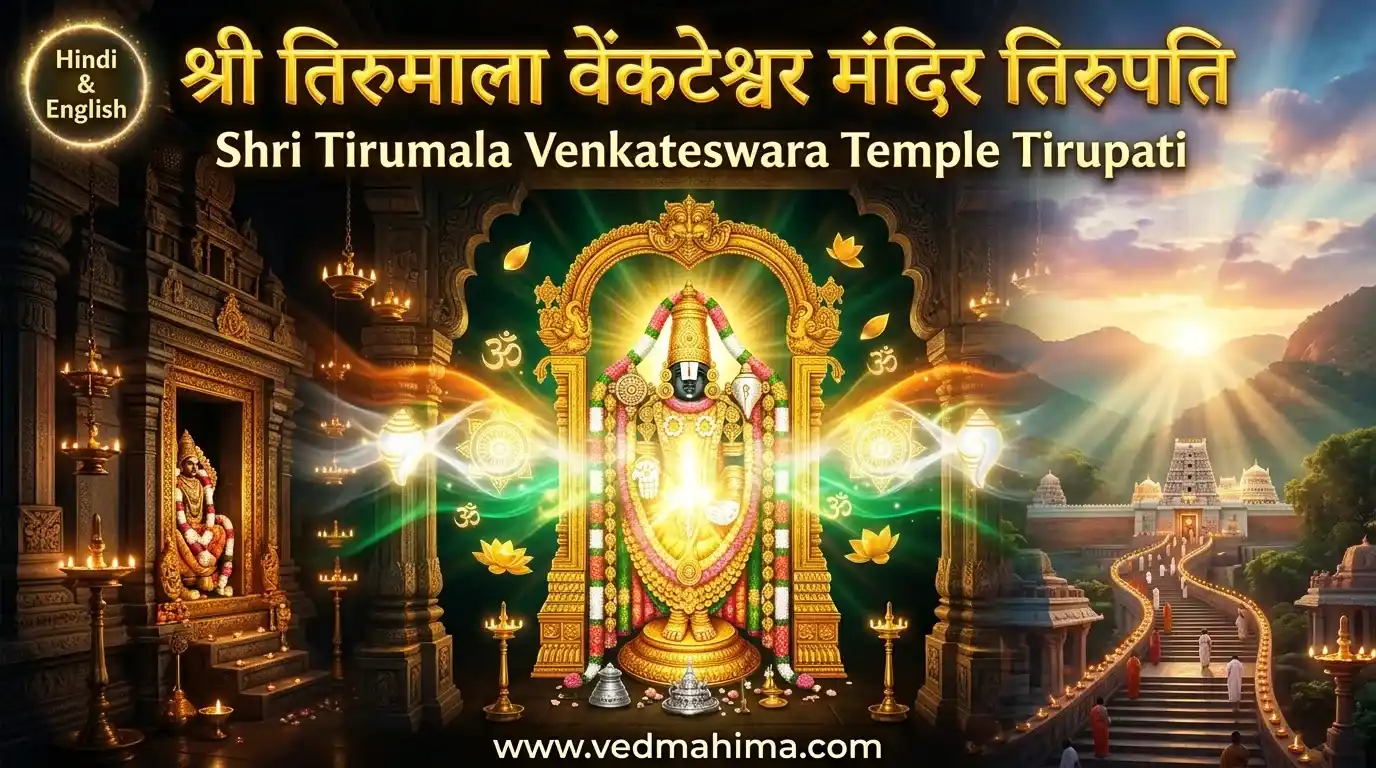
* The Miracle of the Idol: The central stone deity possesses mysterious features; the back of the idol always maintains a natural moist temperature, and despite intense daily washings, it remains uniquely warm.
* The Holy Laddu Prasadam: The globally celebrated Tirupati Laddu, prepared with premium multi-layered pure cow ghee, cashew nuts, cardamom, and saffron in the ancient temple kitchen (Potu), holds a registered GI tag for its inimitable, divine flavor.
* Ritualistic Hair Tonsuring (Kalyana Katta): Millions of pilgrims voluntarily shave their heads completely before entering the queue lines as an ultimate symbolic gesture of destroying personal ego and surrendering pride to the Lord.
1. Suprabhata Seva (03:00 AM - 04:30 AM): The supreme early morning awakening ritual where special hymns are chanted to wake the Lord, conducted in absolute celestial silence.
2. Thomala Seva (04:30 AM - 05:00 AM): A beautiful, exclusive 30-minute flower decoration ritual where premium garlands woven by pure devotees are systematically adorned on the main deity.
3. Kalyanotsavam (12:00 PM - 01:00 PM): The highly spectacular celestial marriage ceremony of the Lord with Goddess Lakshmi and Goddess Padmavathi, attended by thousands of families.
4. Sarvadarshan (General Timings): Free or nominal paid viewing lines running continuously throughout the day and night, meticulously categorized into well-managed holding compartments.
5. Ekanta Seva (11:30 PM): The final intimate night ritual where the representation of the Lord is placed on a golden cradle, offered sweet hot milk, and put to rest amidst soft lullaby chants.
* Absolute Electronic & Mobile Prohibitions: To safeguard the temple's high-security infrastructure and preserve inner peace, mobile phones, cameras, smartwatches, laptops, electronic tablets, and recording devices are completely banned past the primary baggage checking points. Pilgrims must strictly store all electronics inside their vehicles or deposit them safely at the extensive centralized free electronic lockers provided by TTD at the entrance valleys.
* Strict Prohibition on Intoxicants & Non-Vegetarian Food: The entire Tirumala Hill range is an absolute sacred zone. Consuming, carrying, or possessing alcohol, cigarettes, tobacco products, and non-vegetarian food anywhere on the hills is a severe legal offense leading to immediate arrest and heavy judicial fines.
* Biometric Verification & Ticket Integrity: TTD uses highly advanced facial recognition and biometric scanning at multiple checkpoints. Pilgrims must carry their original valid Government Photo ID matching their online booking printout. Never buy tickets from unauthorized local agents or street brokers.
* Vaikuntha Ekadashi: Celebrated with massive spiritual fervor. The special celestial northern gateway (Vaikuntha Dwaram) of the inner sanctum is opened only for these consecutive days. Passing through this gate on this specific day is believed to guarantee direct liberation into the absolute realm of Vishnu.
* Ratha Saptami: Known as the mini-Brahmotsavam, held in February, where the Lord rides seven different grand wheeled structures from early dawn to late midnight around the four main streets (Mada Streets) surrounding the golden temple.
* By Train (Detailed Railway Network): The primary and most central railway junction is Tirupati Main (TPTY), located at the base of the hills. Tirupati Main is a massive A1-class railway hub directly linked via ultra-fast superfast trains, including Vande Bharat Express and super-luxury expresses, from Hyderabad, Bangalore, Chennai, Vijayawada, Delhi, and Mumbai. Right outside the station complex, TTD runs a massive network of continuous free shuttle buses to the main bus stands, alongside 24/7 private taxis and shared tourist jeeps.
* By Road & Pedestrian Walkways (Detailed Highway Navigation): Tirupati is perfectly connected via highly extensive national highways like NH-71. The Andhra Pradesh State Road Transport Corporation (APSRTC) runs an incredible, unbroken fleet of direct deluxe and electric buses ascending to Tirumala hills every 2 minutes from the central Tirupati Bus Stand. For highly devout pilgrims wishing to complete the journey on foot, there are two beautifully covered, fully monitored pedestrian stone pathways: the traditional Alipiri Metlu pathway (comprising 3,550 steps over 9 km) and the shorter Srivari Mettu pathway (comprising 2,388 steps over 2.1 km). Both pedestrian routes feature extensive luggage transfer services and free darshan token quotas.
⏰ Best Time
The ideal months to visit Tirumala are from October to March, when the climate remains wonderfully pleasant and cool. Planning your trip during the annual Brahmotsavam allows you to experience the peak celestial grandeur of the Seven Hills.
🛕 Temple Information
Srivari Temple, Tirumala Hill Town, Tirupati District, Andhra Pradesh - 517504
Temple Queue Lines Open: 24 Hours Daily.
Elite Daily Seva Windows:
Suprabhata Seva (Awakening): 03:00 AM - 04:30 AM
Thomala Seva (Flower Garland): 04:30 AM - 05:00 AM
Kalyanotsavam (Celestial Marriage): 12:00 PM - 01:00 PM
Ekanta Seva (Night Rest): 11:30 PM
*Note: Sarvadarshan (General Public Viewing) runs continuously between these scheduled slots, depending on seasonal crowd density.
https://ttdevasthanams.ap.gov.in
🔗 Related Trending Mandir
About Shri Tirumala Venkateswara Temple Tirupati
The celestial history of Tirumala is deeply rooted in the ancient Vedic and Puranic eras of sanatan tradition. According to Varaha Purana, during the advent of Kalyug, Lord Vishnu left His divine abode Vaikuntha following a cosmic sage's trial and arrived on Earth in search of Goddess Lakshmi. He chose the mesmerizing, serene Seshachalam hills—resembling the multi-headed cosmic serpent Adisesha—as His earthly sanctuary. The Lord married Princess Padmavathi, the daughter of the local king Akasa Raja. To repay a massive divine loan taken from Kubera (the cosmic treasurer) for the grand wedding expenses, Lord Vishnu assumed the permanent, self-manifested stone form of Lord Venkateswara at this spot, promising to stay back until the end of Kalyug while His devotees helped clear the cosmic debt through loving offerings. Historically, the first formal structural developments of the temple were initiated by the ancient Tamil Kings of the Thondaimann dynasty in the early medieval era. Later, the great Chola rulers, the Pallavas, and the Pandya kings heavily contributed gold and vast lands to the shrine. The golden age of the temple peaked under the legendary Emperor Krishnadevaraya of the Vijayanagara Empire in the 16th century, who personally visited multiple times and covered the inner dome in heavy sheets of gold, establishing it as the immortal crown jewel of global Hindu pilgrimage.