Shri Somnath Jyotirlinga Temple
Shree Somnath Jyotirlinga Temple Darshan Guide
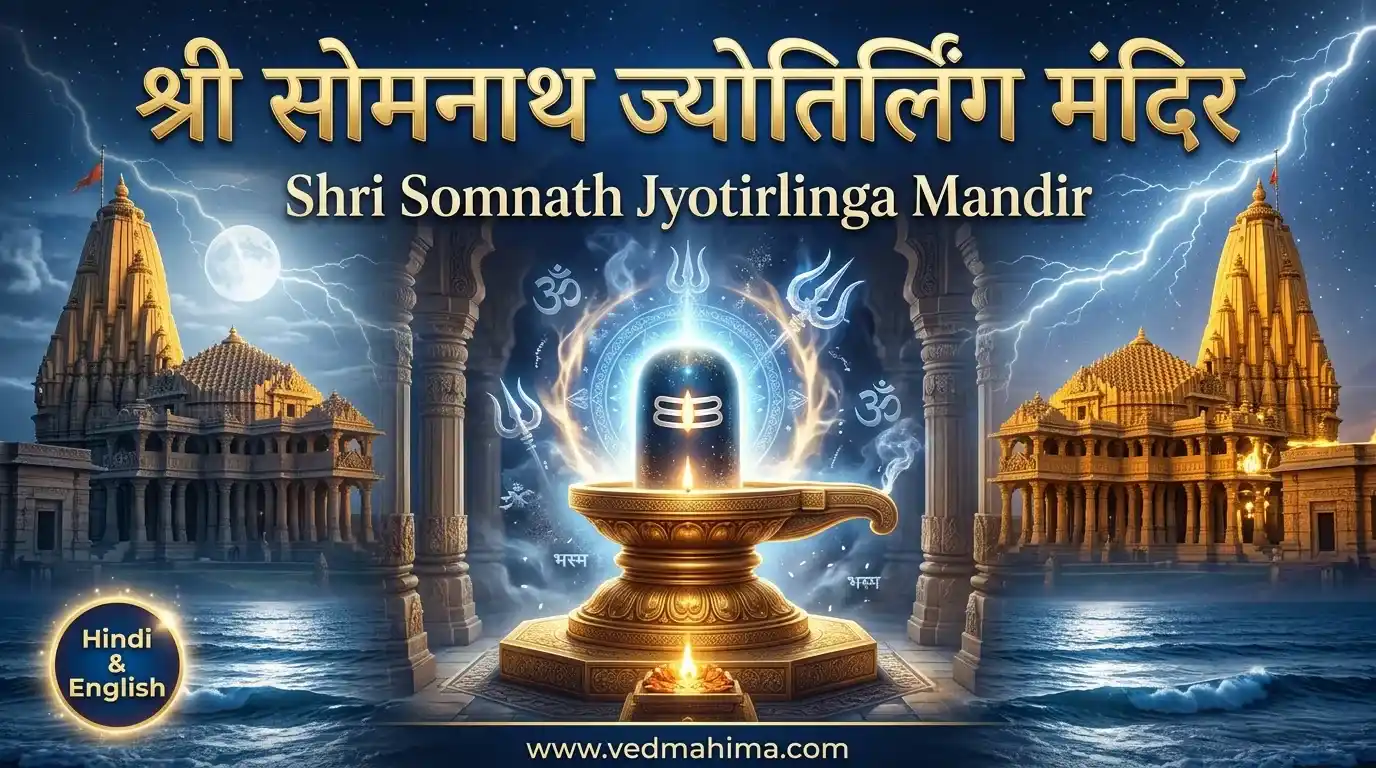
* The Mystical Baan Stambha (Arrow Pillar): Positioned uniquely on the sea-protection wall within the temple complex, this ancient astronomical and geographical marvel features an arrow pointing precisely southwards. An inscription on the pillar reveals that there is absolutely no piece of land or obstruction in a straight line from this exact point all the way to the South Pole (Antarctica), showcasing the advanced scientific acumen of ancient Indian architects.
* The Kailash Mahameru Prasad Architecture: The modern grand structure is built in the exquisite Chalukya (Solanki) style of temple architecture, rising majestically to a height of 155 feet. The entire structure is carved out of fine sandstone, featuring multi-tiered spires, intricately sculpted pillars, and beautiful corbels that pay tribute to the traditional craftsmen of ancient Gujarat.
* The Holy Triveni Sangam Confluence: Situated right outside the structure, the confluence where the rivers meet the sea serves as a massive center of rituals, where pilgrims perform ancestral rites and take a purifying holy dip before entering the inner sanctum.
1. Mangala Aarti (07:00 AM): The first grand vocal and ritualistic offering of the day. The Jyotirlinga is beautifully bathed and worshipped with powerful Vedic hymns, infusing the entire coastal complex with high-frequency positive energy.
2. Bhog Aarti (12:00 PM): An opulent noon ritual where a delicious, pure vegetarian feast is formally offered to Mahadev, accompanied by the rhythmic waving of camphor and heavy brass lamps.
3. Sandhya Maha Aarti (07:00 PM): The spectacular evening twilight worship. As the sun sets over the Arabian Sea, massive crowds gather inside the assembly hall. The deafening, trance-inducing sounds of traditional drums, cymbals, and giant bells fill the air while priests wave multi-tiered fire lamps.
4. Special Continuous Abhishek Rites: Conducted during the intervening day hours by scholarly temple priests where Gangajal, honey, and raw milk flow endlessly over the silver altar amidst the deep resonance of Namakam and Chamakam recitations.
5. Mahashivratri & Shravan Special Midnight Aartis: Continuous, non-stop ritualistic offerings that carry on relentlessly for 24 to 48 hours without any break during highly auspicious astronomical alignments, designed to facilitate and accommodate the millions of walking pilgrims.
* Shravan Maas: The holy monsoon month is entirely dedicated to Someshwar Mahadev. The deity is decorated in unique Shringar avatars every day using thousands of fresh flowers, leaves, and sacred cosmetics.
* Kartik Purnima Fair: A vibrant 5-day cultural and religious festival held during November, attracting folk artists, traders, and walking pilgrims from all over western India to celebrate the lunar victory of light.
* By Air (Flights): The nearest domestic airport is Diu Airport, located approximately 85 kilometers away. Regular flights connect Diu to major cities like Mumbai. Another major option is Rajkot International Airport, located about 200 kilometers away, and Ahmedabad Airport, located 390 kilometers away, which offers excellent nationwide flight connectivity. Pre-paid taxis and luxury buses are readily available from these airports.
* By Train (Railways): Somnath has its own clean, dedicated railway station (SMNH), located merely 0.5 kilometers from the main temple gates, connecting directly to local regional hubs. Another massive railway junction is Veraval Junction (VRL), situated just 7 kilometers away, which is well-served by direct superfast trains coming from Ahmedabad, Mumbai, Pune, Jabalpur, and New Delhi. E-rickshaws, auto-rickshaws, and local cabs run continuously between the stations and the temple area.
* By Road (Highways): Somnath is beautifully connected by wide National and State Highways. Regular state-transport luxury buses (GSRTC) and private AC sleepers run daily from Ahmedabad, Rajkot, Porbandar, Dwarka, Jamnagar, and Junagadh directly to the Somnath Bus Stand. Private cars can easily reach the city; however, all heavy vehicles and visitor electronics are strictly checked and restricted near the main heritage complex to maintain maximum pedestrian safety.
⏰ Best Time
The best time to visit Shree Somnath Temple is between October and March when the coastal weather of Gujarat is highly pleasant, cool, and ideal for sightseeing. Attending the Sandhya Aarti at 7:00 PM followed by the magical Light and Sound Show offers the most profound spiritual experience. Mondays and the entire holy month of Shravan are considered exceptionally meritorious, though these times witness heavy devotee footfall.
🛕 Temple Information
Shree Somnath Trust, Prabhas Patan, Veraval, Gir Somnath District, Gujarat - 362268
Temple Opens: 06:00 AM
Mangala Aarti: 07:00 AM
Midday Bhog Aarti: 12:00 PM
Sandhya Aarti: 07:00 PM
Light & Sound Show: 08:00 PM - 09:00 PM
Temple Closes: 10:00 PM
09428214914
sompp@somnath.org
https://somnath.org/
🔗 Related Trending Mandir



About Shri Somnath Jyotirlinga Temple
The history of Shree Somnath Temple is a glorious saga of the undying flame of Sanatan Dharma and national pride. Mentioned extensively in the Rigveda and Skanda Purana, this temple was targetted, plundered, and completely destroyed multiple times by medieval foreign invaders, most notably by Mahmud of Ghazni in 1026 AD, and later by the Mughal Emperor Aurangzeb in 1706. In 1783, Queen Ahilyabai Holkar built an adjacent structure to keep the worship continuous. The modern majestic temple standing today was reconstructed starting in 1947 due to the monumental iron-will of Sardar Vallabhbhai Patel, and its inner sanctum was formally dedicated to the nation by India's first President, Dr. Rajendra Prasad, in May 1951.