Shri Trimbakeshwar Jyotirlinga Temple
Shri Trimbakeshwar Jyotirlinga Temple Darshan Guide
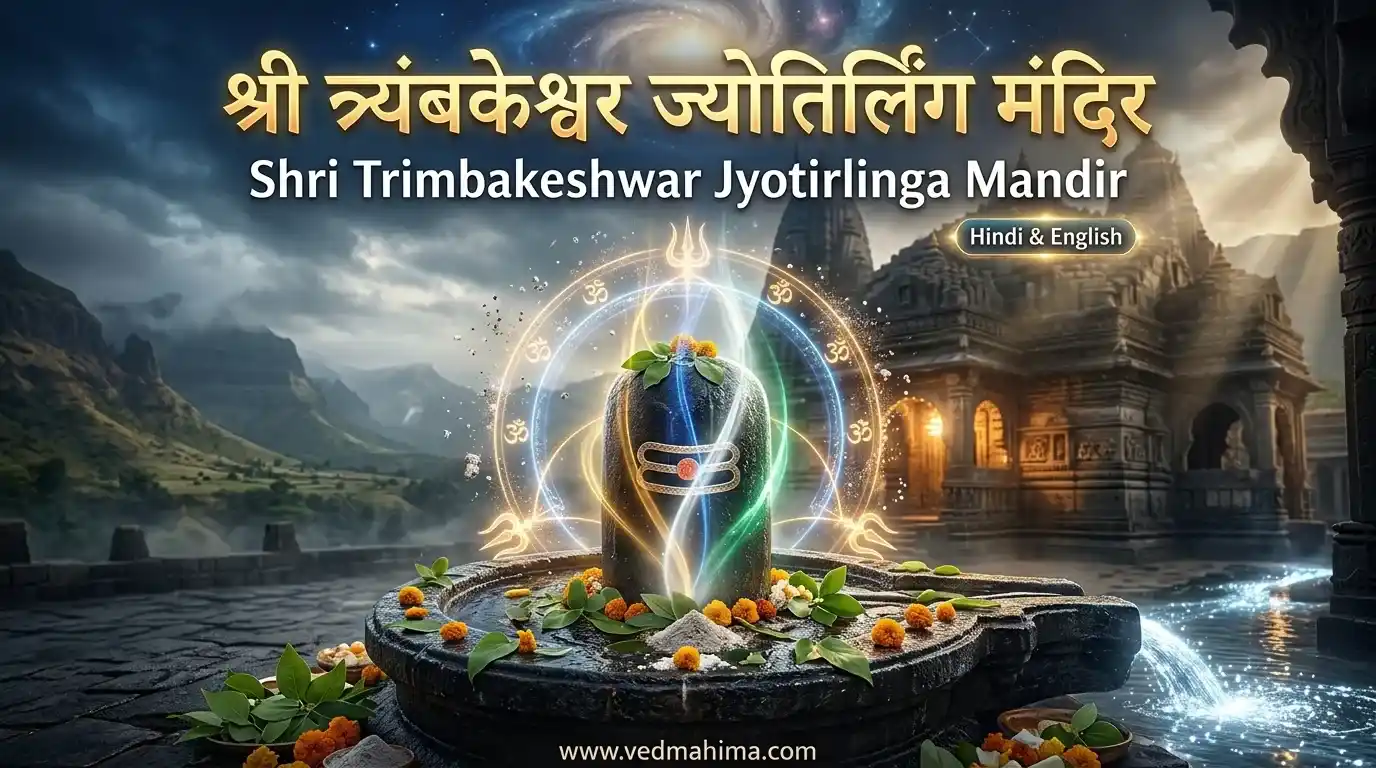
* The Jewel-Encrusted Golden Crown: Due to the continuous natural flow of water inside the cavity, the lingams are naturally eroding. To protect them, a spectacular, historic golden crown encrusted with diamonds, emeralds, and rubies—dating back to the era of the Pandavas—is placed over the deity every Monday evening during a special royal procession.
* The Sacred Kushavarta Kund: Located a short distance from the primary shrine, this holy water tank is the spot where River Godavari, after disappearing from the Brahmagiri hills, re-emerges on earth. Taking a holy dip here before entering the main sanctum is scripturally mandated to purify one's mind and body.
* The Capital of Vedic Remedial Rituals: Trimbakeshwar is globally recognized as the absolute ultimate center for performing powerful Vedic planetary and ancestral corrections. Sages declare that because it represents the holy Trinity alongside the life-giving Godavari river, rituals performed here directly reach the cosmic source.
* The Brahmagiri Mountain Peak: Towering directly behind the temple is the sacred Brahmagiri hill, which represents the physical matted locks of Lord Shiva from where River Ganga descended to Earth upon the rigorous penance of Sage Gautama.
* E-Darshan & Paid VIP Passes: While the general queue is completely free, waiting times can range between 2 to 5 hours. Devotees seeking quicker access can pre-book an E-Darshan time slot on the official trust portal or purchase a paid VIP Darshan pass directly at the temple counter for a smooth, fast-track entry.
* Garbhagriha Abhishek Tickets: Devotees who wish to perform personal water or milk offerings (Jal-Abhishek) directly near the core deity during the early morning hours (05:00 AM to 06:00 AM) must secure a specific Abhishek ticket from the administrative window or via online booking. Traditional dress codes apply strictly.
* Kalsarp Shanti & Narayan Nagbali Rituals: Trimbakeshwar is the paramount scriptural center for major remedial rituals like Narayan Nagbali (for lineage issues), Kalsarp Dosh Nivaran (for astrological afflictions), and Tripindi Shradha (for ancestor peace). These private rituals are conducted by authorized local priests (Tamradhari Purohits) at designated halls outside the main temple structure or near the holy confluence. Bookings can be coordinated in advance through the official trust registry, and standard identity proofs like a Passport or Driver's License are required during check-in.
Morning Kakad Aarti & Abhishek (04:30 AM to 05:30 AM): The temple opens with the traditional awakening Kakad Aarti, followed immediately by the first grand Abhishek performed by the temple priests using pure milk, honey, ghee, and holy Godavari water.
General Nijrupa Darshan (05:30 AM to 03:00 PM): Devotees can enter the inner zone to witness the raw self-manifested cavity deity and perform personal water offerings (Jal-Abhishek) for soul purification.
Afternoon Shringar & Madhyanha Puja (03:00 PM to 04:00 PM): The raw lingam is covered with a majestic silver mask representing the three gods, beautifully decorated with fresh flowers and royal insignia.
Evening Maha Aarti & Shayan (07:00 PM to 09:00 PM): A majestic evening ritual featuring multi-tiered brass lamps and thumping traditional drums, leading up to the final closure of the gates for the deity's night rest.
* Monsoon Precautions: Since the temple is located at a high altitude near the Western Ghats, heavy rainfall, thick fog, and wet steps are common from July to September. Devotees are advised to wear high-grip footwear and carry rain gear.
* Photography & Mobile Bans: Photography and electronic items are strictly prohibited inside the main stone garbha-griha (inner sanctum) to protect the ancient spiritual sanctity of the daily Pujas.
* Shravan Maas Mondays: During the holy month of Shravan, every Monday becomes a mega festival where the deity's golden crown is taken out in a grand palanquin procession through the historic town.
* Ratha Yatra: A spectacular annual festival where the silver deity of Lord Trimbakeshwar is seated on a massive wooden chariot and pulled by thousands of cheering devotees through the streets.
* By Air (Domestic & International): The nearest domestic airport is Nashik Airport (Ozar), located about 50 km away. For robust international connectivity, Mumbai Airport (BOM) is located 190 km away. From the airport, visitors can easily hire private AC cabs directly to the temple town, reaching the site in approximately 4 hours via the scenic highway.
* By Train (Rail Network): The closest major railway junction is Nashik Road Railway Station (NK), located about 36 km from Trimbak. Nashik Road is perfectly connected to Mumbai, Delhi, and other major Indian cities. Regular state transport buses and shared cabs operate every 15 minutes straight to the Trimbak terminal.
* By Road (Scenic Drive): Excellent road networks connect the temple via the Nashik-Trimbakeshwar Road. Regular direct ST buses operate frequently from Nashik Central Bus Stand (CBS) every few minutes, making access highly convenient.
⏰ Best Time
The best time to visit Trimbakeshwar is from October to March for highly pleasant and comfortable weather. Alternatively, visiting during the holy Monsoon season (July to September) offers a breathtaking view of the Western Ghats with lush green mountains and dynamic waterfalls cascading down the Brahmagiri hills.
🛕 Temple Information
Trimbak town, Nashik, Maharashtra - 422212
Jyotirlinga Core Opens: 04:30 AM
Kakad Aarti & Abhishek: 04:30 AM - 05:30 AM
Sparsha & General Darshan: 05:30 AM - 03:00 PM
Madhyanha Puja & Shringar: 03:00 PM - 04:00 PM
General Darshan Resumes: 04:00 PM - 07:00 PM
Evening Maha Aarti: 07:00 PM - 07:30 PM
Shayan Aarti: 08:30 PM - 09:00 PM (Sanctum Closes)
🔗 Related Trending Mandir

About Shri Trimbakeshwar Jyotirlinga Temple
Trimbakeshwar Shiva Temple is one of the twelve sacred Jyotirlingas of India and a highly revered Shiva shrine, whose legend is described in the Shiva Purana. According to ancient belief, Sage Gautama performed intense penance to seek forgiveness from Lord Shiva after unintentionally committing the sin of cow slaughter, and pleased by his devotion, Lord Shiva appeared before him. Sage Gautama then prayed for the descent of the Ganga river for the welfare of all beings, and by divine grace, Ganga manifested here in the form of the Godavari River, making this land extremely sacred. Lord Shiva is believed to reside here in the form of a unique Tridev Jyotirlinga, symbolizing the divine presence of Brahma, Vishnu, and Mahesh together. This holy site is located in the Nashik district of Maharashtra, nestled in the lap of the Brahmagiri hills, and is also famous as the origin of the Godavari River. The present grand black-stone temple was constructed in the 18th century by the Maratha Peshwa Balaji Baji Rao. This temple remains an important pilgrimage site due to its magnificent architecture, spiritual atmosphere, and deep religious significance.