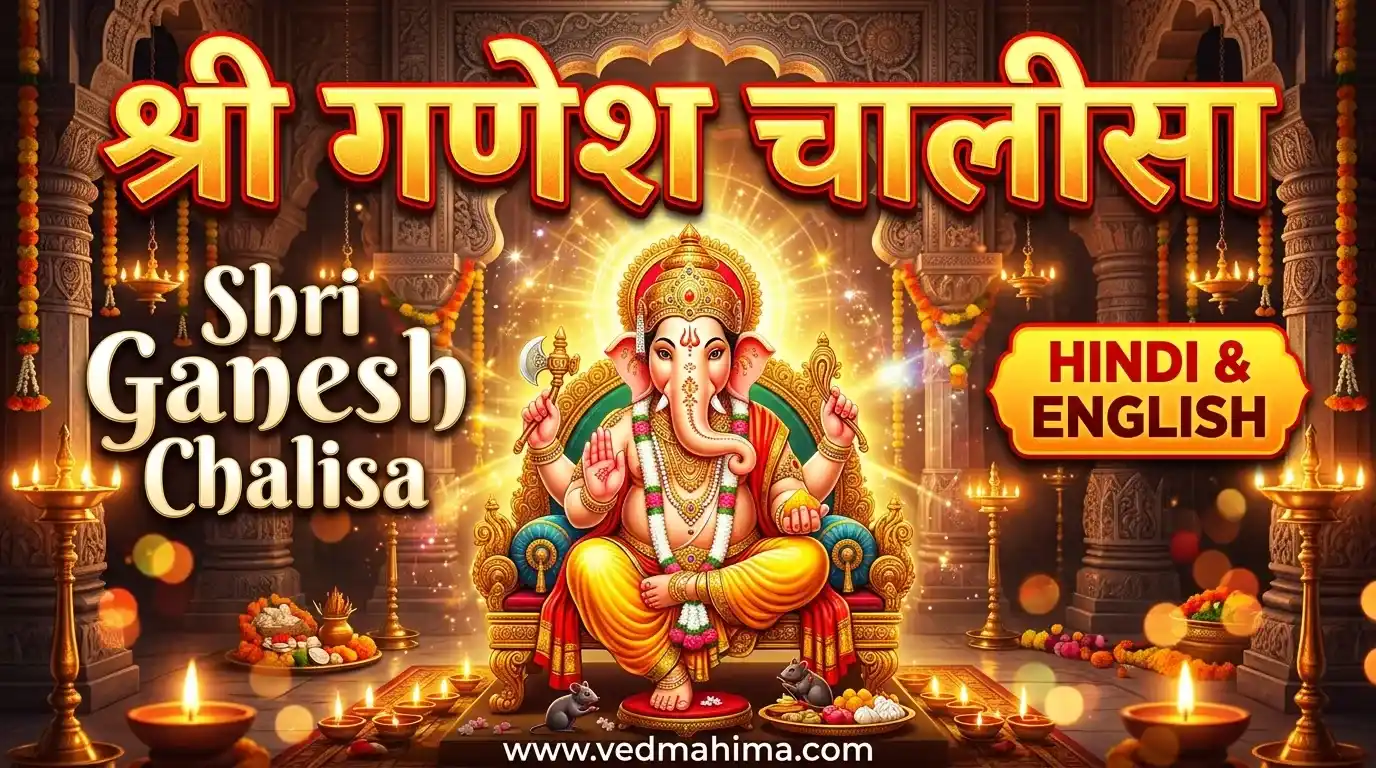
Shri Ganesha Chalisa
Wisdom, Success, Removal of Obstacles, Prosperity, Intelligence, Devotion
Jai Ganpati sadgun sadan,
Kavivar badan kripal.
Vighn haran mangal karan,
Jai jai Girijalal.
॥ Chaupai ॥
Jai jai jai Ganpati Ganraju,
Mangal bharan karan shubh kaaju.
Jai gajbadan sadan sukhdata,
Vishw Vinayak buddhi vidhata.
Vakra tund shuchi shund suhaavan,
Tilak tripund bhaal man bhaavan.
Rajat mani muktan ur mala,
Swarna mukut shir nayan vishala.
Pustak paani kuthar trishulam,
Modak bhog sugandhit phoolam.
Sundar pitambar tan saajit,
Charan paduka muni man raajit.
Dhani Shiv suvan Shadanan bhrata,
Gauri lalan vishw-vikhyata.
Riddhi-siddhi tav chanvar dulaavai,
Mooshak vaahan sohat paavai.
Kahau janm shubh katha tumhari,
Ati shuchi paavan mangalkaari.
Ek samay Giriraj kumari,
Putra hetu tap keenha bhaari.
Bhayo yagya jab poorn anoopa,
Tab pahunche tum dhari dvij roopa.
Atithi jaani ke Gauri sukhaari,
Bahuvidhi seva kari tumhari.
Ati prasann hvai tum var deenha,
Maatu putra hit jo tap keenha.
Milahi putra tuhi buddhi vishala,
Bina garbh dhaaran yahi kaala.
Gananayak gun gyan nidhana,
Pujit pratham roop Bhagwana.
As kahi antardhyan roop hvai,
Palna par balak swaroop hvai.
Bani shishu rudan jabahin tum thana,
Lakhi mukh sukh nahin Gauri samana.
Sakal magan sukh mangal gaavahin,
Nabh te suran suman barsaavahin.
Shambhu Uma bahudan lutaavahin,
Sur munijan sut dekhan aavahin.
Lakhi ati anand mangal saaja,
Dekhan bhi aaye Shani Raja.
Nij avagun guni Shani man maahin,
Balak dekhan chahat naahin.
Girija kachhu man bhed badhaayo,
Utsav mor na Shani tuhi bhaayo.
Kahat lage Shani man sakuchaai,
Ka karihaun shishu mohi dikhaai.
Nahin vishwas Uma ur bhayau,
Shani son balak dekhan kahayau.
Padtahi Shani drig kon prakaasha,
Balak sir udi gayo aakaasha.
Girija giri vikal hvai dharani,
So dukh dasha gayo nahi varni.
Hahakar machyo Kailasha,
Shani keenhon lakh sut ko naasha.
Turat Garud chadhi Vishnu sidhaaye,
Kaati chakra son gaj sir laaye.
Balak ke dhad upar dhaaryo,
Praan mantra padh Shankar daaryo.
Naam Ganesh Shambhu tab keenhe,
Pratham pujya buddhi nidhi var deenhe.
Buddhi pariksha jab Shiv keenha,
Prithvi kar pradakshina leenha.
Chale Shadanan bharami bhulaai,
Rache baith tum buddhi upaai.
Charan maatu-pitu ke dhar leenhe,
Tinke saat pradakshin keenhe.
Dhani Ganesh kahi Shiv hiy harashe,
Nabh te suran suman bahu barse.
Tumhari mahima buddhi badaai,
Shesh sahas mukh sake na gaai.
Main matihin malin dukhari,
Karhun kaun vidhi vinay tumhari.
Bhajat Ramasundar prabhudasa,
Jag Prayag kakra Durvasa.
Ab prabhu daya deen par keejai,
Apni shakti bhakti kuch deejai.
॥ Doha ॥
Shri Ganesh yeh Chalisa,
Paath karai dhar dhyaan.
Nit nav mangal grih basai,
Lahai jagat samman.
Samvat apne sahastra dash,
Rishi panchami dinesh.
Pooran Chalisa bhayo,
Mangal murti Ganesh.
About Shri Ganesha Chalisa
This Chalisa narrates the divine birth story of Lord Ganesha in detail: created by Goddess Parvati to guard her privacy, the child was unknowingly beheaded in a confrontation, and it was Lord Shani''s inadvertent glance, combined with the chain of events described in the verses, that led to the original head being lost. Lord Vishnu then brought the head of an elephant, which Lord Shiva placed upon the child, reviving him as Ganesha.
The Chalisa also describes how Lord Shiva tested the wisdom of his two sons, Ganesha and Kartikeya, with a race around the world. While Kartikeya set off on his peacock, Ganesha wisely circled his parents Shiva and Parvati, declaring that they represented the entire universe to him. Pleased with this wisdom, Shiva granted him the title of Pratham Pujya — the one to be worshipped first before all other deities.
Throughout the hymn, Ganesha is described with his iconic attributes: the modak (sweet) he holds, his mount the mouse (mushak), and Riddhi and Siddhi who attend him, representing prosperity and spiritual accomplishment.
According to Hindu belief, sincere recitation of the Shri Ganesh Chalisa removes obstacles, improves concentration and wisdom, and guides a person toward success in education, career and personal life. It is considered especially powerful when recited in the morning, during evening prayer, or on auspicious days such as Wednesday, Sankashti Chaturthi and Ganesh Chaturthi.
❓ Frequently Asked Questions
Question: What do the elephant head and single tusk of Lord Ganesha symbolize?
Answer: According to this Chalisa, Lord Vishnu brought an elephant head to replace the head lost after Shani''s gaze fell on the infant Ganesha. The elephant head represents wisdom and strength, while his single tusk symbolizes focus and the ability to overcome duality.
Question: Why was Lord Shani unable to look at baby Ganesha directly at first?
Answer: Lord Shani, aware of the curse that his glance could cause harm, hesitated. When Goddess Parvati insisted, his gaze fell on the child and caused the original head to vanish, as described in this Chalisa.
Question: Why is Lord Ganesha worshipped first before any auspicious work?
Answer: As described in the Chalisa, Lord Shiva granted Ganesha the boon of "Pratham Pujya" (first to be worshipped) after he wisely won the race around the world by circling his parents, symbolizing that devotion to one''s parents equals circling the universe.
Question: What is the significance of Riddhi and Siddhi mentioned in the Chalisa?
Answer: Riddhi (prosperity) and Siddhi (spiritual accomplishment) are described as attending Lord Ganesha, symbolizing that true devotion to him brings both material and spiritual success.
Question: When should the Ganesh Chalisa be recited?
Answer: It is best recited in the morning after bathing or during the evening Aarti, and is considered especially powerful on Wednesdays, Ganesh Chaturthi, and monthly Sankashti Chaturthi.