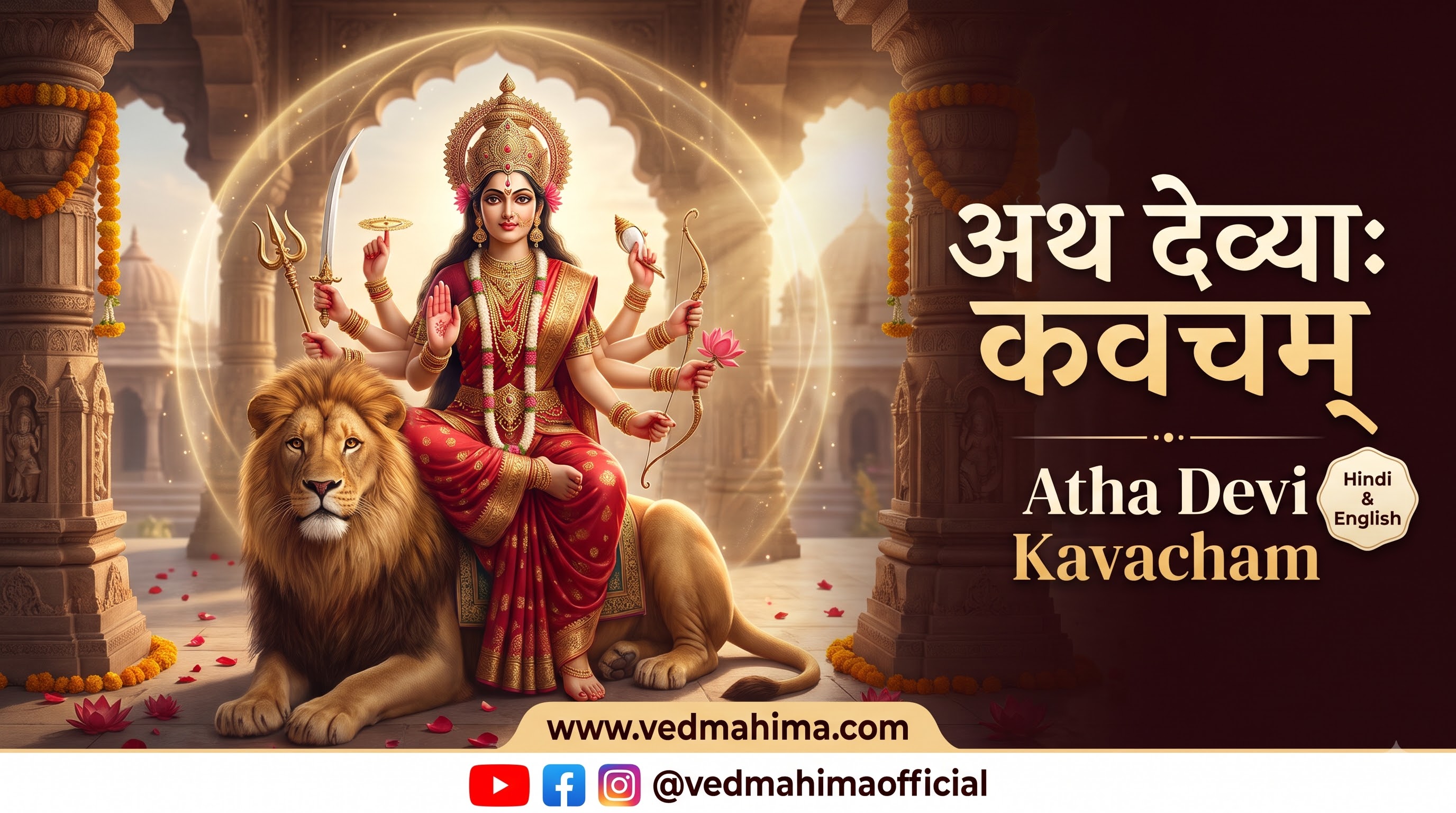
Atha Devi Kavacham
Devi Kavach lyrics, Navadurga names day-wise, Chandi Kavacha 56 verses, ten directions and body-part protection, Navratri path order
Om Asya Shri Chandikavachasya Brahmaa Rishih, Anushtup Chhandah, Chaamundaa Devataa, Anganyaasoktamaataro Beejam, Digbandhadevataastattvam, Shri Jagadambaapreetyarthe Saptasheetipaathaangatvena Jape Viniyogah।
Om Namashchandikaayai ॥
Maarkandeya Uvaacha
Om Yadguhyam Paramam Loke
Sarvarakshaakaram Nrinaam।
Yanna Kasyachidaakhyaatam
Tanme Broohi Pitaamaha॥1॥
Brahmo Uvaacha
Asti Guhyatamam Vipra
Sarvabhootopakaarakam।
Devyaastu Kavacham Punyam
Tachchhrinushva Mahaamune॥2॥
Prathamam Shailaputree Cha
Dviteeyam Brahmachaarinee।
Triteeyam Chandraghanteti
Kooshmaandeti Chaturthakam॥3॥
Panchamam Skandamaateti
Shashtham Kaatyaayaneeti Cha।
Saptamam Kaalaraatreeti
Mahaagaureeti Chaashhtamam॥4॥
Navamam Siddhidaatree Cha
Navadurgaah Prakeertitaah।
Uktaanyetaani Naamaani
Brahmanaiva Mahaatmanaa॥5॥
Agninaa Dahyamaanastu
Shatrumadhye Gato Rane।
Vishame Durgame Chaiva
Bhayaartaah Sharanam Gataah॥6॥
Na Teshaam Jaayate Kinchid
Ashubham Ranasankate।
Naapadam Tasya Pashyaami
Shokaduhkhabhayam Na Hi॥7॥
Yaistu Bhaktyaa Smritaa Noonam
Teshaam Vriddhih Prajaayate।
Ye Tvaam Smaranti Deveshi
Rakshase Taan Na Sanshayah॥8॥
Pretasamsthaa Tu Chaamundaa
Vaaraahee Mahishaasanaa।
Aindree Gajasamaaroodhaa
Vaishnavee Garudaasanaa॥9॥
Maaheshvaree Vrishaaroodhaa
Kaumaaree Shikhivaahanaa।
Lakshmee Padmaasanaa Devee
Padmahastaa Haripriyaa॥10॥
Shvetaroopadharaa Devee
Eeshvaree Vrishavaahanaa।
Brahmee Hansasamaaroodhaa
Sarvaabharanabhooshitaa॥11॥
Ityetaa Maatarah Sarvaah
Sarvayogasamanvitaah।
Naanaabharanashobhaadhyaa
Naanaratnopashobhitaah॥12॥
Drishyante Rathaaroodhaa
Devyah Krodhasamaakulaah।
Shankham Chakram Gadaam Shaktim
Halam Cha Musalaayudham॥13॥
Khetakam Tomaram Chaiva
Parashum Paashameva Cha।
Kuntaayudham Trishoolam Cha
Shaarngamaayudhamuttamam॥14॥
Daityaanaam Dehanaashaaya
Bhaktaanaamabhayaaya Cha।
Dhaarayantyaayudhaaneettham
Devaanaam Cha Hitaaya Vai॥15॥
Namaste'stu Mahaaraudre
Mahaaghoraparaakrame।
Mahaabale Mahotsaahhe
Mahaabhayavinaashini॥16॥
Traahi Maam Devi Dushprekshye
Shatroonaam Bhayavardhini।
Praachyaam Rakshatu Maamaindree
Aagneyyaamagnidevataa॥17॥
Dakshine'vatu Vaaraahee
Nairrityaam Khadgadhaarinee।
Prateechyaam Vaarunee Rakshed
Vaayavyaam Mrigavaahinee॥18॥
Udeechyaam Paatu Kaumaaree
Aishaanyaam Shooladhaarinee।
Oordhvam Brahmaani Me Rakshed
Dhastaad Vaishnavee Tathaa॥19॥
Evam Dasha Disho Rakshe-
Chchaamundaa Shavavaahanaa।
Jayaa Me Chaagratah Paatu
Vijayaa Paatu Prishthatah॥20॥
Ajitaa Vaamapaarshve Tu
Dakshine Chaaparaajitaa।
Shikhaamudyotinee Rakshe-
Dumaa Moordhni Vyavasthitaa॥21॥
Maaladharee Lalaate Cha
Bhruvau Rakshed Yashasvinee।
Trinetraa Cha Bhruvormadhye
Yamaghantaa Cha Naasike॥22॥
Shankhinee Chakshushormadhye
Shrotrayordvaaravaasinee।
Kapolau Kaalikaa Rakshe-
T Karnamoole Tu Shaankaree॥23॥
Naasikaayaam Sugandhaa Cha
Uttaroshthe Cha Charchikaa।
Adhare Chaamritakalaa
Jihvaayaam Cha Sarasvatee॥24॥
Dantaan Rakshatu Kaumaaree
Kanthadeshe Tu Chandikaa।
Ghantikaam Chitraghaantaa Cha
Mahaamaayaa Cha Taaluke॥25॥
Kaamaakshee Chibukam Rakshed
Vaacham Me Sarvamangalaa।
Greevaayaam Bhadrakaalee Cha
Prishthavamshe Dhanurdharee॥26॥
Neelagreevaa Bahihkanthe
Nalikaam Nalakoobaree।
Skandhayoh Khanginee Rakshed
Baahoo Me Vajradhaarinee॥27॥
Hastayordandinee Rakshe-
Dambikaa Chaanguleeshu Cha।
Nakhaan Shooleshvaree Rakshe-
T Kukshau Rakshet Kuleshvaree॥28॥
Stanau Rakshen Mahaadevee
Manah Shokavinaashinee।
Hridaye Lalitaa Devee
Udare Shooladhaarinee॥29॥
Naabhau Cha Kaaminee Rakshed
Guhyam Guhyeshvaree Tathaa।
Pootanaa Kaamikaa Medhram
Gude Mahishavaahinee॥30॥
Katyaam Bhagavatee Rakshe-
Jjaanune Vindhyavaasinee।
Janghe Mahaabalaa Rakshe-
T Sarvakaamapradaayinee॥31॥
Gulphayornaarasimhe Cha
Paadaprishthe Tu Taijasee।
Paadaanguleeshu Shree Rakshe-
T Paadaadhastalavaasinee॥32॥
Nakhaan Damshtrakaaraalee Cha
Keshaanshchaivordhvakeshinee।
Romakoopeshu Kauberee
Tvacham Vaageeshvaree Tathaa॥33॥
Raktamajjaavasaamaansaa-
Nyasthimedhaamsi Paarvatee।
Antraani Kaalaraatrishcha
Pittam Cha Mukuteshvaree॥34॥
Padmaavatee Padmakoshe
Kaphe Choodaamanistathaa।
Jvaalaamukhee Nakhajvaalaa-
Mabhedyaa Sarvasandhishu॥35॥
Shukram Brahmaani Me Rakshe-
Chchhaayaam Chhatreshvaree Tathaa।
Ahankaaram Mano Buddhim
Raksheenme Dharmadhaarinee॥36॥
Praanaapaanau Tathaa Vyaana
Mudaanam Cha Samaanakam।
Vajrahastaa Cha Me Rakshe-
T Praanam Kalyaanashobhanaa॥37॥
Rase Roope Cha Gandhe Cha
Shabde Sparshe Cha Yoginee।
Sattvam Rajastamashchaiva
Raksheennaaraayanee Sadaa॥38॥
Aayoo Rakshatu Vaaraahee
Dharmam Rakshatu Vaishnavee।
Yashah Keertim Cha Lakshmeem Cha
Dhanam Vidyaam Cha Chakrinee॥39॥
Gotramindraanee Me Rakshe-
T Pashoonme Raksha Chandike।
Putraan Raksheenmahaalakshmeer-
Bhaaryaam Rakshatu Bhairavee॥40॥
Panthaanam Supathaa Rakshe-
Nmaargam Kshemakaree Tathaa।
Raajadvaare Mahaalakshmeer-
Vijayaa Sarvatah Sthitaa॥41॥
Rakshaheenam Tu Yatsthaanam
Varjitam Kavachena Tu।
Tatsarvam Raksha Me Devi
Jayantee Paapanaashinee॥42॥
Padamekam Na Gachchhettu
Yadeechchhechchhubhamaatmanah।
Kavachenaavrito Nityam
Yatra Yatraiva Gachchhati॥43॥
Tatra Tatraarthalaabhashcha
Vijayah Saarvakaamikah।
Yam Yam Chintayate Kaamam
Tam Tam Praapnoti Nishchitam।
Paramaishvaryamatulam Praapsyate
Bhootale Pumaan॥44॥
Nirbhayo Jaayate Martyah
Sangraameshvaaparaajitah।
Trailokye Tu Bhavet Poojyah
Kavachenaavritah Pumaan॥45॥
Idam Tu Devyaah Kavacham
Devaanaamapi Durlabham।
Yah Pathet Prayato Nityam
Trisandhyam Shraddhayaanvitah॥46॥
Daivee Kalaa Bhavettasya
Trailokyeshvaaparaajitah।
Jeeved Varshashatam Saagra-
Mapamrityuvivarjitah॥47॥
Nashyanti Vyaadhayah Sarve
Lootaavisphotakaadayah।
Sthaavaram Jangamam Chaiva
Kritrimam Chaapi Yadvisham॥48॥
Abhichaaraani Sarvaani
Mantrayantraani Bhootale।
Bhoocharaah Khecharaashchaiva
Jalajaashchopadeshikaah॥49॥
Sahajaa Kulajaa Maalaa
Daakinee Shaakinee Tathaa।
Antarikshacharaa Ghoraa
Daakinyashcha Mahaabalaah॥50॥
Grahabhootapishaachaashcha
Yakshagandharvaraakshasaah।
Brahmaraakshasavetaalaah
Kooshmaandaa Bhairavaadayah॥51॥
Nashyanti Darshanaattasya
Kavache Hridi Samsthite।
Maanonnatirbhaved Raajnas-
Tejovriddhikaram Param॥52॥
Yashasaa Vardhate So'pi
Keertimanditabhootale।
Japet Saptashateem Chandeem
Kritvaa Tu Kavacham Puraa॥53॥
Yaavadbhoomandalam Dhatte
Sashailavanakaananam।
Taavattishthati Medinyaam
Santatih Putrapautrikee॥54॥
Dehaante Paramam Sthaanam
Yatsurairapi Durlabham।
Praapnoti Purusho Nityam
Mahaamaayaaprasaadatah॥55॥
Labhate Paramam Roopam
Shivena Saha Modate॥ Om ॥56॥
About Atha Devi Kavacham
Verses 1 and 2: the request. Markandeya says: tell me that most secret thing in the world that protects all people and has been told to none. Brahma replies that there is the most secret and holy kavacha of the Devi, which helps all beings, and asks him to listen.
Verses 3 to 5: the Navadurga. The nine names: Shailaputri (daughter of the mountain), Brahmacharini (who does tapas), Chandraghanta (with the moon-bell), Kushmanda, Skandamata (mother of Skanda), Katyayani, Kalaratri, Mahagauri and Siddhidatri (giver of siddhis). These were said by Brahma himself. In Navratri, one name is worshipped each day, in this order, so these three verses are the basis of the nine-day scheme.
Verses 6 to 8: whom she protects. People burning in fire, in the midst of enemies in battle, in hard and difficult places, or afraid and seeking refuge: nothing bad touches them, and no sorrow, grief or fear. Those who remember her with devotion grow in prosperity, and she protects those who remember her.
Verses 9 to 12: the Matrikas on their mounts. Chamunda on a corpse (preta), Varahi on a buffalo, Aindri on an elephant, Vaishnavi on Garuda, Maheshvari on a bull, Kaumari on a peacock, Lakshmi on a lotus with lotus in hand, Ishvari in white on a bull, Brahmi on a swan. These Mothers are described as full of yoga, with many ornaments and jewels.
Verses 13 to 15: the weapons. They come on chariots, angry, bearing conch, discus, mace, spear, plough and pestle, shield, tomara (javelin), axe, noose, lance, trident and the Sharnga bow. These weapons are held to destroy the bodies of the daityas, to give fearlessness to devotees and for the good of the gods.
Verses 16 and 17: the salutation. "Namaste astu maharaudre": salutations to you, most fierce, of great valour, great strength and great courage, destroyer of great fear. Protect me, O hard to look upon, who increases the fear of enemies.
Verses 17 to 20: the ten directions. East: Aindri. South-east: Agni-devata. South: Varahi. South-west: the sword-bearer (Khadgadharini). West: Varuni. North-west: Mrigavahini (on a deer). North: Kaumari. North-east: Shuladharini (with the trident). Above: Brahmani. Below: Vaishnavi. So Chamunda, riding a corpse, guards all ten directions. Jaya guards in front and Vijaya behind.
Verses 21 to 25: head and face. Ajita on the left and Aparajita on the right, Udyotini on the tuft of hair, Uma on the head. Maladhari on the forehead, Yashasvini on the brows, Trinetra between the brows, Yamaghanta on the nose. Shankhini between the eyes, Dvaravasini on the ears, Kalika on the cheeks, Shankari at the root of the ear. Sugandha on the nose, Charchika on the upper lip, Amritakala on the lower lip, Sarasvati on the tongue, Kaumari on the teeth, Chandika at the throat, Chitraghanta at the uvula, Mahamaya at the palate.
Verses 26 to 35: the body. Kamakshi on the chin, Sarvamangala on speech, Bhadrakali on the neck, Dhanurdhari on the spine, Nilagriva on the outer throat, Nalakubari on the windpipe. Khadgini on the shoulders, Vajradharini on the arms, Dandini on the hands, Ambika on the fingers, Shuleshvari on the nails, Kuleshvari in the belly. Mahadevi on the breasts, Shokavinashini on the mind, Lalita in the heart, Shuladharini in the abdomen, Kamini at the navel, Guhyeshvari in the private parts, Mahishavahini at the anus. Bhagavati on the waist, Vindhyavasini on the knees, Mahabala on the shanks, Narasimhi on the ankles, Taijasi on the instep, Shri on the toes, Padadhastalavasini on the soles. Damshtrakarali on the nails, Urdhvakeshini on the hair, Kauberi on the pores, Vagishvari on the skin. Parvati guards blood, marrow, fat, flesh, bone and fat tissue, Kalaratri the intestines and Mukuteshvari the bile. Padmavati, Chudamani, Jvalamukhi and Abhedya guard the other tissues and all the joints, and Brahmani guards the vital fluid. Chhatreshvari guards the shadow, and Dharmadharini the ego, mind and intellect. This is a devotional picture of the whole person under care, and not a medical or safety measure.
Verses 37 to 41: breath, senses, life and home. Vajrahasta guards the vital breaths (prana, apana, vyana, udana, samana), and Kalyanashobhana prana. Yogini guards taste, form, smell, sound and touch, and Narayani the three gunas (sattva, rajas, tamas). Varahi guards life span, Vaishnavi dharma, Chakrini fame, glory, Lakshmi, wealth and learning. Indrani guards the family line, Chandika animals, Mahalakshmi sons and Bhairavi the wife. Supatha guards the path, Kshemakari the road, and Mahalakshmi the royal door, with Vijaya everywhere. The prayer ends this section by asking Jayanti, the destroyer of sin, to protect whatever place the kavacha has left out.
Verses 43 to 45: walking under the kavacha. Verse 43 says one should not take a single step, if one wishes one's own welfare, without being covered by the kavacha, and that wherever one who is covered goes, there is gain and success. One who thinks of any wish gains it, says the text, and becomes fearless and unconquered in battle. This is stated as faith and devotional emphasis, not a guarantee.
Verses 46 to 52: the fruit (phalashruti). The kavacha is hard to get even for the gods. One who reads it daily, at the three sandhyas, with faith, gains a divine quality, is not defeated in the three worlds and lives a full hundred years, free of untimely death. The text says that diseases such as rashes and sores are destroyed, as are poisons of plant, animal and made kinds, and all abhichara (rites for harming others), mantras and yantras, and beings of the earth, sky and water. It names sahaja and kulaja (born-with and family) afflictions, dakini and shakini, ghosts, yakshas, gandharvas, rakshasas, brahmarakshasas, vetalas, kushmandas and bhairavas, and says they flee at the sight of one who holds the kavacha in the heart. These are statements of faith. The words are the language of the old texts, and in a devotional reading they stand for fears and dangers of every kind. Please read them calmly, take proper medical help for any illness or lasting fear, and never use prayer to harm anyone.
Verses 53 to 56: the closing. Verse 53 says to read the Saptashati after first making the kavacha. Verses 54 to 56 say that the reader's line of sons and grandsons lasts as long as the earth with its hills and forests, that at the end he reaches the highest place, hard to get even for the gods, by Mahamaya's grace, and that he gains the highest form and rejoices with Shiva.
The message. The kavacha says that protection is not one thing but many: of the directions, the body, the mind, the family and the road, each under a name of the one Devi. Benefits mentioned in tradition are matters of faith. Prayer works best alongside real effort and care, and health, money or legal problems also need proper help. See the Argala Stotram, Atha Keelakam, Durga Chalisa, Mahishasura Mardini Stotram and the Durga 108 names.
❓ Frequently Asked Questions
Question: What is Devi Kavacham (Durga Kavach) and where is it from?
Answer: Devi Kavacham, also called Chandi Kavacha, is a 56-verse Sanskrit prayer of protection from the Markandeya Purana. It is read as one of the angas (limbs) of the Durga Saptashati (Devi Mahatmya). Markandeya asks Brahma for the most secret protective prayer, and Brahma tells him. The full Sanskrit with Roman and Hindi is on this page.
Question: What are the nine Durga names (Navadurga) in Devi Kavacham, in order?
Answer: Verses 3 to 5 give them: 1 Shailaputri, 2 Brahmacharini, 3 Chandraghanta, 4 Kushmanda, 5 Skandamata, 6 Katyayani, 7 Kalaratri, 8 Mahagauri and 9 Siddhidatri. In Navratri, one name is worshipped on each of the nine days in this order.
Question: In what order are Devi Kavach, Argala and Keelakam read?
Answer: The usual order before the thirteen chapters of the Saptashati is Devi Kavacham, then Argala Stotram, then Atha Keelakam, then the Navarna mantra. Please follow the order in your family book or your teacher's guidance.
Question: When should I read Devi Kavacham, and how?
Answer: In the morning or evening after a bath, in Chaitra and Sharad Navratri (Shukla Pratipada to Navami), on Durga Ashtami and Mahanavami, and on Tuesday and Friday. Sit facing east or north before an image of Devi with a ghee lamp, and read clearly and without hurry. Verse 46 speaks of reading it at the three sandhyas (dawn, noon, dusk).
Question: How does Devi Kavacham protect the body and the directions?
Answer: It places the ten directions (verses 17 to 20), the head, face and senses (verses 21 to 26), the limbs and organs (verses 26 to 35), the vital breaths and mind (verses 36 to 38) and then life, family, path and home (verses 39 to 41) in the care of different names of the Goddess. This is a devotional picture, and not a medical or safety measure.
Question: Does it really remove disease, black magic and ghosts, and give a hundred years of life?
Answer: Verses 47 to 52 say so. These are statements of faith, not guarantees. The text names tantric words such as abhichara and mantra-yantra, and spirit-beings such as dakini and shakini, which in a devotional reading also stand for fears and dangers in general. Prayer can calm the mind, but illness, fear or anxiety also need proper medical help, and prayer must never be used to harm anyone.