Shri Durga Chalisa
Navratri puja, Mahishasur Mardini, Shumbh Nishumbh and Raktabeej story, Durga Chalisa paath vidhi, protection and strength
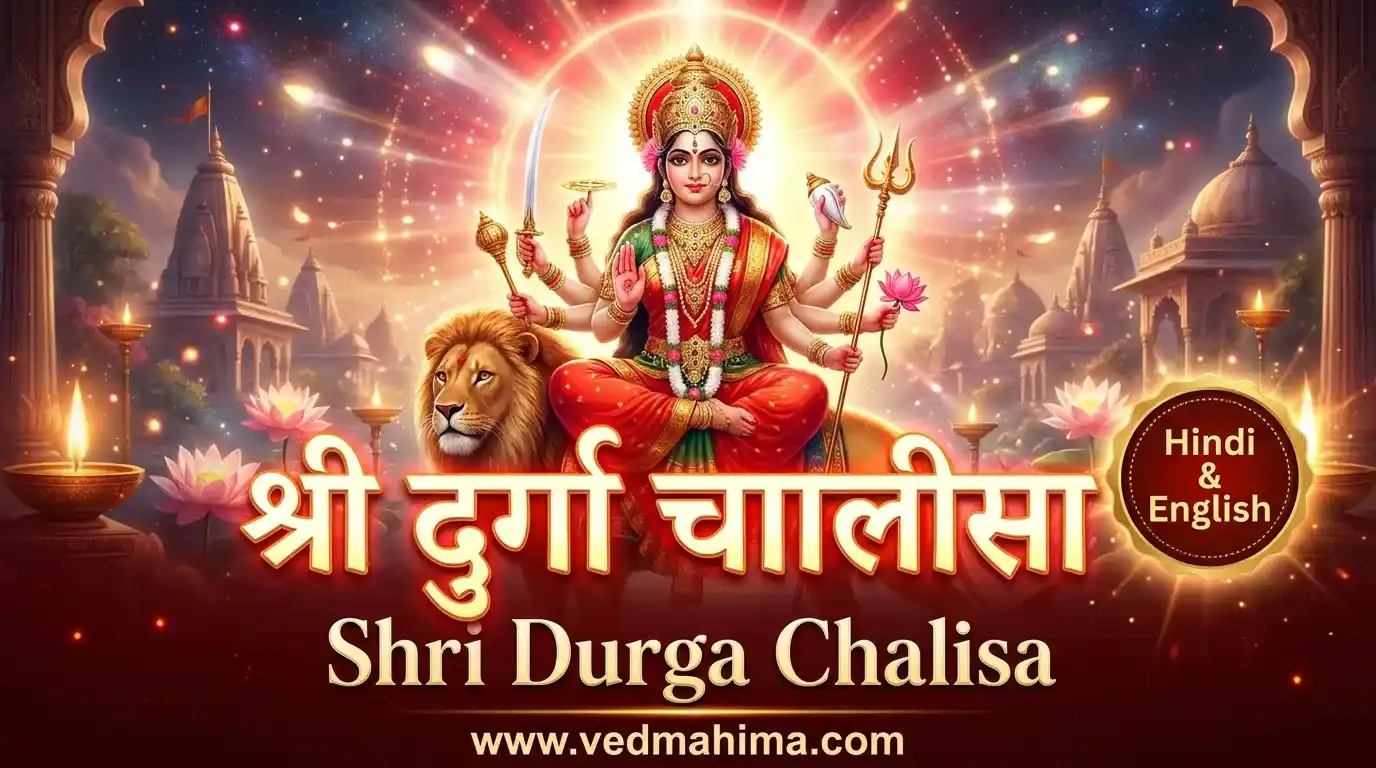
Ya Devi Sarvabhuteshu,
Shakti Roopena Sansthita.
Namastasyai Namastasyai,
Namastasyai Namo Namah.
॥ Chaupai ॥
Namo Namo Durge Sukh Karni,
Namo Namo Ambe Dukh Harni.
Nirankar Hai Jyoti Tumhari,
Tihun Lok Faili Ujiyari.
Shashi Lalata Mukh Mahavishala,
Netr Lal Bhrikuti Vikarala.
Roop Matu Ko Adhik Suhave,
Darsh Karat Jan Ati Sukh Pave.
Tum Sansar Shakti Lai Keena,
Palan Hetu Ann Dhan Deena.
Annapurna Hui Jag Pala,
Tum Hi Aadi Sundari Bala.
Pralaykaal Sab Nashan Hari,
Tum Gauri Shivshankar Pyari.
Shiv Yogi Tumhare Gun Gaave,
Brahma Vishnu Tumhen Nit Dhyave.
Roop Saraswati Ka Tum Dhara,
De Subuddhi Rishi Munin Ubara.
Dharyo Roop Narasimha Ko Amba,
Praghat Bhai Faadkar Khamba.
Raksha Kari Prahlad Bachayo,
Hiranyaksh Ko Swarg Pathayo.
Lakshmi Roop Dharo Jag Mahi,
Shri Narayan Ang Samahi.
Ksheersindhu Mein Karat Vilasa,
Dayasindhu Deejai Man Asha.
Hinglaj Mein Tumhin Bhavani,
Mahima Amit Na Jaat Bakhani.
Matangi Aru Dhoomavati Mata,
Bhuvaneshwari Bagla Sukh Data.
Shri Bhairav Tara Jag Tarini,
Chhinn Bhaal Bhav Dukh Nivarini.
Kehari Vahan Soh Bhavani,
Langur Veer Chalat Agavani.
Kar Mein Khappar Khadg Viraje,
Jako Dekh Kaal Dar Bhaje.
Sohai Astra Aur Trishoola,
Jaate Uthat Shatru Hiy Shoola.
Nagarkot Mein Tumhin Virajat,
Tihunlok Mein Danka Bajat.
Shumbh Nishumbh Danav Tum Maare,
Raktabeej Shankhan Sanhaare.
Mahishasur Nrip Ati Abhimani,
Jehi Agh Bhar Mahi Akulani.
Roop Karaal Kalika Dhara,
Sena Sahit Tum Tihi Sanhara.
Pari Gadha Santan Par Jab Jab,
Bhai Sahay Matu Tum Tab Tab.
Amarpuri Aru Basav Loka,
Tab Mahima Sab Rahen Ashoka.
Jwala Mein Hai Jyoti Tumhari,
Tumhen Sada Poojat Narnari.
Prem Bhakti Se Jo Yash Gave,
Dukh Daridra Nikat Nahi Aave.
Dhyave Tumhen Jo Nar Man Lai,
Janmamaran Tako Chhuti Jai.
Jogi Sur Muni Kahat Pukari,
Yog Na Ho Bin Shakti Tumhari.
Shankar Acharaj Tap Keeno,
Kaam Krodh Jeeti Sab Leeno.
Nishidin Dhyan Dharo Shankar Ko,
Kahu Kaal Nahi Sumiro Tumko.
Shakti Roop Ka Maram Na Payo,
Shakti Gai Tab Man Pachhtayo.
Sharanagat Hui Kirti Bakhani,
Jai Jai Jai Jagdamb Bhavani.
Bhai Prasann Aadi Jagdamba,
Dai Shakti Nahi Keen Vilamba.
Moko Matu Kasht Ati Ghero,
Tum Bin Kaun Harai Dukh Mero.
Asha Trishna Nipat Satave,
Moh Madadik Sab Binshave.
Shatru Nash Kijai Maharani,
Sumirau Ikchit Tumhen Bhavani.
Karo Kripa He Matu Dayala,
Riddhi Siddhi Dai Karahu Nihala.
Jab Lagi Jiyun Daya Phal Paun,
Tumharo Yash Main Sada Sunau.
Shri Durga Chalisa Jo Koi Gave,
Sab Sukh Bhog Parampad Pave.
Devidas Sharan Nij Jaani,
Kahu Kripa Jagdamb Bhavani.
॥ Doha ॥
Sharanagat Raksha Kare,
Bhakt Rahe Nishank.
Main Aaya Sharan Mein Teri,
Matu Lijiye Ank.
About Shri Durga Chalisa
The Chalisa first praises her light, which it calls formless and spread through the three worlds. It describes the moon on her forehead, the wide face, red eyes and fierce frown, and says her form gives joy at darshan. It calls her the one who brought forth the world, and as Annapurna fed it, and as the youthful first beauty. At the time of dissolution she is the one who withdraws everything, and she is also Gauri, the beloved of Shiva. Shiva and the yogis sing her virtues, and Brahma and Vishnu meditate on her. As Saraswati she gives wisdom to sages.
It then names her many forms. She took the Narasimha form and tore the pillar to protect Prahlad (see the Narasimha Chalisa), she is Lakshmi, who rests in Narayan''s body in the ocean of milk (see the Mahalakshmi Chalisa), she is Hinglaj Bhavani, Matangi, Dhumavati, Bhuvaneshwari, Bagla, Tara and Chhinnamasta. She rides a lion, with Langur Veer walking ahead, and holds a khappar, a sword, a weapon and a trident that pierces the heart of the enemy. Her seats are named at Nagarkot (Kangra), and her flame at Jwala.
The next verses are the battles. She killed the demons Shumbh and Nishumbh, destroyed Raktabeej and Shankhan, and ended the proud Mahishasura, whose sins weighed on the earth, by taking the fierce Kalika form with her army (see the Kali Chalisa). The Chalisa adds that whenever saints were in trouble, she came to their aid. It also tells of Shankar Acharya, who conquered desire and anger but forgot Shakti, and felt his own power leave him until he took refuge in her.
The last part is a prayer. The devotee says that desire, thirst, attachment and pride trouble him, and asks for the end of enemies, for riddhi and siddhi, and for the strength to sing her praise as long as he lives. It names the poet as Devidas. The Chalisa promises that one who sings it with love and devotion keeps poverty and sorrow away and attains the highest state. These are matters of faith, and the text is best read as a source of courage and calm, alongside effort and practical help.
❓ Frequently Asked Questions
Question: How does the Durga Chalisa describe the Goddess?
Answer: It says her light is formless (nirankar) and spreads across the three worlds. She has a moon on her forehead, a wide face, red eyes and a fierce frown, rides a lion with Langur Veer walking ahead, and holds a khappar, a sword and a trident. The same verses say that devotees feel great joy at her darshan.
Question: Which demons did Durga destroy, according to the Chalisa?
Answer: It names Shumbh and Nishumbh, Raktabeej, and Mahishasura, the proud king whose sins overburdened the earth. For Mahishasura she took the fierce form of Kalika and destroyed him with her army.
Question: Why does the Chalisa mention the Narasimha form and Prahlad?
Answer: The verses say that she appeared as Narasimha, tearing the pillar to protect Prahlad. This follows the belief that one Shakti stands behind all divine forms (see the Narasimha Chalisa). The text names Hiranyaksh where other accounts name Hiranyakashipu, which is how this version of the verse is sung.
Question: Which other forms of the Goddess are named?
Answer: The Chalisa names Annapurna, Saraswati, Lakshmi (see the Mahalakshmi Chalisa), Hinglaj Bhavani, Matangi, Dhumavati, Bhuvaneshwari, Bagla, Tara and Chhinnamasta, and Kali (see the Kali Chalisa). It also names her seats at Nagarkot (Kangra) and Jwala.
Question: What does the story of Shankaracharya in the Chalisa mean?
Answer: The verses say Shankar Acharya conquered desire and anger but did not remember Shakti, and his power left him until he took refuge in her. The lesson is that spiritual strength rests on Shakti, and that humble surrender returns it.
Question: When is the best time to recite the Durga Chalisa?
Answer: After a morning bath or at evening prayer, with Navratri (Chaitra and Sharad), Ashtami, Tuesdays and Fridays especially favoured.