Shri Narasimha Chalisa
Narasimha Jayanti, Prahlad story, protection from enemies, nazar dosh and fear
Maas Vaishakh Kritika Yut,
Haran Mahi Ko Bhar.
Shukla Chaturdashi Som Din,
Liyo Narsingh Avatar.
Dhanya Tumharo Singh Tanu,
Dhanya Tumharo Naam.
Tumhare Sumiran Se Prabhu,
Puran Ho Sab Kaam.
॥ Chaupai ॥
Narsingh Dev Mein Sumaron Tohi,
Dhan Bal Vidya Daan De Mohi.
Jai-Jai Narsingh Kripala,
Karo Sada Bhaktan Pratipala.
Vishnu Ke Avatar Dayala,
Mahakaal Kaalan Ko Kaala.
Naam Anek Tumharo Bakhano,
Alp Buddhi Mein Na Kachu Jaano.
Hiranyakush Nrip Ati Abhimaani,
Tehi Ke Bhar Mahi Akulaani.
Hiranyakush Kayadhu Ke Jaaye,
Naam Bhakt Prahlad Kahaaye.
Bhakt Bana Vishnu Ko Daasa,
Pita Kiyo Maran Parasaaya.
Astra-Shastra Maare Koot Danda,
Agni Daah Kiyo Prachanda.
Bhakt Hetu Tum Liyo Avtaara,
Dusht-Dalan Haran Mahibhara.
Tum Bhaktan Ke Bhakt Tumhare,
Prahlad Ke Praan Piyare.
Pragat Bhaye Faadkar Tum Khambha,
Dekh Dusht-Dal Bhaye Achambha.
Khadag Jihva Tanu Sundar Saaja,
Urdhva Kesh Mahadrisht Viraaja.
Tapt Swarn Sam Badan Tumhara,
Ko Varne Tumharo Vistaara.
Roop Chaturbhuj Badan Vishaala,
Nakh Jihva Hai Ati Vikaraala.
Swarn Mukut Badan Ati Bhaari,
Kanan Kundal Ki Chhavi Nyaari.
Bhakt Prahlad Ko Tumne Ubaara,
Hiranyakush Khal Kshan Mah Maara.
Brahma, Vishnu Tumhe Nit Dhyaave,
Indra-Mahesh Sada Man Laave.
Ved-Puraan Tumharo Yash Gaave,
Shesh Sharada Paaran Paave.
Jo Nar Dharo Tumharo Dhyaana,
Taako Hoy Sada Kalyaana.
Traahi-Traahi Prabhu Dukh Nivaaro,
Bhav Bandhan Prabhu Aap Hi Taaro.
Nitya Jape Jo Naam Tihaara,
Dukh-Vyaadhi Ho Nistaara.
Santaanheen Jo Jaap Karaaye,
Man Ichchhit So Nar Sut Paave.
Bandhya Naari Susantaan Ko Paave,
Nar Daridra Dhani Hoi Jaave.
Jo Narsingh Ka Jaap Karaave,
Taahi Vipatti Sapne Nahi Aave.
Jo Kaamna Kare Man Maahi,
Sab Nishchay So Siddh Hui Jaahi.
Jeevan Mein Jo Kuchh Sankat Hoi,
Nishchay Narsingh Sumre Soi.
Rog Grasit Jo Dhyaave Koi,
Taaki Kaaya Kanchan Hoi.
Dakini-Shakini Pret-Betaala,
Grah-Vyaadhi Aru Yam Vikaraala.
Pret-Pishaach Sabe Bhay Khaaye,
Yam Ke Doot Nikat Nahi Aave.
Sumir Naam Vyaadhi Sab Bhaage,
Rog-Shok Kabahun Nahi Laage.
Jaako Nazar Dosh Ho Bhai,
So Narsingh Chalisa Gaai.
Hate Nazar Hove Kalyaana,
Bachan Satya Saakhi Bhagwaana.
Jo Nar Dhyaan Tumharo Laave,
So Nar Man Vanchhit Phal Paave.
Banvaaye Jo Mandir Gyaani,
Ho Jaave Vah Nar Jag Maanni.
Nit-Prati Paath Kare Ik Baara,
So Nar Rahe Tumhara Pyaara.
Narsingh Chalisa Jo Jan Gaave,
Dukh-Daridr Taake Nikat Na Aave.
Chalisa Jo Nar Padhe-Padhaave,
So Nar Jag Mein Sab Kuchh Paave.
Yah Shri Narsingh Chalisa,
Padhe Rank Hove Avneesa.
Jo Dhyaave So Nar Sukh Paave,
Tohi Vimukh Bahu Dukh Uthaave.
Shivswaroop Hai Sharan Tumhari,
Haro Nath Sab Vipatti Hamari.
॥ Doha ॥
Charon Yug Gaayen,
Teri Mahima Aparampaar.
Nij Bhaktan Ke Praan Hit,
Liyo Jagat Avatar.
Narsingh Chalisa Jo Padhe,
Prem Magan Shat Baar.
Us Ghar Anand Rahe,
Vaibhav Badhe Apaar.
About Shri Narasimha Chalisa
The central story of the Chalisa is that of Prahlad. It describes King Hiranyakashipu as so proud and oppressive that the earth itself was troubled by his weight. His son Prahlad, born of Queen Kayadhu, became a devoted follower of Vishnu. The furious father tried to destroy his own child with weapons, clubs and fire, but Prahlad remained safe through his faith. Then, for the sake of his devotee, the Lord appeared by splitting open a pillar (khambha), and the king''s followers were struck with amazement.
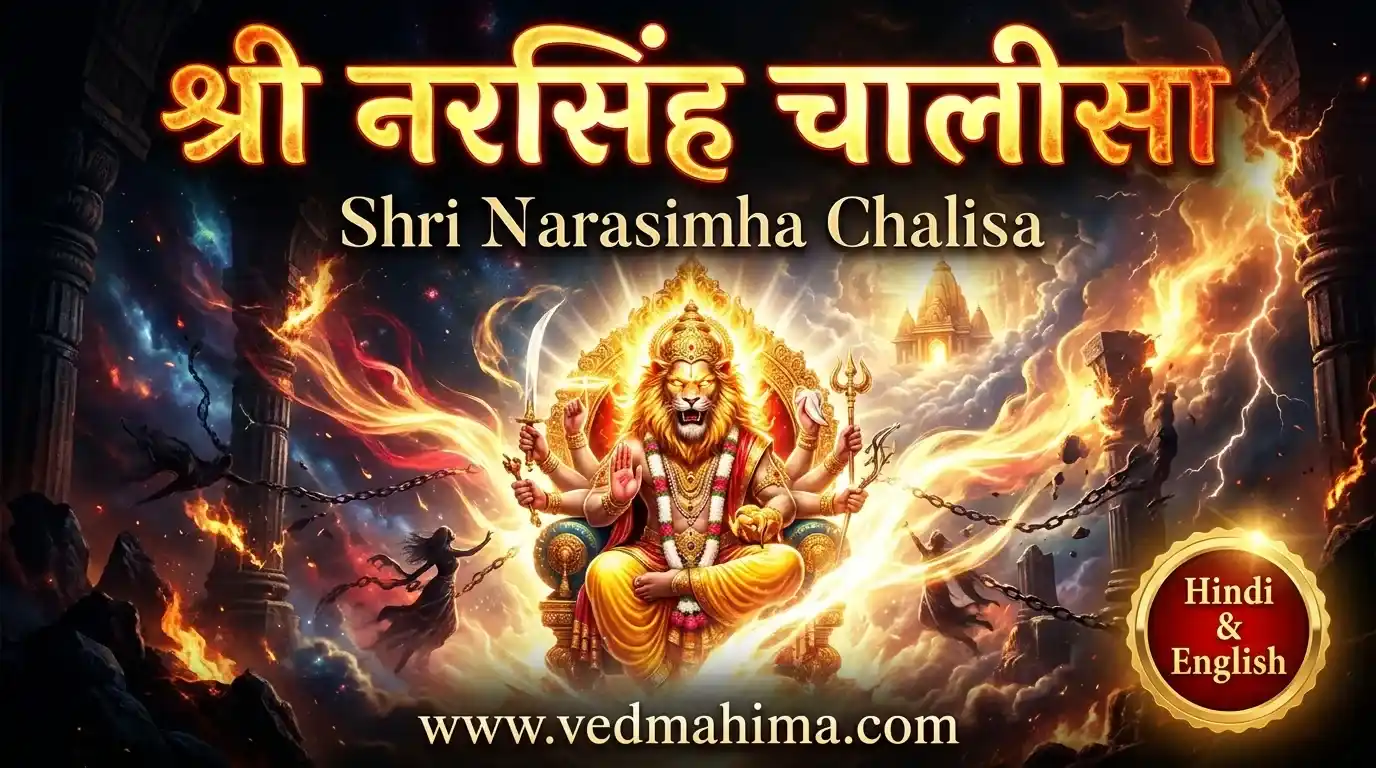
The Chalisa gives a vivid picture of this form: a sword-like tongue, upright hair, a body glowing like molten gold, four arms, terrible claws, a golden crown and shining earrings. According to the Bhagavata Purana, Hiranyakashipu had received a boon that he could not be killed by man or animal, inside or outside, by day or by night, or by any weapon. Narasimha, who is neither fully man nor fully animal, killed him at twilight on the threshold of the palace, placing him on his lap and using his claws, so that every condition of the boon was respected.
The second half of the hymn is a prayer. It says that remembering Narasimha removes disease and fear, that dakini, shakini, pret, betal and the messengers of Yama do not approach the one who recites his name, that nazar dosh (the evil eye) is removed, and that the childless, the poor and the troubled find relief. It also says that one who builds a temple becomes respected in the world, and that one who recites it once daily becomes dear to the Lord. These are matters of faith, and they are best seen as a source of courage alongside, not in place of, medical, legal and practical help.
Narasimha is worshipped across India, and well-known temples include Ahobilam in Andhra Pradesh, Simhachalam near Visakhapatnam and Yadagirigutta in Telangana. Devotees recite this Chalisa especially for protection from enemies, fear and negative energy, and for the courage that comes from remembering that the Lord protects those who take refuge in him.
❓ Frequently Asked Questions
Question: Who was Hiranyakashipu and why did Lord Narasimha appear?
Answer: The Chalisa describes Hiranyakashipu as a very proud king whose weight burdened the earth. His son Prahlad, born of Kayadhu, became a devotee of Vishnu, and the angry father tried to kill him with weapons, clubs and fire. To protect his devotee and remove the tyrant, the Lord took the Narasimha form.
Question: Why did Vishnu take a half-man, half-lion form?
Answer: According to the Bhagavata Purana, Hiranyakashipu had a boon that he could not be killed by man or animal, indoors or outdoors, by day or night, or by any weapon. Narasimha, who is neither fully man nor fully animal, killed him at twilight on the threshold, on his lap and with his claws. The Chalisa itself says he appeared by splitting open a pillar.
Question: How does the Narasimha Chalisa describe the Lord''s form?
Answer: It describes a sword-like tongue, upright hair, a body glowing like molten gold, four arms, fearsome claws, a golden crown and shining earrings, and says the sight astonished the wicked.
Question: When is Narasimha Jayanti?
Answer: The opening doha names the month of Vaishakh, the Shukla Paksha Chaturdashi and a Monday as the day of the avatar. It is observed every year on Vaishakh Shukla Chaturdashi, usually in April or May, and the exact date changes with the panchang.
Question: Does the Chalisa mention nazar dosh and protection from negative energy?
Answer: Yes. It says that reciting it removes nazar dosh and that dakini, shakini, pret, betal and the messengers of Yama do not come near the one who remembers the Lord''s name. These are statements of devotional belief, not guarantees.
Question: When and how should the Narasimha Chalisa be recited?
Answer: Evening around sunset is considered best, because tradition says the Lord appeared at twilight. Light a pure ghee lamp before an image of Narasimha and recite with focus, especially on Narasimha Jayanti. The Chalisa itself suggests reciting once daily, or a hundred times with devotion.


