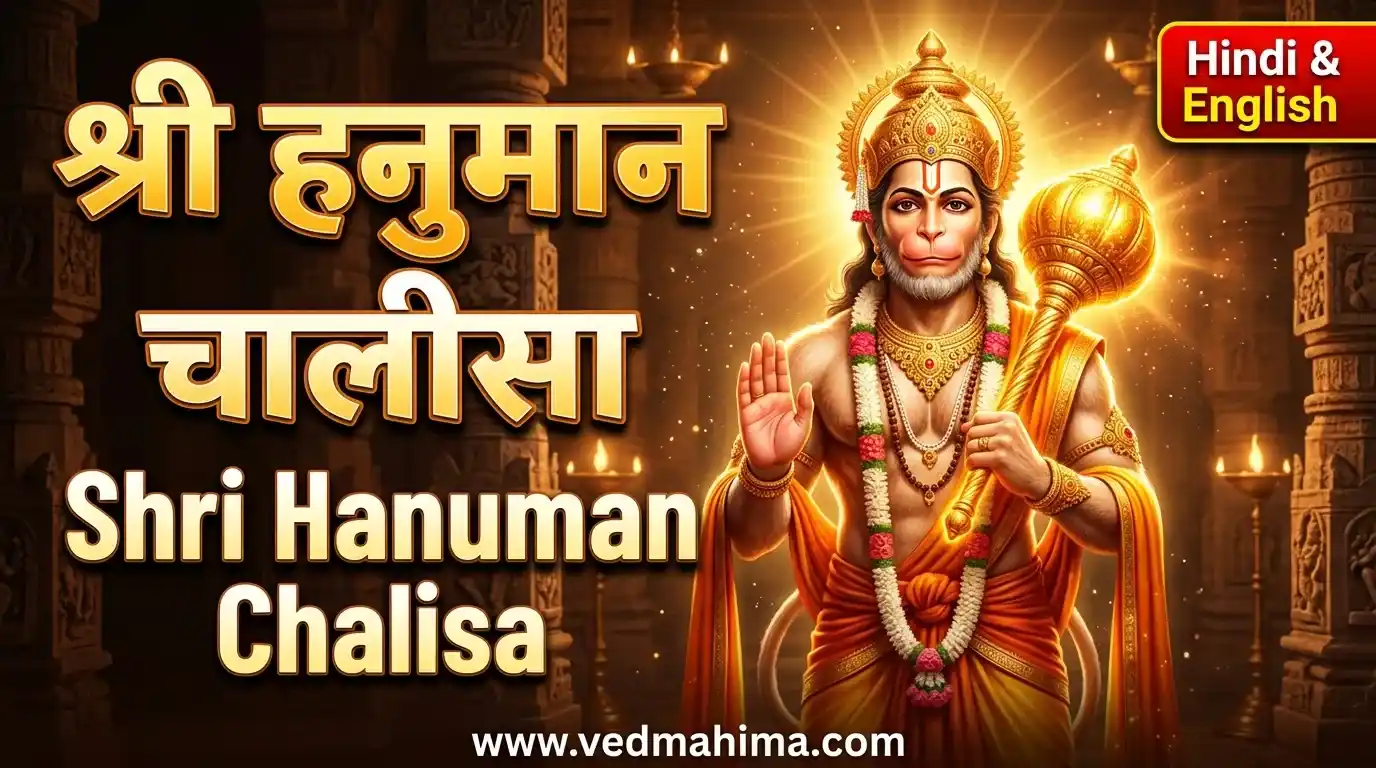
Shri Hanuman Chalisa
Shakti, Suraksha, Bhakti, Strength, Protection, Faith
Shri Guru charan saroj raj,
nij manu mukuru sudhaari.
Barnaun Raghuvar bimal jasu,
jo daayaku phal chaari.
Buddhiheen tanu jaanike,
sumiraun Pavan-Kumar.
Bal buddhi bidya dehu mohin,
harahu kalesh bikaar.
॥ Chaupai ॥
Jai Hanuman gyan gun sagar,
jai Kapis tihun lok ujagar.
Ram doot atulit bal dhaama,
Anjani-putra Pavan sut naama.
Mahabir bikram Bajrangi,
kumati nivaar sumati ke sangi.
Kanchan baran biraaj subesa,
kaanan kundal kunchit kesa.
Haath bajra au dhwaja biraaje,
kandhe moonj janeu saaje.
Shankar suvan Kesari nandan,
tej prataap maha jag vandan.
Bidyavaan guni ati chatur,
Ram kaaj karibe ko aatur.
Prabhu charitra sunibe ko rasiya,
Ram Lakhan Sita man basiya.
Sukshm roop dhari Siyahin dikhaava,
vikat roop dhari Lanka jaraava.
Bheem roop dhari asur sanhaare,
Ramchandra ke kaaj sanvaare.
Laay sanjeevan Lakhan jiyaaye,
Shri Raghubeer harashi ur laaye.
Raghupati keenhi bahut badaai,
tum mam priya Bharat hi sam bhaai.
Sahas badan tumharo yash gaavain,
as kahi Shripati kanth lagaavain.
Sanakaadik Brahmaadi muneesa,
Narad Saarad sahit Aheesa.
Jam Kuber digpaal jahan te,
kabi kobid kahi sake kahan te.
Tum upkaar Sugreevahin keenha,
Ram milay raj pad deenha.
Tumharo mantra Vibheeshan maana,
Lankaeshwar bhaye sab jag jaana.
Jug sahasra jojan par bhaanu,
leelyo taahi madhur phal jaanu.
Prabhu mudrika meli mukh maahin,
jaladhi laanghi gaye acharaj naahin.
Durgam kaaj jagat ke jete,
sugam anugrah tumhare tete.
Ram duaare tum rakhware,
hot na aagya binu paisaare.
Sab sukh lahai tumhari sarna,
tum rakshak kaahu ko dar na.
Aapan tej samhaaro aapai,
teeno lok haank te kaampai.
Bhoot pisaach nikat nahin aavai,
Mahavir jab naam sunaavai.
Naasai rog hare sab peera,
japat nirantar Hanumat beera.
Sankat te Hanuman chhudaavai,
man kram bachan dhyaan jo laavai.
Sab par Ram tapasvi raaja,
tin ke kaaj sakal tum saaja.
Aur manorath jo koi laavai,
soi amit jeevan phal paavai.
Chaaron jug partaap tumhaara,
hai prasiddh jagat ujiyara.
Sadhu sant ke tum rakhware,
asur nikandan Ram dulaare.
Asht siddhi nau nidhi ke daata,
as bar deen Janki Maata.
Ram rasayan tumhare paasa,
sada raho Raghupati ke daasa.
Tumhare bhajan Ram ko paavai,
janam janam ke dukh bisraavai.
Ant kaal Raghuvar pur jaai,
jahan janam Hari bhakt kahaai.
Aur devta chitt na dharai,
Hanumat sehi sarb sukh karai.
Sankat katai mitai sab peera,
jo sumirai Hanumat balbeera.
Jai Jai Jai Hanuman Gosaai,
kripa karahu Gurudev ki naai.
Jo sat baar paath kar koi,
chhootahi bandi maha sukh hoi.
Jo yah padhe Hanuman Chalisa,
hoy siddhi saakhi Gaurisa.
Tulsidas sada Hari chera,
keejai naath hriday mah dera.
॥ Doha ॥
Pavan tanay sankat haran,
mangal moorti roop.
Ram Lakhan Sita sahit,
hriday basahu sur bhoop.
About Shri Hanuman Chalisa
The hymn narrates key episodes from Hanuman''s life connected to the Ramayana: taking a tiny form to secretly meet Sita in Lanka, assuming a massive form to burn Lanka with his blazing tail, and bringing the life-saving Sanjeevani herb from the Himalayas to revive the wounded Lakshmana. It also recalls how Hanuman helped Sugreeva regain his throne and secure an alliance with Rama, and how Vibhishana, after receiving Hanuman''s counsel, was later crowned king of Lanka.
The Chalisa describes Hanuman''s divine birth as the son of Anjani and Kesari, blessed by Vayu (the wind god), and his unmatched physical and spiritual strength, often described through the episode of him mistaking the sun for a fruit and leaping to swallow it as a child.
Towards its conclusion, the hymn states that Hanuman was granted Ashta Siddhi (eight supernatural powers) and Nav Nidhi (nine treasures) as a boon from Mother Sita, which he grants to sincere devotees. The final verses promise that reciting the Chalisa with devotion removes fear, sorrow and obstacles, and that reciting it one hundred times with faith frees a person from worldly bondage.
Because of its direct connection to protection, courage and the removal of negative energy, the Hanuman Chalisa is recited daily by millions of devotees, and is considered especially powerful on Tuesdays and Saturdays, or during times of fear, illness or hardship.
❓ Frequently Asked Questions
Question: What do "Sukshm roop" and "Vikat roop" mean in the Hanuman Chalisa?
Answer: These lines refer to Hanuman taking a tiny (sukshm) form to secretly show himself to Sita in Lanka, and a massive, terrifying (vikat) form to burn Lanka with his tail, both episodes mentioned in the Chalisa.
Question: What is the significance of the Sanjeevani booti episode mentioned in the Chalisa?
Answer: The Chalisa references how Hanuman brought the Sanjeevani herb to revive Lakshmana after he was gravely wounded in battle, showing his devotion and selfless service to Lord Rama.
Question: Why does the Chalisa mention Sugreev and Vibhishan?
Answer: Hanuman helped Sugreev regain his kingdom and secure Rama''s friendship, and later guided Vibhishan, who then became the King of Lanka — both are cited as examples of Hanuman''s role as a helper and guide.
Question: What are Ashta Siddhi and Nav Nidhi mentioned at the end of the Chalisa?
Answer: Ashta Siddhi (eight spiritual powers) and Nav Nidhi (nine forms of wealth) are the boons Hanuman received from Mother Sita, which he can bestow upon sincere devotees.
Question: When should the Hanuman Chalisa be recited?
Answer: It can be recited any time with devotion, but mornings after bathing and evenings are considered most auspicious, with Tuesdays and Saturdays being especially significant for Hanuman worship.
Question: What benefit is promised to someone who recites the Chalisa 100 times?
Answer: The Chalisa itself states that reciting it one hundred times with devotion frees a person from worldly bondage and brings great happiness, as mentioned in its concluding verses.