Shri Shiv Chalisa
Peace, devotion, strength, protection, spiritual energy
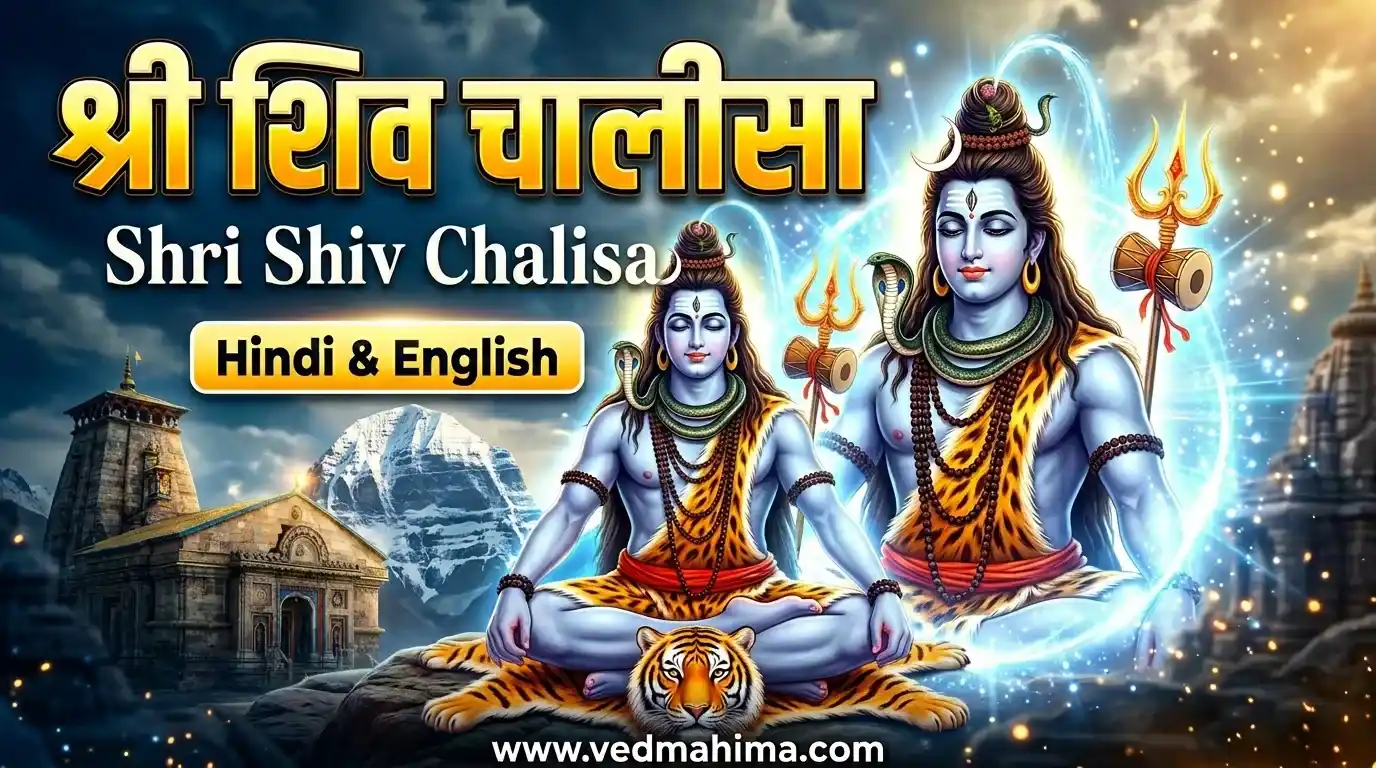
Shri Ganesh Girija Suvan,
mangal mool sujan.
Kahat Ayodhyadas tum,
deu abhay vardaan.
॥ Chaupai ॥
Jai Girijapati deen dayala,
sada karat santan pratipala.
Bhaal chandarma sohat neeke,
kaanan kundal nagphani ke.
Ang gaur shir gang bahaaye,
mundmaal tan kshar lagaaye.
Vastra khaal baghambar sohe,
chhavi ko dekh naag man mohe.
Maina maatu ki hvai dulaari,
baam ang sohat chhavi nyaari.
Kar trishool sohat chhavi bhaari,
karat sada shatrun kshaykaari.
Nandi Ganesh sohai tahan kaise,
sagar madhya kamal hain jaise.
Kartik Shyam aur Ganraau,
ya chhavi ko kahi jaat na kaau.
Devan jabahin jaay pukaara,
tabahin dukh prabhu aap nivaara.
Kiya upadrav taarak bhaari,
devan sab mili tumhi juhari.
Turat Shadanan aap pathaayu,
lav nimish mahan maari giraayu.
Aap Jalandhar asur sanhaara,
suyash tumhaar vidit sansaara.
Tripurasur san yuddh machaai,
sabahin kripa kar leen bachaai.
Kiya tapahin Bhagirath bhaari,
purab pratigya taasu puraari.
Daanin mahan tum sam kou naahin,
sevak stuti karat sadaahin.
Ved naam mahima tav gaai,
akath anaadi bhed nahin paai.
Prakati udadhi manthan mein jwaala,
jarat surasur bhaye vihaala.
Keenh daya tahan kari sahaai,
Neelkanth tab naam kahaai.
Poojan Ramchandra jab keenha,
jeet ke Lanka Vibhishan deenha.
Sahas kamal mein ho rahe dhaari,
keenh pariksha tabahin Puraari.
Ek kamal prabhu raakheu joi,
kamal nayan poojan chahu soi.
Kathin bhakti dekhi prabhu Shankar,
bhaye prasann diye ichhit var.
Jai jai jai anant avinaashi,
karat kripa sab ke ghatvaasi.
Dusht sakal nit mohi sataave,
bhramat rahaun mohi nain na aave.
Trahi trahi main naath pukaaro,
yahi avsar mohi aan ubaaro.
Lai trishool shatrun ko maaro,
sankat te mohi aan ubaaro.
Maat pita bhrata sab hoi,
sankat mein poochhat nahin koi.
Swami ek hai aas tumhari,
aay harahu ab sankat bhaari.
Dhan nirdhan ko det sadaahin,
jo koi jaanche so phal paahin.
Stuti kehi vidhi karaun tumhari,
kshamahu naath ab chook hamari.
Shankar ho sankat ke naashan,
mangal kaaran vighn vinashan.
Yogi yati muni dhyaan lagaavain,
Sharad Narad sheesh navaavain.
Namo namo jai namah Shivay,
sur Brahmadik paar na paay.
Jo yah paath kare man laai,
ta par hot hai Shambhu sahaai.
Riniyan jo koi ho adhikaari,
paath kare so paavan haari.
Putra hon kar ichha koi,
nishchay Shiv prasad tehi hoi.
Pandit Trayodashi ko laave,
dhyaan poorvak hom karaave.
Trayodashi vrat karai hamesha,
taake tan nahin rahai kalesha.
Dhoop deep naivedya chadhaave,
Shankar sammukh paath sunaave.
Janam janam ke paap nasaave,
ant dham Shivpur mein paave.
Kahain Ayodhyadas aas tumhari,
jaani sakal dukh harahu hamari.
॥ Doha ॥
Nitya nem kar pratah hi,
paath karaun chaalis.
Tum meri manokamna,
poorn karo Jagdish.
Magasar chhathi hemant ritu,
samvat chausath jaan.
Astuti Chalisa Shivahi,
poorn keen kalyaan.
About Shri Shiv Chalisa
The Chalisa narrates several key episodes from Shiva''s divine life. When the demon Tarakasura caused great suffering to the gods, Lord Shiva sent his six-faced son Kartikeya (Shadanan), who destroyed the demon within moments. Shiva himself is remembered for slaying the demon Jalandhara and for the fierce battle against the Tripurasuras, in which he showed his grace by protecting all beings.
One of the most celebrated episodes is the story behind his name Neelkanth. During the churning of the cosmic ocean (Samudra Manthan) by the gods and demons, a deadly poison (Halahala) emerged that threatened to destroy all of creation. Out of boundless compassion, Lord Shiva drank the poison and held it in his throat rather than swallowing it, which turned his throat blue — hence the name Neelkanth.
The Chalisa also recalls the devotion of King Bhagiratha, who performed intense penance to bring the river Ganga down to earth; Lord Shiva is remembered for receiving the mighty Ganga upon his head to break her fall, fulfilling Bhagiratha''s vow.
A particularly moving episode describes Lord Rama''s worship of Shiva with a thousand lotus flowers. To test Rama''s devotion, Shiva hid one lotus. Finding one flower short, Rama prepared to offer his own lotus-like eye in its place. Deeply moved by this depth of devotion, Lord Shiva appeared and granted him his desired boon, after which Rama went on to defeat Ravana and crown Vibhishana as king of Lanka.
Regular recitation of the Shiv Chalisa with devotion is believed to bring mental peace, spiritual growth, inner strength, and protection from negative energies. It helps calm the mind, reduce stress, and remove negative thoughts, guiding a person toward positivity and balance in life. It is especially considered auspicious to recite it in the early morning after bathing and during evening aarti time, with Monday (Somvar) regarded as the most sacred day for Lord Shiva.
❓ Frequently Asked Questions
Question: Who was Tarakasura and how was he defeated according to this Chalisa?
Answer: Tarakasura was a demon who tormented the gods severely. The Chalisa recounts that Lord Shiva sent his six-faced son Kartikeya (Shadanan), who slew Tarakasura in an instant.
Question: Why is Lord Shiva called Neelkanth in this Chalisa?
Answer: During the churning of the cosmic ocean (Samudra Manthan), a deadly poison emerged that threatened all beings. Lord Shiva drank it out of compassion and held it in his throat, which turned blue, earning him the name Neelkanth.
Question: What test did Lord Rama undergo with a thousand lotus flowers?
Answer: The Chalisa describes that Lord Rama worshipped Shiva with a thousand lotuses, but Shiva hid one flower to test his devotion. Rama offered his own lotus-like eye instead, and pleased by this devotion, Shiva granted him his wish.
Question: Which demons are mentioned as defeated by Lord Shiva in this Chalisa?
Answer: The Chalisa mentions the destruction of Tarakasura (through Kartikeya), the demon Jalandhara, and the battle against the Tripurasuras.
Question: Why is King Bhagiratha mentioned in the Chalisa?
Answer: Bhagiratha performed intense penance to bring the Ganga to earth, and Lord Shiva is remembered for fulfilling his vow, which relates to Shiva bearing the Ganga on his head.
Question: When should the Shiv Chalisa be recited?
Answer: It is most auspicious in the early morning after bathing or during evening Aarti, with Monday (Somvar) considered the most sacred day for Lord Shiva.


