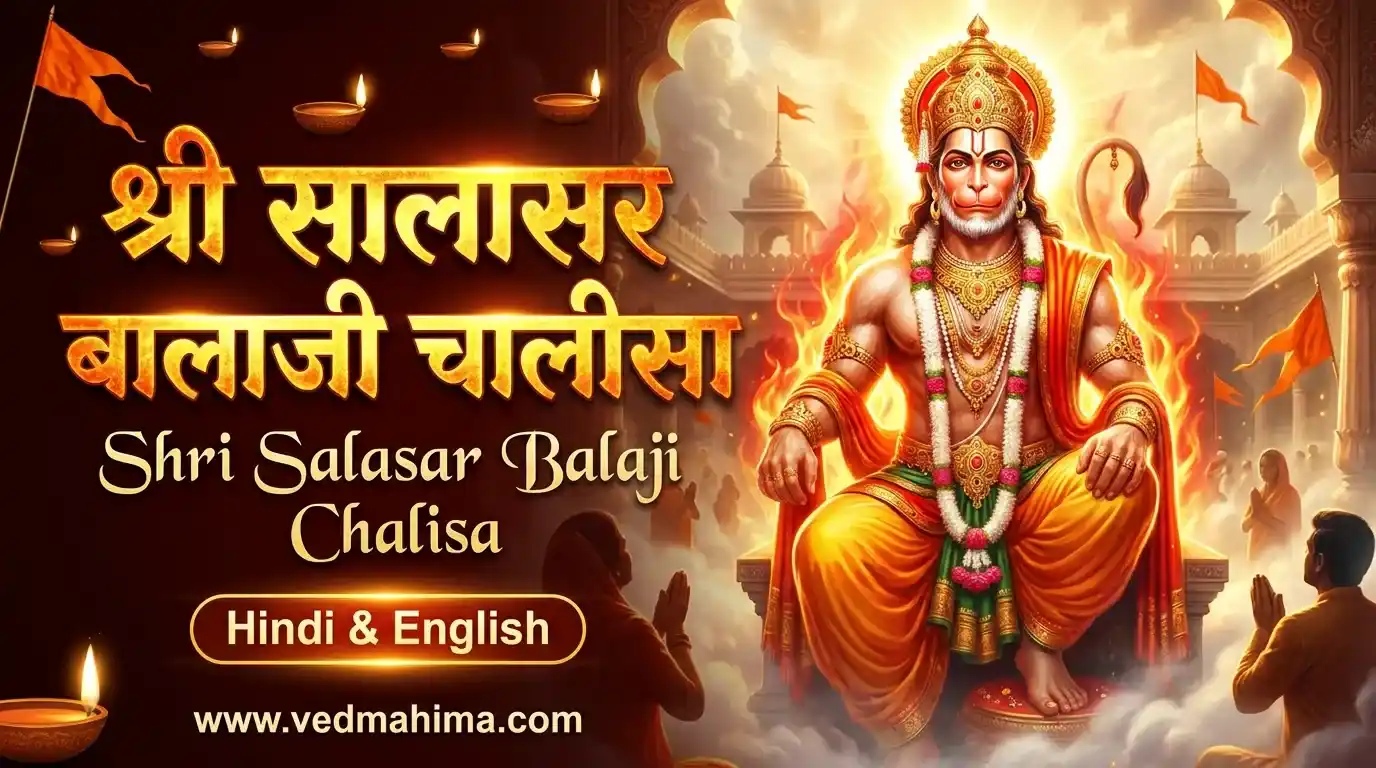
Shri Salasar Balaji Chalisa
Salasar Balaji blessings, nariyal bandhna tradition, obstacle removal, wish fulfillment, success
Guru Gira Aru Ganpati,
Puni Vinavau Hanuman.
Salasar Ke Devta,
Sada Karo Kalyan.
Lal Deh Ki Lalitya,
Murti Lal Lalaam.
Haath Jod Vinati Karun,
Purvahu Sabke Kaam.
॥ Chaupai ॥
Jai Jai Jai Salasar Dhaama,
Paavan Ruchir Lok Abhiraama.
Jimi Paavan Mathura Aru Kashi,
Pushkar Kurukshetra Sukhrashi.
Avadhpuri, Gange Haridwara,
Salasar Shubh Varanu Vichaara.
Rajasthan Sikar Niyaaraaye,
Lachhmangarh Nagar Man Bhaaye.
Tehi Niyar Salasar Graama,
Sakal Bhaanti Shubh Shuchi Sukh Dhaama.
Siddhpeeth Yah Param Puneeta,
Hanumat Darshan Sab Dukh Beeta.
Taate Vinay Karun Sunu Bhai,
Bhajahu Pavan Sut Sumati Paai.
Salasar Hanumat Jimi Aava,
Kahun Sakal Sunu Man Samjhaava.
Mohan Das Vipra Sab Jaana,
Bhakti Bhaav Gun Gyaan Nidhana.
Uday Sang Le Khet Kamaaye,
Ek Baar Hanumat Tahan Aaye.
Kah Kapi Vipra Suno Mam Baani,
Kije Dhyan Bhakti Jiy Jaani.
Sab Taji Mohan Vipra Vichaara,
Hanumat Bhajan Sada Sukhkaari.
Karai Bhajan Bhakti Aru Dhyana,
Nitya Hoi Milan Hanumana.
Asota Murti Pragataye,
Lai Thakur Salasar Aaye.
Vikram Ashtadash Shat Gyarah,
Aayu Hanumat Ravi Jim Baarah.
Shravan Sit Navami Shanivaara,
Thaayan Yog Bhoomi Asvaara.
Mohan Poojan Havan Karaai,
Kapi Murti Thaapi Sukhdaai.
Aarti Mohan Mangal Gaava,
Dhol Nagara Shabd Suhaava.
Chadhe Churma Bhog Lagaaye,
Bhajan Kirtan Sab Mil Gaaye.
Ek Baar Mohan Man Bhaai,
Bhai Prerna Murti Sajai.
Chitra Racha Jo Man Sukhdaai,
Bhaye Prasann Hanumat Kapiraai.
Ghrit Sindoor Thaal Bhar Leena,
Murat Lal Lalit Kar Deena.
Mohan Bole Uday Bulaai,
Hanumat Kahan Aaradhau Aai.
Sevahu Hanumat Lagan Lagaai,
Nit Prati Bhakti Badhe Savai.
Salasar Jaikaar Suhaai,
Chahundishi Ghanta Dhuni Man Bhaai.
Din Din Ho Mandir Vistara,
Pooja Kare Uday Parivara.
Mangal Poonam Jo Man Bhaaye,
Salasar Shubh Darshan Paaye.
Dhawaaja Nariyal Aan Chadhaaye,
Khaand Churma Bhog Lagaaye.
Hanumat Bhajan Karai Man Laai,
Salasar Hanuman Manaai.
Ehvidhi Aai Dhok Lagaaye,
Man Ichha Phal Sab Jan Paaye.
Aatma Gyaan Badhe Nit Naaya,
Jab Te Hoye Hanumat Daaya.
Sab Vidh Kasht Vikar Hataave,
Salasar Sharna Jo Jaave.
Chinta Saampini Taako Bhaaj,
Jaake Hiy Mein Hanumat Raaje.
Hanumat Darshan Ati Man Bhaai,
Lal Deh Chhavi Kahi Nahi Jaai.
Door Door Te Log Lugai,
Bade Bhaag Te Darshan Paai.
Karahi Safal Sab Nij Nij Lochan,
Kari Kari Darshan Sankat Mochan.
Hanumat Mahima Chahundishi Gaaje,
Salasar Hanuman Viraje.
Salasar Shubh Dhaam Bhajaami,
Jai Jai Jai Bajrang Namaami.
Indrajeet Kapiraai Sahaai,
Salasar Mahima Jo Gaai.
Salasar Hanumat Chalisa,
Padhe Sune Shubh Kare Kapisa.
॥ Doha ॥
Chalisa Shubhdham Ka,
Gaaye Jo Chitlaay.
Indrajeet Bhakti Badhe,
Daya Karen Kapiraay.
Om Sumar Gaate Raho,
Nit Shri Sitaram.
Salasar Sharna Gaho,
Kari Hanumat Pranam.
About Shri Salasar Balaji Chalisa
A unique feature of Salasar Balaji is that Lord Hanuman is worshipped in a rare idol depicting him with a beard and mustache, making this temple distinct from most other Hanuman shrines. This extraordinary form symbolizes divine power, courage, and unwavering devotion, attracting devotees from across India and around the world.
The Shri Salasar Balaji Chalisa beautifully recounts the inspiring story of Saint Mohandas Ji, a devout Brahmin farmer whose deep devotion and spiritual dedication played a vital role in establishing the sacred shrine — Hanuman himself is said to have appeared before him while he worked in the fields, urging him toward a life of devotion. It also narrates the miraculous discovery of Lord Hanuman''s idol by the farmer Uday Singh while plowing his field in the village of Asota, and the divine events that led to its installation at Salasar Dham on Shravan Shukla Navami, a Saturday, in Vikram Samvat 1811.
These historical and spiritual traditions have made the temple one of the most important centers of Hanuman worship in North India. One of the most well-known traditions at Salasar Balaji Temple is offering and tying a coconut (nariyal) as a symbol of prayer and devotion. It is widely believed that offering a coconut with a pure heart, along with the regular recitation of the Shri Salasar Balaji Chalisa, helps remove incurable illnesses, relieves mental stress and worries, fulfills heartfelt wishes, and brings divine grace into the devotee''s life. The temple''s grandest celebrations occur during the Chaitra Purnima and Ashwin Purnima fairs, when lakhs of devotees gather for darshan.
According to popular belief, devotees who recite the Shri Salasar Balaji Chalisa with sincere faith receive the blessings of Lord Hanuman, who removes obstacles, grants courage, protects against negative influences, and brings peace, prosperity, and success into their lives.
❓ Frequently Asked Questions
Question: What makes the Salasar Balaji idol unique among Hanuman temples?
Answer: Unlike most Hanuman shrines, Salasar Balaji is worshipped in a rare form with a beard and mustache, a distinctive appearance that symbolizes his unmatched power and devotion.
Question: How was the Salasar Balaji idol discovered?
Answer: The Chalisa recounts that a farmer named Uday Singh discovered the miraculous idol while plowing his field in the village of Asota, after which it was carried to Salasar and enshrined there.
Question: Who was Mohandas Ji and what is his connection to this temple?
Answer: Mohandas Ji was a devout Brahmin farmer to whom Hanuman himself appeared and urged to abandon worldly pursuits for devotion; his sincere worship played a vital role in establishing the shrine.
Question: What is the significance of tying a coconut (nariyal) at Salasar Balaji?
Answer: It is one of the temple''s most famous traditions — devotees tie or offer a coconut with a sincere wish, believing that with faith and regular Chalisa recitation, their heartfelt desires are fulfilled.
Question: Which fairs (melas) are celebrated at Salasar Dham?
Answer: The Chaitra Purnima and Ashwin Purnima fairs are the most significant, drawing lakhs of devotees to Salasar for Hanuman''s darshan and blessings.
Question: When should the Salasar Balaji Chalisa be recited?
Answer: Tuesdays, Saturdays, and especially during the Purnima fairs, after offering ghee and sindoor to Lord Salasar Balaji, are considered most auspicious.