Shri Kali Chalisa
Kali Chalisa, Mahishasur Mardini, Kali Puja and Amavasya, protection from fear and negative energy
Jai Kali Kalimal Haran,
Mahima Agam Apaar.
Mahish Mardini Kalika,
Dehu Abhay Apaar.
॥ Chaupai ॥
Ari Mad Maan Mitaavan Haari,
Mundmaal Gal Sohat Pyaari.
Ashtabhuji Sukhdaiyak Mata,
Dushtdalan Jag Mein Vikhyaata.
Bhaal Vishaal Mukut Chhavi Chaajai,
Kar Mein Sheesh Shatru Ka Saajai.
Dooje Haath Liye Madhu Pyaala,
Haath Teesre Sohat Bhaala.
Chauthe Khappar Khadg Kar Paanche,
Chhathe Trishool Shatru Bal Jaanche.
Saptam Kar Damkat Asi Pyaari,
Shobha Adbhut Maat Tumhaari.
Ashtam Kar Bhaktan Var Daata,
Jag Manharan Roop Ye Mata.
Bhaktan Mein Anurakt Bhavani,
Nishdin Ratein Rishi-Muni Gyaani.
Mahashakti Ati Prabal Puneeta,
Tu Hi Kaali Tu Hi Sita.
Patit Taarini He Jag Paalak,
Kalyaani Paapi Kul Ghaalak.
Shesh Suresh Na Paavat Paara,
Gauri Roop Dharyo Ik Baara.
Tum Samaan Daata Nahin Dooja,
Vidhivat Karein Bhaktjan Pooja.
Roop Bhayankar Jab Tum Dhaara,
Dushtdalan Keenhehu Sanhaara.
Naam Anekan Maat Tumhaare,
Bhaktjano Ke Sankat Taare.
Kali Ke Kasht Kaleshan Harni,
Bhav Bhay Mochan Mangal Karni.
Mahima Agam Ved Yash Gaavein,
Narad Sharad Paar Na Paavein.
Bhoo Par Bhaari Badhyo Jab Bhaari,
Tab Tab Tum Prakateen Mahtaari.
Aadi Anaadi Abhay Var Daata,
Vishwavidit Bhav Sankat Traata.
Kusamay Naam Tumhaaro Leenha,
Usko Sada Abhay Var Deenha.
Dhyaan Dharein Shruti Shesh Suresha,
Kaal Roop Lakhi Tumro Bheshha.
Kaluwa Bhairon Sang Tumhaare,
Ari Hit Roop Bhayankar Dhaare.
Sevak Laangur Rahat Agaari,
Chausath Jogan Aagyakaari.
Treta Mein Raghuvar Hit Aai,
Dashkandhar Ki Sain Nasai.
Khela Ran Ka Khel Niraala,
Bhara Maans-Majja Se Pyaala.
Raudra Roop Lakhi Daanav Bhaage,
Kiyau Gavan Bhavan Nij Tyaage.
Tab Aisau Taamas Chadha Aayo,
Swajan Vijjan Ko Bhed Bhulayo.
Ye Baalak Lakhi Shankar Aaye,
Raah Rok Charanan Mein Dhaaye.
Tab Mukh Jeebh Nikar Jo Aayi,
Yahi Roop Prachalit Hai Maai.
Baadhyo Mahishasur Mad Bhaari,
Peedit Kiye Sakal Nar-Naari.
Karun Pukaar Suni Bhaktan Ki,
Peer Mitaavan Hit Jan-Jan Ki.
Tab Prakati Nij Sain Sameta,
Naam Pada Maa Mahish Vijeta.
Shumbh Nishumbh Hane Kshan Maahin,
Tum Sam Jag Doosar Kou Naahin.
Maan Mathanhaari Khal Dal Ke,
Sada Sahaayak Bhakt Vikal Ke.
Deen Viheen Karein Nit Seva,
Paavein Manvaanchhit Phal Meva.
Sankat Mein Jo Sumiran Karein,
Unke Kasht Maatu Tum Harein.
Prem Sahit Jo Keerti Gaavein,
Bhav Bandhan Son Mukti Paavein.
Kaali Chalisa Jo Padhein,
Swarglok Binu Bandhan Chadhein.
Daya Drishti Herau Jagdamba,
Kehi Kaaran Maa Kiyau Vilamba.
Karahu Maatu Bhaktan Rakhwaali,
Jayati Jayati Kaali Kankaali.
Sevak Deen Anaath Anaari,
Bhaktibhaav Yuti Sharan Tumhaari.
॥ Doha ॥
Prem Sahit Jo Kare,
Kaali Chalisa Paath.
Tin Ki Pooran Kaamna,
Hoy Sakal Jag Thaath.
About Shri Kali Chalisa
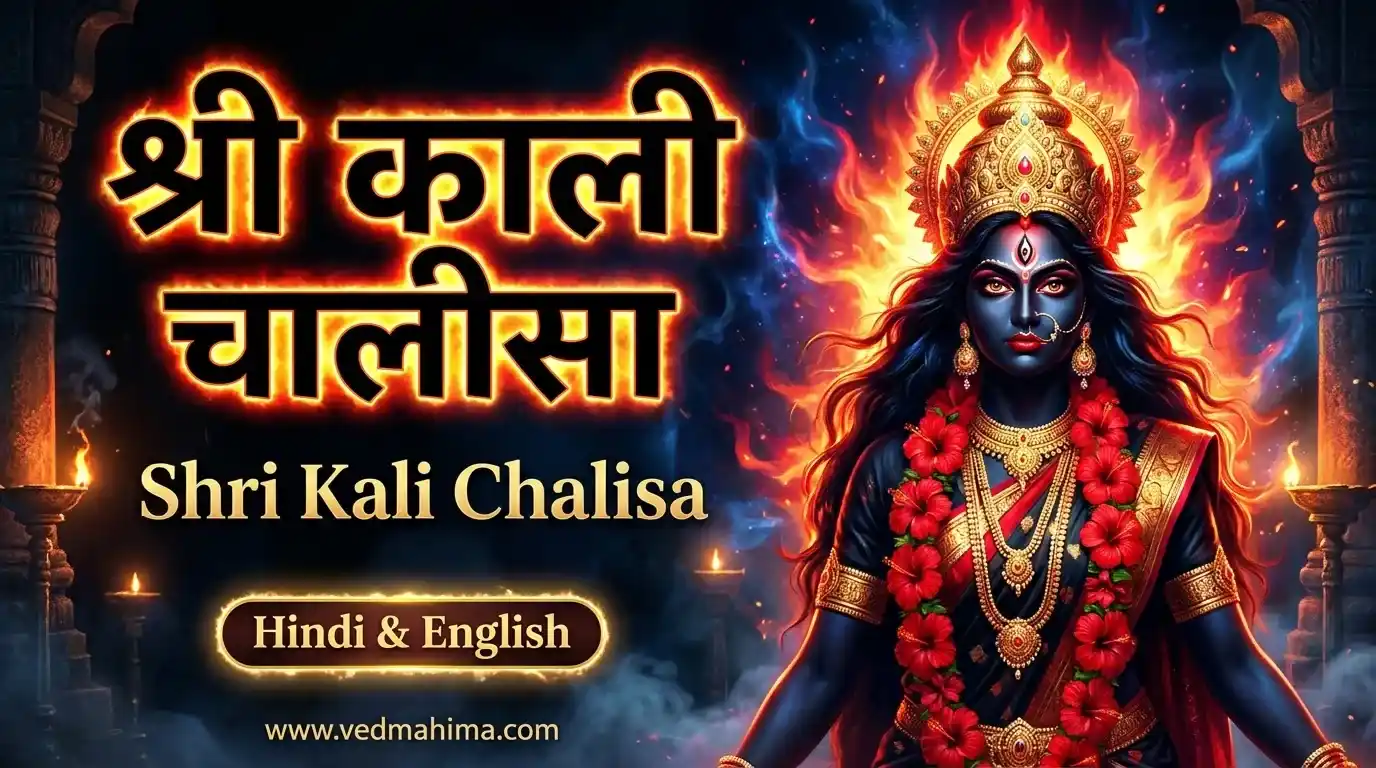
The Chalisa first pictures her form. She is eight-armed and wears a garland of skulls. In her hands are a severed head, a cup, a spear, a skull-bowl, a sword, a trident and another blade, while her eighth hand grants boons to her devotees. She is called Ashtabhuji, the one who ends the pride of enemies, and the one who rescues the fallen.
It then recalls her deeds. When the burden on the earth grew heavy, she appeared again and again. In the Treta Yuga she came to help Lord Rama and destroyed the army of Ravana, and the demons ran from her terrible form. When Mahishasura''s pride swelled and tormented everyone, the cries of her devotees reached her, and she appeared with her forces and became known as the conqueror of Mahisha. She then destroyed the demon brothers Shumbh and Nishumbh in a moment.
One of its most striking verses explains the tongue that is shown in her images. A great rage rose in her during the fight and she lost the sense of friend and foe. Shankar came and lay down in her path, her feet fell on him, and her tongue came out in shock. The Chalisa says this is the form that became popular. Her companions are named as Kalua Bhairon, Langur, and the 64 Jogans, who obey her.
Devotees read the Chalisa at night or early morning, on Amavasya, Tuesday and Saturday, and during Kali Puja on the night of Kartik Amavasya. They pray for courage, for protection from fear and enemies, and for release from the bonds of worldly life. The Chalisa says that one who recites it climbs to heaven without bondage. Kali is best understood as a protective Mother whose fierce form is for her children''s safety, and the Chalisa should be recited with respect and pure intention, never to harm anyone.
❓ Frequently Asked Questions
Question: What does Goddess Kali hold in her eight hands?
Answer: The Chalisa describes Kali as eight-armed, wearing a garland of skulls. She holds a severed head, a cup, a spear (bhala), a skull-bowl (khappar), a sword, a trident and another blade, while her eighth hand grants boons to devotees.
Question: Why is Kali shown with her tongue out?
Answer: The Chalisa says a great fury came over her in battle and she lost the sense of who was friend or foe. Lord Shankar lay down in her path and she stepped on him, and her tongue came out in shock. It says this is the form that became popular.
Question: Which demons did Kali defeat according to the Chalisa?
Answer: It names Mahishasura, whose pride tormented all people, which gave her the title Mahishmardini, and the demon brothers Shumbh and Nishumbh, whom she destroyed in a moment. It also says she came in the Treta Yuga for Lord Rama and destroyed Ravana''s army.
Question: Who are Kalua Bhairon, Langur and the 64 Jogans?
Answer: The Chalisa says Kalua Bhairon accompanies her in a fearsome form against enemies, that Langur always stands ready as her attendant, and that the 64 Jogans (yoginis) obey her command.
Question: Is Kali worship meant to frighten, and can householders recite this Chalisa?
Answer: Kali is worshipped as a protective Mother who destroys fear, ego and evil. Her fierce form is for protecting devotees, and the Chalisa itself prays for protection and fearlessness (abhay). It should be recited with respect and a pure intention, never to harm anyone.
Question: When is the best time to recite the Kali Chalisa?
Answer: Night or early morning is traditional, with Amavasya, Tuesday and Saturday considered special. Kali Puja is observed on the night of Kartik Amavasya (the Diwali night), especially in Bengal and eastern India, and Navratri is another important period.