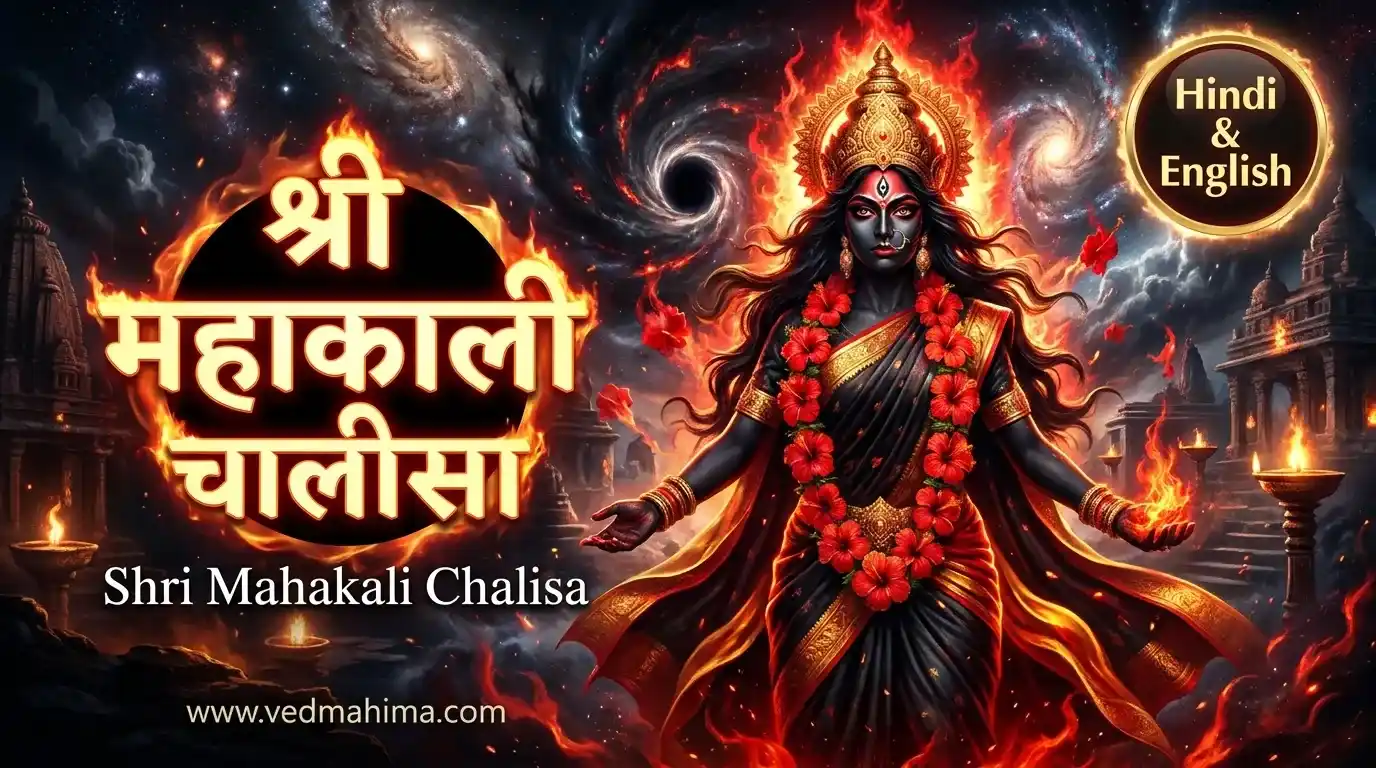
Shri Mahakali Chalisa
Mahakali Chalisa, Raktabeej and Shumbh Nishumbh story, Dash Mahavidya names, Amavasya and Kali Puja paath vidhi, protection from fear
Jai Jai Sitaram Ke,
Madhyavasini Amb.
Dehu Darsh Jagdamb Ab,
Karahu Na Matu Vilamb.
Jai Tara Jai Kalika,
Jai Dash Vidya Vrind.
Kaali Chaalisa Rachat,
Ek Siddhi Kavi Hind.
Praatah Kaal Uth Jo Padhe,
Dupahariya Ya Shaam.
Dukh Daridrata Door Hon,
Siddhi Hoy Sab Kaam.
॥ Chaupai ॥
Jai Kaali Kankaal Maalini,
Jai Mangala Mahakapalini.
Raktabeej Vadhkaarini Mata,
Sada Bhakt Janan Ki Sukhdaita.
Shiro Maalika Bhooshit Ange,
Jai Kaali Jai Mady Matange.
Har Hridayaarvind Suvilasini,
Jai Jagdamba Sakal Dukh Naashini.
Hreem Kaali Shreem Mahakaali,
Kreem Kalyaani Dakshinaakaali.
Jai Kalaavati Jai Vidyaavati,
Jai Tara Sundari Mahaamati.
Dehu Subuddhi Harahu Sab Sankat,
Hohu Bhakt Ke Aage Pargat.
Jai Omkaare Jai Hunkare,
Mahashakti Jai Aparampaare.
Kamala Kaliyug Darp Vinaashini,
Sada Bhaktajan Ki Bhaynaashini.
Ab Jagdamb Na Der Lagaavahu,
Dukh Daridrata Mor Hataavahu.
Jayati Karaal Kalika Mata,
Kaalanal Samaan Dyutigata.
Jayshankari Sureshi Sanaatani,
Koti Siddhi Kavi Matu Puraatani.
Kapardini Kali Kalp Vimochani,
Jai Vikasit Nav Nalin Vilochani.
Aananda Karni Aanand Nidhana,
Dehu Matu Mohi Nirmal Gyaana.
Karunaamrit Saagara Kripaamayi,
Hohu Dusht Jan Par Ab Nirdyayi.
Sakal Jeev Tohi Param Piyaara,
Sakal Vishw Tore Aadhaara.
Pralay Kaal Mein Nartan Karini,
Jag Janani Sab Jag Ki Paalini.
Mahodari Maheshwari Maya,
Himgiri Suta Vishw Ki Chhaya.
Swachhand Rad Maarad Dhuni Maahi,
Garjat Tumhi Aur Kou Naahi.
Sphurati Maniganakaar Prataane,
Taaragan Tu Vyom Vitaane.
Shridhaare Santan Hitkaarini,
Agnipaani Ati Dusht Vidaarini.
Dhoomra Vilochani Praan Vimochini,
Shumbh Nishumbh Mathani Var Lochani.
Sahas Bhuji Saroruh Maalini,
Chaamunde Marghat Ki Vaasini.
Khappar Madhya Sushonit Saaji,
Maarehu Maa Mahishaasur Paaji.
Amb Ambika Chand Chandika,
Sab Eke Tum Aadi Kalika.
Aja Ekroopa Bahuroopa,
Akath Charitra Tav Shakti Anoopa.
Kalkatta Ke Dakshin Dwaare,
Moorati Tori Maheshi Apaare.
Kaadambari Paanrat Shyaama,
Jai Maantagi Kaam Ke Dhaama.
Kamalaasan Vaasini Kamalaayani,
Jai Shyaama Jai Jai Shyaamaayini.
Maatangi Jai Jayati Prakriti He,
Jayati Bhakti Ur Kumati Sumati He.
Koti Brahm Shiv Vishnu Kaamada,
Jayati Ahinsa Dharm Janmada.
Jalthal Nabhamandal Mein Vyaapini,
Saudamini Madhya Alaapini.
Jhananan Tachchhu Maririn Naadini,
Jai Saraswati Veena Vaadini.
Om Aim Hreem Kleem Chaamundaayai,
Kalit Gale Komal Runddaayai.
Jai Brahmaand Siddhi Kavi Mata,
Kaamaakhya Aur Kaali Mata.
Hinglaaj Vindhyaachal Vaasini,
Attahaasini Aru Aghan Naashini.
Kitni Stuti Karun Akhande,
Tu Brahmaande Shaktijit Chande.
Karahu Kripa Sab Pe Jagdamba,
Rahahin Nishank Tor Avalamba.
Chaturbhuji Kaali Tum Shyaama,
Roop Tumhaar Maha Abhiraama.
Khadag Aur Khappar Kar Sohat,
Sur Nar Muni Sabko Man Mohat.
Tumhaari Kripa Paave Jo Koi,
Rog Shok Nahin Taakahu Hoi.
Jo Yah Paath Karai Chaalisa,
Taapar Kripa Karahin Gaurisha.
॥ Doha ॥
Jai Kapaalini Jai Shiva,
Jai Jai Jai Jagdamb.
Sada Bhaktajan Keri Dukh,
Harahu Matu Avilamb.
About Shri Mahakali Chalisa
The first verses paint her form. She is Kankal Malini and Mahakapalini, adorned with a garland of heads, the slayer of Raktabeej, and a giver of happiness to her devotees. She is called Mangala, Karal Kalika, bright like the fire of dissolution (kalanal), and Kapardini, the one who frees from the faults of Kali Yuga. The verses call her the support of all the world, who dances at the time of dissolution and yet feeds and protects all beings. Later she is pictured as four-armed Kali with a sword and a skull-bowl, a form so beautiful that it charms gods, humans and sages.
A special feature is the line "Hreem Kali, Shreem Mahakali, Kreem Kalyani Dakshinakali". These are bija (seed) sounds used in Kali worship, and the hymn weaves them into her praise, along with "Om Aim Hreem Kleem Chamundayai". Their deeper meaning belongs to the tantric and devotional tradition and is not explained in the verses.
The Chalisa recalls her victories. She is the slayer of Raktabeej, the destroyer of Dhumralochan, Shumbh and Nishumbh, and the one who killed the proud Mahishasura with her skull-bowl filled with blood (see the Durga Chalisa). It calls her Amba, Ambika, Chanda and Chandika, and says all of them are one, the original Kalika, unborn and one in essence yet taking many forms.
It also names many forms and holy places: Tara, Kamala, Matangi and Shyama, Chamunda, Saraswati with her veena (see the Saraswati Chalisa), Kamakhya, Hinglaj and Vindhyachal (see the Vindhyeshwari Chalisa), and her image at the southern gate of Kolkata, which devotees link with the Kali temples of that city. Its promise is that the one who receives her grace is not troubled by disease or grief, and that Gauri''s Lord (Shiva) is kind to the one who recites it. These are matters of faith, and the hymn is best read as a source of courage and calm, never to harm anyone, and alongside medical and practical help.
❓ Frequently Asked Questions
Question: How does the Mahakali Chalisa describe the Goddess?
Answer: It calls her Kankal Malini and Mahakapalini, adorned with a garland of heads (shiro malika), the slayer of Raktabeej and a giver of happiness to her devotees. Later verses describe her as four-armed Kali with a sword and a skull-bowl (khappar), whose form is very beautiful and charms gods, humans and sages alike.
Question: Is this the same as the Kali Chalisa?
Answer: No. It is a separate hymn with different verses. The Kali Chalisa tells of her eight arms, her tongue and Kalua Bhairon, while this Mahakali Chalisa is built around her many names, the bija sounds and the Dash Mahavidya.
Question: What do "Hreem Kali, Shreem Mahakali, Kreem Kalyani Dakshinakali" mean?
Answer: These are bija (seed) sounds woven into the praise, naming her as Kali, Mahakali, Kalyani and Dakshinakali. In Kali worship, Kreem is the sound most closely linked with her. Their deeper meaning belongs to the tantric and devotional tradition and is not explained in the verses.
Question: Which demons does the Chalisa say she destroyed?
Answer: It names Raktabeej, Dhumralochan, Shumbh and Nishumbh, and Mahishasura, whom she killed with her skull-bowl filled with blood. The same battles are told in the Durga Chalisa.
Question: Which other forms and holy places are named?
Answer: The hymn names Tara and Kalika among the Dash Mahavidya, Kamala, Matangi, Shyama, Chamunda, Saraswati (see the Saraswati Chalisa), Kamakhya, Hinglaj and Vindhyachal (see the Vindhyeshwari Chalisa). It also mentions her image at the southern gate of Kolkata, which devotees link with the Kali temples there.
Question: When and how should the Mahakali Chalisa be recited?
Answer: The opening doha says to read it in the morning, at noon or in the evening to remove sorrow and poverty. Amavasya, Tuesday and Saturday, night or twilight, and Kali Puja on the night of Kartik Amavasya (Diwali night) are traditional times. Recite with a calm and fearless mind and a pure intention.


