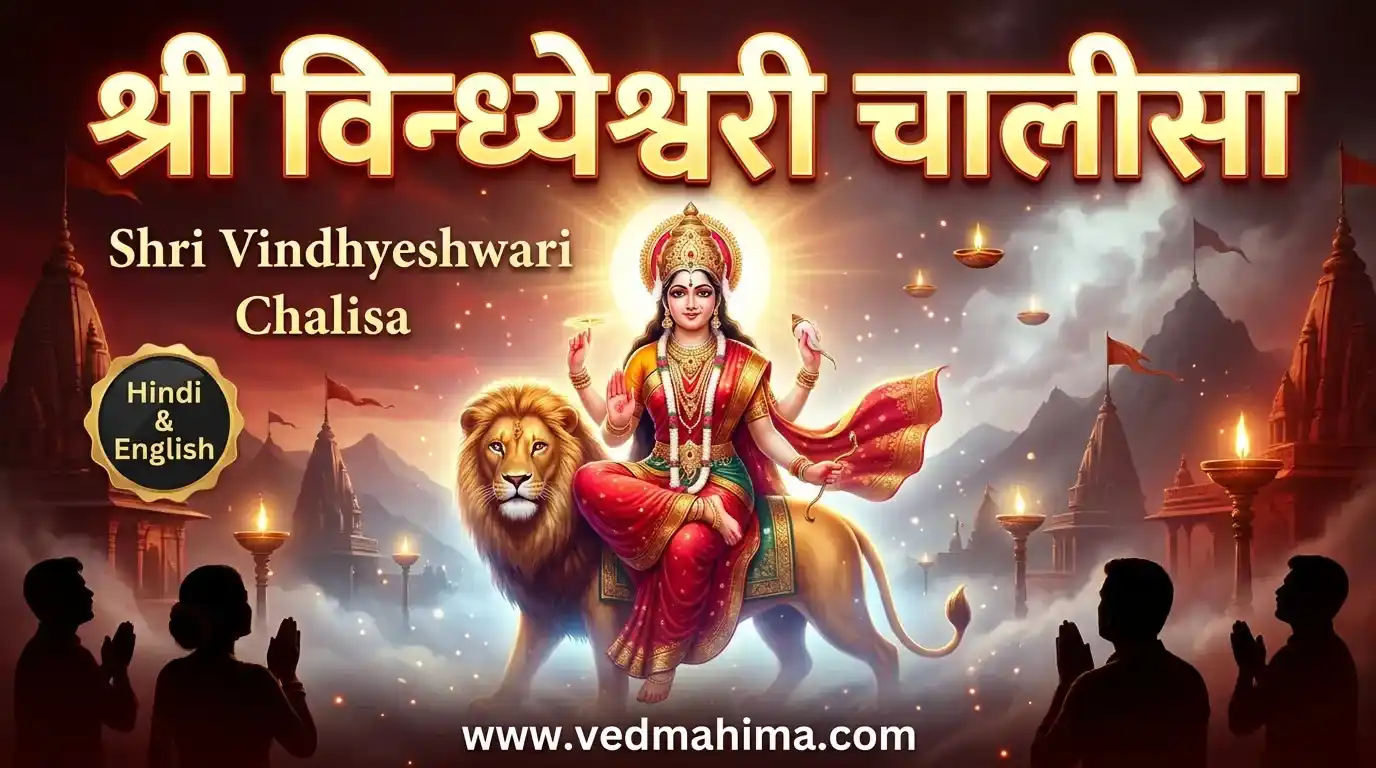
Shri Vindhyeshwari Chalisa
Vindhyachal Dham, Maa Vindhyavasini, Navratri puja, rin mukti and sankat nivaran paath vidhi
Namo Namo Vindhyeshwari,
Namo Namo Jagdamb.
Santjanon Ke Kaaj Mein,
Karti Nahi Vilamb.
॥ Chaupai ॥
Jai Jai Jai Vindhyachal Rani,
Aadishakti Jag Vidit Bhavani.
Sinhvahini Jai Jagmata,
Jai Jai Jai Tribhuvan Sukhdāta.
Kasht Nivarini Jai Jagdevi,
Jai Jai Sant Asura Sur Sevi.
Mahima Amit Apar Tumhari,
Shesh Sahas Mukh Varnat Hari.
Deenan Ke Dukh Harat Bhavani,
Nahi Dekhyon Tum Sam Kou Dani.
Sab Kar Mansa Puravat Mata,
Mahima Amit Jagat Vikhyata.
Jo Jan Dhyan Tumharo Lavai,
So Turatahi Vanchhit Phal Pavai.
Tum Hi Vaishnavi Tum Hi Rudrani,
Tum Hi Sharda Arun Brahmani.
Rama Radhika Shyama Kali,
Tum Hi Matu Santan Pratipali.
Uma Madhvi Chandi Jwala,
Vegi Mohi Par Hohu Dayala.
Tum Hi Hinglaj Maharani,
Tum Hi Sheetla Arun Vijnani.
Durga Durg Vinashini Mata,
Tum Hi Lakshmi Jag Sukh Data.
Tum Hi Jahnavi Arun Rudrani,
He Mavati Amb Nirvani.
Ashtabhuji Varahini Deva,
Karat Vishnu Shiv Jakar Seva.
Chaunsath Devi Kalyani,
Gauri Mangala Sab Gun Khani.
Patan Mumba Dant Kumari,
Bhadrakali Sun Vinay Hamari.
Vajradharini Shok Nashini,
Aayu Rakshini Vindhyavasini.
Jaya Aur Vijaya Vaitali,
Matu Sugandha Arun Vikarali.
Naam Anant Tumhar Bhavani,
Varnai Kimi Manush Agyani.
Jaapar Kripa Matu Tab Hoi,
Jo Vah Karai Chahe Man Joi.
Kripa Karahu Mopar Maharani,
Siddh Kariye Ambe Mam Vani.
Jo Nar Dharai Matu Kar Dhyana,
Takar Sada Hoy Kalyana.
Vipati Tahi Sapnehu Nahi Aavai,
Jo Devi Ka Jaap Karavai.
Jo Nar Kahan Rin Hoy Apara,
So Nar Paath Karai Shat Bara.
Nishchay Rin Mochan Hoi Jai,
Jo Nar Paath Karai Man Lai.
Astuti Jo Nar Padhe Padhavai,
Ya Jag Mein So Bahu Sukh Pavai.
Jako Vyadhi Satave Bhai,
Jaap Karat Sab Door Parai.
Jo Nar Ati Bandi Mahan Hoi,
Baar Hazaar Paath Kari Soi.
Nishchay Bandi Te Chhut Jai,
Satya Vachan Mam Manahu Bhai.
Jaapar Jo Kuchh Sankat Hoi,
Nishchay Devihin Sumirai Soi.
Ja Kahan Putra Hoy Nahi Bhai,
So Nar Ya Vidhi Kare Upai.
Panch Varsh Jo Paath Karavai,
Nauratan Mahan Vipra Jimavai.
Nishchay Hohin Prasann Bhavani,
Putra Dehin Ta Kahan Gun Khani.
Dh्वजा Nariyal Aan Chadhavai,
Vidhi Samet Poojan Karavai.
Nit Prati Paath Karai Man Lai,
Prem Sahit Nahi Aan Upai.
Yah Shri Vindhyachal Chalisa,
Rank Padhat Hove Avnisa.
Yah Jan Acharaj Manahu Bhai,
Kripa Drishti Jaapar Hoi Jai.
Jai Jai Jai Jag Matu Bhavani,
Kripa Karahu Mohi Par Jan Jani.
About Shri Vindhyeshwari Chalisa
The first half praises the Goddess. It calls her Vindhyachal Rani, Adishakti, the lion-rider and the mother of the world, who removes suffering and gives happiness in the three worlds. It says her glory is endless, that even Shesh with a thousand mouths cannot finish describing it, that nobody is as generous, and that whoever meditates on her quickly receives the wished-for fruit.
Its most striking part is the long list of her forms. The verses say she is Vaishnavi and Rudrani, Sharda and Brahmani, Rama, Radhika, Shyama and Kali, Uma, Madhvi, Chandi and Jwala, Hinglaj and Sheetla, Durga who destroys forts, and Lakshmi who gives worldly happiness. They add Jahnavi, Ashtabhuji Varahi whom Vishnu and Shiv serve, the 64 Devis, Gauri and Mangala, Patan Mumba and Dant Kumari, Bhadrakali, Vajradharini, the protector of life Vindhyavasini, Jaya and Vijaya, Vaitali and Vikarali. The message is that one Shakti stands behind all of them (see the Durga Chalisa, Kali Chalisa, Mahalakshmi Chalisa and Sheetla Mata Chalisa).
The second half lists what devotees ask for. A person with heavy debt is told to recite it a hundred times, a prisoner a thousand times, and one who suffers from illness to chant it. The childless are told to have the paath done for five years, to feed Brahmins during Navratri and to offer a flag and coconut with a proper puja. The Chalisa says that even a poor man who reads it becomes like a king. These are promises of faith, and they are best read as hope and discipline, not as a replacement for legal, financial or medical help.
A local tradition, not told in this Chalisa, links Vindhyavasini with Yogamaya, the girl who slipped from Kansa''s hands at Krishna''s birth (see the Krishna Chalisa). Devotees recite the Chalisa during Navratri and on Tuesdays and Fridays for protection, courage and peace of mind.
❓ Frequently Asked Questions
Question: Who is Maa Vindhyeshwari (Vindhyavasini)?
Answer: The Chalisa calls her Vindhyachal Rani, Adishakti, the lion-riding mother of the world who removes suffering. Her main shrine is at Vindhyachal, near Mirzapur in Uttar Pradesh, on the bank of the Ganga. Devotees see her as the Divine Mother who answers the prayers of saints without delay.
Question: Which forms of the Goddess are named in this Chalisa?
Answer: It says she is Vaishnavi, Rudrani, Sharda and Brahmani, Rama, Radhika, Shyama and Kali, Uma, Chandi and Jwala, Hinglaj and Sheetla (see the Sheetla Mata Chalisa), Durga (see the Durga Chalisa), Lakshmi (see the Mahalakshmi Chalisa), Varahi, Bhadrakali (see the Kali Chalisa) and many more, including the 64 Devis.
Question: How many times should the Chalisa be recited for rin mukti (debt relief)?
Answer: The Chalisa says that a person with heavy debt should recite it a hundred times (shat bara) with a focused mind. This is a devotional promise. It is best taken as a source of steadiness alongside honest repayment planning and proper financial advice.
Question: What does the Chalisa say about imprisonment and court troubles?
Answer: One verse says that a person who is imprisoned (bandi) should recite it a thousand times. Devotees extend this to legal worries. It is a statement of faith and not a replacement for a lawyer or due legal process.
Question: What practice does the Chalisa suggest for those without children?
Answer: It suggests having the paath done for five years and feeding Brahmins during the nine nights of Navratri, and offering a flag and coconut with a full puja. It promises the Goddess will be pleased. This is a matter of belief and does not replace medical advice.
Question: When is the best time to recite the Vindhyeshwari Chalisa?
Answer: Navratri (Chaitra and Sharad), especially Ashtami, and Tuesdays and Fridays, with red flowers offered to the Goddess.


