Shri Hinglaj Mata Temple Pakistan
Shri Hinglaj Mata Temple Balochistan Pakistan Complete Yatra Guide
🙏 Devotional
🔥 Powerful
📿 Daily Prayer
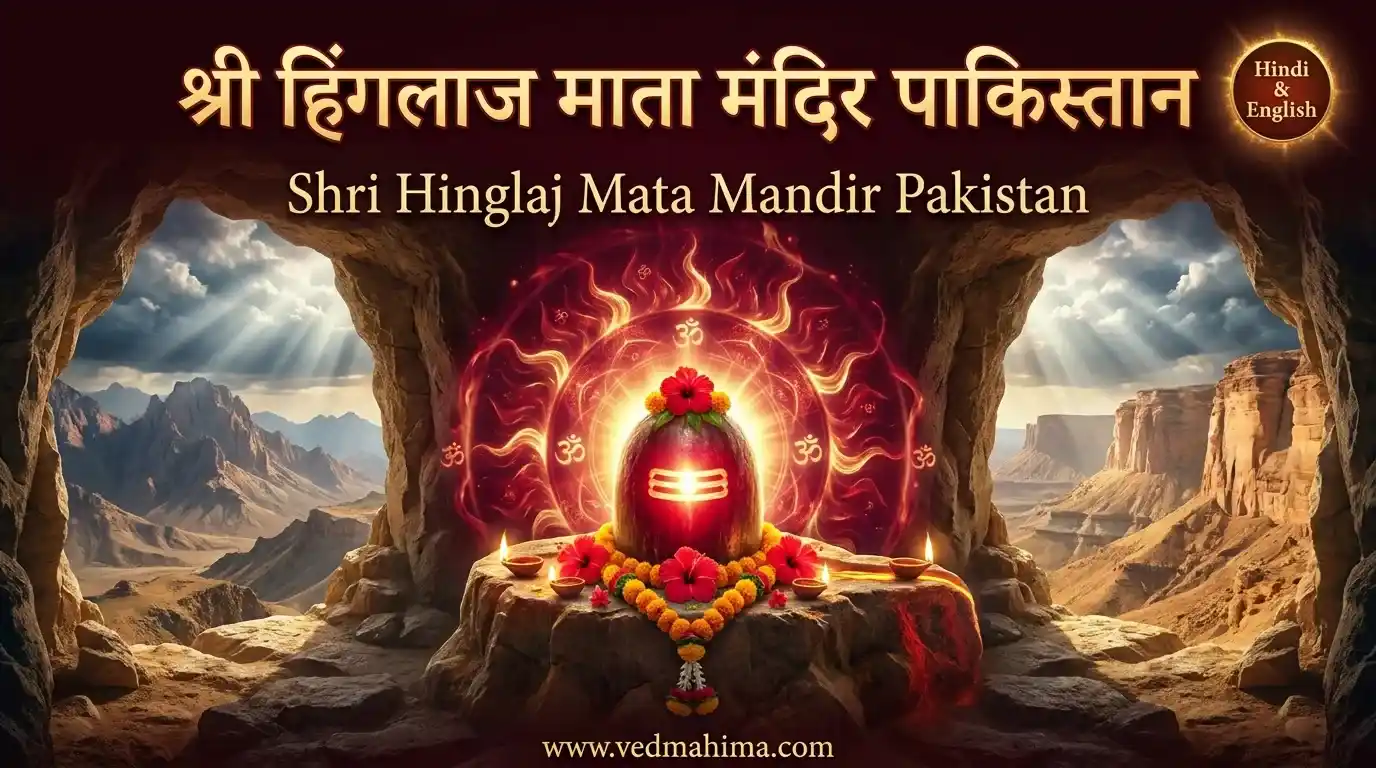
॥ Divine Dwelling & Geo-Spiritual Majesty of Hinglaj Peetha ॥
Nestled deep within a desolate, wind-sculpted limestone canyon inside the Hingol National Park of Balochistan, Pakistan, lies the highly revered shrine of Shri Hinglaj Mata (affectionately called Hinglaj Devi or Nani Mandir). Situated approximately 250 kilometres west of Karachi along the rugged Makran coast, this sacred shrine is celebrated as the absolute crown jewel among the 51 holy Shakti Peethas of Sanatan Dharma. It marks the exact cosmic spot where the Brahmarandhra (the top of the head/brain) of Mata Sati fell after Lord Vishnu dismembered her body with the Sudarshana Chakra. The temple is entirely non-structural, naturally embedded inside a dark, low-roofed mountain cave. Instead of a man-made stone idol, the Divine Mother is worshiped here in her primordial form—a shapeless, low-profile rock smeared with sacred vermilion (Sindoor). Flanked by the turquoise waters of the Hingol River and surrounded by eerie mud volcanoes, Hinglaj Mata stands as an eternal beacon of ancient faith, surviving centuries of geographical and political isolation, and bridging the spiritual consciousness of the entire Indian subcontinent.॥ Puranic Legends: Treta Yuga, Lord Rama, and the Demonic Hingol ॥
The mystical history of Hinglaj Mata is deeply embedded in the ancient Puranas and the epic Ramayana:* The Fall of the Brahmarandhra: When Mata Sati sacrificed her life in the sacrificial fire of Daksha Prajapati, an enraged Lord Shiva performed the cosmic dance of destruction (Tandava) with her body. To restore cosmic equilibrium, Lord Vishnu sliced the body into 51 pieces. The supreme part—the crown of the head—fell into the caves of Balochistan, transforming the entire canyon into an intensely charged epicenter of cosmic energy.
* The Tyranny of Demon Hingol: According to local scriptural legends, the region was once ruled by a powerful, tyrannical demon king named Hingol. His atrocities grew so absolute that the local populations prayed to the Divine Mother for deliverance. Responding to their prayers, the Goddess manifested in the cave and slayed the demon. In his dying moments, Hingol begged the Goddess to name the holy cave after him so his soul could find redemption. The compassionate Mother granted his wish, naming the shrine Hinglaj.
* The Pilgrimage of Lord Rama: In the Treta Yuga, after defeating the demon king Ravana, Lord Rama was burdened with the karmic sin of Brahma-Hatya (since Ravana was born a Brahmin). To purify his soul, Lord Rama, along with Mata Sita and Lakshmana, undertook a grueling barefoot pilgrimage to the distant Hinglaj cave. He established a sacred stone marker inside the valley, cementing the cave as the ultimate space for absolute karmic purification.
* The Dattatreya Connection: The supreme avatar of yoga, Lord Dattatreya, along with the legendary sage Agastya, spent centuries performing intense austerities in the high-altitude mud hills surrounding the cave to absorb the raw, unmanifested energy (Adi Shakti) radiating from the vermilion rock.
॥ Architectural Context & Indigenous Geography ॥
The architectural framework of Hinglaj Mata is completely natural, highlighting the primeval essence of early Vedic worship. The cave entrance is a narrow, horizontal slit in the massive mud-rock cliff, requiring devotees to crawl slightly to enter the inner sanctum. Inside, the space opens into a tiny cavern where a small stream of mountain water naturally trickles down, washing the base of the vermilion-coated holy rock. There are no ornamental columns, metallic gates, or artificial rooftops within the primary shrine, keeping the raw atmospheric power of the desert canyon fully intact. Historical texts indicate that the ancient silk-route travelers and coastal seafarers regularly stopped at this canyon to offer prayers for safe maritime transit across the Arabian Sea.॥ Comprehensive & Extra-Long Yatra Chronicle (Mahotsav) ॥
The annual Hinglaj Mata Yatra is a monumental, multi-day spiritual festival (Mahotsav) that represents the single largest Hindu cultural gathering in Pakistan. It is an extraordinary celebration of resilience, deep-rooted identity, and inter-community brotherhood:* The Four-Day Spring Mahotsav (The Grand Hinglaj Yatra): The core celebration occurs over four highly intensive days in the spring month of Chaitra (typically April). Managed by the Hinglaj Mata Mandir Shahani Shah (the local Hindu governing board), the festival transforms the silent desert of Balochistan into a sea of red, saffron, and yellow flags. Tens of thousands of pilgrims from Sindh, Punjab, and remote tribal regions of Pakistan, alongside global devotees, arrive in massive organized convoys to participate in non-stop chantings of Jai Mata Di and Hinglaj Maiya Ki Jai.
* The Ritual Trial of Chandragup Mud Volcano: The absolute structural and spiritual highlight of the Mahotsav involves an intense preparatory ritual at the Chandragup Mud Volcano, situated along the travel axis. Rising out of the flat desert, this holy mud volcano is worshiped as the seat of Lord Shiva (Baba Chandragup). Pilgrims must climb the steep, slippery slopes of the volcano barefoot under a blazing sun, carrying a coconut and a small packet of saffron. At the bubbling mud crater on the summit, devotees stop, state their full name, ancestry (Gotra), and confess their deepest human errors aloud. They throw the coconut into the bubbling mud; if the volcano ejects a bubble immediately, it is celebrated as the absolute forgiveness of Shiva, certifying the pilgrim pure enough to enter the Hinglaj Cave.
* The Aesthetic of Nani Ma Ka Haj & Sufi Synthesis: A deeply beautiful and globally unique dimension of the Hinglaj Mahotsav is its intensive integration with the local Muslim community, particularly the Zikri Muslims and Baloch Sufi devotees. They revere Hinglaj Mata as Nani Ma (The Great Maternal Ancestor) and classify the pilgrimage as Nani Ma Ka Haj. Sufi saints like Shah Abdul Latif Bhittai historically walked this track, composing beautiful mystical verses praising the divine light of the Hinglaj cave. During the festival, Muslim volunteers manage water security, run transport lines, guard the mountain tracks, and sit side-by-side with Hindu ascetics, creating a stellar global model of inter-faith synthesis.
* The Night of Chhari Mubarak & Final Aarti: On the third night of the Mahotsav, a massive Chhari Mubarak (holy staff) procession winds through the narrow, torch-lit limestone gorge. The entire canyon is illuminated by thousands of traditional clay lamps. The festival reaches its absolute climax during the midnight Maha Aarti, where the vermilion rock is bathed in milk, decorated with fresh desert flowers, and offered large trays of traditional sweetmeat (Prasad), invoking an overwhelming wave of emotional and spiritual ecstasy among the gathered masses.
॥ Comprehensive Travel Guide: How to Reach Hinglaj Mata Cave ॥
Reaching the remote Hinglaj Cave requires traveling through the secured transport corridors of Balochistan via modern highway networks connected to key transit hubs:* By Road (The Makran Coastal Highway Axis): The primary and most efficient road route is via the world-class Makran Coastal Highway (N-10). Pilgrims start their journey in Karachi, the largest transport hub in Pakistan. Traveling west from Karachi, the highway cuts through the breathtaking coastal desert landscapes of Hub and Lasbela before turning inland into the Hingol National Park. The total distance from Karachi to the temple base camp is approximately 250 km and takes about 4 to 5 hours via private tourist coaches or highly coordinated community vehicles. The road is fully paved, providing smooth access right up to the park limits.
* By Air & International Transit (Karachi Hub): For global travelers and international pilgrims, the mandatory entry point is the Jinnah International Airport in Karachi (KHI). It receives direct daily flights from major global hubs in the Middle East, Asia, and Europe. From the airport, travelers can hire secure, pre-booked private tourist cabs or coordinate with the official Hinglaj Yatra Committee to join the guarded seasonal convoys moving towards the Balochistan border post.
* The Traditional Foot Track: Before the construction of the Makran Highway in 2004, the Yatra was an incredibly grueling 15-day barefoot trek from Karachi across shifting desert sands, dangerous salt flats, and unmapped mountain ranges. Today, while the highway handles 99% of the traffic, small batches of traditional ascetics (Sadhus) still walk the ancient desert paths over multiple weeks to keep the original ascetic spirit of the ancient rishis alive.
🙏 ॥ Thus completed ॥ 🙏
The Hindi text has been compiled based on original and authentic sources. If there is any difference,
error, or inconsistency between the Hindi and English versions, the Hindi text shall be considered the
authoritative version. If there are any errors or copyright-related concerns regarding this content,
please contact us.
📜 प्रामाणिक स्रोत:
📖 सार्वजनिक रूप से उपलब्ध स्रोत
📖 आधिकारिक मंदिर रिकॉर्ड
📖 सरकारी पोर्टल
📖 सत्यापित ऑनलाइन संदर्भ
About Shri Hinglaj Mata Temple Pakistan
The early historical lineage of Hinglaj Peetha is intertwined with ancient pre-Islamic geography and the expansive realm of Gandhara and Sindh civilization. The shrine is mentioned with deep reverence in the ancient texts of the Brahmanda Purana and the Shiva Charita. Historically, the area was protected by the Hindu Rai Dynasty of Sindh and the local Buddhist and Hindu rulers of Lasbela who maintained the routes for wandering ascetics (Kanphata Yogis) of the Nath lineage, established by Guru Gorakhnath. The historic ties of this shrine cut deep across the royal lineages of Rajasthan and Gujarat; many Rajput clans worship Hinglaj Mata as their Kuldevi (family deity) and historically funded the upkeep of the desert wells along the track. Post-partition, the operational security and structural preservation of the shrine have been completely managed by the local Pakistani Hindu Panchayat in absolute alignment with the local Muslim tribal chiefs, ensuring that the ancient flame inside the cave has remained lit through every major geopolitical shift of the 20th and 21st centuries.