Shri Khatu Shyam Ji Temple Khatu
Shree Khatu Shyam Ji Temple Sikar Darshan Guide
🙏 Devotional
🔥 Powerful
📿 Daily Prayer
॥ Temple Overview & Divine Glory ॥
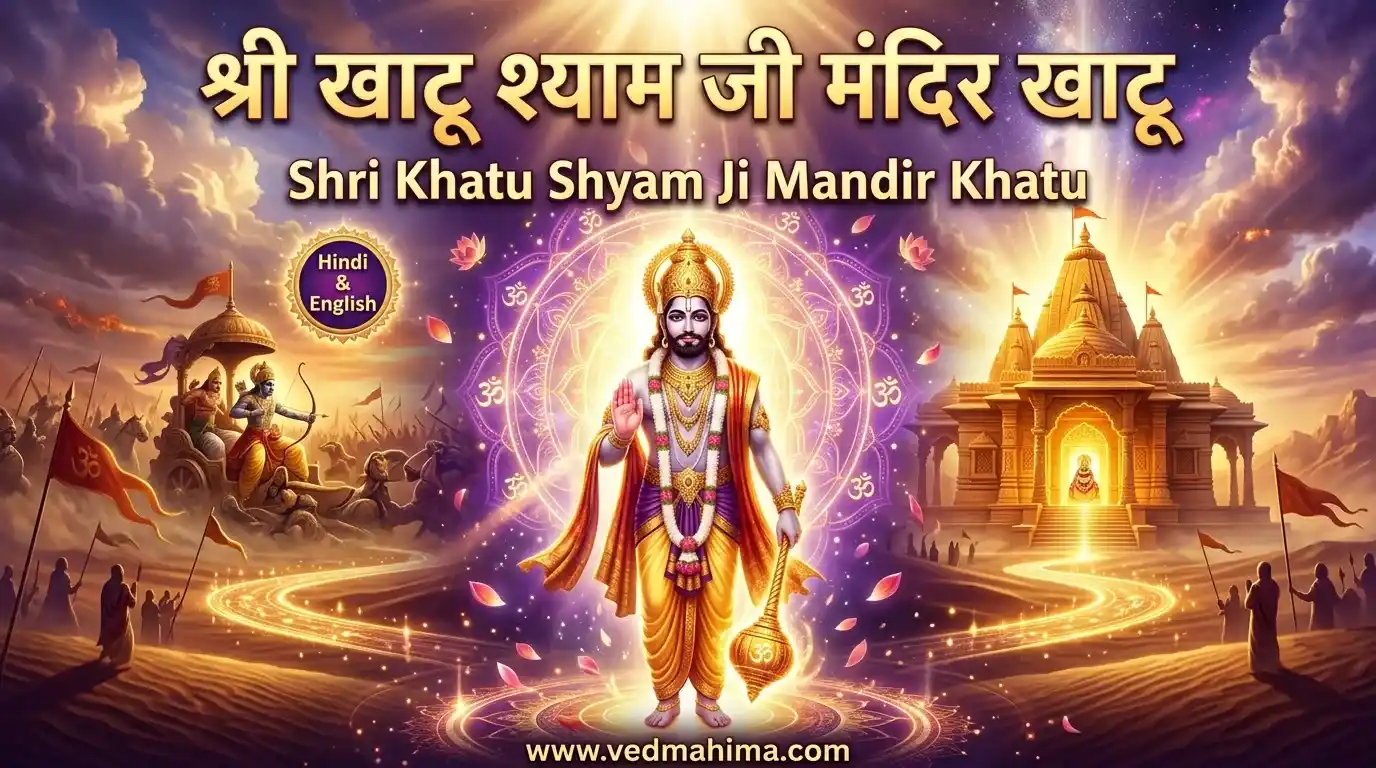
Shri Khatu Shyam Ji Temple, nestled in the sacred town of Khatu in Sikar district, Rajasthan, is one of the most revered, highly frequented, and spiritually charged pilgrimage destinations in modern India. The temple is dedicated to Barbarika, the grandson of Bhima, who is worshipped here as the direct manifestation of Lord Krishna—affectionately called Kalyug ke Avtar (the deity of the dark age) and Hare Ka Sahara (the ultimate savior of the defeated). According to deep scriptural legends from the Mahabharata, Barbarika offered his severed head (Sheesh) to Lord Krishna before the war. Deeply moved by this ultimate sacrifice, Lord Krishna granted him a divine boon that he would be worshipped in the age of Kalyug under Krishna's own name, Shyam. Taking Darshan of this ancient, self-manifested Sheesh (head) inside the pure white marble sanctum is believed to instantly dissolve life's deepest miseries, alleviate chronic suffering, and fulfill the heartfelt desires of absolute surrender.॥ Key Spiritual & Structural Aspects ॥
* The Miracle of Shyam Kund: Located right near the temple, this holy pond is where the self-manifested head of Barbarika was miraculously excavated from the earth. Taking a holy dip in Shyam Kund is believed to heal physical ailments and purify the inner self.* Grand Makrana Marble Architecture: The entire modern temple structure features a stunning design built using pristine white Makrana marble. The ornamental entryways, intricate flower relief carvings, and the silver-plated inner sanctum doors reflect magnificent Rajasthani craftsmanship.
* The Golden Kalash & Flag: The temple peak is adorned with a massive, brilliantly shining golden Kalash. Pilgrims continuously carry colorful devotional flags (Nishan) on foot over long distances to hoist them here as a symbol of absolute victory and gratitude.
* Unbroken Devotional Vibrations: The vast courtyard is famous for its continuous, high-energy congregational chants of Jai Shri Shyam, creating a deeply emotional spiritual ambiance that leaves travelers spellbound.
॥ The Ritualistic Cycle: Divine Daily Aartis & Schedules ॥
The daily ritual cycles are performed with absolute precision by the traditional priests. The temple remains open for continuous viewing lines, but the 5 daily Aartis represent the highest vibrational windows:1. Mangala Aarti (04:30 AM - 05:00 AM Summer / 05:30 AM - 06:00 AM Winter): The holy morning awakening prayer, conducted as the first rays of light touch the temple tower.
2. Shringar Aarti (07:00 AM - 07:45 AM Summer / 08:00 AM - 08:45 AM Winter): The sacred viewing where the Lord's Sheesh is beautifully adorned with highly artistic floral decorations, premium crowns, and heavy jewelry.
3. Bhog Aarti (12:30 PM Summer / 01:00 PM Winter): A massive mid-day food offering consisting of pure traditional Rajasthani sweets like Ladoo, Peda, and Churma, before the short afternoon closure.
4. Sandhya Aarti (06:30 PM - 07:15 PM Summer / 06:00 PM - 06:45 PM Winter): Breathtaking evening twilight lamp ceremonies that attract thousands of emotional devotees waving small lights.
5. Shayan Aarti (09:00 PM Summer / 08:30 PM Winter): The final peaceful night prayer where the Lord is offered sweet milk and prepared for night rest.
॥ Detailed Code of Conduct & Pilgrimage Guidelines ॥
* Strict Dress Code Architecture: To honor the pristine Vedic sanctity and traditional spiritual values of this great Dham, all visiting pilgrims must dress in dignified, modest clothing. Men should ideally wear kurtas, dhotis, or simple formal trousers, while women are requested to wear traditional sarees or decent salwar-suits. Revealing modern Western outfits, ripped or distressed jeans, short skirts, casual shorts, or sleeveless tops are completely banned within the sacred barrier zones.* Absolute Ban on Mobile Cameras & Electronic Devices: Capturing photographs, taking digital selfies, or recording videos anywhere near the main stairs, the zig-zag queue complex, and inside the main inner sanctum (Garbhagriha) is strictly prohibited. Devotees must keep their mobile devices securely turned off or tucked inside their pockets. Violators face immediate confiscation of devices and legal fines from the temple security board.
* Footwear & Queue Line Management: Footwear of any kind must be safely removed at the extensive, dedicated shoe stands situated far outside the entrance gates. Due to massive multi-kilometer queues during weekends, pilgrims must mentally prepare to walk patiently through the covered, well-ventilated zig-zag walkways. Always follow the guidelines of the security marshals to ensure safe crowd movement.
* Nishan Flag Protocols: Devotees carrying the sacred multi-colored flags (Nishan) must hand them over systematically at the designated collection enclosures near the main entrance rather than attempting to take them directly into the narrow inner sanctum.
॥ Major Festivals Celebrated In Full Splendor ॥
* The Grand Phalgun Khatu Lalkar Mela: This is the crowning, world-renowned annual festival of Khatu Shyam Ji, held during the Hindu months of Phalgun (February–March). Millions of colorfully dressed pilgrims complete a grueling 18-kilometer pedestrian journey (Padayatra) on foot from Reengus, singing and carrying sacred Nishan flags. The entire town transforms into a massive spiritual carnival filled with 24/7 community kitchens (Bhandaras) and ecstatic bhajan stages.* Krishna Janmashtami: Celebrated with absolute royal splendor. The entire marble temple is wrapped in thousands of exotic fresh flowers and fairylights. A special midnight bathing ceremony (Abhishek) is conducted, followed by grand mid-night aartis and distribution of sacred sweets.
* Every Shukla Ekadashi & Dwadashi: The 11th and 12th days of every bright lunar fortnight are treated as minor festival days. Hundreds of thousands of devotees arrive from across India, turning the entire weekend into a highly vibrant, packed devotional event.
॥ Comprehensive Routing Guide: How to Reach Khatu Town ॥
* By Air (Detailed Flight Route): The closest operational airport is Jaipur International Airport (JAI), situated roughly 95 kilometers south of the Khatu temple complex. The airport handles high-frequency daily flights from major metros like New Delhi, Mumbai, Kolkata, Chennai, and Bangalore. Upon arrival at Jaipur Airport, pilgrims can comfortably book pre-paid commercial air-conditioned SUVs or private luxury cabs. The smooth road journey takes about 2 hours via the well-maintained Jaipur-Sikar National Highway 52 (NH-52), leading directly to Khatu town's dedicated entry gates.* By Train (Detailed Railway Network): The primary and most convenient railway junction is Reengus Junction (RGS), located just 18 kilometers away from Khatu Shyam Ji. Reengus is seamlessly connected via express and superfast trains running directly from New Delhi, Jaipur, Chandigarh, and Ahmedabad. Outside the Reengus station complex, pilgrims have 24/7 access to a massive network of budget-friendly shared jeeps, direct private auto-rickshaws, and specialized local shuttle buses that drop you at the Khatu temple peripheral parking zones in approximately 25 to 30 minutes.
* By Road (Detailed Highway Navigation): Khatu town features excellent, smooth connectivity via state and national highway networks. If driving personally from New Delhi-NCR, you can follow the National Highway 48 (NH-48) up to Kotputli or Shahpura, and then take the state highways passing through Ajitgarh to reach Reengus and Khatu, covering a distance of about 270 kilometers in 5 to 5.5 hours. Alternatively, travelers can take the NH-52 directly from Jaipur. The Rajasthan State Road Transport Corporation (RSRTC) and numerous private operators run frequent deluxe, express, and luxury sleeper buses daily from Jaipur's Sindhi Camp and New Delhi's ISBT Kashmiri Gate directly to the Khatu Bus Stand.
🙏 ॥ Thus completed ॥ 🙏
The Hindi text has been compiled based on original and authentic sources. If there is any difference,
error, or inconsistency between the Hindi and English versions, the Hindi text shall be considered the
authoritative version. If there are any errors or copyright-related concerns regarding this content,
please contact us.
📜 प्रामाणिक स्रोत:
📖 सार्वजनिक रूप से उपलब्ध स्रोत
📖 आधिकारिक मंदिर रिकॉर्ड
📖 सरकारी पोर्टल
📖 सत्यापित ऑनलाइन संदर्भ
About Shri Khatu Shyam Ji Temple Khatu
The glorious history of Khatu Shyam Ji traces its origin back to the epic Mahabharata era. Barbarika, the son of Ghatotkacha and grandson of Bhima, possessed immense warrior powers through three divine arrows gifted by Lord Shiva, capable of ending any war in seconds. Bound by a vow to always fight for the losing side, his participation in the Kurukshetra war threatened the victory of the righteous Pandavas. To maintain cosmic balance, Lord Krishna disguised himself as a Brahmin and asked Barbarika for his head in charity. Understanding the divine play, the young warrior willingly decapitated himself on the Shukla Dwadashi of Phalgun month. Impressed by his peerless sacrifice, Lord Krishna blessed his head to remain alive to witness the entire war from a hilltop and declared that in the dark age of Kalyug, Barbarika would be worshipped as Shyam. Centuries later, during the early medieval period, his hidden head was miraculously excavated from a spot in Khatu village after a cow began spontaneously shedding milk over the ground. The ruler of Khatu, Raja Roop Singh, built the first formal shrine here in 1027 AD after receiving a divine directive in his dream. Later, in 1720 AD, the nobleman Abhai Singh renovated and expanded the shrine into the majestic stone structure seen today, cementing it as an unyielding fort of protective faith and divine grace.