Shri Sheetla Mata Chalisa
Sheetla Ashtami (Basoda), the story of the Visphotak demon, Sheetla Mata puja vidhi, fever and child health
Jai Jai Mata Sheetla,
Tumhin Dharai Jo Dhyaan.
Hoy Vimal Sheetal Hriday,
Vikasai Buddhi Bal Gyaan.
Ghat-Ghat Vaasi Sheetla,
Sheetal Prabha Tumhaar.
Sheetal Chhaiyan Mein Jhulai,
Maiya Palna Daar.
॥ Chaupai ॥
Jai-Jai-Jai Shri Sheetla Bhavani,
Jai Jag Janani Sakal Gun Khaani.
Grih-Grih Shakti Tumhaari Raajit,
Pooran Sharadchandra Sam Saajit.
Visphotak Se Jalat Shareera,
Sheetal Karat Harat Sab Peera.
Maatu Sheetla Tav Shubh Naama,
Sabke Gaadhe Aavahin Kaama.
Shok Hari Shankari Bhavani,
Baal-Pranrakshi Sukh Daani.
Shuchi Marjani Kalash Kar Raajai,
Mastak Tej Surya Sam Raajai.
Chausath Yogini Sang Mein Gaavain,
Veena Taal Mridang Bajaavain.
Nritya Nath Bhairav Dikhlaavain,
Sahaj Shesh Shiv Paar Na Paavain.
Dhanya Dhanya Dhatri Maharani,
Sur Nar Muni Tav Suyash Bakhaani.
Jwala Roop Maha Balkari,
Daitya Ek Visphotak Bhaari.
Ghar-Ghar Praveshat Koi Na Rakshat,
Rog Roop Dhari Baalak Bhakshat.
Haahaakar Machyo Jag Bhaari,
Sakyo Na Jab Kou Sankat Taari.
Tab Maiyya Dhari Adbhut Roopa,
Kar Mein Liye Marjani Soopa.
Visphotakahi Pakad Kar Leenho,
Moosal Pramaan Bahuvidhi Keenho.
Bahut Prakaar Vah Vinati Keenha,
Maiyya Nahi Bhali Main Kachhu Cheenha.
Ab Nahi Maatu Kaahu Grih Jai Hoon,
Jahaan Apavitra Wahi Ghar Rahi Hoon.
Poojan Paath Maatu Jab Kari Hai,
Bhay Aanand Sakal Dukh Hari Hai.
Bhakt Tan Sheetal Hoi Jaihen,
Visphotak Bhay Ghor Nasaihen.
Shri Sheetlahin Bhaje Kalyaana,
Vachan Satya Bhashe Bhagwaana.
Visphotak Bhay Jihi Grih Bhai,
Bhajai Devi Kahun Yahi Upai.
Kalash Sheetlaka Sajavaavai,
Dwij Se Vidhivat Paath Karavai.
Tumhin Sheetla, Jag Ki Mata,
Tumhin Pita Jag Ki Sukhdata.
Tumhin Jagaddhatri Sukhsevi,
Namo Namami Sheetle Devi.
Namo Sukhkarni Dukhhharni,
Namo-Namo Jag Taarni Dharni.
Namo Namo Trailokya Vandini,
Dukh Daridradik Nikandini.
Shri Sheetla, Shedhla, Mahla,
Runli Hrinani Maatu Mandla.
Ho Tum Digambar Tanu Dhaari,
Shobhit Panchnaam Aswaari.
Rasabha, Khar, Baisakh Sunandan,
Gardabh Durvakand Nikandan.
Sumirat Sang Sheetla Maai,
Jaahi Sakal Dukh Door Paraai.
Galka, Galgandadi Jo Hoi,
Taakar Mantra Na Aushadhi Koi.
Ek Maatu Ji Ka Aaradhan,
Aur Nahi Koi Hai Saadhan.
Nishchay Maatu Sharan Jo Aavai,
Nirbhay Man Ichchhit Phal Paavai.
Kodhi Nirmal Kaaya Dhaarai,
Andha Drig Nij Drishti Nihaarai.
Bandhya Naari Putra Ko Paavai,
Janm Daridra Dhani Hoi Jaavai.
Maatu Sheetla Ke Gun Gaavat,
Lakha Mook Ko Chhand Banaavat.
Yaame Koi Karai Jani Shanka,
Jag Mein Maiya Ka Hi Danka.
Bhagat Kamal Prabhudasa,
Tat Prayag Se Poorab Pasa.
Gram Tiwari Pur Mam Basa,
Kakra Ganga Tat Durvasa.
Ab Vilamb Main Tohi Pukaarat,
Maatri Kripa Ko Baat Nihaarat.
Pade Dwaar Sab Aas Lagaai,
Raksha Karahu Sheetla Maai.
॥ Doha ॥
Yeh Chalisa Sheetla,
Paath Kare Jo Koy.
Sapne Dukh Vyaape Nahi,
Nit Sab Mangal Hoy.
About Shri Sheetla Mata Chalisa
The best-known story in the Chalisa is that of Visphotak. It says a powerful demon with this name, which is linked with blisters and pox, entered house after house in the form of disease and attacked children, and nobody could stop him. A great cry of distress rose across the world. Then Sheetla Mata took an astonishing form, with a broom and a winnowing basket in her hands, caught Visphotak and overpowered him. The demon pleaded with her and promised that he would stay only in homes that are unclean. The story carries a plain message: cleanliness protects a household from this kind of disease.
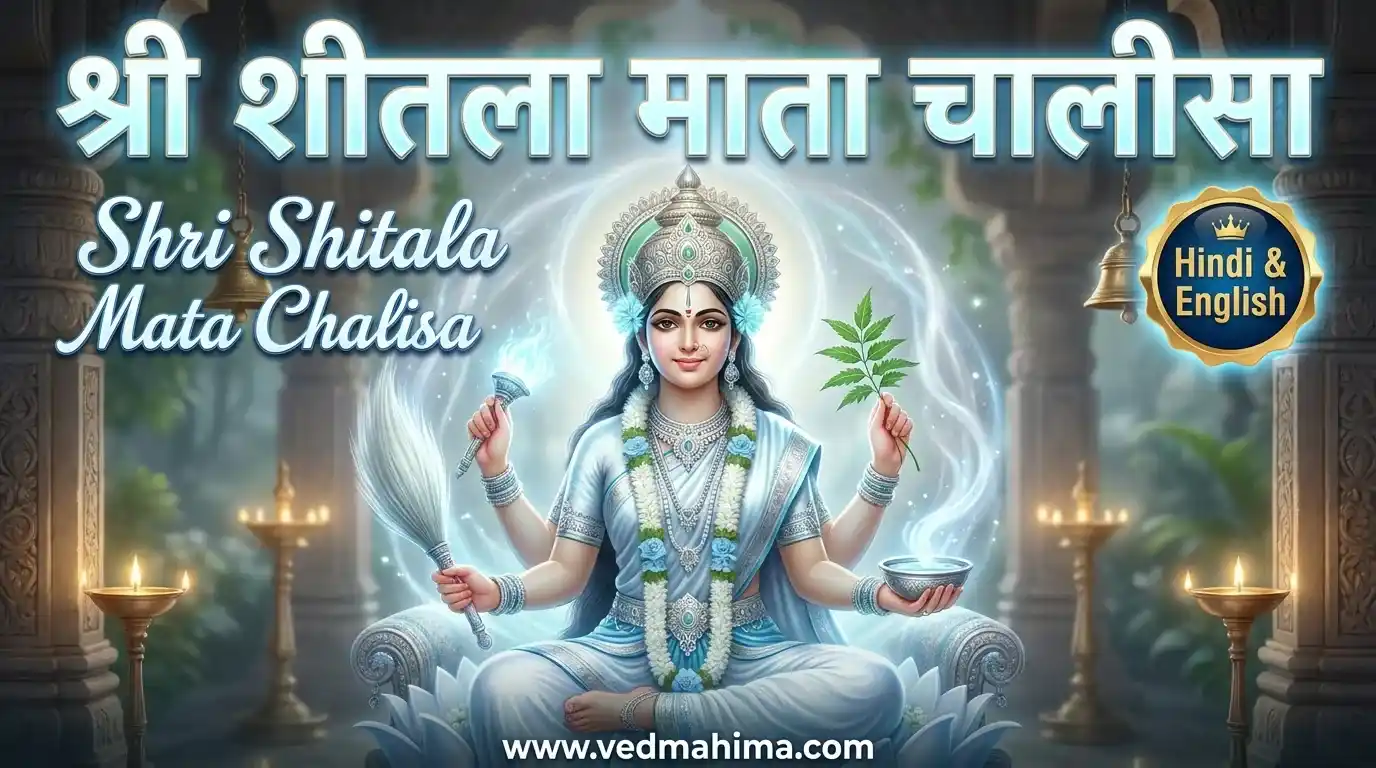
The Chalisa describes her radiance as that of the full autumn moon. She holds a clean broom and a kalash, is described as digambar, and rides a donkey. She is attended by the 64 Yoginis, who play the veena and mridang, while Nath Bhairav dances before her. The hymn gives her the names Sheetla, Shedhla, Mahla, Runli and Hrinani and calls her Jagaddhatri, the mother and nourisher of the world. It also says that where she is remembered, sorrow flees, and that the family struck by the fear of pox should decorate a Sheetla kalash and have the path read properly.
Devotees recite it for the health and long life of children, for relief during fever and skin troubles, and for peace in the home, especially in the hot season around Chaitra. Her main festival is Sheetla Ashtami (Basoda), when food cooked a day earlier is eaten cold as an offering to the cooling goddess. The closing verses sign the hymn with the name of the poet, Kamal Prabhudas, of Tiwaripur, east of Prayag.
It is worth saying plainly that smallpox was declared eradicated in 1980, and that fever, rashes and chickenpox today need medical care and vaccination. The Chalisa is best read as a prayer for protection, cleanliness and calm, alongside doctors and not in place of them.
❓ Frequently Asked Questions
Question: Who is Sheetla Mata and how does the Chalisa describe her?
Answer: Sheetla Mata is worshipped as the goddess of cooling, cleanliness and healing, especially in connection with diseases that bring burning fever and blisters. The Chalisa describes her as radiant like the full moon, carrying a clean broom (marjani) and a kalash, attended by the 64 Yoginis while Nath Bhairav dances before her.
Question: What is the story of the Visphotak demon?
Answer: The Chalisa says a mighty demon named Visphotak, a name linked with blisters and pox, entered house after house in the form of disease and attacked children, and no one could stop him. Sheetla Mata took an astonishing form with her broom and winnowing basket (soop) and overpowered him. He pleaded, and she let him stay only in homes that are unclean.
Question: Why does Sheetla Mata hold a broom and a kalash?
Answer: The Chalisa names the clean broom (shuchi marjani) and the kalash in her hands. Traditionally the broom stands for cleanliness and the removal of impurity, and the water pot for coolness and healing. This reading is traditional symbolism, not stated in the verses.
Question: What other names does the Chalisa give her?
Answer: It calls her Sheetla, Shedhla, Mahla, Runli and Hrinani, and addresses her as Jagaddhatri, the mother of the world. It also describes her as digambar, riding a donkey (rasabh, khar).
Question: What is Sheetla Ashtami (Basoda)?
Answer: In many North Indian traditions it is observed on the Ashtami of Chaitra Krishna Paksha, around eight days after Holi. Food is cooked the day before and eaten cold (basoda) as an offering to the cooling goddess. Customs differ by region, so follow your family or local temple practice.
Question: Can reciting this Chalisa replace medical treatment?
Answer: No. Smallpox was declared eradicated worldwide in 1980, and fever, rashes and chickenpox today need proper medical care and vaccination. The Chalisa is a devotional prayer for protection and peace, to be used alongside medical advice and not instead of it.


