Shri Mahalakshmi (Mahalaxmi) Chalisa
Mahalakshmi puja on Friday and Diwali, dhan prapti, debt relief, prosperity and good fortune
Jai Jai Shri Mahalakshmi,
Karun Maat Tav Dhyaan.
Siddh Kaaj Mam Kijiye,
Nij Shishu Sevak Jaan.
॥ Chaupai ॥
Namo Maha Lakshmi Jai Mata,
Tero Naam Jagat Vikhyata.
Aadi Shakti Ho Maat Bhavani,
Poojat Sab Nar Muni Gyaani.
Jagat Paalini Sab Sukh Karni,
Nij Janhit Bhandaaran Bharni.
Shwet Kamal Dal Par Tav Aasan,
Maat Sushobhit Hai Padmasan.
Shwetambar Aru Shweta Bhooshan,
Shwet Hi Shwet Susajjit Pushpan.
Sheesh Chhatra Ati Roop Vishaala,
Gal Sohe Muktan Ki Maala.
Sundar Sohe Kunchit Kesha,
Vimal Nayan Aru Anupam Bhesha.
Kamnal Sam Bhuj Tav Chaari,
Sur Nar Muni Janhit Sukhkaari.
Adbhut Chhata Maat Tav Bhaari,
Teen Lok Chahun Disha Vistari.
Shaanti Swabhav Mridul Tav Vaani,
Sakal Vishva Kinho Sukhkhaani.
Mahalakshmi Dhanya Ho Maai,
Panch Tatva Mein Srishti Rachaai.
Jeev Charachar Tum Upjaaye,
Pashu Pakshi Nar Naari Banaaye.
Kshitital Aganit Vriksh Jamaaye,
Amit Rang Phal Phool Suhaaye.
Chhavi Vilok Surmuni Narnari,
Kare Sada Tav Jai-Jai Kaari.
Surpati Au Narpati Sab Dhyaavein,
Tere Sammukh Sheesh Navaavein.
Charahu Vedan Tab Yash Gaaya,
Mahima Agam Paar Nahin Paaya.
Jaapar Karahu Maatu Tum Daaya,
Soi Jag Mein Dhanya Kahaaya.
Pal Mein Raajahi Rank Banaao,
Rank Raav Kar Vilamb Na Laao.
Jin Ghar Karahu Maat Tum Baasa,
Unka Yash Ho Vishva Prakaasha.
Jo Dhyaave Se Bahu Sukh Paave,
Vimukh Rahe Ho Dukh Uthaave.
Mahalakshmi Jan Sukh Daai,
Dhyaau Tumko Sheesh Navaai.
Nij Jan Jaani Mohin Apnaao,
Sukh Sampatti De Dukh Nasaao.
Om Shri-Shri Jaisukh Ki Khaani,
Riddhi Siddhi Deu Maat Janjaani.
Om Hreem-Om Hreem Sab Vyaadhi Hataao,
Jan Un Vimal Drishti Darshaao.
Om Kleem-Om Kleem Shatrun Kshay Keejai,
Janhit Maat Abhay Var Deejai.
Om Jai Jayati Jai Janani,
Sakal Kaaj Bhaktan Ke Sarani.
Om Namo-Namo Bhavnidhi Taarni,
Tarni Bhanwar Se Paar Utaarni.
Sunahu Maat Yah Vinay Hamaari,
Purvahu Aash Na Karahu Abaari.
Rini Dukhi Jo Tumko Dhyaave,
So Praani Sukh Sampatti Paave.
Rog Grasit Jo Dhyaave Koi,
Taaki Nirmal Kaaya Hoi.
Vishnu Priya Jai-Jai Maharani,
Mahima Amit Na Jaay Bakhaani.
Putraheen Jo Dhyaan Lagaave,
Paaye Sut Atihi Hulasave.
Traahi Traahi Sharanagat Teri,
Karahu Maat Ab Nek Na Deri.
Aavahu Maat Vilamb Na Keejai,
Hriday Nivaas Bhakt Var Deejai.
Jaanu Jap Tap Ka Nahin Bheva,
Paar Karo Bhavnidhi Bin Kheva.
Binavon Baar-Baar Kar Jori,
Pooran Aasha Karahu Ab Mori.
Jaani Daas Mam Sankat Taaro,
Sakal Vyaadhi Se Mohin Ubaaro.
Jo Tav Surati Rahai Lav Laai,
So Jag Paavai Suyash Badaai.
Chhaayo Yash Tera Sansara,
Paavat Shesh Shambhu Nahin Paara.
Govind Nishdin Sharan Tihaari,
Karahu Pooran Abhilasha Hamaari.
॥ Doha ॥
Mahalakshmi Chalisa,
Padhai Sunai Chit Laay.
Taahi Padarth Milai,
Ab Kahai Ved As Gaay.
About Shri Mahalakshmi (Mahalaxmi) Chalisa
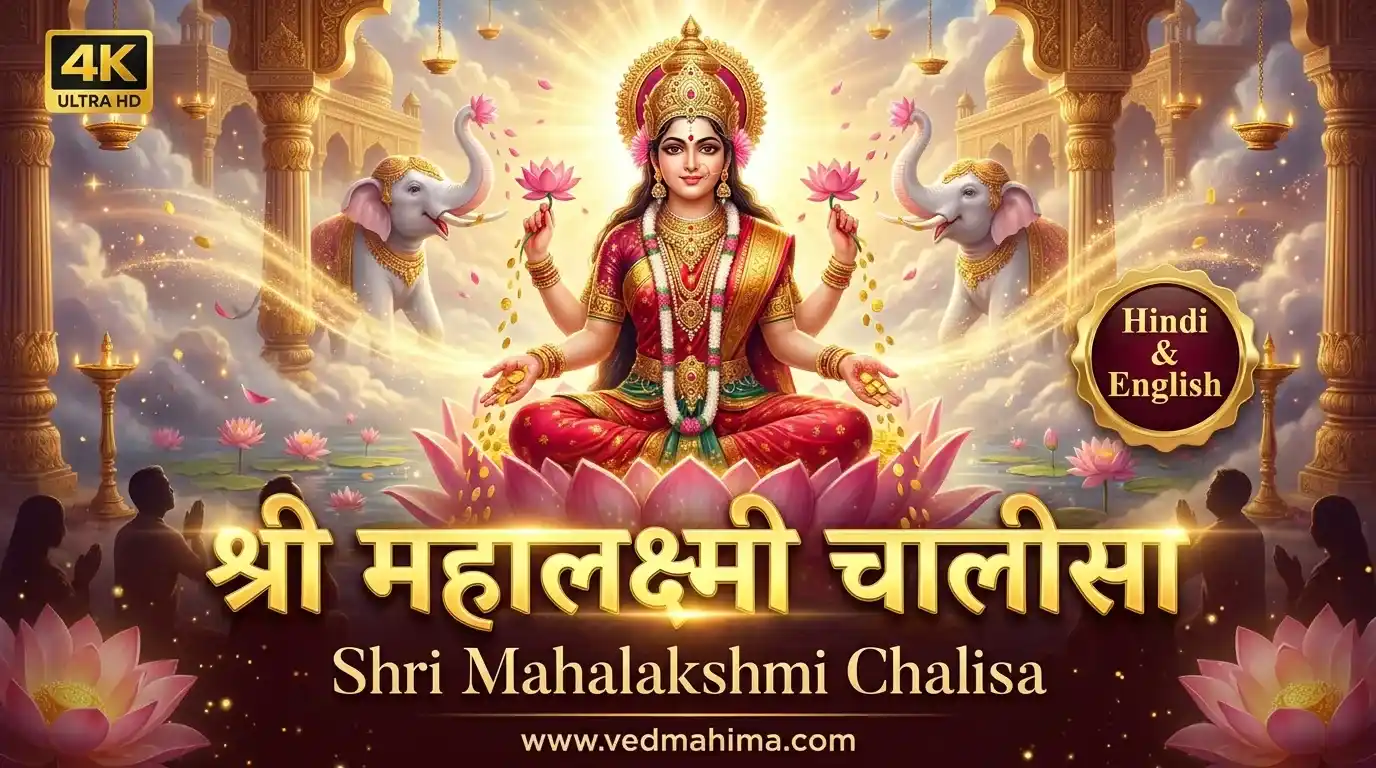
The hymn first paints her picture. She sits on a white lotus and is dressed in white with white ornaments and flowers, a royal umbrella over her head, a garland of pearls around her neck, curly hair and clear eyes, with four arms like lotus stalks. This white form is the Chalisa''s own description, and many popular images of Lakshmi show her instead on a red or pink lotus with gold coins, both of which are part of the wider tradition. Her nature is described as peaceful and her speech as gentle.
The next verses celebrate her power of creation: through the five elements she made the universe, the living and non-living, animals, birds, men and women, and countless trees with fruits and flowers of every colour. Kings and gods bow before her, and even the four Vedas cannot fully measure her glory. The Chalisa says that on whomever she shows mercy becomes blessed in the world, that she can turn a king into a pauper and a pauper into a king in a moment, and that the home where she lives gains fame across the world.
The central part is a prayer with three seed sounds. "Om Shri" is asked for happiness, riddhi and siddhi, "Om Hreem" for the removal of illness, and "Om Kleem" for the end of enemies and a boon of fearlessness. The hymn addresses her as Vishnu Priya, and according to the Puranas she appeared during the churning of the ocean and chose Vishnu as her Lord. It says that the indebted and distressed who meditate on her find happiness and prosperity, that the sick find health, and that the childless find joy in a son. The poet, who signs as Govind, asks her to come without delay and to cross him over the ocean of worldly life.
Devotees recite it on Fridays and at Diwali for dhan prapti, rin mukti and peace in the household. These are matters of faith, and they are best taken as a source of hope and discipline alongside honest work, careful spending and sound financial and medical advice. The Chalisa itself concludes that one who reads or hears it with full attention receives the good things of life.
❓ Frequently Asked Questions
Question: How does the Mahalakshmi Chalisa describe the Goddess?
Answer: It describes her seated on a white lotus, dressed in white and adorned with white ornaments and flowers, with a royal umbrella over her head, a garland of pearls, curly hair, clear eyes and four arms like lotus stalks. It also calls her gentle in nature and soft in speech.
Question: What do the Om Shri, Om Hreem and Om Kleem lines in the Chalisa mean?
Answer: They are seed sounds (bija mantras) woven into the prayer. The Chalisa asks "Om Shri" for happiness, riddhi and siddhi, "Om Hreem" for removal of illness, and "Om Kleem" for the end of enemies and a boon of fearlessness. Traditionally Shri is the sound most closely linked with Lakshmi.
Question: Why is Mahalakshmi called Vishnu Priya?
Answer: The Chalisa addresses her as Vishnu Priya, the beloved of Vishnu. According to the Puranas she is Vishnu''s consort and appeared during the churning of the ocean (Samudra Manthan), choosing Vishnu as her Lord.
Question: Can reciting the Mahalakshmi Chalisa help with debt and money problems?
Answer: The Chalisa says that the indebted and distressed who meditate on the Goddess find happiness and prosperity, and devotees recite it for rin mukti and dhan prapti. It is best taken as a source of hope and discipline alongside honest work, careful spending and sound financial advice.
Question: On which days is the Mahalakshmi Chalisa best recited?
Answer: Friday evenings are the most common choice, and the festival of Diwali, when Lakshmi Puja is performed on the evening of Kartik Amavasya, is considered especially auspicious. Dhanteras, Sharad Purnima and Akshaya Tritiya are also popular occasions.
Question: What is the correct way to recite the Chalisa?
Answer: Keep the home clean, bathe, and light a pure ghee lamp in the evening before an image of Lakshmi, offering lotus or other flowers. Recite with a calm and focused mind. The closing doha says that one who reads or hears it with full attention is blessed with the good things of life.