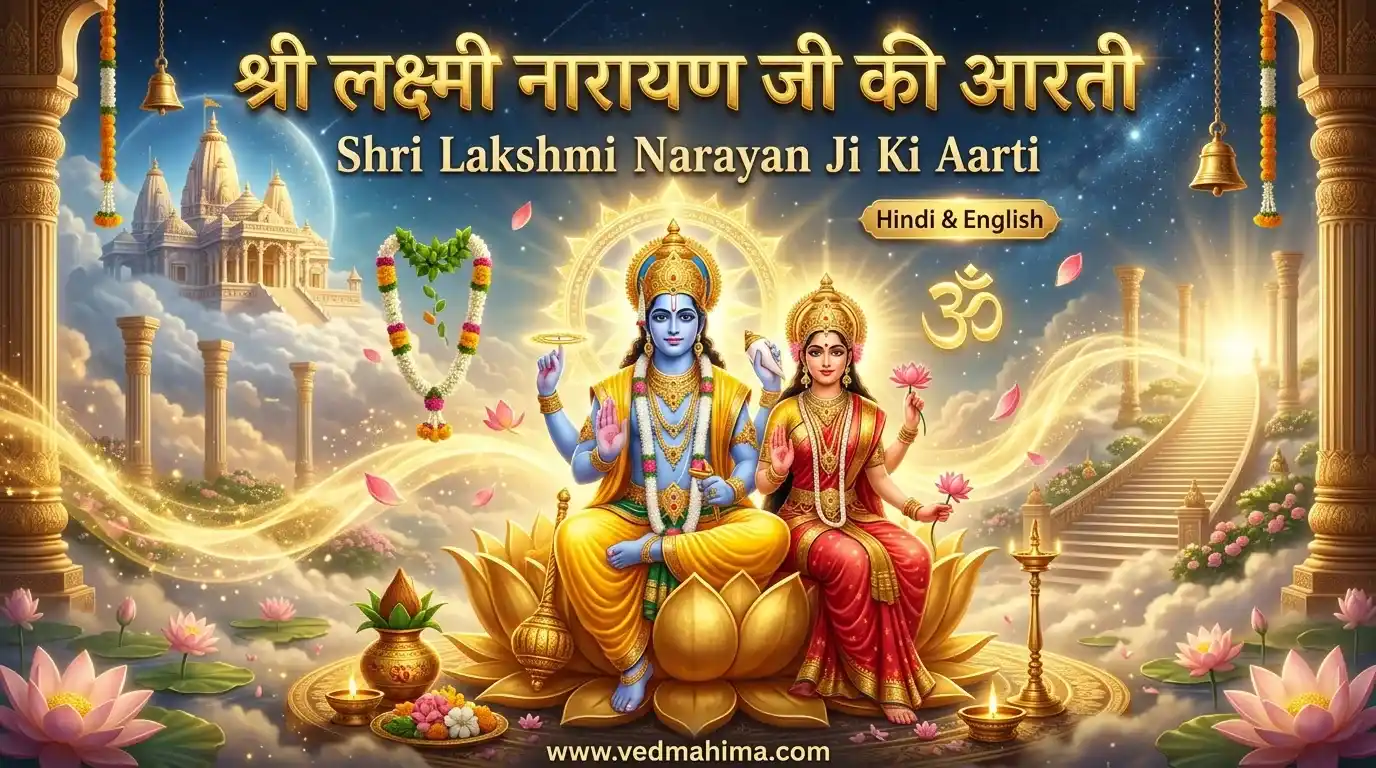
Shri Lakshmi Narayan Ji Ki Aarti
Prosperity, Wealth, Protection, Dharma, Peace, Grace, Devotion
🙏 Devotional
🔥 Powerful
📿 Daily Prayer
॥ Aarti ॥
Jai Lakshmi-Vishnu,
Jai Lakshminarayan,
Jai Lakshmi-Vishnu,
Jai Madhav, Jai Shripati,
Jai, Jai, Jai Vishnu.
Jai Lakshmi-Vishnu.
Jai Champa Sam-Varne,
Jai Neeradkanti,
Jai Mand Smita-Shobhe,
Jai Adbhut Shanti.
Jai Lakshmi-Vishnu.
Kamal Varabhay-Haste,
Shankhadik Dharin,
Jai Kamalalay Vasini,
Garudasana Charin.
Jai Lakshmi-Vishnu.
Sachchinmay Karcharane,
Sachchinmay Murte,
Divyanand-Vilasini,
Jai Sukhamay Murte.
Jai Lakshmi-Vishnu.
Tum Tribhuvan Ki Mata,
Tum Sabke Trata,
Tum Lok-Tray-Janani,
Tum Sabke Dhata.
Jai Lakshmi-Vishnu.
Tum Dhan Jan Sukh Santati,
Jai Dene Wali,
Paramanand Vidhata,
Tum Ho Vanmali.
Jai Lakshmi-Vishnu.
Tum Ho Sumati Gharon Mein,
Tum Sabke Swami,
Chetan Aur Achetan,
Ke Antaryami.
Jai Lakshmi-Vishnu.
Sharanagat Hoon,
Mujh Par Kripa Karo Mata,
Jai Lakshmi-Narayan,
Nav-Mangal Data.
Jai Lakshmi-Vishnu.
Jai Lakshmi-Vishnu,
Jai Lakshminarayan,
Jai Lakshmi-Vishnu,
Jai Madhav, Jai Shripati,
Jai, Jai, Jai Vishnu.
Jai Lakshmi-Vishnu.
Jai Champa Sam-Varne,
Jai Neeradkanti,
Jai Mand Smita-Shobhe,
Jai Adbhut Shanti.
Jai Lakshmi-Vishnu.
Kamal Varabhay-Haste,
Shankhadik Dharin,
Jai Kamalalay Vasini,
Garudasana Charin.
Jai Lakshmi-Vishnu.
Sachchinmay Karcharane,
Sachchinmay Murte,
Divyanand-Vilasini,
Jai Sukhamay Murte.
Jai Lakshmi-Vishnu.
Tum Tribhuvan Ki Mata,
Tum Sabke Trata,
Tum Lok-Tray-Janani,
Tum Sabke Dhata.
Jai Lakshmi-Vishnu.
Tum Dhan Jan Sukh Santati,
Jai Dene Wali,
Paramanand Vidhata,
Tum Ho Vanmali.
Jai Lakshmi-Vishnu.
Tum Ho Sumati Gharon Mein,
Tum Sabke Swami,
Chetan Aur Achetan,
Ke Antaryami.
Jai Lakshmi-Vishnu.
Sharanagat Hoon,
Mujh Par Kripa Karo Mata,
Jai Lakshmi-Narayan,
Nav-Mangal Data.
Jai Lakshmi-Vishnu.
🙏 ॥ Thus completed ॥ 🙏
The Hindi text has been compiled based on original and authentic sources. If there is any difference,
error, or inconsistency between the Hindi and English versions, the Hindi text shall be considered the
authoritative version. If there are any errors or copyright-related concerns regarding this content,
please contact us.
📜 प्रामाणिक स्रोत:
📖 पारंपरिक लोकप्रचलित पाठ
About Shri Lakshmi Narayan Ji Ki Aarti
Shri Lakshmi Narayan Ji Ki Aarti is a beautiful and philosophically profound devotional hymn dedicated to the divine union of Goddess Lakshmi and Lord Vishnu. Unlike single-deity prayers, this aarti worships the supreme cosmic energy as a unified whole—combining the material and spiritual abundance of Maa Lakshmi with the protective and sustaining grace of Lord Narayan (Vishnu). The verses artistically contrast the golden, champa-like complexion of Lakshmi with the dark, cloud-like (Neeradakante) form of Vishnu.
The underlying philosophy of this hymn touches upon the concepts of pure consciousness (Sacchinmaya) and supreme bliss (Divyanand). It recognizes the divine couple as the parents and protectors of the three worlds (Tribhuvan ki Mata, Sabke Trata). A vital prayer within the hymn is the plea for "Sumati" (righteous wisdom) within households, highlighting that material wealth is only beneficial when accompanied by a pure intellect. Singing this aarti brings profound domestic harmony, balances financial energies, removes the darkness of ignorance, and invites absolute peace into the seeker's life.
The underlying philosophy of this hymn touches upon the concepts of pure consciousness (Sacchinmaya) and supreme bliss (Divyanand). It recognizes the divine couple as the parents and protectors of the three worlds (Tribhuvan ki Mata, Sabke Trata). A vital prayer within the hymn is the plea for "Sumati" (righteous wisdom) within households, highlighting that material wealth is only beneficial when accompanied by a pure intellect. Singing this aarti brings profound domestic harmony, balances financial energies, removes the darkness of ignorance, and invites absolute peace into the seeker's life.