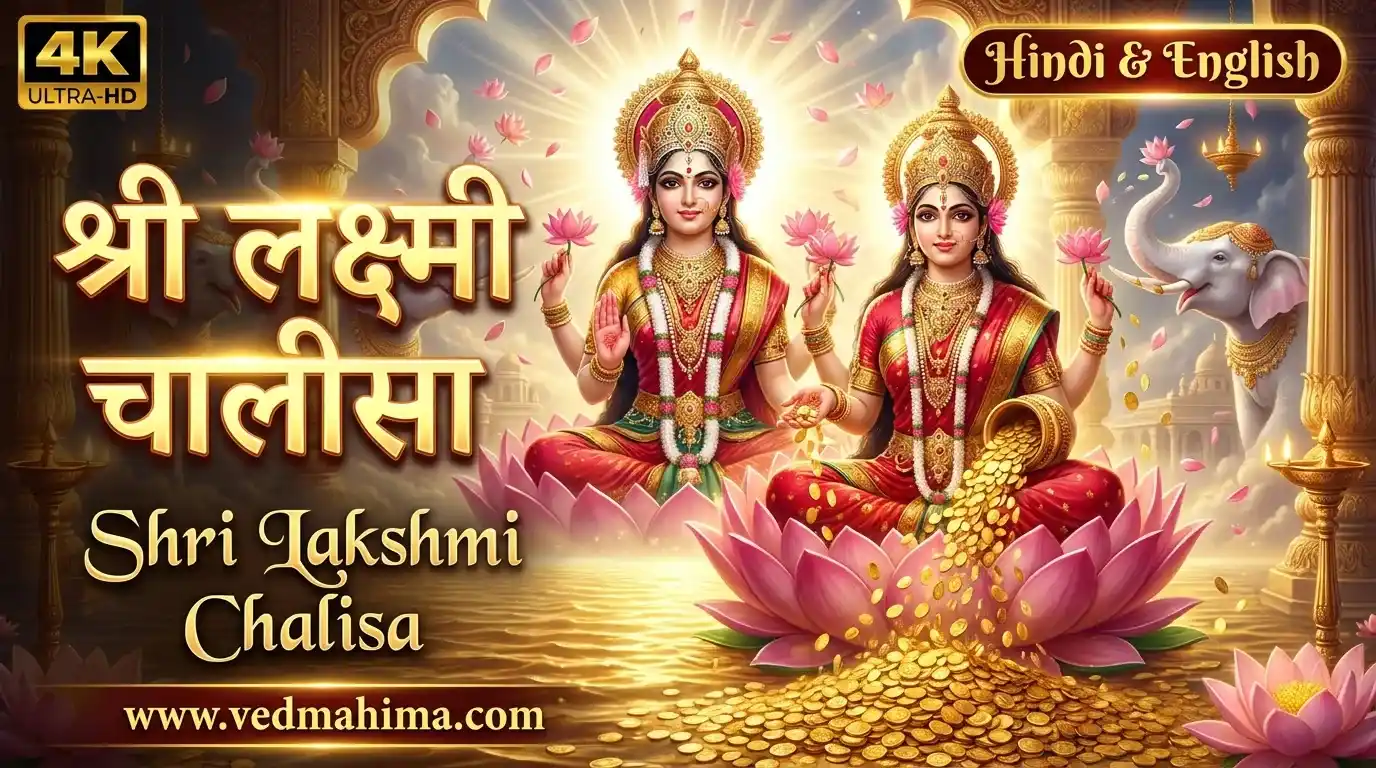
Shri Lakshmi (Laxmi) Chalisa
Sindhu Suta Lakshmi, Samudra Manthan and 14 ratna, Sita avatar, Friday and Diwali Lakshmi puja, dhan prapti and sukh-samriddhi
Matu Lakshmi Kari Kripa,
Karo Hriday Mein Vaas.
Manokamna Siddh Kari,
Purvahu Meri Aas.
॥ Soratha ॥
Yahi Mor Ardaas,
Haath Jod Vinti Karun.
Sab Vidhi Karau Suvaas,
Jai Janani Jagdambika.
॥ Chaupai ॥
Sindhu Suta Main Sumirau Tohi,
Gyaan Buddhi Vidya Do Mohi.
Tum Samaan Nahin Koi Upkari,
Sab Vidhi Purvahu Aas Hamari.
Jai Jai Jai Janani Jagdamba,
Sabki Tum Hi Ho Avalamba.
Tum Hi Ho Ghat Ghat Ki Vaasi,
Vinti Yahi Hamari Khaasi.
Jag Janani Jai Sindhu Kumari,
Deenan Ki Tum Ho Hitkari.
Vinavau Nit Tumhin Maharani,
Kripa Karau Jag Janani Bhavani.
Kehi Vidhi Stuti Karau Tihari,
Sudhi Lijai Apradh Bisari.
Kripa Drishti Chitavo Mam Ori,
Jag Janani Vinti Sun Mori.
Gyaan Buddhi Sab Sukh Ki Data,
Sankat Haro Hamari Mata.
Ksheer Sindhu Jab Vishnu Mathayo,
Chaudah Ratna Sindhu Mein Payo.
Chaudah Ratna Mein Tum Sukhrasi,
Seva Kiyo Prabhuhin Ban Daasi.
Jab Jab Janm Prabhu Jahan Linha,
Roop Badal Tahan Seva Kinha.
Swayam Vishnu Jab Nar Tanu Dhara,
Linha Avadhpuri Avatara.
Tab Tum Pragat Janakpur Mahi,
Seva Kiyo Hriday Pulkaahi.
Apnayo Tohi Antaryami,
Vishva Vidit Tribhuvan Ki Swami.
Tum Sam Prabal Shakti Nahi Aani,
Kahan Tak Mahima Kahun Bakhani.
Man Kram Vachan Karai Sevakai,
Man Ichchhit Vanchhit Phal Pai.
Taji Chhal Kapat Aur Chaturai,
Poojahin Vividh Bhanti Manlai.
Aur Haal Main Kahau Bujhai,
Jo Yah Paath Karai Man Lai.
Tako Koi Kasht Na Hoi,
Man Ichchhit Paavai Phal Soi.
Trahi Trahi Jai Dukh Nivarini,
Trividha Taap Bhav Bandhan Harini.
Jo Chalisa Padhai Aur Padhavai,
Dhyan Lagakar Sunai Sunavai.
Tako Koi Na Rog Satavai,
Putra Aadi Dhan Sampatti Pavai.
Putraheen Aru Sampatti Heena,
Andh Badhir Kodhi Ati Deena.
Vipra Bolay Kai Paath Karavai,
Shanka Dil Mein Kabhi Na Lavai.
Paath Karavai Din Chalisa,
Ta Par Kripa Karain Gaurisa.
Sukh Sampatti Bahut Si Pavai,
Kami Nahin Kahu Ki Aavai.
Barah Maas Karai Jo Pooja,
Tehi Sam Dhanya Aur Nahin Dooja.
Pratidin Paath Karai Man Mahi,
Un Sam Koi Jag Mein Kahun Nahi.
Bahu Vidhi Kya Main Karun Badai,
Ley Pariksha Dhyan Lagai.
Kari Vishwas Karai Vrat Nema,
Hoy Siddh Upjai Ur Prema.
Jai Jai Jai Lakshmi Bhavani,
Sab Mein Vyapit Ho Gun Khani.
Tumhro Tej Prabal Jag Mahi,
Tum Sam Kou Dayalu Kahun Nahi.
Mohi Anath Ki Sudhi Ab Lijai,
Sankat Kaati Bhakti Mohi Dijai.
Bhool Chook Kari Kshama Hamari,
Darshan Dijai Dasha Nihari.
Bin Darshan Vyakul Adhikari,
Tumhi Akshat Dukh Sahte Bhari.
Nahi Mohi Gyaan Buddhi Hai Tan Mein,
Sab Jaanat Ho Apne Man Mein.
Roop Chaturbhuj Karke Dharan,
Kasht Mor Ab Karahu Nivaran.
Kehi Prakar Main Karun Badai,
Gyaan Buddhi Mohi Nahi Adhikai.
Ramdas Ab Kahai Pukari,
Karo Door Tum Vipati Hamari.
॥ Doha ॥
Trahi Trahi Dukh Harini,
Haro Vegi Sab Traas.
Jayati Jayati Jai Lakshmi,
Karo Shatrun Ko Naash.
Ramdas Dhari Dhyan Nit,
Vinay Karat Kar Jor.
Matu Lakshmi Daas Par,
Karahu Daya Ki Kor.
About Shri Lakshmi (Laxmi) Chalisa
The hymn opens with a plain request. The devotee remembers Lakshmi as Sindhu Suta, the daughter of the ocean, and asks for knowledge, intelligence and learning. He calls her the support of all, the one who lives in every heart, the friend of the poor, and says that nobody does as much good as she does. The verses ask her to forgive faults, look with kindness and remove trouble.
The central story is that of her origin and her service. The Chalisa says that when Vishnu churned the ocean of milk, fourteen jewels (chaudah ratna) were found, and among them she is the treasure of happiness, who then served the Lord as his companion. It adds that whenever the Lord took birth anywhere, she changed her form and served him there. When Vishnu took a human body and came as the Avadhpuri avatar, she appeared at Janakpur and served him with a joyful heart, which devotees read as Sita (see the Ram Chalisa and the Vishnu Chalisa). It calls her known to the world and the mistress of the three worlds.
The next verses describe what faithful worship brings. It says that whoever serves her with mind, deed and word, giving up deceit and cunning, receives the wished-for fruit, and that one who reads this paath with attention suffers no trouble. It calls her the remover of the three kinds of suffering and the one who frees from the bonds of worldly life. The Chalisa goes on to say that one who reads, teaches, or listens with focus is not troubled by illness and gains sons, wealth and property, and that even the childless, the poor, the blind, the deaf and those afflicted by leprosy are blessed. It advises calling a Brahmin to perform the paath for forty days without doubt, and worshipping for twelve months, with the promise that no one will lack anything. These are promises of faith, so they are best read as hope and discipline alongside honest work and medical care.
The closing verses are a humble prayer. The poet says he has no knowledge or intelligence, asks her to forgive mistakes and give darshan, to take the four-armed form and remove his suffering, and ends with Ramdas calling out for her to end his troubles. The closing dohas ask her to destroy fear and enemies and to show kindness to her servant. Devotees recite it on Fridays and at Diwali for dhan prapti, peace at home and steady prosperity.
❓ Frequently Asked Questions
Question: Why does the Chalisa call Lakshmi "Sindhu Suta" (daughter of the ocean)?
Answer: The Chalisa says that when Vishnu churned the ocean of milk (Ksheer Sagar), fourteen jewels (chaudah ratna) came out, and Lakshmi was the one among them who is a treasure of happiness. This is why she is called Sindhu Suta and Sindhu Kumari. The full Samudra Manthan story is in the Puranas (see the Vishnu Chalisa).
Question: How is Lakshmi connected with Lord Ram and Sita, according to this Chalisa?
Answer: It says that whenever the Lord took birth, Lakshmi changed her form and served him. When Vishnu took a human body and came as the Avadhpuri avatar, she appeared at Janakpur and served with a joyful heart. Devotees read this as the form of Sita (see the Ram Chalisa).
Question: What is the difference between the Lakshmi Chalisa and the Mahalakshmi Chalisa?
Answer: They are two separate hymns with different verses. This Lakshmi Chalisa, signed by the poet Ramdas, is centred on the ocean story, her service to the Lord in every avatar and a simple prayer, while the Mahalakshmi Chalisa describes her white-lotus form and the Om Shri, Hreem and Kleem seed sounds.
Question: What does the Chalisa promise to those who recite it regularly?
Answer: It says that one who reads, teaches or listens with attention is not troubled by disease and gains sons, wealth and property, and that the childless, the poor, the blind, deaf and leprosy-afflicted who recite it are blessed. These are devotional promises, and they are best taken alongside honest effort and medical care.
Question: What practice does the Chalisa suggest for lasting results?
Answer: It suggests calling a Brahmin to do the paath for forty days, doing the puja for twelve months, and keeping the vow with trust and without doubt. It also advises giving up deceit and cunning and worshipping with a sincere mind.
Question: When is the best time to recite the Lakshmi Chalisa?
Answer: Friday evening at twilight (godhuli bela) and Diwali, when Lakshmi Puja is performed on the night of Kartik Amavasya, are the most popular. Dhanteras, Sharad Purnima and Akshaya Tritiya are other well-loved occasions.


