Mata Mansa Devi Temple Panchkula
Mata Mansa Devi Shrine Panchkula Complete Yatra Guide, History and Navratri Mela
🙏 Devotional
🔥 Powerful
📿 Daily Prayer
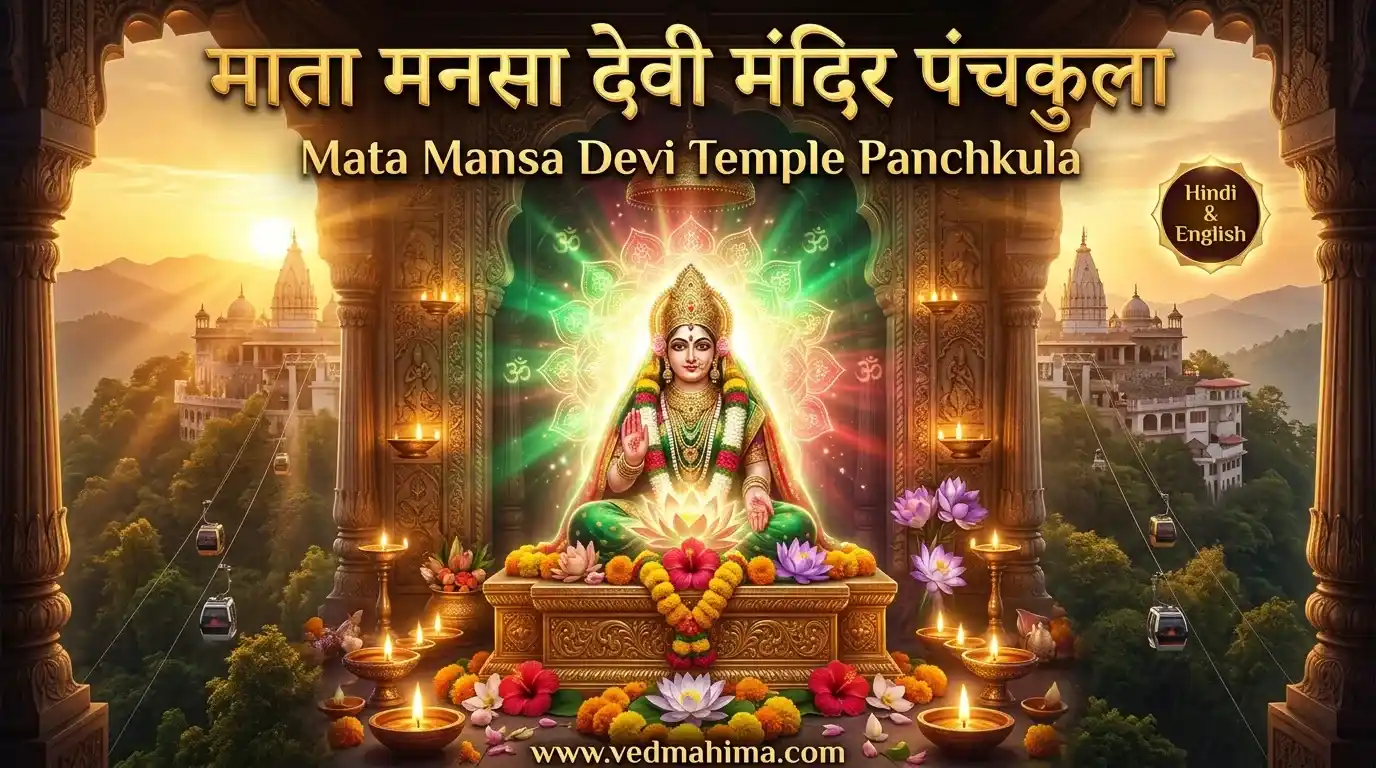
॥ Geo-Spiritual Majesty & Shivalik Foothill Presence of Maa Mansa ॥
Sprawled majestically across the serene foothills of the Shivalik ecological range in Panchkula district (bordering the capital city of Chandigarh), lies the highly prominent and highly vibrant spiritual seat of Shri Mata Mansa Devi Temple. Revered across Northern India as a premier hub of Shakta traditions and a vital component of the wider Himalayan Devi shrines, this holy sanctuary acts as a supreme wish-fulfilling matrix. Millions of devotees converge here annually to offer prayers to Goddess Mansa, whose name literally signifies the Goddess born out of the Mind (Mansa) of Sage Kashyap. The inner sanctum (Garbhagriha) does not feature a conventional marble statue; instead, it houses three highly sacred, ancient Pindis (natural stone representations) that embody the cosmic triad of Hindu divinity: Mata Mansa, Mata Lakshmi, and Mata Saraswati. Guarded closely by her protective energies, this temple grid radiates an intense aura of domestic peace, protection, and psychological healing, making it a foundational milestone of religious life in the region.॥ Puranic Legends: The Snake Goddess, Vasuki's Sister, and Maharaja Gopal Singh's Vow ॥
The deep scriptural and historical chronicle of the Panchkula Mansa Devi shrine is highly dynamic, tracing back to classical Puranas and 19th-century royal treaties:* The Emergence from Sage Kashyap's Mind: In the Puranic lore, Goddess Mansa is described as the mind-born daughter of Sage Kashyap. She is also recognized as the sister of Nagaraja Vasuki (the cosmic serpent wrapped around Lord Shiva's neck) and the consort of Sage Jaratkaru. She is uniquely worshiped for protection against snakebites and for the absolute fulfillment of one's inner mental wishes.
* The Royal Patronage of Mani Majra: The primary main temple structure was built between 1811 and 1815 AD by Maharaja Gopal Singh, the ruler of the princely state of Mani Majra. Legend says that the King vowed to construct a grand palace for the Goddess after his military and political sovereignty was restored through her divine intervention. Later, in 1840 AD, a secondary temple called the Patiala Temple was constructed within the same complex by Maharaja Karam Singh of Patiala to celebrate royal alliances.
* The Sacred Wish-Tying Tree: Within the courtyard stands an ancient banyan tree where pilgrims from all walks of life tie sacred red threads (Mauli) while making a mental wish. Once the wish is fulfilled, it is a strict spiritual tradition to return to the temple to untie a thread as a mark of absolute gratitude.
॥ Architectural Framework & Indo-Islamic Panchayatana Masonry ॥
Architecturally, the main Mansa Devi Temple presents a spectacular and highly unique blending of traditional Hindu temple configurations with medieval Indo-Islamic architectural features. Built on a raised stone platform following the structural essence of the Panchayatana style, the temple features four magnificent minaret-style corner spires and a massive central dome. The interior walls and ceilings of the grand mandapa are adorned with beautiful, historic frescoes and mural paintings belonging to the Kangra and Rajput schools of art, depicting various scenes from the Durga Saptashati, Ramayana, and Sri Krishna's pastimes. The sacred inner sanctum is lined with highly polished white Makrana marble and houses a silver-plated canopy under which the sacred Pindis are placed, brilliantly illuminated by traditional ghee lamps.॥ Comprehensive & Extra-Long Yatra Chronicle (Mahotsav) ॥
The annual festivals at Shri Mata Mansa Devi Shrine are celebrated on a massive, state-sponsored scale, transforming the entire tri-city region (Panchkula-Chandigarh-Mohali) into a vast zone of absolute religious celebration:* The Monumental Ashvin and Chaitra Navratri Melas: The absolute climax of spiritual celebration occurs twice a year during the Chaitra Navratri (March/April) and Sharad Navratri (September/October). During these 9-day periods, the entire shrine complex is heavily decorated with millions of imported exotic flowers and advanced LED light displays. Over 1 to 1.5 million pilgrims arrive from Haryana, Punjab, Himachal Pradesh, Delhi, and Rajasthan. The Government of Haryana organizes a massive state fair (Mela), deploying hundreds of special buses and cultural stages.
* The Chandi Path Conclave and Midnight Yajnas: Throughout the nine days of Navratri, the temple complex echoes with the continuous, high-pitched chanting of the Durga Saptashati (Chandi Path) performed by a conclave of Vedic scholars. On the midnight of Maha-Ashtami, a massive, complex fire ritual (Havan) is conducted in the main courtyard, attended by top state dignitaries and administrative chiefs to pray for regional prosperity.
* The Daily High-Energy Shringar and Bhog Aartis: The daily ritualistic cycles at the temple are strictly timed. The morning and evening Shringar Aartis pull thousands of visitors into a deep state of devotion. The sounding of massive silver trumpets, traditional drums, and large brass bells creates an intense sonic frequency that resonates across the Shivalik valley.
॥ Comprehensive Travel Guide: Detailed Connectivity to Panchkula Peeth ॥
Reaching the holy town of Panchkula is exceptionally comfortable and modern due to its immediate proximity to Chandigarh, which serves as a major national transport intersection:* By Road (National Highway 5 Access Grid): The temple is located in Panchkula, roughly 10 km from the center of Chandigarh city and 250 km north of New Delhi. It is directly accessible via highly developed multi-lane national highways like NH-5. The Haryana Roadways and Chandigarh Transport Undertaking (CTU) run special direct local luxury buses from the Sector-17 and Sector-43 Inter-State Bus Terminals (ISBT) of Chandigarh straight to the Mansa Devi temple complex steps every 15 minutes.
* By Rail Network (Chandigarh Junction Railway Station - CDG): The absolute closest major railway transit hub is the Chandigarh Railway Station (CDG), located just 5 to 6 km away from the temple gates. Chandigarh station is thoroughly connected via premium high-speed trains like Vande Bharat Express, Shatabdi Express, and regular mail trains to New Delhi, Amritsar, Kalka, and Mumbai. Pre-paid auto-rickshaws, app-based cabs (Uber/Ola), and local shuttles are available 24/7 at the station exits.
* By Air Transit (Shaheed Bhagat Singh International Airport - IXC): The primary domestic and international gateway is the Chandigarh International Airport (IXC), located approximately 18 km away from the shrine site. It operates frequent direct daily flights connecting to major cities like Delhi, Mumbai, Bengaluru, Ahmedabad, and Dubai. From the airport terminal, luxury tourist taxis can be instantly hired to reach the temple via the smooth Purv Marg bypass in about 35 minutes.
🙏 ॥ Thus completed ॥ 🙏
The Hindi text has been compiled based on original and authentic sources. If there is any difference,
error, or inconsistency between the Hindi and English versions, the Hindi text shall be considered the
authoritative version. If there are any errors or copyright-related concerns regarding this content,
please contact us.
📜 प्रामाणिक स्रोत:
📖 सार्वजनिक रूप से उपलब्ध स्रोत
📖 आधिकारिक मंदिर रिकॉर्ड
📖 सरकारी पोर्टल
📖 सत्यापित ऑनलाइन संदर्भ
About Mata Mansa Devi Temple Panchkula
The administration and maintenance of Shri Mata Mansa Devi Temple underwent a major evolutionary shift to protect its massive historical assets from commercial exploitation. In 1991, the Government of Haryana enacted a special legislative act, establishing the Shri Mata Mansa Devi Shrine Board (SMMDSB), which is permanently chaired by the Honorable Chief Minister of Haryana. The board meticulously manages the entire multi-acre complex, running massive free community kitchens (Bhojanshala), clean dharamshalas, a highly equipped old-age home, Sanskrit colleges, and extensive free medical dispensaries. This structural governance ensures that all internal royal and Puranic Vedic rituals are executed with absolute precision and transparency.