Atha Argala Stotram
Argala Stotram lyrics, "Rupam dehi jayam dehi yasho dehi dvisho jahi" meaning, Jayanti Mangala Kali verse, 25 verses, Kavach-Argala-Keelak order
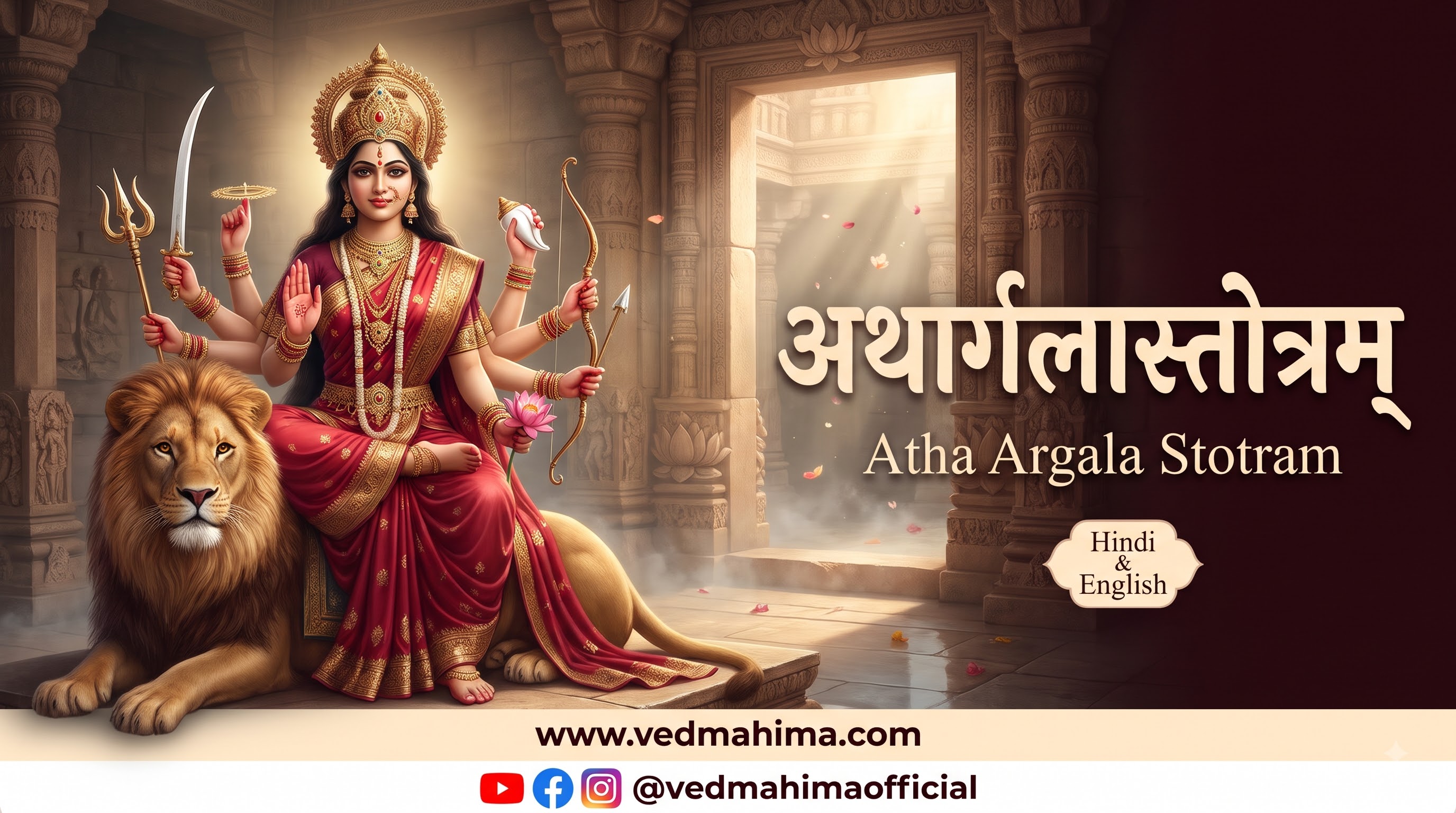
Om Asya Shri Argala Stotramantrasya Vishnur Rishih, Anushtup Chhandah Shri Mahalakshmir Devata, Shri Jagadamba Preetaye Saptashati Paathangatvena Jape Viniyogah।
Om Namashchandikaayai ॥
Markandeya Uvaacha
Om Jayanti Mangala Kaali
Bhadrakaali Kapaalini।
Durga Kshama Shiva Dhatri
Swaaha Swadha Namo'stu Te ॥1॥
Jaya Tvam Devi Chaamunde
Jaya Bhootaarthihaarini।
Jaya Sarvagate Devi
Kaalaraatri Namo'stu Te ॥2॥
Madhukaitabha Vidraavi
Vidhatrivarade Namah।
Roopam Dehi Jayam Dehi
Yasho Dehi Dvisho Jahi ॥3॥
Mahishasura Nirnaashi
Bhaktaanaam Sukhade Namah।
Roopam Dehi Jayam Dehi
Yasho Dehi Dvisho Jahi ॥4॥
Raktabeejavadhe Devi
Chandamunda Vinaashini।
Roopam Dehi Jayam Dehi
Yasho Dehi Dvisho Jahi ॥5॥
Shumbhasyaiva Nishumbhasya
Dhoomraakshasya Cha Mardini।
Roopam Dehi Jayam Dehi
Yasho Dehi Dvisho Jahi ॥6॥
Vanditaanghriyuge Devi
Sarvasaubhaagyadaayini।
Roopam Dehi Jayam Dehi
Yasho Dehi Dvisho Jahi ॥7॥
Achintyaroopacharite
Sarvashatru Vinaashini।
Roopam Dehi Jayam Dehi
Yasho Dehi Dvisho Jahi ॥8॥
Natebhyah Sarvada Bhaktyaa
Chandike Duritaapahe।
Roopam Dehi Jayam Dehi
Yasho Dehi Dvisho Jahi ॥9॥
Stuvadbhyo Bhaktipoorvam Tvaam
Chandike Vyaadhinaashini।
Roopam Dehi Jayam Dehi
Yasho Dehi Dvisho Jahi ॥10॥
Chandike Satatam Ye
Tvaam Archayantiha Bhaktitah।
Roopam Dehi Jayam Dehi
Yasho Dehi Dvisho Jahi ॥11॥
Dehi Saubhaagyam Aarogyam
Dehi Me Paramam Sukham।
Roopam Dehi Jayam Dehi
Yasho Dehi Dvisho Jahi ॥12॥
Vidhehi Dvishataam Naasham
Vidhehi Balam Uchchakaih।
Roopam Dehi Jayam Dehi
Yasho Dehi Dvisho Jahi ॥13॥
Vidhehi Devi Kalyaanam
Vidhehi Paramaam Shriyam।
Roopam Dehi Jayam Dehi
Yasho Dehi Dvisho Jahi ॥14॥
Suraasura Shiroratna
Nighrishta Charane Ambike।
Roopam Dehi Jayam Dehi
Yasho Dehi Dvisho Jahi ॥15॥
Vidyaavantam Yashasvantam
Lakshmeevantam Janam Kuru।
Roopam Dehi Jayam Dehi
Yasho Dehi Dvisho Jahi ॥16॥
Prachanda Daitya Darpaghne
Chandike Pranataaya Me।
Roopam Dehi Jayam Dehi
Yasho Dehi Dvisho Jahi ॥17॥
Chaturbhuje Chaturvaktra
Samstute Parameshwari।
Roopam Dehi Jayam Dehi
Yasho Dehi Dvisho Jahi ॥18॥
Krishnena Samstute Devi
Shashvad Bhaktyaa Sada Ambike।
Roopam Dehi Jayam Dehi
Yasho Dehi Dvisho Jahi ॥19॥
Himaalachala Sutanaatha
Samstute Parameshwari।
Roopam Dehi Jayam Dehi
Yasho Dehi Dvisho Jahi ॥20॥
Indraaneepati Sadbhaava
Poojite Parameshwari।
Roopam Dehi Jayam Dehi
Yasho Dehi Dvisho Jahi ॥21॥
Devi Prachanda Dordanda
Daitya Darpavinaashini।
Roopam Dehi Jayam Dehi
Yasho Dehi Dvisho Jahi ॥22॥
Devi Bhaktajanoddaama
Dattaanandodaye Ambike।
Roopam Dehi Jayam Dehi
Yasho Dehi Dvisho Jahi ॥23॥
Patneem Manoramaam Dehi
Manovrittaanusaarineem।
Taarineem Durgasamsaara
Saagarasya Kulodbhavaam ॥24॥
Idam Stotram Pathitvaa Tu
Mahaastotram Pathen Narah।
Sa Tu Saptashatee Sankhyaa
Varam Aapnoti Sampadaam॥ Om ॥25॥
About Atha Argala Stotram
Verses 1 and 2: the names of the Goddess. Verse 1 begins with a string of names: Jayanti (the victorious), Mangala, Kali, Bhadrakali, Kapalini, Durga, Kshama (patience), Shiva, Dhatri (who bears), Svaha and Svadha (the words of offering to gods and ancestors): salutations to you. Verse 2 hails Chamunda, the remover of the pain of beings, the all-pervading, and Kalaratri.
Verses 3 to 6: the demons she ended. Verse 3 greets her as the one who scattered Madhu and Kaitabha and who gave boons to Brahma (Vidhatri). Verse 4: destroyer of Mahishasura, giver of happiness to devotees (see the Mahishasura Mardini Stotram). Verse 5: who killed Raktabija and destroyed Chanda and Munda. Verse 6: who crushed Shumbha, Nishumbha and Dhumraksha. These are the stories of the Saptashati in short. The refrain closes each of these verses.
Verses 7 to 9: feet and fortune. Verse 7: whose feet are worshipped, giver of all good fortune (saubhagya). Verse 8: whose deeds are beyond thought, destroyer of all enemies. Verse 9: to those who bow always with devotion, O Chandika who removes sin.
Verses 10 to 12: healing and worship. Verse 10: to those who praise you with devotion, O Chandika who destroys disease. Verse 11: to those who always worship you here with devotion. Verse 12 is a plain request: give good fortune, give health, give me the highest happiness. The mention of disease and health is a prayer, and medical care is still needed for illness.
Verses 13 and 14: end of enmity, strength, welfare. Verse 13: put an end to haters, give strength in a high measure. Verse 14: bring welfare, bring the highest prosperity (shri). In a devotional reading the haters are also the enemies within.
Verses 15 to 17: the crowned feet. Verse 15: whose feet are rubbed by the crown-jewels of gods and demons who bow, O Ambika. Verse 16: make a person learned (vidyavan), famous (yashasvan) and prosperous (lakshmivan). This is the most quoted request: learning, fame and prosperity together. Verse 17: destroyer of the pride of fierce daityas, Chandika, to me who bow.
Verses 18 to 21: those who praise her. Verse 18: praised by the four-faced (Brahma), four-armed, supreme goddess. Verse 19: praised always with devotion by Krishna. Verse 20: praised by the lord of Himalaya's daughter (Shiva). Verse 21: worshipped with true feeling by the husband of Indrani (Indra). The verses show all the great gods bowing to her.
Verses 22 and 23: arms and joy. Verse 22: whose strong arms destroy the pride of daityas. Verse 23: who gives rise to joy for her devotees, with the cry of "udbhava."
Verse 24: the prayer for a partner. "Patnim manoramam dehi manovrittanusarinim, tarinim durgasamsara-sagarasya kulodbhavam": give me a pleasing wife who follows the heart, who carries one across the hard ocean of worldly life, and who is of a good family. This is a traditional prayer for a good partner. This verse does not carry the refrain. Many devotees who are not men read it in a form suited to them or leave it aside, so please follow your family tradition.
Verse 25: the fruit. "Idam stotram pathitva tu mahastotram pathen narah, sa tu saptashati-sankhya-varam apnoti sampadam": having read this stotra, one should read the great stotra (the Saptashati), and he gains the best of the fruit of the Saptashati and of prosperity. This is stated as a matter of faith, not a guarantee.
The message. The stotra asks the Goddess for what a person needs to live well: a good form, success, a good name, health, learning, prosperity and a good home, while naming the demons of arrogance and ignorance that she removes. It also says that when everything is asked in prayer, effort is still needed. Benefits mentioned in tradition are matters of faith. Please never use the line "dvisho jahi" to wish harm on a person, and for health, money or legal problems please take proper help as well. See the Devi Kavacham, Atha Keelakam, Durga Chalisa and Durga 108 names.
❓ Frequently Asked Questions
Question: What is Argala Stotram (Argala Stotra) and where is it from?
Answer: Argala Stotram is a Sanskrit hymn to Goddess Durga that is read as one of the angas (limbs) of the Durga Saptashati (Devi Mahatmya) in the Markandeya Purana. The vinyoga names Vishnu as the rishi, Anushtup as the metre and Mahalakshmi as the deity, and in the Saptashati tradition Markandeya is the speaker. The full Sanskrit with Roman and Hindi is on this page.
Question: What is the meaning of "Rupam dehi jayam dehi yasho dehi dvisho jahi"?
Answer: It means "give me beauty (or a good form), give me victory, give me fame, and remove those who are against me." In a devotional reading, the "enemies" (dvisha) also stand for the inner foes such as anger, greed and doubt. Please never use the line to wish harm on any person.
Question: In what order are Devi Kavach, Argala and Keelakam read?
Answer: The usual order before the thirteen chapters of the Saptashati is Devi Kavacham, then Argala Stotram, then Atha Keelakam, then the Navarna mantra. The word argala means a bolt or latch, and the stotra is read as a way of opening the way to the Saptashati. Please follow your family book or your teacher.
Question: When and how should I read Argala Stotram?
Answer: In the morning or evening after a bath, in Chaitra and Sharad Navratri (Shukla Pratipada to Navami), on Durga Ashtami and Mahanavami, and on Tuesday and Friday, before a lamp and an image of Durga. Read slowly, with the refrain said fully each time. It has 25 verses as numbered here, and some editions number them differently.
Question: What is the "Patnim manoramam dehi" verse (verse 24)?
Answer: It asks the Goddess for a wife who is pleasing, who follows the mind of the husband, who saves him from the hard ocean of worldly life and who is born of a good family. It is a traditional prayer for a good partner. Many devotees who are not men read it in a form suited to them or leave it aside, so please follow your family tradition.
Question: Can a beginner read it, and does it give success?
Answer: Yes, with respect. If the Sanskrit is new, read the Hindi meaning first. The last verse says that one who reads this stotra before the Saptashati gains the great fruit of the path and of prosperity. This is a matter of faith, not a guarantee, and success also needs effort.