Shri Bhagavati Stotram
Jaya Bhagavati Devi Namo Varade lyrics, five verses to Durga, Shumbha-Nishumbha and Andhaka, Mahishasura, Navratri, Tuesday and Friday
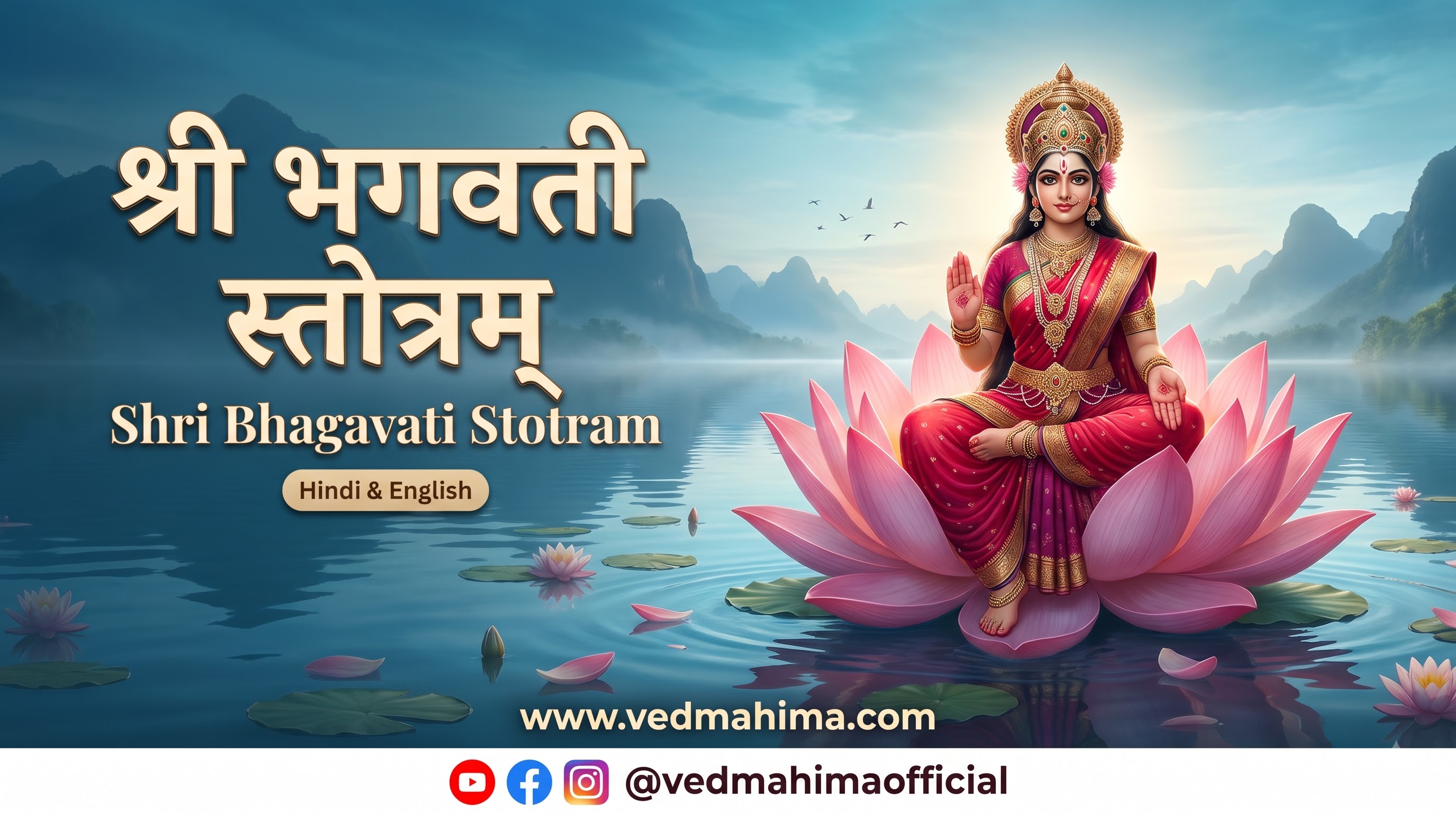
Jaya Bhagavati Devi Namo Varade,
Jaya Paapavinaashini Bahuphalade।
Jaya Shumbha Nishumbha Kapaaladhare,
Pranamaami Tu Devi Naraartihare॥1॥
Jaya Chandradivaakara Net dhare,
Jaya Paavakabhooshitavaktravare।
Jaya Bhairavadehanileenapare,
Jaya Andhakadaityavishoshakare॥2॥
Jaya Mahishavimardini Shoolakare,
Jaya Lokasamastaka Paapahare।
Jaya Devi Pitaamaha-Vishnunute,
Jaya Bhaaskara Shakra Shiro'vanate॥3॥
Jaya Shanmukha Saayudha Eeshanute,
Jaya Saagaragaamini Shambhunute।
Jaya Duhkhadaridravinaashakare,
Jaya Putrakalatravivriddhikare॥4॥
Jaya Devi Samastashareeradhare,
Jaya Naakavidarshini Duhkhahare।
Jaya Vyaadhivinaashini Mokshakare,
Jaya Vaanchhitadaayini Siddhivare॥5॥
About Shri Bhagavati Stotram
Verse 1: the boon-giver. "Jaya Bhagavati Devi namo varade": victory to Goddess Bhagavati, salutations to the giver of boons. "Jaya papavinashini bahuphalade": victory to the destroyer of sin, who gives many fruits. "Jaya Shumbha-Nishumbha kapaladhare": victory to the one who holds the skulls of Shumbha and Nishumbha (the slayer of the two demon brothers). "Pranamami tu Devi naraartihare": I bow to the Goddess who removes the pain of people.
Verse 2: sun, moon and fire. Victory to the one who has the moon and the sun as her eyes (chandra-divakara-netra-dhare), whose excellent face is adorned with fire (pavaka-bhushita-vaktra-vare). Victory to the one who is absorbed in the form of Bhairava, a line read in different ways by readers (bhairava-deha-nileena-pare), and who dried up the demon Andhaka (andhaka-daitya-vishoshakare). The picture is of a Goddess whose eyes are the two great lights.
Verse 3: Mahishasura and the gods. Victory to the slayer of the buffalo demon, the trident in her hand (mahishavimardini shulakare; see the Mahishasura Mardini Stotram). Victory to the remover of the sins of all the world (lokasamastaka-papahare). Victory to the Devi praised by Brahma (Pitamaha) and Vishnu, before whom the Sun (Bhaskara) and Indra (Shakra) bow their heads.
Verse 4: praised by the gods, and the gifts. Victory to the one praised by Shanmukha (Kartikeya) and Ishana (Shiva) with weapons in hand (shanmukha-sayudha-Eeshanute), and the one praised by Shambhu who goes toward the sea (sagaragamini; this is read by many as the river Ganga). Victory to the destroyer of sorrow and poverty (duhkha-daridra-vinashakare), and the giver of growth of sons and family (putra-kalatra-vivriddhikare). The word "kalatra" means wife or household, and readers take the line as a prayer for a thriving family.
Verse 5: health, liberation, wishes. Victory to the Devi who holds all bodies (samastashareeradhare), meaning the life in every being. Victory to the one who shows heaven (naakavidarshini) and takes away sorrow. Victory to the destroyer of disease who gives liberation (vyadhivinashini mokshakare). Victory to the giver of wished fruits, supreme in success (vanchhitadayini siddhivare).
The message. The hymn asks the Goddess for what a person needs: freedom from sin, sorrow and disease, a good family, success, and in the end liberation. Benefits mentioned in tradition are matters of faith and a devotional focus, not guarantees. Prayer works best alongside real effort, and health, money or legal problems also need proper help. See the Durga Chalisa, Devi Kavacham, Argala Stotram and Durga 108 names.
❓ Frequently Asked Questions
Question: What is Jaya Bhagavati Devi Namo Varade (Bhagavati Stotram)?
Answer: It is a five-verse Sanskrit hymn to Goddess Bhagavati (Durga) that begins "Jaya Bhagavati Devi namo varade." It praises her as the slayer of Shumbha, Nishumbha, Andhaka and Mahishasura and as the one who removes sin, sorrow and poverty. The full Sanskrit with Roman and Hindi is on this page.
Question: Who wrote Bhagavati Stotram and where is it from?
Answer: The author and exact source are not known to us. It is read as a traditional devotional text, and some printed collections place it among Puranic hymns to Durga. Please confirm the edition from your own book.
Question: What is the meaning of Bhagavati Stotram?
Answer: Verse 1 salutes the giver of boons and remover of sin. Verse 2 praises her moon-and-sun eyes and her victory over Andhaka. Verse 3 recalls Mahishasura and her being praised by Brahma, Vishnu, the Sun and Indra. Verse 4 mentions Kartikeya and Shiva praising her and her removal of sorrow and poverty. Verse 5 asks for freedom from disease, liberation and the fulfilment of wishes.
Question: When should I read Bhagavati Stotram?
Answer: In the morning or evening after a bath, on Tuesday and Friday, in Chaitra and Sharad Navratri (Shukla Pratipada to Navami) and on Durga Ashtami. It takes only two or three minutes, so it is easy to read daily.
Question: Is it different from Durga Chalisa and Mahishasura Mardini Stotram?
Answer: Yes. It is much shorter. The Durga Chalisa has forty verses, and the Mahishasura Mardini Stotram has 21 long verses. Many devotees read this short hymn when they have little time.
Question: Does it remove disease, poverty and sin?
Answer: The hymn asks for this in its words. These are matters of faith and a devotional focus, not guarantees. Prayer can calm the mind, but health, money and legal problems also need proper help.