Siddha Kunjika Stotram
Siddha Kunjika Stotram lyrics, Rudrayamala Gauri Tantra, Shiva-Parvati dialogue, Aim Hrim Klim Chamundayai Vichche, Saptashati path, Navratri
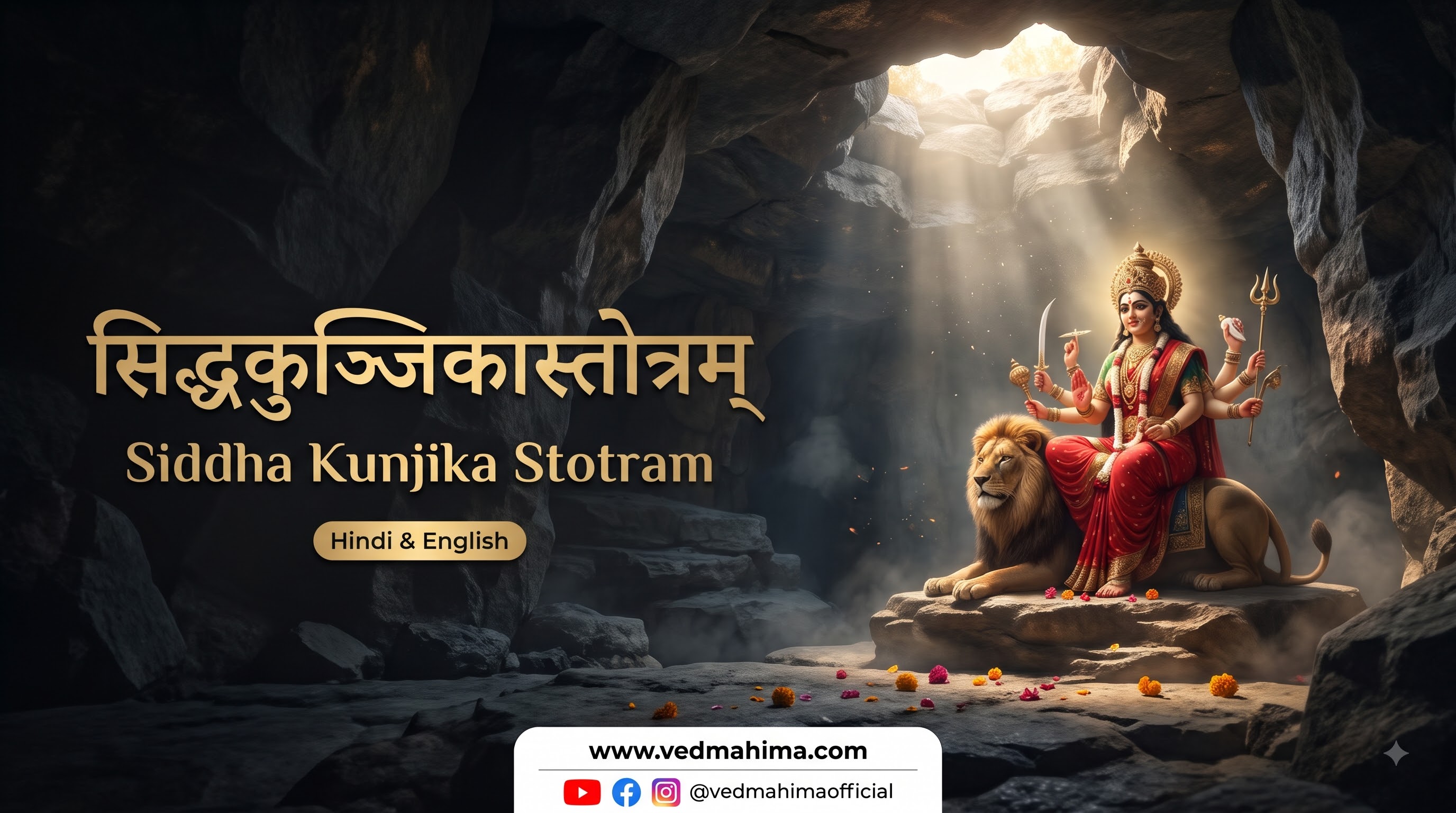
Shiva Uvaacha
Shrinu Devi Pravakshyaami
Kunjika Stotram Uttamam।
Yena Mantra Prabhaavena
Chandi Jaapah Shubho Bhavet ॥1॥
Na Kavacham Nargala Stotram
Keelakam Na Rahasyakam।
Na Sooktam Naapi Dhyaanam Cha
Na Nyaaso Na Cha Varchanam ॥2॥
Kunjikaa Paathamaatrena
Durgaa Paatha Phalam Labhet।
Ati Guhyataram Devi
Devaanaamapi Durlabham ॥3॥
Gopaneeyam Prayatnena
Svayoniriva Paarvati।
Maaranam Mohanam Vashyam
Stambhanocchaatanaadikam।
Paathamaatrena Samsiddhyet
Kunjika Stotram Uttamam ॥4॥
Atha Mantrah
Om Aim Hreem Kleem Chaamundaayai Vichche॥
Om Glaum Hoom Kleem Joom Sah Jvaalaya Jvaalaya
Jvala Jvala Prajvala Prajvala
Aim Hreem Kleem Chaamundaayai Vichche
Jvala Ham Sam Lam Ksham Phat Swaaha॥
॥ Iti Mantrah ॥
Namaste Rudraroopinyai
Namaste Madhumardini।
Namah Kaitabha Haariṇyai
Namaste Mahishaardini ॥1॥
Namaste Shumbhahantryai Cha
Nishumbhaasuraghaatini।
Jaagratam Hi Mahaadevi
Japam Siddham Kurushva Me ॥2॥
Ainkaari Srishtiroopaayai
Hreenkaari Pratipaalikaa।
Kleenkaari Kaamaroopinyai
Beejaroop e Namo'stu Te ॥3॥
Chaamundaa Chandaghaati Cha
Yaikaari Varadaayini।
Vichche Cha Abhayadaa Nityam
Namaste Mantraroopini ॥4॥
Dhaam Dheem Dhoo Dhoorjateh Patni
Vaam Veem Doom Vaagadheeshvari।
Kraam Kreem Kroom Kaalikaa Devi
Shaam Sheem Shoo Me Shubham Kuru ॥5॥
Hum Hum Humkaararoopinyai
Jam Jam Jam Jambhanaadini।
Bhraam Bhreem Bhroom Bhairavi Bhadre
Bhavaanyai Te Namo Namah ॥6॥
Am Kam Cham Tam Tam Pam Yam
Sham Veem Dum Aim Veem Ham Ksham
Dhijaagram Dhijaagram Trotaya Trotaya
Deeptam Kuru Kuru Swaaha ॥7॥
Paam Peem Poom Paarvati Poornaa
Khaam Kheem Khoom Khechari Tathaa।
Saam Seem Soom Saptashati Devyaa
Mantrasiddhim Kurushva Me ॥8॥
Idam Tu Kunjika Stotram
Mantra Jaagarti Hetave।
Abhakte Naiva Daatavyam
Gopitam Raksha Paarvati॥
Yastu Kunjikayaa Devi
Heenaam Saptashateem Pathet।
Na Tasya Jaayate Siddhir
Aranye Rodanam Yathaa॥
॥ Iti Shri Rudrayaamale Gauritan tre Shiva Paarvati Samvaade Kunjika Stotram Sampoornam॥
॥ ॐ Tatsat ॥
About Siddha Kunjika Stotram
Verses 1 to 3: the claim. Shiva says: listen, Devi, I will tell the best Kunjika stotra, by whose power the Chandi japa becomes auspicious. For one who reads it, the text says, no kavach, argala, keelaka, rahasya, sukta, dhyana, nyasa or archana is needed, and by the Kunjika path alone one gains the fruit of the Durga path. It is called very secret and hard to get even for the gods. This is a statement of faith, not a guarantee, and many families still read the Devi Kavacham, Argala Stotram and Atha Keelakam first.
Verse 4: secrecy and the old tantric words. It says to guard the stotra with effort, like one's own womb (svayoni), and names old tantric rites (maran, mohan, vashya, stambhan, ucchatan) as things said to be accomplished by reading it. This page does not teach or recommend any such rite. These words describe the world of the old tantric texts, and prayer must never be used to harm or control a person.
The mantra. "Om Aim Hrim Klim Chamundayai Vichche" is the Navarna (nine-letter) mantra of the Saptashati. Aim is the seed of Saraswati (speech and knowledge), Hrim of Mahamaya (the power of the world) and Klim of Kali (the power of attraction and will), and "Chamundayai vichche" is the salutation to Chamunda with the closing "vichche." The longer line that follows ("Om Glaum Hum Klim Jum Sah Jvalaya Jvalaya...") is a string of seed sounds that have no word-meaning; it means "blaze, blaze" in the sense of waking energy. The seed sounds are traditionally learned from a guru.
Salutation verses 1 and 2. Salutations to the Rudra-formed, the destroyer of Madhu, the remover of Kaitabha, the slayer of Mahishasura, the slayer of Shumbha and Nishumbha (see the Mahishasura Mardini Stotram). "Jagratam hi Mahadevi, japam siddham kurushva me": O Mahadevi, be awake, and make my japa successful.
Verse 3: the three seeds. Ainkari is the form of creation, Hrimkari the sustainer, Klimkari the form of desire, and the Goddess is the form of the seed (bija-rupa).
Verse 4: Chamunda. Chamunda, destroyer of Chanda, the one of "Yai," giver of boons, and "vichche," always the giver of fearlessness, the form of the mantra.
Verses 5 and 6: seed syllables. A series of syllables (Dham Dhim Dhum, Vam Vim Dum, Kram Krim Krum, Sham Shim Shum, Hum Hum, Jam Jam Jam, Bhram Bhrim Bhrum) joined with names: wife of Dhurjati (Shiva), mistress of speech (Vagadhishvari), Kalika, the humkara form, the one who crushes (jambhanadini), Bhairavi and Bhavani. "Me shubham kuru" asks: do what is good for me.
Verse 7: the letters. A string of consonants (Am, Kam, Cham, Tam, Pam, Yam, Sham and others) and the call "Dhijagram dhijagram trotaya trotaya deeptam kuru kuru svaha," which is read as: awaken the mind, break the obstacle, make it bright. In the tradition these letters are the alphabet of the mantra.
Verse 8: Saptashati. "Pam Pim Pum Parvati purna, Kham Khim Khum Khechari tatha, Sam Sim Sum Saptashati Devya mantrasiddhim kurushva me": O complete Parvati, O sky-goer, O Saptashati of the Devi, give me success in the mantra.
The close. "This Kunjika stotra is for awakening the mantras. It should not be given to the one without devotion; keep it hidden, O Parvati." Then: "He who reads the Saptashati without the Kunjika, his success does not come, like crying in a forest." This is a statement of faith in the tradition, and the colophon names the Rudrayamala, Gauri Tantra and the Shiva-Parvati dialogue.
The message. Devotion comes first, and the text asks for care and reverence with a powerful mantra. Benefits mentioned in tradition are matters of faith. Prayer works best alongside real effort, and health, money or legal problems also need proper help. Please never use it to harm or control anyone. See the Durga Chalisa, Durga 108 names and Devi Stuti.
❓ Frequently Asked Questions
Question: What is Siddha Kunjika Stotram and where is it from?
Answer: It is a Sanskrit stotra given as a dialogue of Shiva and Parvati. The colophon places it in the Rudrayamala Tantra (Gauri Tantra). It is printed in many Durga Saptashati books, and "kunjika" means a key: the stotra is read as a key that "wakes" the mantras of the Saptashati. The full Sanskrit with Roman and Hindi is on this page.
Question: What is the meaning of Siddha Kunjika Stotram?
Answer: Shiva tells Parvati that this stotra makes the Chandi japa fruitful. Then comes a mantra beginning "Om Aim Hrim Klim Chamundayai Vichche," and eight salutation verses to the Goddess as Rudra-form, slayer of Madhu, Kaitabha, Mahishasura, Shumbha and Nishumbha, and as the form of the seed-sounds (bija). The verse-wise meaning is below.
Question: Do I need Devi Kavach, Argala and Keelak if I read Kunjika Stotram?
Answer: Verse 2 says that for one who reads the Kunjika, kavacha, argala, keelaka, rahasya, sukta, dhyana, nyasa and archana are not needed. Many families still read the Devi Kavacham, Argala Stotram and Atha Keelakam first. Please follow your family book or your teacher.
Question: When and how should I read Siddha Kunjika Stotram?
Answer: In the morning or evening after a bath, in Chaitra and Sharad Navratri (Shukla Pratipada to Navami), on Durga Ashtami, Mahanavami, and on Tuesday and Friday, before a lamp and an image of Durga. The text says it makes the Saptashati japa fruitful, so it is usually read before the Saptashati chapters. If the Sanskrit is new, read the Hindi meaning first.
Question: Is it safe to read the seed mantras (bija mantras) without a guru?
Answer: The stotra itself says it is a secret to be guarded and not given to those without devotion (verse 9). The bija sounds (Aim, Hrim, Klim, Glaum, Hum and others) have no word-meaning and are traditionally taken from a guru. Reading the text with devotion is fine, but for japa or any rite please learn from a qualified teacher.
Question: Verse 4 mentions maran, mohan and vashya. Is this a text for harming people?
Answer: The verse names old tantric rites (maran, mohan, vashya, stambhan, ucchatan) as examples of what the stotra is said to accomplish. This page does not teach or recommend any such rite, and prayer must never be used to harm or control anyone. Read the stotra only as devotion to the Goddess. Results mentioned, such as the full fruit of the Saptashati, are matters of faith, not guarantees.