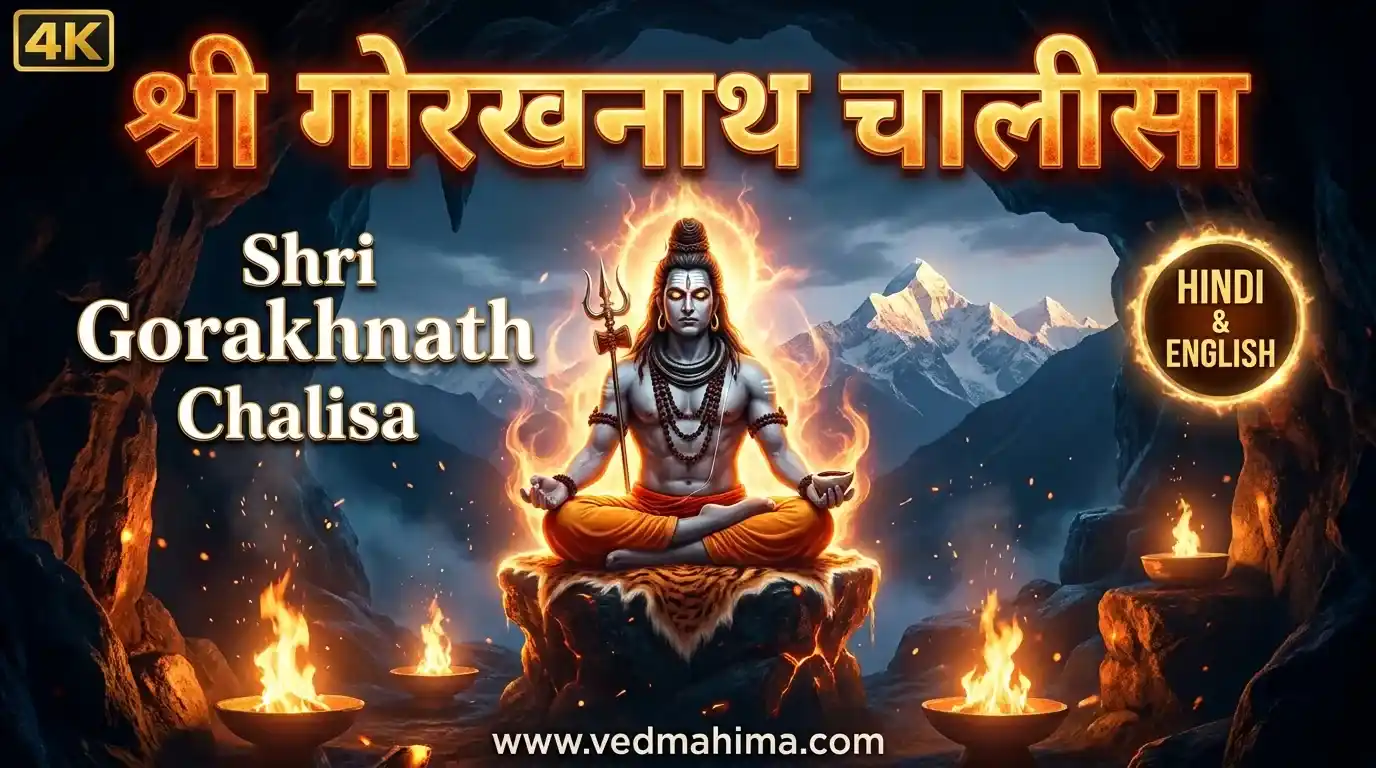
Shri Gorakhnath Chalisa
Nath Sampraday, Alakh Niranjan, Ashta Siddhi, protection from negative energy, yoga mastery
Ganpati Girija Putra Ko,
Sumirun Baarambaar.
Haath Jod Binati Karun,
Sharad Naam Aadhaar.
॥ Chaupai ॥
Jai Jai Gorakh Nath Avinaasi,
Kripa Karo Guru Dev Prakaashi.
Jai Jai Jai Gorakh Gun Gyaani,
Ichchha Roop Yogi Vardaani.
Alakh Niranjan Tumharo Naama,
Sada Karo Bhaktan Hit Kaama.
Naam Tumhara Jo Koi Gaave,
Janm Janm Ke Dukh Mit Jaave.
Jo Koi Gorakh Naam Sunaave,
Bhoot Pishaach Nikat Nahin Aave.
Gyaan Tumhara Yog Se Paave,
Roop Tumhara Lakhya Na Jaave.
Niraakaar Tum Ho Nirvaani,
Mahima Tumhari Ved Na Jaani.
Ghat Ghat Ke Tum Antaryaami,
Siddh Chauraasi Kare Pranaami.
Bhasm Ang Gal Naad Viraaje,
Jata Sheesh Ati Sundar Saaje.
Tum Bin Dev Aur Nahin Dooja,
Dev Muni Jan Karte Pooja.
Chidaanand Santan Hitkaari,
Mangal Karan Amangal Haari.
Poorn Brahm Sakal Ghat Vaasi,
Gorakh Nath Sakal Prakaashi.
Gorakh Gorakh Jo Koi Dhyaave,
Brahm Roop Ke Darshan Paave.
Shankar Roop Dhar Damaru Baaje,
Kaanan Kundal Sundar Saaje.
Nityaanand Hai Naam Tumhara,
Asur Maar Bhaktan Rakhwaara.
Ati Vishaal Hai Roop Tumhara,
Sur Nar Muni Paavai Na Paara.
Deen Bandhu Deenan Hitkaari,
Haro Paap Hum Sharan Tumhari.
Yog Yukti Mein Ho Prakaasha,
Sada Karo Santan Tan Vaasa.
Praatahkaal Le Naam Tumhara,
Siddhi Badhai Aru Yog Prachaara.
Hath Hath Hath Goraksh Hatheele,
Maar Maar Vairi Ke Keele.
Chal Chal Chal Gorakh Vikraala,
Dushman Maar Karo Behaala.
Jai Jai Jai Gorakh Avinaasi,
Apne Jan Ki Haro Chauraasi.
Achal Agam Hai Gorakh Yogi,
Siddhi Devo Haro Ras Bhogi.
Kaato Maarg Yam Ko Tum Aai,
Tum Bin Mera Kaun Sahaai.
Ajar Amar Hai Tumhari Deha,
Sanakaadik Sab Jorahin Neha.
Kotin Ravi Sam Tej Tumhara,
Hai Prasiddh Jagat Ujiyaara.
Yogi Lakhe Tumhari Maaya,
Paar Brahma Se Dhyaan Lagaaya.
Dhyaan Tumhara Jo Koi Laave,
Ashtasiddhi Nav Nidhi Ghar Paave.
Shiv Gorakh Hai Naam Tumhara,
Paapi Dusht Adham Ko Taara.
Agam Agochar Nirbhay Naatha,
Sada Raho Santan Ke Saatha.
Shankar Roop Avataar Tumhara,
Gopichandra Bharathari Ko Taara.
Sun Leejo Prabhu Araj Hamaari,
Kripasindhu Yogi Brahmachaari.
Poorn Aas Daas Ki Keeje,
Sevak Jaan Gyaan Ko Deeje.
Patit Paavan Adham Adhaara,
Tinke Hetu Tum Let Avataara.
Alakh Niranjan Naam Tumhara,
Agam Panth Jin Yog Prachaara.
Jai Jai Jai Gorakh Bhagwaana,
Sada Karo Bhaktan Kalyaana.
Jai Jai Jai Gorakh Avinaasi,
Seva Karai Siddh Chauraasi.
Jo Ye Padhahi Gorakh Chalisa,
Hoy Siddh Saakshi Jagdeesha.
Haath Jodkar Dhyaan Lagaave,
Aur Shraddha Se Bhent Chadhaave.
Baarah Paath Padhai Nit Joi,
Manokamna Poorn Hoi.
॥ Doha ॥
Sune Sunaave Prem Vash,
Pooje Apne Haath.
Man Ichchha Sab Kaamna,
Poore Gorakhnath.
Agam Agochar Nath Tum,
Parabrahm Avataar.
Kaanan Kundal Sir Jata,
Ang Vibhooti Apaar.
Siddh Purush Yogeshwaro,
Do Mujhko Updesh.
Har Samay Seva Karun,
Subah Shaam Aadesh.
About Shri Gorakhnath Chalisa
Its first great theme is his name, "Alakh Niranjan." "Alakh" is that which cannot be seen or described, and "Niranjan" is that which is pure and untouched by any stain. The Chalisa says this is the name by which he spread the difficult path of yoga. It describes him as formless (niraakaar) and free (nirvaani), as the indweller of every heart (ghat ghat ke antaryaami), whose glory not even the Vedas can fully measure. It also describes his outward form: ash smeared on the body, a horn (naad) around the neck, matted hair, earrings (kundal), and the damaru of Shankar.
The hymn recalls that eighty-four Siddhas bow before him and that he shines with the radiance of crores of suns. It names two kings whom he is said to have carried across worldly bondage: Gopichandra and Bharthari, traditionally remembered as rulers who renounced their thrones for the yogic path under his guidance. It also describes him as the protector of the sinful, the fallen, and the humble, and as the one who takes birth to uplift them.
Its fierce verses ("Hath hath hath Goraksh hatheele") call on his unyielding power to destroy enemies and obstacles, and the Chalisa promises that those who recite his name, or hear it, are not approached by ghosts and evil spirits. It further says that one who meditates on him receives the Ashta Siddhi and Nav Nidhi, the eight mystical perfections and nine treasures, and that one who recites the Chalisa twelve times daily with faith sees heartfelt wishes fulfilled.
Devotees therefore recite it for protection from negative energy, fear, illness and mental unrest, and for inner strength and spiritual confidence on the path of yoga.
❓ Frequently Asked Questions
Question: Who is Guru Gorakhnath and what is the Nath Sampraday?
Answer: Guru Gorakhnath is the great yogi and perfected master (Siddha) regarded as the central figure of the Nath tradition, and the Chalisa calls him an incarnation of Lord Shankar. He is traditionally associated with Hatha Yoga and is believed by devotees to have spread the path of yoga among ordinary people.
Question: What does the name "Alakh Niranjan" mean in this Chalisa?
Answer: "Alakh" means that which cannot be seen or described, and "Niranjan" means pure and untouched by any stain. The Chalisa uses the phrase as his name and says it is the path of yoga that he spread.
Question: Which two kings are mentioned as being guided by Gorakhnath?
Answer: The Chalisa names King Gopichandra and King Bharthari, saying that Gorakhnath, in the form of Shankar, carried them across worldly bondage and led them toward spiritual realisation.
Question: What are the Ashta Siddhi and Nav Nidhi referred to in the Chalisa?
Answer: They are the eight mystical perfections and nine treasures that, according to the verses, come into the home of one who meditates on Gorakhnath with devotion.
Question: What does the Chalisa say about reciting it twelve times?
Answer: The closing verses say that one who recites it twelve times daily with folded hands and faith will see heartfelt wishes fulfilled, and that ghosts and evil spirits do not come near the one who hears or speaks his name.
Question: When should the Gorakhnath Chalisa be recited?
Answer: Early morning after bathing, or in the evening with incense and a lamp, with Guru Purnima, Tuesdays and Saturdays considered especially auspicious.


