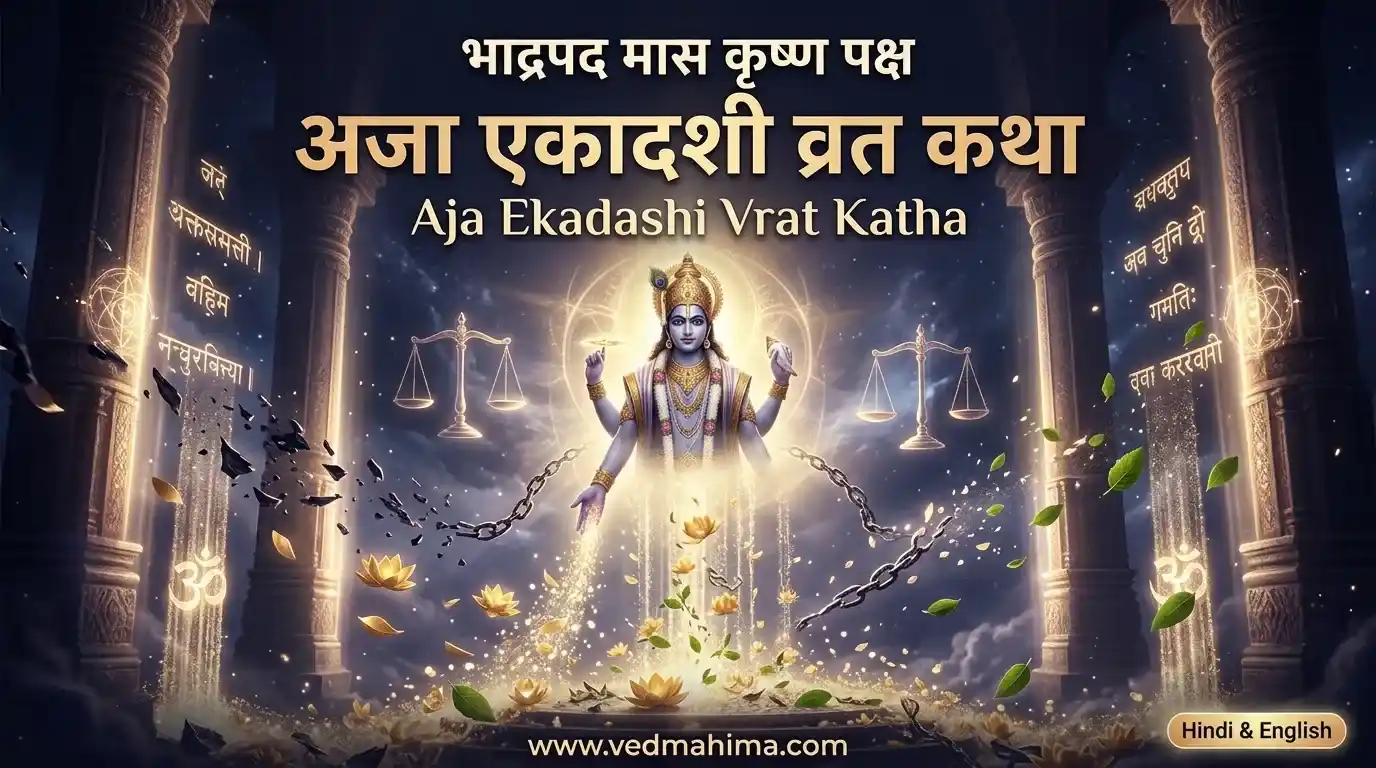
Bhadrapada Maas Krishna Paksha Aja Ekadashi Vrat Katha
Raja Harishchandra and Sage Gautam story, truthfulness, Hrishikesh puja
॥ Introduction ॥
Bhadrapada Krishna Ekadashi, widely celebrated as Aja Ekadashi, holds an exceptionally revered and sacred position in Sanatan Dharma. Falling during the holy dark fortnight of the Bhadrapada month, this auspicious day is universally acclaimed as the ultimate destroyer of all terrifying sins and profound miseries. Dedicated to the worship of Lord Hrishikesh (a divine form of Lord Shri Hari Vishnu), observing this fast with absolute purity dissolves structural karmic bondages and guides the soul toward liberation.
॥ Importance ॥
The supreme spiritual importance of Aja Ekadashi is direct and beautifully profound. Lord Shri Krishna states that reading, hearing, or meditating upon the holy glory of this specific fast grants the immense spiritual fruit equivalent to performing the prestigious Ashvamedha Yajna. It serves as an eternal beacon of hope for souls facing intense suffering, proving that no matter how severe one''s karmic fall or worldly trials are, the dedicated penance of Aja Ekadashi can restore lost glory and righteousness.
॥ Puranic Reference ॥
The divine reference of this holy katha is rooted in the timeless conversation of the Dwapar Yuga between Lord Shri Krishna and King Yudhishthira. The narrative introduces the legendary Emperor Harishchandra of the Ikshvaku lineage, known across all realms for his absolute vow of truth (Satya). This sacred account beautifully illustrates how the king met Maharshi Gautam during his period of ultimate hardship and how the seer instructed him to observe the Aja Ekadashi fast to completely burn away his past karmic debts.
॥ Story ॥
King Yudhishthira asked—O Janardana! Now I deeply desire to hear about which Ekadashi occurs during the dark fortnight (Krishna Paksha) of the month of Bhadrapada? Please describe it to me.
Lord Shri Krishna replied—O King! Listen with single-minded attention. The Ekadashi that falls during the dark fortnight of the month of Bhadrapada is known by the name of ''Aja''. It is described as the absolute destroyer of all sins. Anyone who worships Lord Hrishikesh and observes this sacred fast becomes entirely liberated from all sins.
In ancient times, there lived a highly famous wheel-turning monarch (Chakravarti King) named Harishchandra, who was the supreme sovereign of the entire earth and strictly devoted to his vow of truth. At one time, due to the arrival of the fruits of some past actions (Karma), he had to be completely deposed from his vast kingdom. The King had to sell his beloved wife and young son, and eventually, he had to sell himself too. Despite being an exceptionally pious and pure soul, he had to accept the dark servitude of a Chandala (crematorium keeper). His daily duty was to collect shrouds (kafan) from dead bodies brought to the cremation ground.
Even under such terrible conditions, the best among kings, Harishchandra, did not deviate an inch from his vow of truth. While executing the servitude of the Chandala, many long years passed away. Due to this, the King fell into intense worry. Deeply aggrieved, he began to ponder—''What should I do? Where should I go? How will my ultimate deliverance take place?'' Filled with such continuous anxiety, he completely drowned in an ocean of heavy grief.
Knowing the King to be desperately anxious, a great sage arrived near him. He was none other than the eminent Maharshi Gautam. Seeing the supreme Brahmin approach, the best among kings bowed down at his feet, and with folded hands standing respectfully before Gautam, narrated his entire sorrowful history.
Hearing the King''s painful words, Maharshi Gautam spoke—''O King! In the dark fortnight of the upcoming Bhadrapada month, an exceedingly auspicious and welfare-bestowing Ekadashi named ''Aja'' is approaching, which grants massive merits. Observe its sacred vow. By this, your sins will come to an absolute end. By your great fortune, the Ekadashi falls exactly on the seventh day from today. On that specific day, observe a complete fast and perform a night vigil (Jagaran).''
Saying this, Maharshi Gautam instantly vanished from sight. Hearing the words of the sage, King Harishchandra systematically executed that supreme vow of Aja Ekadashi. By the divine influence of that fast, the King crossed over all his structural miseries. He instantly received the close companionship of his wife and the miraculous revival of his dead son. Celestial drums (Dundubhis) began to resound loudly in the sky, and a grand shower of flowers began falling from the heavenly realms.
By the absolute power of Ekadashi, the King regained his thornless kingdom and, in the end, departed to the glorious heavenly world along with his citizens, family members, and relatives.
Lord Shri Krishna said—O King Yudhishthira! Any human being who observes this fast becomes entirely liberated from all sins and ascends to the heavenly realm. By reading and hearing its holy glory, one obtains the complete fruit of an Ashvamedha Yajna.
॥ Moral of the Story ॥
- Truthfulness (Satya) is the ultimate spiritual anchor; even when stripped of kingdom, family, and status, King Harishchandra''s refusal to lie preserved his soul''s integrity.
- Karmic cycles spare no one, not even Chakravarti (Universal Emperor); however, suffering faced with dignity and righteousness cleanses the deepest spiritual defilements.
- A true Guru or Sage appears precisely when the soul''s intense cry for deliverance reaches its peak, just as Maharshi Gautam appeared to the aggrieved king.
- The virtue of Ekadashi has the cosmic power to reverse structural misfortunes, bring the dead back to life, and elevate an entire community to higher realms.
॥ Vrat & Worship Method ॥
- On Bhadrapada Krishna Ekadashi, wake up early during the Brahma Muhurta, perform cleansing rituals, and take a holy bath.
- Sit facing East or North, place an image of Lord Hrishikesh (Vishnu), and take a solemn vow (Sankalpa) of truth and complete fasting.
- Worship the Lord using pure Satvik materials like sandalwood paste, yellow flowers, incense, fresh fruits, and mandatory Tulsi leaves.
- Observe a strict fast throughout the day and night, completely abstaining from grains, rice, pulses, salt, and negative speech.
- Execute a dedicated night vigil (Jagaran), remaining awake to sing devotional hymns, recite the Vishnu Sahasranama, and meditate on truth.
- On Dwadashi morning, perform the morning prayers, offer charity or food to worthy persons or Brahmins, and break the fast during the auspicious Parana timing.
॥ Rules for Overcoming Hardships ॥
- Aja Ekadashi Key Practice: Like King Harishchandra, emphasis must be laid on absolute truthfulness in speech and thought throughout the fasting period.
- Diet Restrictions: Grains, rice, wheat, sea salt, honey, and tamasik items like onions and garlic are strictly forbidden. Only pure fruits and water are allowed.
- Cows & Living Beings: Since the king suffered under a Chandala, practicing humility and feeding stray animals or cows on this day multiplies the fast''s merit.
॥ Parana (Breaking the Fast) Method ॥
- The fast of Aja Ekadashi must be formally broken on the next day, Dwadashi Tithi, strictly after the local sunrise.
- Ensure that the fast is broken before the Dwadashi Tithi ends and outside the duration of Hari Vasara.
- Break the fast by drinking holy Tulsi water or consuming a light Satvik meal, respecting the ongoing scriptural guidelines.
॥ Benefits ॥
- Completely burns away all past structural sins and liberates the individual from long-standing miseries and emotional debts.
- Grants cosmic spiritual merits equivalent to performing the legendary and grand Ashvamedha Yajna.
- Restores lost glory, broken relationships, domestic stability, and brings unexpected positive turns in business or career.
- Guarantees a permanent place in the heavenly realms and ultimate salvation for the devotee along with their family members.
About Bhadrapada Maas Krishna Paksha Aja Ekadashi Vrat Katha
After many years he worries about how he will ever be freed. Sage Gautam comes, and the king bows and tells his whole story. The sage says that in a week the Ekadashi named Aja will come, and tells him to fast on it and keep a night vigil, saying it will end his sin. Gautam then disappears. The king keeps the vrat, and the Katha says that his wife is restored, his son lives, drums sound in the sky and flowers fall, and that he regains his kingdom and finally goes to heaven with his people.
The Katha ends by saying that reading or hearing it gives the fruit of an Ashvamedha yajna. These are matters of faith. The story''s central message is the strength of truthfulness in the hardest time, and it should be read with care and respect. The page also gives the vrat method, special rules, parana and benefits believed in tradition. Related: Vishnu Chalisa, Ekadashi Ki Aarti and Padma Ekadashi.
❓ Frequently Asked Questions
Question: When is Aja Ekadashi kept?
Answer: On the Krishna Paksha Ekadashi of Bhadrapada in the purnimanta calendar of North India (usually August or September). In the amanta calendar of Gujarat, Maharashtra and the south, the same Ekadashi falls in Shravan, so please follow your local panchang.
Question: What is the story of King Harishchandra?
Answer: The Katha says that, because of the fruit of some karma, the emperor Harishchandra loses his kingdom, sells his wife and son and then himself, and serves at a cremation ground, collecting shrouds. Even so he does not leave truth. Sage Gautam tells him to keep Aja Ekadashi a week later with a night vigil. By its effect his family is restored, his son lives, and he regains his kingdom. The story is a devotional narrative.
Question: Which form of Vishnu is worshipped?
Answer: Lord Hrishikesh, the Lord of the senses (see the Vishnu Chalisa).
Question: What does the Katha teach?
Answer: That truthfulness holds even in the hardest time, and that guidance from a wise sage can come when one sincerely looks for a way out.
Question: What merit does the Katha promise?
Answer: It says that reading or hearing it gives the fruit of an Ashvamedha yajna. This is a matter of faith and a devotional emphasis.
Question: Can I keep a lighter fast?
Answer: Yes. The vrat is best kept according to health, and fruit or milk is acceptable. Pregnant women, the elderly, diabetics and those on medicines should follow a doctor''s advice. Sing the Ekadashi Ki Aarti after the puja.