Shri Gayatri Chalisa
Gayatri Mantra word-by-word meaning, Tat Savitur Varenyam Bhargo Devasya, Gayatri Mata, brahma gyan, Sandhya paath vidhi
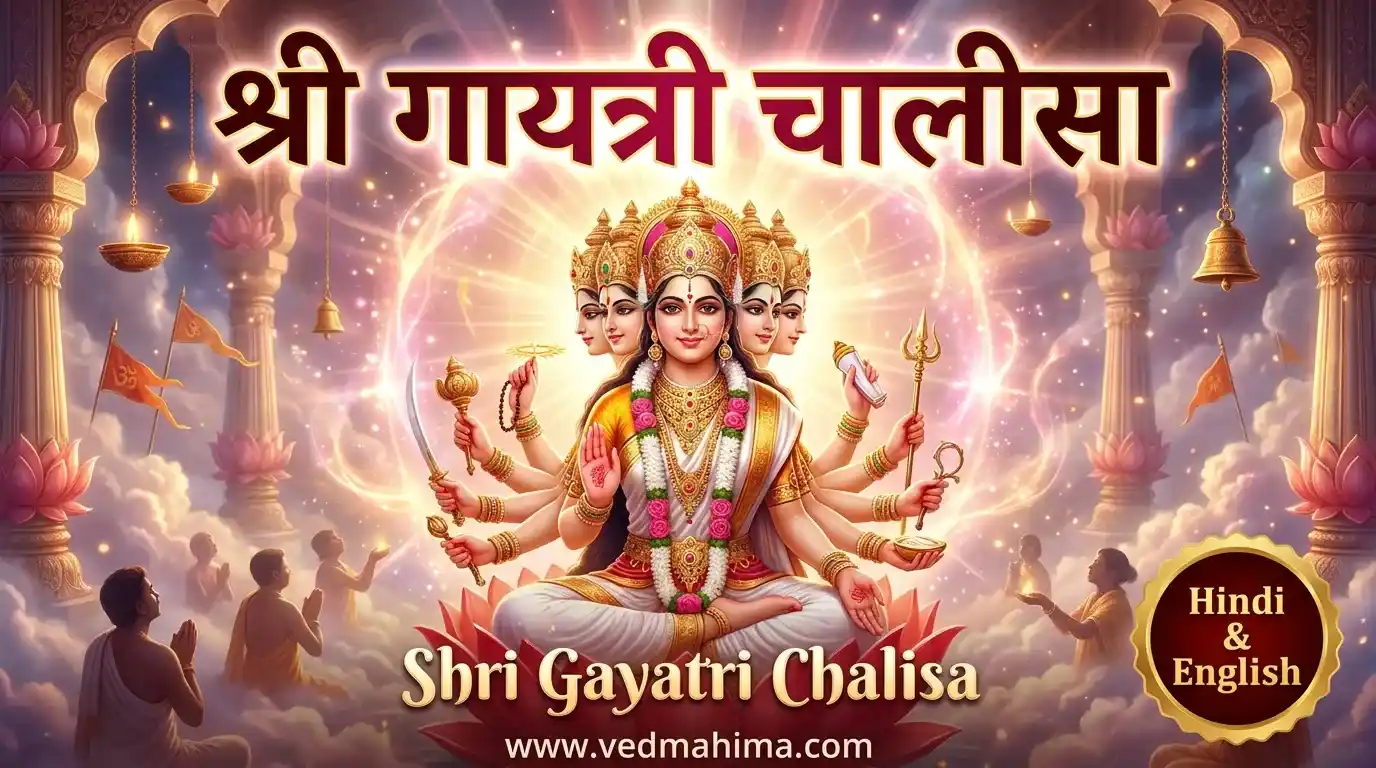
Jayati Jayati Ambe Jayati,
Jai Gayatri Devi.
Brahm Gyan Dharini Hriday,
Aadi Shakti Sur Sevi.
॥ Chaupai ॥
Jayati Jayati Gayatri Amba,
Kaatahu Kasht Na Karahu Vilamba.
Tav Dhyaavat Vidhi Vishnu Mahesha,
Lahat Agam Sukh Shanti Hamesha.
Tuhi Jan Brahm Gyan Ur Dharini,
Jag Tarini Mag Mukti Prasarini.
Jan Tan Sankat Naasni Haari,
Harni Pishaach Pret Dai Taari.
Mangal Mod Bharni Bhay Naasni,
Ghat-Ghat Vaasni Buddhi Prakaashini.
Pooran Gyan Ratna Ki Khaani,
Sakal Siddhi Daanee Kalyaani.
Shambhu Netra Nit Nirat Karaiya,
Bhav Bhay Daarun Darp Haraiya.
Sarv Kaam Krodhaadik Maaya,
Mamta Matsar Moh Adaaya.
Agam Anisht Haran Mahashakti,
Sahaj Bharan Bhaktan Ur Bhakti.
Om Roop Kali Kalush Vibhajani,
Bhurbhuvah Swah Swatah Niranjani.
Shabd Tatsavitu Hans Sawaari,
Aru Varenyam Brahm Dulaari.
Bhargo Jan Tanu Klesh Nasavat,
Prem Sahit Devasya Ju Dhyaavat.
Dheemahi Dheer Dharat Ur Maahin,
Dhiyo Buddhi Bal Vimal Suhaahin.
Yonah Nit Nav Bhakti Prakaashan,
Prachodayat Punj Agh Naashan.
Akshar-Akshar Mahan Gun Roopa,
Agam Apaar Sucharit Anupa.
Jo Gun Mantra Na Tumharo Jaana,
Shabd Arth Jo Suna Na Kaana.
So Nar Durlabh As Tan Paavat,
Paaras Gahat Na Kanak Banaavat.
Jab Lagi Brahm Kripa Nahin Teri,
Rahahi Tabahi Lagi Gyan Ki Deri.
Pra krit Brahm Shakti Bahu Tero,
Maha Vyahriti Naam Ghanero.
Om Tatva Nirgun Jag Jaana,
Bhooh Mahi Roop Chaturdal Aana.
Bhuvah Bhuvan Paalan Shuchikaari,
Swah Raksha Solah Dal Dhaari.
Ta Vidhi Roop Jan Paalan Haari,
Ts Ras Roop Brahm Sukhkaari.
Vi Rachit Gandh Shishir Sanyukta,
Tu Ramit Ghat-Ghat Jeevan Mukta.
Rv Tan Shabd Su Vigrah Kaaran,
Re Sw Shareer Tatva Yut Dhaaran.
Nyang Sarvatr Supaalan Karta,
Bh Bhavan Beech Mud Mangal Bharta.
Rgo Sanyukt Gandh Avinaashi,
De Tan Buddhi Vachan Sukhrashi.
Va Sat Brahm Yug Baahu Swaroopa,
Sya Tanu Lasat Shatdal Anuroopa.
Dhee Jan Prakriti Shabd Nit Kaaran,
Ma Nit Brahm Roopin Nit Dhaaran.
Hi Yahi Sarv Par Brahm Prakaashini,
Dhiyo Buddhi Bal Vidya Vaasini.
Yo Sarvatr Lasat Jal Thal Nidhi,
Nah Nit Tej Punj Jag Bahu Vidhi.
Pra Bal Anil Kaaya Nit Kaaran,
Cho Pari Pooran Shri Shiv Dhaaran.
Da Man Karati Agh Pragati Nishakti,
Yaat Gyan Pravishat Hari Bhakti.
Jayati Jayati Jai Jai Jagdhaatri,
Jai Jai Mahamantra Gayatri.
Tuhi Shriram Radhika Sita,
Tuhi Shri Krishna Mukharsit Geeta.
Aadi Shakti Tuhi Bhakti Bhavani,
Jagat Janani Phal Vanchhit Daani.
Tuhi Shri Durga Durg Naashini,
Uma Rama Baikunth Vaasini.
Tuhi Shri Bhakti Bhairav Baani,
Tumhin Matu Mangala Mridani.
Jete Mantra Jagat Ke Maahin,
Par Gayatri Sam Koi Naahin.
Jahi Brahm Hatyaadik Laagai,
Gayatrihi Jap So Agh Bhaagai.
Dhani Ho Dhani Trailokya Vandini,
Jai Ho Jai Shri Brahmanandini.
॥ Doha ॥
Shri Gayatri Chaalisa,
Paath Kare Saanand.
Sahaj Tare Paatak Hare,
Pare Na Puni Bhav Fand.
Baas Hoi Grih Lakshmi,
Gahi Manvanchhit Aas.
Aas Poorn Lahi Sakal Vidhi,
Virachyo Sundar Daas.
About Shri Gayatri Chalisa
The first part praises her. It says that Brahma, Vishnu and Mahesh meditate on her and gain peace, that she holds Brahma-knowledge, carries beings across the world and spreads the path of liberation, and that she removes trouble, ghosts and evil spirits, fills life with joy, lives in every heart, lights up the intellect, and is a mine of perfect knowledge and the giver of all siddhis. The verses add that she takes away fear, pride, desire, anger, attachment and envy.
The second part is the heart of this Chalisa, and it explains the Gayatri Mantra word by word. The mantra is a Vedic prayer from the Rigveda, traditionally ascribed to Vishwamitra, that goes "Om Bhur Bhuvah Swah, Tat Savitur Varenyam, Bhargo Devasya Dhimahi, Dhiyo Yo Nah Prachodayat." The Chalisa takes it piece by piece. Om is the formless element, and Bhuh is the earth in a four-petalled form, Bhuvah protects the worlds, and Swah gives protection with a sixteen-petalled form. It says Tat is the form of the one who sustains and Savitur is the joy of Brahma''s own self, and that Varenyam is the dear one of Brahma. Bhargo takes away the suffering of body and mind of those who meditate with love on Devasya, the divine. Dhimahi means holding that light steadily in the heart, Dhiyo gives a pure mind and strength of intellect, and Prachodayat destroys the heap of sin and lets knowledge and devotion enter. In the usual rendering, the mantra means "We meditate on the radiant light of the divine Savitr; may it inspire our understanding."
The Chalisa also says that whoever does not know the meaning of the mantra, who has not even heard the words, has the human body but not its real fruit, like holding a philosopher''s stone without making gold, and that knowledge is delayed until Brahma''s grace comes. It calls the Goddess the great Vyahriti, with many names, and gives each syllable a role of its own, which is why many students use it to understand the mantra.
The last verses identify her with Sri Ram, Radhika and Sita, Sri Krishna and the Gita, Adi Shakti, Durga, Uma and Rama, and the mother of all (see the Durga Chalisa and the Saraswati Chalisa). It says that of all mantras in the world none equals Gayatri, and that even a great sin such as brahma-hatya is destroyed by her japa. The closing doha says that one who recites it joyfully crosses easily over sin, is not caught again in the net of worldly life, and sees Lakshmi come to the home. These are matters of faith, and the benefit most readers notice is clearer, calmer thought.
❓ Frequently Asked Questions
Question: What makes this Gayatri Chalisa different from other Gayatri Chalisas?
Answer: A large part of it explains the Gayatri Mantra syllable by syllable, going through Om, Bhur, Bhuvah, Swah, Tat, Savitur, Varenyam, Bhargo, Devasya, Dhimahi, Dhiyo, Yo, Nah and Prachodayat. The other hymn, the Gayatri Chalisa 2, begins with Hreem, Shreem and Kleem and focuses on her form and the 24 syllables.
Question: What is the Gayatri Mantra, and where does it come from?
Answer: It is a Vedic prayer from the Rigveda, traditionally ascribed to the sage Vishwamitra, that begins "Om Bhur Bhuvah Swah, Tat Savitur Varenyam, Bhargo Devasya Dhimahi, Dhiyo Yo Nah Prachodayat." It is a prayer to the divine light to inspire our understanding.
Question: What do Bhur, Bhuvah and Swah mean in the Chalisa?
Answer: The Chalisa explains them as the three vyahritis. It says Bhuh stands for the earth and has a four-petalled form, Bhuvah is the one who protects the worlds, and Swah is protection with sixteen petals. In the mantra they name the earth, the atmosphere and the heavens.
Question: What do "Bhargo" and "Dhimahi" mean?
Answer: The Chalisa says Bhargo takes away the suffering of the body and mind of those who meditate on the divine with love, and Dhimahi is the steady holding of that light in the heart. In the usual rendering, bhargo is radiant light and dhimahi means "we meditate".
Question: What does the Chalisa say about the "Dhiyo Yo Nah Prachodayat" part?
Answer: It says that Dhiyo gives a pure mind and strength of intellect, and Prachodayat destroys the heap of sin and lets knowledge and devotion enter. The line means "may she inspire our intellect".
Question: When should the Gayatri Chalisa be recited?
Answer: Brahma Muhurta or sunrise, facing east, and at dusk, the same sandhya hours as the Gayatri Mantra. It is also read on Gayatri Jayanti, which is kept on different dates in different traditions, so check the panchang. For a briefer hymn see the Saraswati Chalisa.