Shri Gayatri Chalisa (Hreem Shreem Kleem Medha Prabha)
Gayatri Mantra and its 24 syllables, Gayatri Mata as Mother of the Vedas, Hreem Shreem Kleem, wisdom and inner peace
Hreem Shreem Kleem Medha Prabha,
Jeevan Jyoti Prachand.
Shanti Kranti Jaagruti Pragati,
Rachna Shakti Akhand.
Jagat Janani Mangal Karni,
Gayatri Sukh Dhaam.
Pranavon Savitri Swadha,
Swaha Pooran Kaam.
॥ Chaupai ॥
Bhoorbhuvah Swah Om Yut Janani,
Gayatri Nit Kalimal Dahani.
Akshar Chauviss Parm Puneeta,
Inmein Basen Shastra Shruti Geeta.
Shaashwat Satoguni Sat Roopa,
Satya Sanaatan Sudha Anoopa.
Hansaaroodh Shwetambar Dhaari,
Swarn Kaanti Shuchi Gagan-Bihaari.
Pustak Pushp Kamandal Maala,
Shubh Varna Tanu Nayan Vishaala.
Dhyaan Dharat Pulkit Hit Hoi,
Sukh Upjat Dukh Durmati Khoi.
Kaamdhenu Tum Sur Taru Chhaaya,
Nirakaar Ki Adbhut Maaya.
Tumhari Sharan Gahai Jo Koi,
Tarai Sakal Sankat Son Soi.
Saraswati Lakshmi Tum Kaali,
Dipai Tumhari Jyoti Niraali.
Tumhari Mahima Paar Na Paavein,
Jo Sharad Shat Mukh Gun Gaavein.
Chaar Ved Ki Maat Puneeta,
Tum Brahmani Gauri Sita.
Mahamantar Jitne Jag Maahin,
Koi Gayatri Sam Naahin.
Sumirat Hiy Mein Gyaan Prakaasai,
Aalas Paap Avidya Naasai.
Srishti Beej Jag Janani Bhavani,
Kaalratri Varda Kalyaani.
Brahma Vishnu Rudra Sur Jete,
Tum Son Paaven Surta Tete.
Tum Bhaktan Ki Bhakt Tumhare,
Jananihin Putra Praan Te Pyaare.
Mahima Aparampaar Tumhari,
Jai Jai Jai Tripada Bhayhaari.
Poorit Sakal Gyaan Vigyaana,
Tum Sam Adhik Na Jag Mein Aana.
Tumhin Jaani Kachhu Rahai Na Shesha,
Tumhin Paay Kachhu Rahai Na Kalesha.
Jaanat Tumhin Tumhin Hai Jaai,
Paaras Parasi Kudhaatu Suhaai.
Tumhari Shakti Dipai Sab Thaai,
Mata Tum Sab Thaur Samaai.
Grah Nakshatra Brahmand Ghanere,
Sab Gativaan Tumhare Prere.
Sakal Srishti Ki Praan Vidhaata,
Paalak Poshak Naashak Traata.
Mateshwari Daya Vrat Dhaari,
Tum San Tare Paataki Bhaari.
Jaapar Kripa Tumhari Hoi,
Taapar Kripa Kare Sab Koi.
Mand Buddhi Te Buddhi Bal Paavein,
Rogi Rog Rahit Ho Jaavein.
Daridra Mitai Katai Sab Peera,
Naashai Dukh Harai Bhav Bheera.
Grih Kalesh Chit Chinta Bhaari,
Naasai Gayatri Bhay Haari.
Santati Heen Susantati Paavein,
Sukh Sampatti Yut Mod Manaavein.
Bhoot Pishaach Sabai Bhay Khaavein,
Yam Ke Doot Nikat Nahi Aavein.
Je Sadhwa Sumirein Chit Thaai,
Achhat Suhaag Sada Sukhdaai.
Ghar Var Sukh Prad Lahain Kumaari,
Vidhwa Rahen Satya Vrat Dhaari.
Jayati Jayati Jagdamb Bhavani,
Tum Sam Thor Dayaalu Na Daani.
Jo Sadguru So Diksha Paave,
So Saadhan Ko Safal Banaave.
Sumiran Kare Suruchi Badbhaagi,
Lahai Manorath Grihi Viraagi.
Asht Siddhi Navnidhi Ki Daata,
Sab Samarth Gayatri Mata.
Rishi Muni Yati Tapasvi Yogi,
Aatar Arthi Chintit Bhogi.
Jo Jo Sharan Tumhari Aavein,
So So Man Vanchhit Phal Paavein.
Bal Buddhi Vidya Sheel Swabhaau,
Dhan Vaibhav Yash Tej Uchaau.
Sakal Badhein Upjen Sukh Naana,
Je Yah Paath Karai Dhari Dhyaana.
॥ Doha ॥
Yah Chalisa Bhaktiyut,
Paath Karai Jo Koi.
Taapar Kripa Prasannata,
Gayatri Ki Hoy.
About Shri Gayatri Chalisa (Hreem Shreem Kleem Medha Prabha)
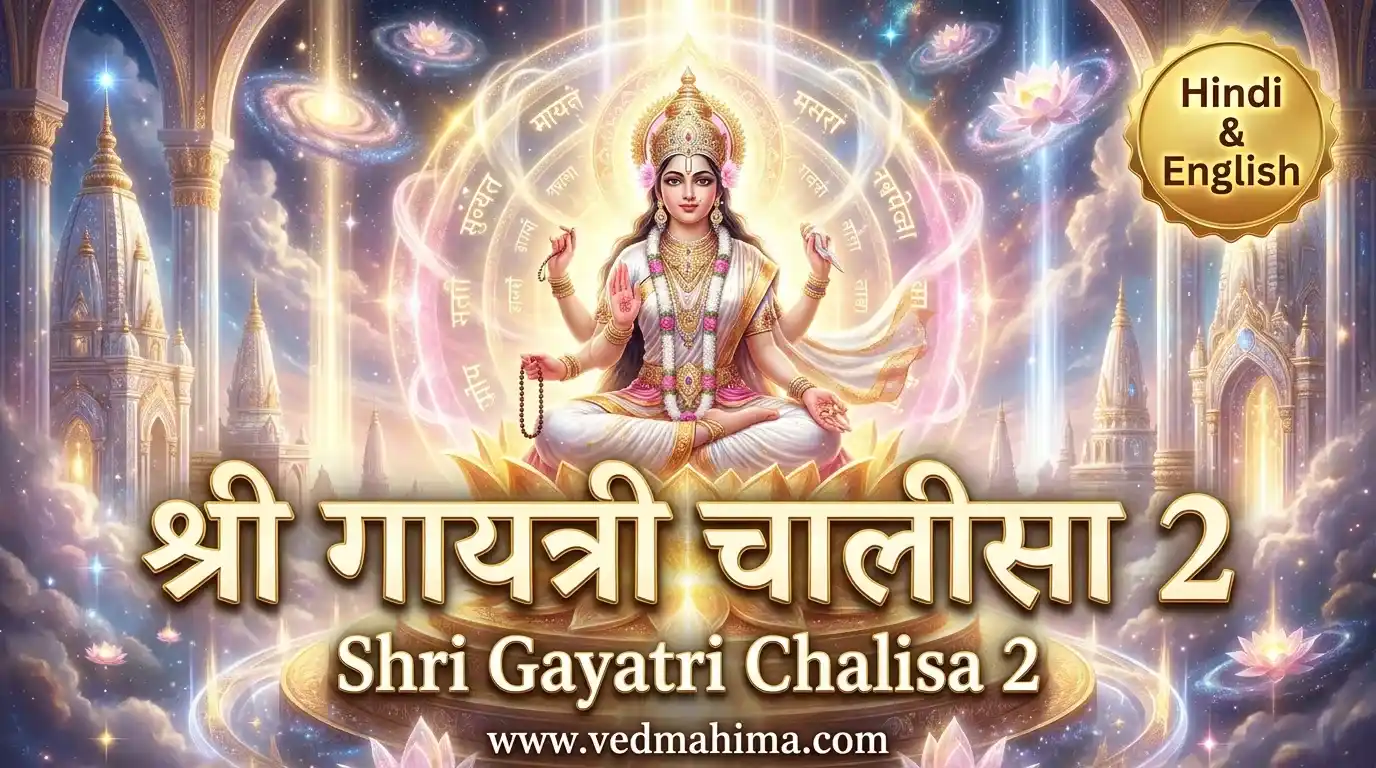
The Chalisa first pictures her form. She is seated on a swan, dressed in white, golden in radiance, moving through the sky, with a book, a flower, a kamandalu and a rosary in her hands. She is fair, with wide eyes. The hymn says that meditating on this form fills the heart with joy and drives away sorrow and wrong thinking, and it calls her the Kamdhenu and the shade of the wish-fulfilling tree.
Its second theme is the mantra itself. The first line of the hymn opens with "Bhoorbhuvah Swah Om" and says that the 24 syllables of the Gayatri Mantra are supremely pure, and that the shastras, the shruti and the Gita live within them. The mantra is a Rigvedic prayer that asks the divine light of Savitr to inspire our understanding. The Chalisa goes as far as to say that among all great mantras none equals Gayatri, and that remembering her lights up knowledge in the heart and destroys laziness, sin and ignorance.
The third theme is her identity. She is called Saraswati, Lakshmi and Kali; Brahmani, Gauri and Sita; the mother of the four Vedas; and the seed of creation. Brahma, Vishnu, Rudra and all the gods are said to draw their strength from her, and the planets and stars to move at her impulse. In this way the hymn presents her as one supreme power appearing in many forms, the one who creates, sustains and withdraws the world.
The closing verses are a list of what devotees ask for: intelligence for the dull-minded, health for the sick, an end to poverty and household strife, children for the childless, and protection from fear. These are matters of faith, and the benefit most readers notice is a calmer and more focused mind, so they are best taken as encouragement alongside study, work and medical care. Devotees read the Chalisa at dawn and dusk, before study, and as a companion to chanting the Gayatri Mantra.
❓ Frequently Asked Questions
Question: Who is Gayatri Mata and how does the Chalisa describe her form?
Answer: Gayatri Mata is worshipped as the Mother of the Vedas and the power behind the Gayatri Mantra. The Chalisa describes her seated on a swan, dressed in white, golden in radiance, holding a book, a flower, a kamandalu and a rosary, with wide eyes, and says meditating on her brings joy and removes sorrow and bad thinking.
Question: Why does the Chalisa say her 24 syllables are so important?
Answer: It says the 24 syllables (akshar) of the Gayatri Mantra are supremely pure and that the shastras, the shruti and the Gita are contained in them. The mantra itself is the Rigvedic prayer that begins "Om Bhur Bhuvah Svah" and asks the divine light of Savitr to inspire our understanding.
Question: What do Hreem, Shreem and Kleem mean in the opening doha?
Answer: They are traditional seed sounds (bija mantras). The doha uses them to call Gayatri the light of wisdom (medha) and the source of peace, awakening, progress and creative power. Their sound-based meanings are a matter of tradition and are not explained in the verses.
Question: Why is Gayatri called Saraswati, Lakshmi and Kali?
Answer: The Chalisa says she is Saraswati, Lakshmi and Kali, and also Brahmani, Gauri and Sita, and that Brahma, Vishnu, Rudra and all the gods draw their power from her. It presents her as one supreme power appearing in many forms.
Question: What benefits does the Chalisa promise?
Answer: It says the dull-minded gain intelligence, the sick become well, poverty and household strife end, and the childless receive children. These are devotional beliefs; a calmer, more focused mind is the benefit most people notice from regular chanting. They are not a replacement for study, work or medical care.
Question: When should the Gayatri Chalisa be recited?
Answer: Brahma Muhurta or sunrise, facing east, and the evening are considered best. Traditionally the Gayatri Mantra itself is chanted at the three sandhyas (dawn, noon, dusk). Gayatri Jayanti is kept on different dates in different traditions, so check the panchang.