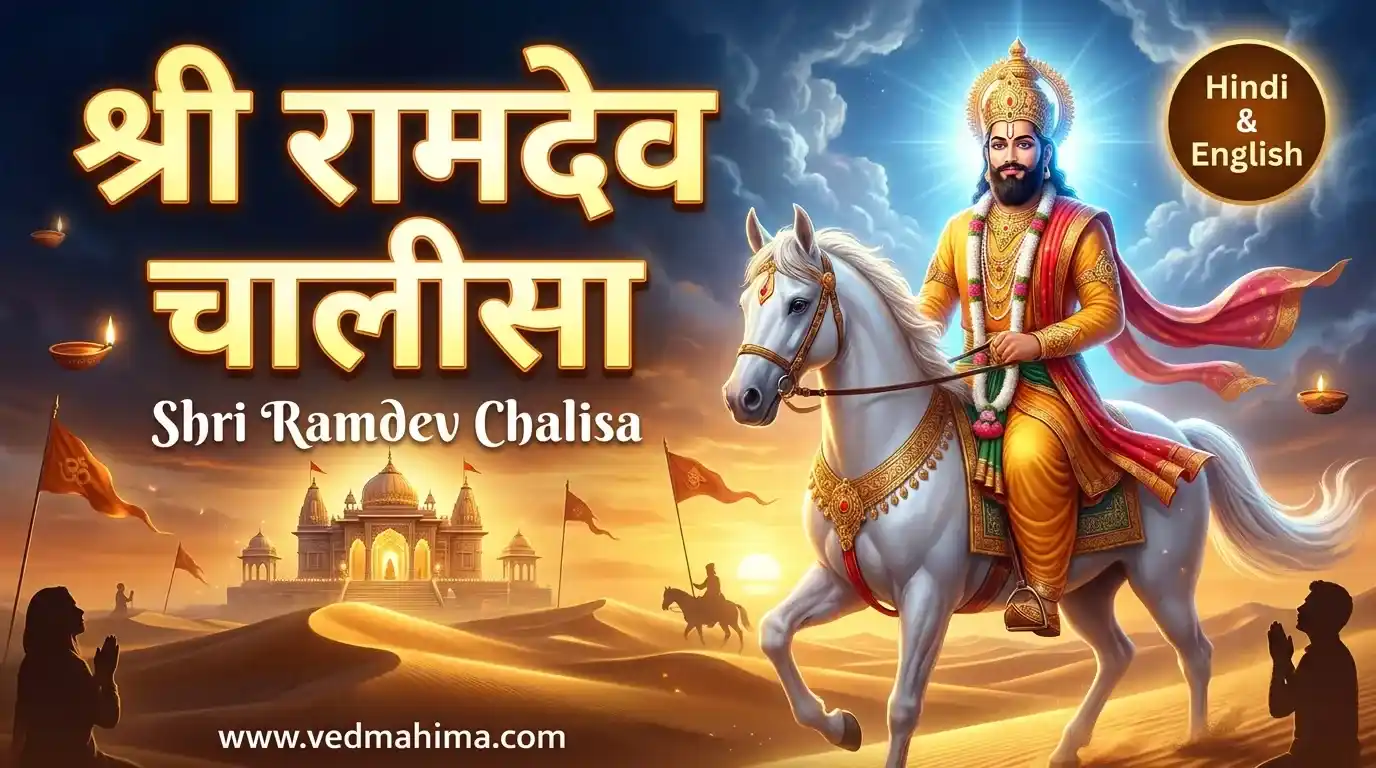
Shri Ramdev Chalisa
Baba Ramdev Ji, 24 parchas, Ramdevra fair, Bhadrapada Beej, protection and blessings
Shri Guru Pad Naman Kari,
Girija Ganesh Manay.
Kathun Ramdev Vimal Yash,
Sune Paap Vinashay.
Dwar Kesh Ne Aay Kar,
Liya Manuj Avtaar.
Ajmal Geh Badhavana,
Jag Mein Jai Jaikaar.
॥ Chaupai ॥
Jai Jai Ramdev Sur Raya,
Ajmal Putra Anokhi Maya.
Vishnu Roop Sur Nar Ke Swami,
Param Pratapi Antaryami.
Le Avtaar Avani Par Aaye,
Tanwar Vansh Avatansh Kahaye.
Sant Janon Ke Karaj Saare,
Danav Daitya Dusht Sanhare.
Parcha Pratham Pita Ko Deenha,
Doodh Parinda Manhi Keenha.
Kumkum Pad Poli Darshaye,
Jyonhi Prabhu Palne Pragataye.
Parcha Dooja Janani Paya,
Doodh Uphanta Chara Uthaya.
Parcha Teeja Purjan Paya,
Chithadon Ka Ghoda Hi Saya.
Parcha Chautha Bhairav Mara,
Bhakt Janon Ka Kasht Nivara.
Pancham Parcha Ratna Paya,
Pungal Ja Prabhu Phand Chhudaya.
Parcha Chhatha Vijaysingh Paya,
Jala Nagar Sharanagat Aaya.
Parcha Saptam Sugna Paya,
Muva Putra Hansta Bhag Aaya.
Parcha Ashtam Bouhit Paya,
Ja Pardesh Dravya Bahu Laya.
Bhanwar Doobti Naav Ubari,
Pragat Ter Pahunche Avtari.
Navman Parcha Veeram Paya,
Baniya Aa Jab Haal Sunaya.
Dasvan Parcha Pa Binjara,
Mishri Bani Namak Sab Khara.
Parcha Gyarah Kirpa Thari,
Namak Hua Mishri Phir Saari.
Parcha Dwadash Thokar Mari,
Nikalang Naadi Sirji Pyari.
Parcha Terahvan Peer Pari Padharya,
Lyay Katora Karaj Saraya.
Chaudahvan Parcha Jabho Paya,
Nijsar Jal Khara Karvaya.
Parcha Pandrah Phir Batlaya,
Ram Sarovar Prabhu Khudvaya.
Parcha Solah Harbu Paya,
Darsh Pay Atishay Harshaya.
Parcha Satrah Har Ji Paya,
Doodh Thana Bakraya Ke Aaya.
Sukhi Naadi Pani Keenho,
Aatm Gyan Harji Ne Deenho.
Parcha Atharahvan Hakim Paya,
Soote Ko Dharti Ludhkaya.
Parcha Unneesvan Dal Ji Paya,
Putra Pay Man Mein Harshaya.
Parcha Beesvan Paya Sethani,
Aaye Prabhu Sun Gadgad Vani.
Turant Seth Sarjeevan Keenha,
Ukt Ujagar Abhay Var Deenha.
Parcha Ikkisvan Chor Jo Paya,
Ho Andha Karni Phal Paya.
Parcha Baisvan Mirzo Cheenha,
Saato Tawa Bedh Prabhu Deenha.
Parcha Teisvan Badshah Paya,
Pher Bhakt Ko Nahin Sataya.
Parcha Chaubeesvan Bakhshi Paya,
Muva Putra Pal Mein Uth Dhaya.
Jab-Jab Jisne Sumaran Keenha,
Tab-Tab Aa Tum Darshan Deenha.
Bhakt Ter Sun Aatur Dhaate,
Chadh Leele Par Jaldi Aate.
Jo Jan Prabhu Ki Leela Gaaven,
Manvanchhit Karaj Phal Paaven.
Yah Chalisa Sune Sunave,
Taake Kasht Sakal Kat Jaave.
Jai Jai Jai Prabhu Leela Dhari,
Teri Mahima Aparampari.
Main Moorakh Kya Gun Tab Gaaun,
Kahan Buddhi Sharad Si Laaun.
Nahin Buddhi Bal Ghat Lav Lesha,
Mati Anusar Rachi Chalisa.
Daas Sabhi Sharan Mein Teri,
Rakhiyo Prabhu Lajja Ab Meri.
About Shri Ramdev Chalisa
What makes this Chalisa different is its list of twenty-four parchas. A parcha is a miracle that proves the Lord''s presence, and the Chalisa tells them one by one, starting from his birth. The first was to his father: milk in a pot, with kumkum footprints seen in the cradle. The second was to his mother: the boiling milk lifted from the fire. The third was the horse made of rags, which came alive. The fourth was the killing of the demon Bhairav (not the deity Bhairav of the Bhairav Chalisa), who troubled devotees.
The next parchas include the freeing of Ratna from trouble at Pungal, help for King Vijay Singh whose town burned, the revival of Sugna''s dead son, and the rescue of a sinking ship that brought a merchant home with wealth. The ninth is the story of the trader Veeram. The tenth and eleventh are the salt and mishri story: a banjara''s sugar became salt, and by Ramdev''s grace the salt turned to mishri again. Others tell of a stroke that opened a spring, the Pir who came with a bowl, and the digging of Ram Sarovar (Ramsarovar).
The later parchas tell of the salt lake Jabho, Harbu and Har Ji, a hakim, Dal Ji who received a son, the merchant''s wife, a thief who went blind for his wrong, Mirza, who was shown seven iron plates pierced, a badshah who stopped troubling his devotee, and Bakhshi, whose dead son rose in a moment. The Chalisa says that whenever anyone remembers him, he comes, riding his Leela horse, and that one who sings his leela gets his wishes fulfilled.
Baba Ramdev Ji is honoured by Hindu and Muslim devotees alike, and is remembered as a symbol of equality and harmony. Devotees recite the Chalisa for protection, help in trouble and family welfare. These are matters of faith, and the stories are traditions of devotion, to be taken alongside, and not instead of, practical help.
❓ Frequently Asked Questions
Question: Who is Baba Ramdev Ji, according to the Chalisa?
Answer: The Chalisa says that Dwarkesh (Krishna) himself took a human birth as the son of Ajmal Ji, in the Tanwar dynasty. It calls him an avatar of Vishnu and a destroyer of demons who solves the problems of saints. He is a revered folk deity of Rajasthan, also honoured by Muslim devotees as Ramsa Pir.
Question: What is a "parcha" in this Chalisa?
Answer: A parcha means a miracle or proof of divine presence. The Chalisa counts twenty-four of them, from his birth onward, and each one is a short story of help given to a devotee or family.
Question: What are the first parchas described?
Answer: The first is to his father, when milk in a pot was shown to him. At his birth he is said to have left footprints in kumkum in the cradle. The second was to his mother, when he lifted the boiling milk from the fire. The third was the cloth horse, made of rags, which came alive.
Question: What is the story of the salt and mishri?
Answer: In the tenth parcha a trader (banjara) said his goods were salt, and sugar crystals turned into salt. In the eleventh, by Ramdev''s grace, all the salt became mishri again. The point of the story is the Lord''s power to restore what has been taken from a devotee.
Question: Which parchas are about rescue and revival?
Answer: The seventh restores Sugna''s dead son, the eighth saves a sinking ship, and the twenty-fourth raises the dead son of Bakhshi. These are traditions of devotion, and the Chalisa presents them as proof that those who call him are heard.
Question: When is the best time to recite the Ramdev Chalisa?
Answer: The Bhadrapada Shukla Paksha, especially Bhadrapada Shukla Dwitiya (Beej) to Ekadashi, when the great fair is held at Ramdevra, is the most important period. Thursdays are also kept in many homes, with churma as the offering.


