Shri Mallikarjuna Jyotirlinga Temple
Shree Mallikarjuna Jyotirlinga Temple Darshan Guide
🙏 Devotional
🔥 Powerful
📿 Daily Prayer
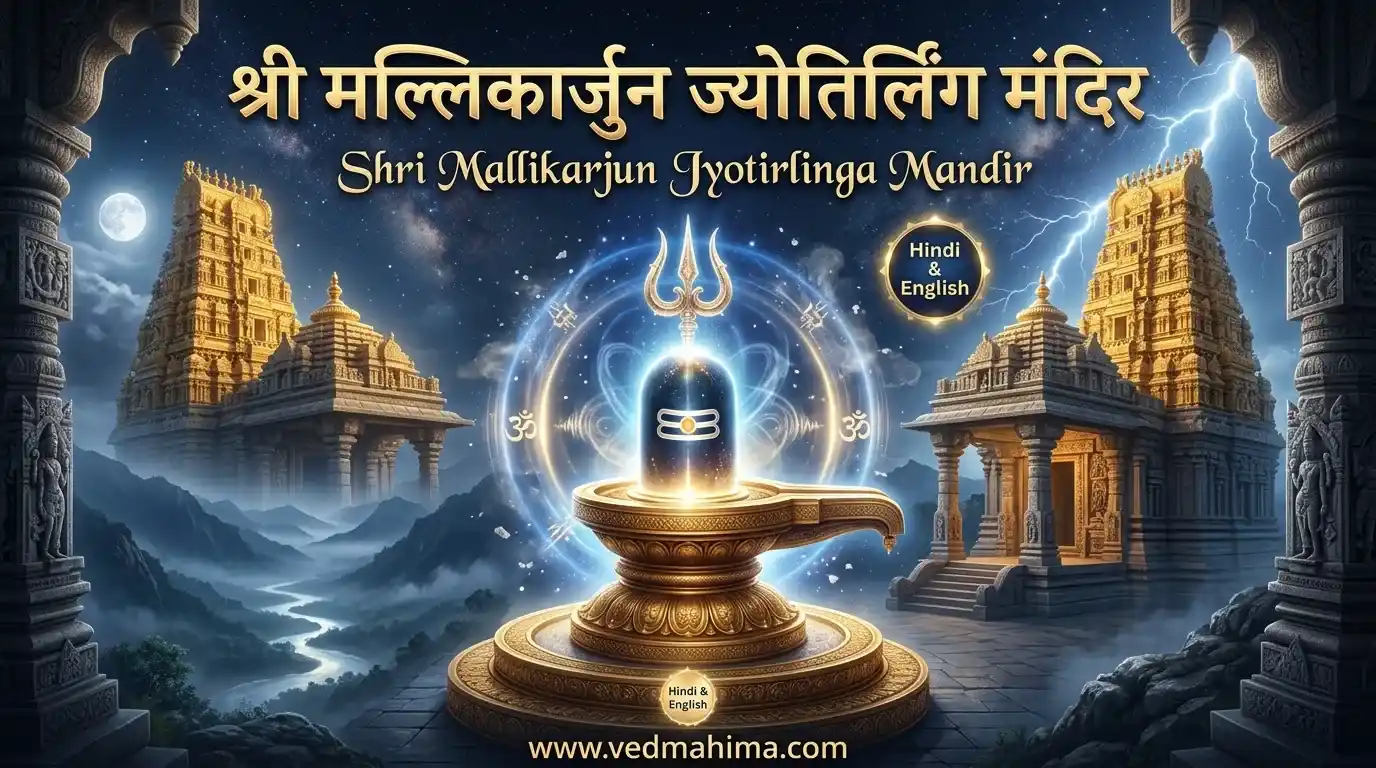
॥ Temple Overview & Divine Glory ॥
Shree Mallikarjuna Temple, located majestically on the flat top of Nallamala Hills in Srisailam, Andhra Pradesh, holds an extraordinarily unique position in Hindu sacred geography. It is celebrated as the second among the twelve sacred Jyotirlingas of Lord Shiva and simultaneously shines as one of the 18 premier Maha Shakti Peethas (Bhramaramba Devi), where the neck of Goddess Sati fell. This dual manifestation makes Srisailam a rare cosmic confluence of both Shiva and Shakti energies on a single campus, often referred to as the Kailash of the South. The holy temple overlooks the deep gorges of the Krishna River, locally revered as Patalaganga. According to the ancient Shiva Purana, Lord Shiva and Goddess Parvati descended to this mountain dynamically to pacify and stay near their aggrieved son, Lord Kartikeya. Scripturally, visiting Srisailam and getting a pure glance (Darshan) of the divine couple grants liberation from rebirth, dissolves heavy karmic blockages, and bestows both material success and absolute spiritual awakening.॥ Key Spiritual & Structural Aspects ॥
* The Unique Self-Manifested Lingam: The central deity is Mallikarjuna Swamy, manifested as a small, natural, unpolished stone lingam set within a beautifully carved silver pit. Uniquely, the temple permits Sparsha Darshan, allowing devotees to touch the holy stone directly with their forehead during specific hours.* The Dual Seat of Shiva & Shakti: While Mallikarjuna Swamy rules the primary sanctum, the shrine of Goddess Bhramaramba Devi (manifested as the Divine Mother Bee) stands right behind. It is believed that chanting near her shrine activates immense cosmic energy.
* The Fortified Prakaram Wall Architecture: Built predominantly during the Vijayanagara and Kakatiya empires, the temple features massive, fortress-like stone walls (Prakaram) stretching over 20 feet high. These outer structures are completely covered in thousands of intricately sculpted bas-reliefs depicting scenes from the Mahabharata, Ramayana, and Shiva Leelas.
* The Sacred Patalaganga: Located down the hill, this pristine stretch of the Krishna River is where pilgrims take a refreshing, purifying dip. Devotees either climb down 852 stone steps or use the modern ropeway system to reach the water before ascending to the sanctum.
॥ The Ritualistic Cycle: Divine Daily Aartis ॥
The daily spiritual administration at Srisailam follows ancient Agama Shastras, dividing the sacred rituals into specific highly anticipated public segments:1. Suprabhata Seva & Mangala Aarti (04:30 AM): The waking ritual of the Lord. The sanctum doors open to the melodious chanting of Vedic scholars, accompanied by the first grand fire offering to remove obstacles for the day.
2. Maha Mangala Aarti (05:00 AM & 06:30 PM): The primary mass worship ceremonies held twice daily, where multi-tiered oil lamps are waved before Mallikarjuna Swamy amidst heavy drumbeats and long trumpets.
3. Pradosha Kaala Puja (Evening): A highly auspicious sunset ritual performed with special emphasis on the Nandi Mandapa, where raw milk, sandalwood paste, and Bilva leaves are offered continuously.
4. Ekantha Seva (10:00 PM): The final ritual of the day where a beautiful lullaby is sung to the deities, preparing the divine couple for rest, after which the main temple doors are locked securely for the night.
5. Chandi Homam & Rudrabhishek: Ongoing special paid rituals conducted in dedicated mandapas by individual families to invoke planetary peace and physical healing through deep fire rituals.
॥ Deep Architectural Marvel & Layout ॥
The Srisailam temple complex is structured as a colossal stone citadel with four grand entrance towers (Gopurams) facing the cardinal directions. The main sanctum is a classic specimen of Dravidian architecture with a small golden vimana spire. Standing prominently in front of the Garbhagriha is the spectacular Mukha Mandapa, featuring heavy, polished black granite pillars carved with intricate depictions of dancers and musicians. The courtyard houses several sub-shrines dedicated to Lord Ganesha (Siddhi Ramappa), Virabhadra Swamy, and a cluster of ancient monolithic Sahasra Lingas (one thousand lingas carved out of a single stone). The entire atmosphere is a brilliant fusion of historic royal patronage and heavy spiritual vibration.॥ Spiritual Geography: Srisaila Kshetra ॥
Ancient geographical texts designate Srisailam as the northern gateway to the sacred Siddha Kshetram. Surrounded by the dense, mysterious Nallamala forest—traditionally inhabited by Chenchu tribes—this area has been an active hotbed for advanced Hatha Yoga practitioners, Tantric mystics, and Alchemists for over two millennia. Legendary saints like Adi Shankaracharya stayed here to compose his famous Shivananda Lahari, and the place is deeply charged with the mystical vibrations of thousands of invisible advanced spiritual masters.॥ Major Festivals Celebrated ॥
* Maha Shivaratri Brahmotsavams: A spectacular 11-day grand festival in February-March. The highlights include the presentation of the sacred silk robes (Pattu Vastrams), the Pagalabandhanam (tying a massive white turban across the temple towers), and the final chariot procession.* Navaratri Festivals: Celebrated with intense devotion at the Bhramaramba Devi shrine during October, where the goddess is adorned in nine distinct regal avatars, attracting massive crowds.
* Karthika Masam: The holy autumn month where thousands of traditional oil lamps (Deepas) are lit across the steps of Srisailam, creating a breathtaking visual of flickering gold under the starlit sky.
॥ How to Reach Mallikarjuna Temple ॥
Srisailam is situated amidst a protected forest reserve, making its road approach highly scenic but subject to night transit regulations:* By Air (Flights): The nearest international airport is Rajiv Gandhi International Airport (HYD) in Hyderabad, located approximately 200 kilometers away. Hyderabad Airport is exceptionally well-connected to all major global and national cities. Visitors can hire direct AC pre-paid taxis or board luxury state buses from the airport terminal straight to Srisailam hill.
* By Train (Railways): Srisailam does not have its own railway tracks due to the rugged hilly terrain. The nearest major railway station is Markapur Road (MRK), situated around 85 kilometers away. However, for nationwide travelers, the most convenient stations are Secunderabad Junction (SC) at 210 kilometers, or Vijayawada Junction (BZA) at 250 kilometers. Frequent express buses and private cabs ply from these stations around the clock.
* By Road (Highways): The hill town is excellently connected by state highways passing through the Nallamala Forest. Regular direct deluxe and luxury buses are operated by APTDC and TSRTC from Hyderabad, Vijayawada, Guntur, and Tirupati. Private vehicles and self-drive cars offer a beautiful experience; however, note that the forest check-posts close the ghat road for all vehicles from 09:00 PM to 06:00 AM for wildlife safety.
🙏 ॥ Thus completed ॥ 🙏
The Hindi text has been compiled based on original and authentic sources. If there is any difference,
error, or inconsistency between the Hindi and English versions, the Hindi text shall be considered the
authoritative version. If there are any errors or copyright-related concerns regarding this content,
please contact us.
📜 प्रामाणिक स्रोत:
📖 सार्वजनिक रूप से उपलब्ध स्रोत
📖 आधिकारिक मंदिर रिकॉर्ड
📖 सरकारी पोर्टल
📖 सत्यापित ऑनलाइन संदर्भ
About Shri Mallikarjuna Jyotirlinga Temple
The historical roots of the Mallikarjuna temple are deeply intertwined with ancient rulings of South India. Celebrated in the 7th-century Tamil Shaiva canonical texts (Tevaram), it received extensive architectural additions from the Satavahanas, Ikshvakus, Pallavas, and the Kakatiyas. The temple reached its zenith under the Vijayanagara Empire, where Emperor Sri Krishnadevaraya personally visited and constructed the majestic Southern Gopuram and a grand gold-plated mandapa. Shivaji Maharaj, the great Maratha ruler, also visited in 1677 AD, built the southern side gopuram, and institutionalized several safety protocols for the resident monks.