Shri Kedarnath Jyotirlinga Temple
Shri Kedarnath Jyotirlinga Temple Darshan Guide
🙏 Devotional
🔥 Powerful
📿 Daily Prayer
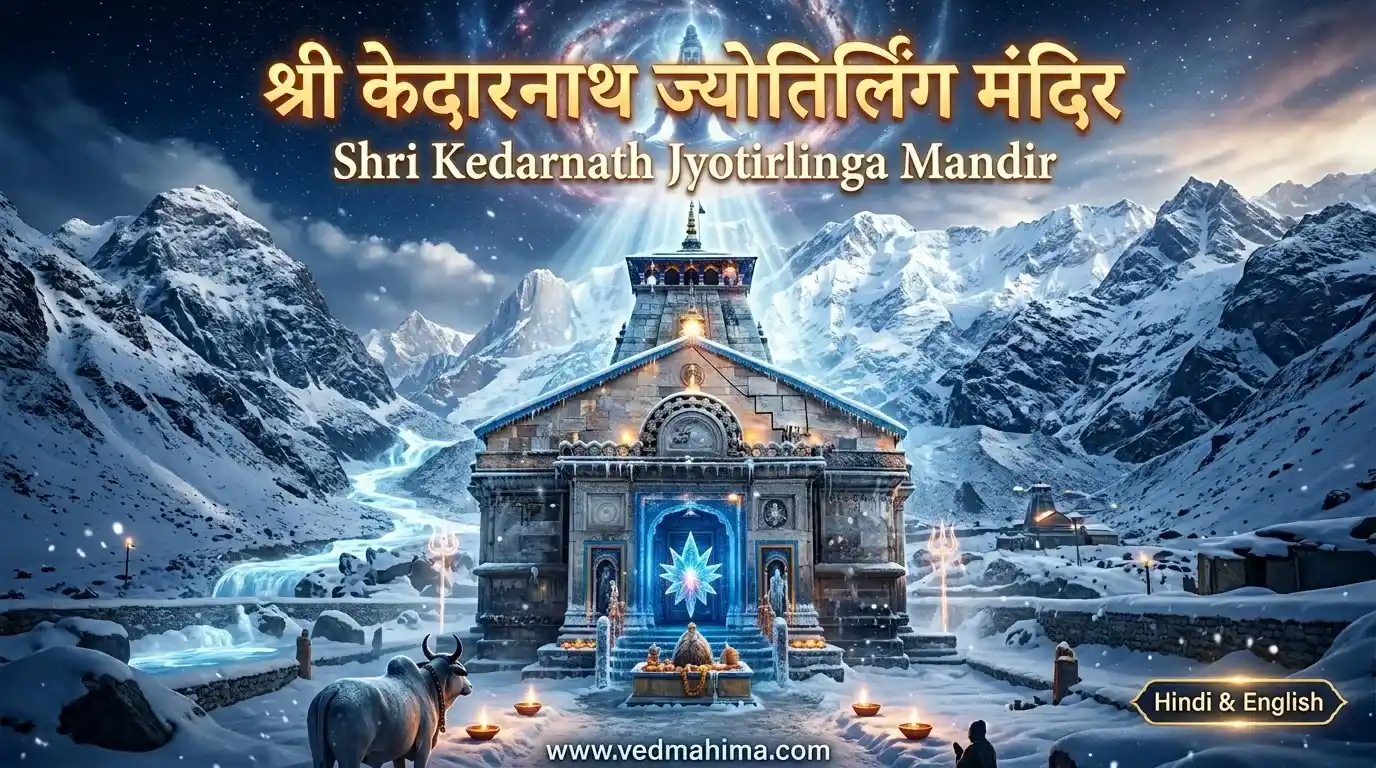
॥ Temple Overview & Divine Glory ॥
Shri Kedarnath Jyotirlinga Temple stands as the ultimate, eternal cosmic epitome of Himalayan spirituality, ultimate ascetism, and unyielding devotion across millennia. Nestled profoundly at an altitude of 3,583 meters (11,755 feet) above sea level in the Rudraprayag district of Uttarakhand, India, this divine shrine is globally revered as the highest and most remote among the twelve sacred Jyotirlingas of Lord Shiva. The temple complex rests majestically in the snow-clad lap of the Garhwal Himalayas, flanked by the breathtaking, towering peaks of Kedarnath, Kedar Dome, and Bharatehkunta, near the pristine headwaters of the holy Mandakini River. According to ancient Vedic scriptures, Puranas, and historical treatises, Kedarnath is not merely a geographical destination but the absolute pinnacle of Kedar Khanda, a spiritual realm where the divine cosmic energy of Mahadev touches the physical earth in its most primordial, untamed form. A deeply ingrained, foundational belief in Sanatan Dharma holds that a single, pure-hearted glimpse (Darshan) of the hump-shaped self-manifested Kedarnath Jyotirlinga eradicates the accumulated karmic baggage, sins, and mortal attachments of multiple past lifetimes. Furthermore, undertaking the arduous pilgrimage to this sacred peak is believed to bestow ultimate spiritual liberation, as the harsh mountain terrain and pure alpine atmosphere systematically purify the mind, body, and soul, preparing the devotee for absolute union with the divine consciousness.॥ Key Spiritual & Structural Aspects ॥
* The Triangular Self-Manifested Jyotirlinga: The central deity is the Swayambhu (self-manifested) Lingam of Lord Kedar, which uniquely manifests as a massive, natural, triangular rock formation. Unlike traditional sculpted or cylindrical stone lingams, this rough, dark-grey volcanic rock represents the hump of Lord Shiva when he assumed the form of a celestial bull (Mahisha). The deity radiates an intense, palpable cosmic energy, and devotees are permitted to touch their foreheads directly against the cold, sacred stone during designated hours of Sparsha Darshan, a ritual considered a rare and life-altering spiritual privilege.* The Mandatory Pashupatinath Pre-requisite: According to deep-rooted spiritual traditions and scriptural beliefs, it is considered necessary for a devotee to first visit and seek blessings at the Shri Pashupatinath Temple in Kathmandu, Nepal, before arriving at Shri Kedarnath Temple. In the cosmic legend of the divine bull form, the head and face manifested at Pashupatinath, while the hind section (the hump) appeared at Kedarnath. Therefore, to unlock the ultimate spiritual merits of the Kedarnath pilgrimage, traditional lore dictates that one must first pay homage to the divine countenance (face) at Pashupatinath before worshipping the sacred torso and hump at Kedarnath.
* The Indestructible Architectural Substratum: Built using massive, heavy, and meticulously interlocking grey stone slabs, the temple structure is an engineering marvel capable of surviving the harshest Himalayan winters, heavy glacial shifts, and catastrophic floods. The structural resilience of the temple was globally witnessed during the devastating 2013 flash floods, where a massive boulder—now revered as the Bhim Shila—miraculously rolled down from the mountains and stopped precisely behind the temple, diverting the raging waters and protecting the inner sanctum from any damage.
* The Panch Kedar Cosmic Connection: Kedarnath is the primary and most revered temple within the sacred Panch Kedar pilgrimage circuit. According to scriptural texts, different parts of Lord Shiva’s divine bull form manifested at five distinct locations across the Himalayas: the hump at Kedarnath, the arms at Tungnath, the torso and navel at Madmaheshwar, the face at Rudranath, and the matted hair at Kalpeshwar. Completing the pilgrimage to all five sites is believed to grant the ultimate essence of Shaivite spiritual awakening.
* The Sacred Bhairavnath Temple: Positioned on a nearby hillock overlooking the main complex, this open-air shrine is dedicated to Lord Bhairav, the fierce guardian deity of the entire valley. According to local lore and scriptural tradition, when the main Kedarnath temple closes its doors during the heavy snowbound winter months, Lord Bhairavnath acts as the living protector of the entire temple and the sacred valley, ensuring no malevolent forces desecrate the holy land.
॥ The Ritualistic Cycle: Five Daily Sacred Aartis ॥
The spiritual atmosphere of Kedarnath is strictly anchored by ancient Vedic rituals and daily continuous chants administered by the Rawal (Chief Priest) belonging to the Veera Shaiva community of Karnataka. The five daily operational phases include:1. Maha Abhishek & Prabhat Puja (04:00 AM to 07:00 AM): The day begins with intense cleansing rituals where the triangular deity is covered with pure ghee, honey, milk, and fragrant herbal pastes. Powerful mantras are chanted by the priests as the sun rises over the snow peaks.
2. Sparsha Darshan Puja (07:00 AM to 01:00 PM): The time when common devotees are allowed inside the main sanctum to perform personal worship, pour holy Ganga water, place Belpatra leaves, and directly touch their heads onto the self-manifested cosmic rock.
3. Mid-Day Shringar Puja (01:00 PM to 02:00 PM): The temple is briefly cleared, and the holy rock is heavily decorated with beautiful strings of flowers, dry fruits, and artistic ornaments. The doors are subsequently shut for afternoon rest until 05:00 PM.
4. Sayangkala Sandhya Aarti (06:00 PM to 07:30 PM): A grand evening gathering where large multi-layered lamps are lit. The entire valley echoes with the powerful chanting of Shiva Stotras, traditional temple bells, and rhythmic percussion instruments, generating a transcendent trance.
5. Shayan Aarti (08:30 PM to 09:00 PM): The final concluding ritual of the night. Devotional hymns are sung in absolute silence, after which the deity is formally put to rest, and the main heavy stone doors are securely locked.
॥ Darshan Tickets, Bookings & Paid Passes Guide ॥
The Shri Badrinath-Kedarnath Temple Committee (BKTC) manages line discipline, but specialized passes and prior ticket bookings are essential to optimize your pilgrimage:* General Darshan & Mandatory Registration (Cost: FREE / Nil): Standard general queue entry for physical darshan inside the temple is completely free. However, it is strictly mandatory for every pilgrim to complete the Uttarakhand Chardham Yatra Registration online via the official government portal (registrationandtouristcare.uk.gov.in) before entering the valley.
* VIP / Special Quick Darshan Pass (Cost: ₹300 per person): To bypass massive queues that often stretch up to several hours during peak months, BKTC issues Special Fast-Track / VIP Darshan passes. These can be purchased directly at the official offline ticketing counter located near the main temple entrance or through the official website. This token optimizes entry and cuts the waiting time significantly to around 30–45 minutes.
* Official Helicopter Booking (Cost: ₹5,500 to ₹9,000 approx for Round Trip): Helicopter transfers from lower base helipads (Phata, Sersi, and Guptkashi) straight to Kedarnath helipad must be booked strictly via the IRCTC official heli-booking portal (heliyatra.irctc.co.in). Slots open periodically before the yatra season, and booking well in advance is required as physical offline spot-tickets are extremely rare.
* Special Morning Puja / Abhishek Bookings (Cost: ₹1,100 to ₹25,000): Devotees wishing to participate in exclusive spiritual rituals like the pre-dawn Maha Abhishek, Rudrabhishek, or evening Shringar Puja must book these slots in advance through the BKTC portal. These are premium, receipt-based ritual services conducted directly inside the inner sanctum under strict priestly guidance.
॥ Deep Architectural Marvel & Layout ॥
The architecture of the Shri Kedarnath Temple is a brilliant and sublime manifestation of the classic Katyuri style of Hindu temple construction, which flourished in ancient Uttarakhand. Built on a massive, highly durable raised rectangular stone platform, the temple’s exterior structure features walls carved from massive, heavy grey granite blocks joined together using an advanced historical interlocking iron clamp system without any mortar. The layout is divided into two main sections: a small inner sanctum sanctorum (Garbhagriha) which houses the natural triangular rock deity, and a large assembly hall (Mandapa) where pilgrims congregate. The entrance of the assembly hall features a beautiful canopy, and its internal stone pillars are meticulously engraved with exquisite carvings of the five Pandava brothers, Draupadi, Lord Krishna, Lord Ganesha, and Lord Shiva along with Goddess Parvati. Standing vigil directly outside the main entrance door is a massive, beautifully sculpted monolithic stone statue of Mount Nandi (the divine bull), staring directly inward into the sanctum, acting as the eternal cosmic gatekeeper.॥ Spiritual Geography: The Kedar Khanda Vortex ॥
In ancient Puranic cosmology, the territory encompassing Kedarnath is designated as the absolute spiritual crown of the Kedar Khanda (the holy Himalayan region described extensively in the Skanda Purana). The entire geographical valley is saturated with a unique, high-frequency spiritual energy that is palpable even to common travellers. This invisible cosmic aura has been systematically built up over thousands of years through the severe austerities performed by ancient rishis, self-realized sages, and the Pandavas themselves who selected this specific high-altitude vortex for their ultimate spiritual ascension. The natural layout of the peaks surrounding the temple forms a sacred geometric mandala that holds back the destructive worldly illusions, leaving only pure, unadulterated consciousness available to the true spiritual seeker.॥ Major Festivals Celebrated ॥
* Badri-Kedar Utsav: A grand annual cultural and spiritual festival celebrated inside the valley during the peak summer months, attracting major classical musicians, spiritual gurus, and traditional artists from all across India.* Shravan Naagpanchami Festival: Celebrated with immense local fervor during the holy monsoon month of Shravan, where the entire deity rock is decorated with special green leaves and medicinal herbs, attracting regional pahadi folk dances and rituals.
* Kapat Opening & Closing Ceremonies: The two most emotional and grand days of the region. The opening occurs on the auspicious day of Akshaya Tritiya (April/May) amidst the continuous playing of military bands and traditional musical instruments. The closing occurs on the day of Bhai Dooj (October/November), where the temple is completely locked down, and the Utsav Murti (moving idol) of Lord Kedar is carried down in a huge, foot-led royal procession to its winter home in Omkareshwar Temple at Ukhimath.
॥ How to Reach Kedarnath Temple ॥
Reaching the remote high-altitude Kedarnath Temple involves a multi-modal travel itinerary combining air/rail networks, scenic mountain motorways, and a highly challenging mountain foot trek:* By Air (Flights): The nearest airport is the Jolly Grant Airport located in Dehradun, which is approximately 239 kilometers away from the primary road-head at Sonprayag/Gaurikund. Regular domestic flights connect Dehradun directly to major metropolitan hubs like New Delhi, Mumbai, and Bengaluru. From the airport, travellers can hire reliable private taxis or catch state transport buses to Rishikesh, Rudraprayag, and Guptkashi. For luxury travelers, direct government-authorized Helicopter services operate directly from helipads located at Guptkashi, Phata, and Sersi, dropping passengers directly at the Kedarnath helipad, located just 500 meters from the temple.
* By Train (Railways): The closest railway terminal is the Yog Nagari Rishikesh Railway Station (YNRK) or the Haridwar Junction (HW), situated around 215 kilometers and 240 kilometers away respectively from Sonprayag. These major stations are comprehensively connected to all parts of northern, western, and eastern India via superfast express trains. From Haridwar and Rishikesh, regular direct morning buses operated by GMOU and private tour operators run daily along the scenic mountain highways toward Sonprayag.
* By Road & Trekking (Highways): Private cars and tourist buses can smoothly travel up to the designated base station at Sonprayag via the National Highway 107 (NH-107), passing through major transit towns like Devprayag, Rudraprayag, and Guptkashi. From Sonprayag, local eco-friendly shared shuttle jeeps carry pilgrims for 5 kilometers up to Gaurikund (the absolute road termination point and hot water spring site). From Gaurikund, the legendary and physically demanding 16 to 18-kilometer mountain stone pathway trek begins. Pilgrims must ascend completely barefoot, on foot, or by hiring local horse/mule services, canvas palanquins (Dandies), or human basket carriers (Kandis) to cross the steep, beautiful terrain via Rambara and Lincholi to finally reach the temple valley.
🙏 ॥ Thus completed ॥ 🙏
The Hindi text has been compiled based on original and authentic sources. If there is any difference,
error, or inconsistency between the Hindi and English versions, the Hindi text shall be considered the
authoritative version. If there are any errors or copyright-related concerns regarding this content,
please contact us.
📜 प्रामाणिक स्रोत:
📖 सार्वजनिक रूप से उपलब्ध स्रोत
📖 आधिकारिक मंदिर रिकॉर्ड
📖 सरकारी पोर्टल
📖 सत्यापित ऑनलाइन संदर्भ
About Shri Kedarnath Jyotirlinga Temple
The history of Kedarnath Temple is deeply intertwined with the ancient epic Mahabharata and the subsequent revival of Sanatan Dharma. According to scriptural accounts, the temple was originally established by the Pandavas. Seeking atonement for the sins of killing their kinsmen in the Kurukshetra war, the Pandavas pursued Lord Shiva to the Himalayas. Shiva evaded them by taking the form of a bull, plunging into the ground at Kedarnath, leaving his divine hump behind. The modern grand stone temple standing today was historically reconstructed in the 8th century CE by Adi Shankaracharya, the great revivalist philosopher of Hinduism, who established it as a pillar of the Char Dham circuit before taking his final Samadhi behind this very shrine.