Shri Ram Janmabhoomi Teerth Kshetra Ayodhya
Shri Ram Janmabhoomi Teerth Kshetra Ayodhya Temple Darshan Guide
🙏 Devotional
🔥 Powerful
📿 Daily Prayer
॥ Temple Overview & Divine Glory ॥
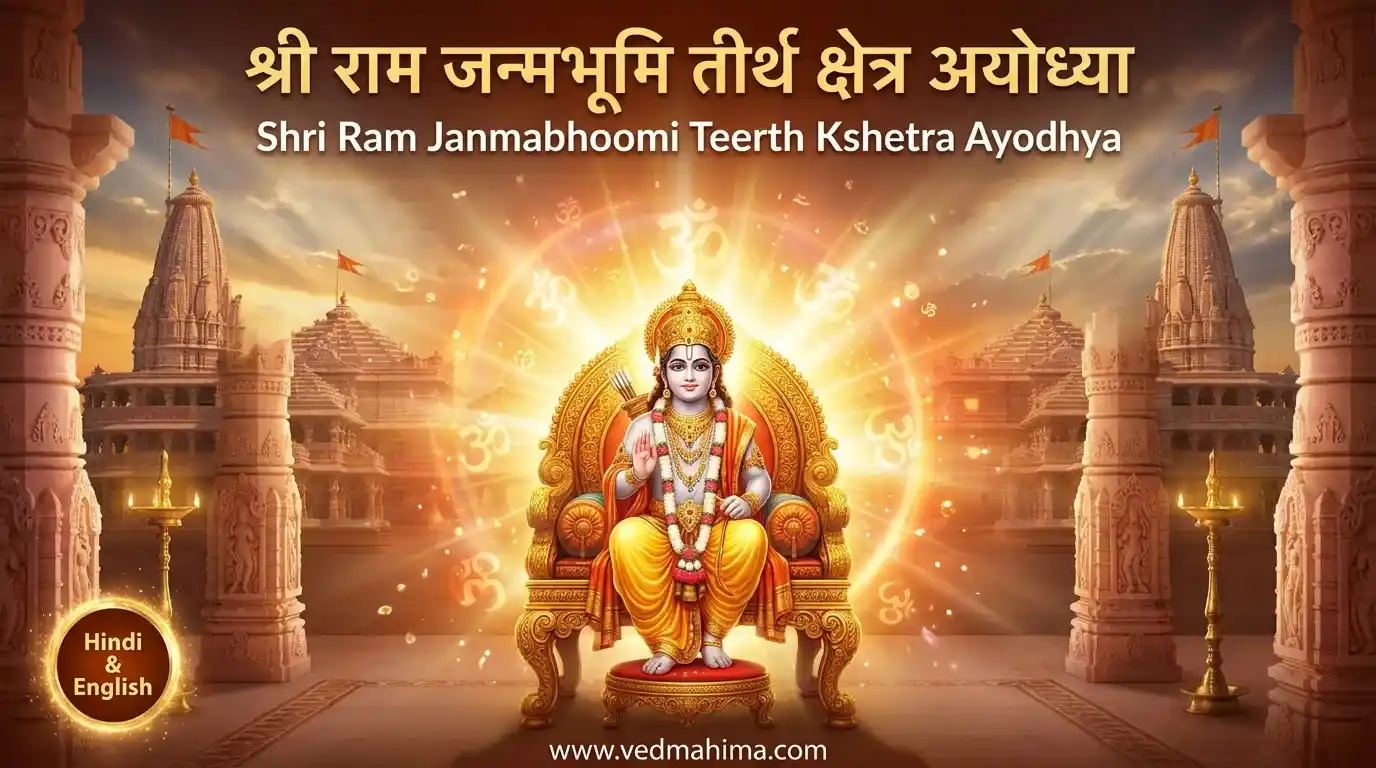
Shri Ram Janmabhoomi Temple stands as the monumental spiritual epicenter of Sanatan Dharma, embodying the collective faith, ultimate sacrifice, and centuries-long resilience of millions of Hindus worldwide. Located profoundly on the sacred banks of the holy river Sarayu in the ancient city of Ayodhya, Uttar Pradesh, India, this magnificent architectural marvel marks the absolute literal birthplace of Lord Rama, the seventh incarnation of Lord Vishnu. Celebrated as Maryada Purushottam (the ultimate epitome of righteousness and human conduct), Lord Rama's return to his grand birthplace has culminated in the historic construction of this sprawling temple complex. Globally revered as a sovereign seat of cosmic justice, tranquility, and divine sovereignty, the central deity of the inner sanctum is Ram Lalla Virajman—the five-year-old child form of Lord Rama, exquisitely sculpted out of a single monolithic block of millions-of-years-old black Shyamal stone. A deeply ingrained belief in Hindu philosophy dictates that a single pure-hearted glimpse (Darshan) of the divine child Lord instills an absolute sense of spiritual peace, washes away accumulated earthly sins, and connects the mortal soul to the ultimate cosmic consciousness of Ramrajya.॥ Key Spiritual & Architectural Aspects ॥
* The Transcendent Monolithic Idol: The central focal point of the entire universe for devotees is the breathtaking 51-inch-long idol of Ram Lalla, sculpted by master artist Arun Yogiraj. Standing majestically on a gold-plated marble altar, the deity exhibits a soft, captivating, child-like smile, holding a golden bow and arrow, while the intricate outer frame features the ten primary incarnations (Dashavatara) of Lord Vishnu, along with sacred symbols like Swastika, Om, and the divine mace (Gada).* Traditional Nagara Architectural Style: Built completely without the use of a single ounce of structural iron or steel, the main temple is a brilliant, ultra-engineered manifestation of the traditional northern Indian Nagara architectural template. Crafted completely out of pink sandstone imported from Bansi Paharpur in Rajasthan, it is engineered to stand structurally unyielding for over one thousand years, holding five massive, highly artistic courtly halls (Mandapas): Nritya, Rang, Sabha, Prarthana, and Kirtan Mandapa.
* The Divine Surya Tilak Science: An incredible engineering and astronomical marvel is integrated into the structural design of the inner sanctum. Every year on the auspicious day of Ram Navami, a highly precise system of high-grade reflective mirrors and lenses channels the natural rays of the sun directly onto the forehead of the Ram Lalla idol at exactly 12:00 PM, symbolizing the divine blessing of the solar dynasty (Suryavansh) to which Lord Rama belonged.
* The Sacred Parkota & Sub-Shrines: The main shrine is surrounded by a massive, continuous rectangular security wall and paved corridor known as the Parkota, spanning over 732 meters. The corners and perimeter of this historic corridor accommodate dedicated individual shrines honoring sacred sages and divine characters from the Ramayana, including Maharishi Valmiki, Maharishi Vashistha, Maharishi Vishwamitra, Mata Shabari, and Nishad Raj.
॥ The Detailed Divine Ritual & Aarti Cycle ॥
The daily spiritual rhythm of the grand temple is systematically governed by the Shri Ram Janmabhoomi Teerth Kshetra Trust, splitting the timeline into highly precise, regal devotional phases:1. Mangala & Shringar Aarti (06:00 AM - 06:30 AM): The supreme morning awakening and ornamentation ritual. The child deity is gently awakened, bathed in sacred waters, and intricately decorated in highly radiant seasonal garments and heirloom gold and diamond jewelry, followed by the morning wave offerings.
2. Bhog Aarti (12:00 PM - 12:30 PM): The grand midday royal feast offering. A highly delicious assortment of pure vegetarian dishes, traditional sweets, dairy items, and fruits is formally presented to Ram Lalla, followed by general darshan suspension for brief deity rest.
3. Sandhya Aarti (07:30 PM - 08:00 PM): The spectacular evening twilight worship. Multiple tiers of heavy brass lamps are rhythmically waved by the chief priests amidst the thunderous chanting of the Ram Stuti, blowing of conch shells, and traditional percussive systems, illuminating the complex in a solar glow.
4. Shayan Aarti (09:30 PM - 10:00 PM): The final, deeply moving night ritual. Soothing devotional lullabis are sung to put the child Lord into deep celestial rest before the primary heavy silver doors are securely locked for the night.
॥ Deep Historical Landscape & Layout ॥
The complete Shri Ram Janmabhoomi complex spans over a massive 70 acres of high-security land, comprehensively designed to blend environmental conservation with cultural heritage. Over 70% of the active site is systematically preserved as an eco-friendly green zone, featuring ancient groves of trees and water conservation channels. To access the main temple platform, pilgrims climb a monumental series of 32 stone steps through the grand Singh Dwar (Lion Gate), which opens into the vast, paved courtyards. The complex features a state-of-the-art Pilgrimage Facility Center (PFC) capable of handling hundreds of thousands of travelers simultaneously, complete with automated locker systems, medical centers, and well-shaded, high-capacity pedestrian walkways designed to optimize transit comfort during intense summer or monsoon seasons.॥ Major Festivals Celebrated ॥
* Shri Ram Navami: The ultimate national and international festival celebrating the birth anniversary of Lord Rama. The entire city of Ayodhya is decorated like a royal palace, drawing millions of walking pilgrims who take a purifying dip in the holy Sarayu river before entering the temple for the world-famous Surya Tilak ceremony.* Deepawali Mahotsav (The Grand Festival of Lights): Marking the historic return of Lord Rama to Ayodhya after his victory over Ravana. The entire temple complex and the adjacent banks of Sarayu (Ram Ki Paidi) are illuminated with millions of traditional earthen oil lamps (Diyas), breaking global world records and creating an unearthly, heavenly spectacle.
* Pran Pratishtha Anniversary: Celebrating the historic consecration day of the temple, observed annually with grand Chhappan Bhog offerings, special classical musical assemblies, and continuous Vedic yagyas for global peace.
॥ How to Reach Shri Ram Janmbhoomi Ayodhya ॥
Ayodhya is an internationally developed tourist destination, exceptionally well-connected across global coordinates via high-capacity modern infrastructure:* By Air (Flights): The holy city is directly served by the state-of-the-art Maharishi Valmiki International Airport Ayodhya Dham (AYO), located barely 10 kilometers away from the temple complex. It operates daily direct domestic flights to major hubs like New Delhi, Mumbai, Bengaluru, Ahmedabad, and Kolkata, with expanding international transit gates. Safe airport taxis, app-based cabs, and dedicated electric shuttle coaches run non-stop from the arrival bays.
* By Train (Railways): The city is anchored by the world-class, newly renovated Ayodhya Dham Junction Railway Station (AYC), designed to resemble a grand temple. It is seamlessly connected via high-speed Vande Bharat Express, Amrit Bharat Express, and luxury superfast lines traversing from all four corners of India. Local eco-friendly e-rickshaws and golf carts are available immediately at the station gates to drop pilgrims directly at the entry corridor plaza.
* By Road (Highways): Ayodhya sits prominently on a major 4-lane national highway corridor (NH-27). Regular luxury Volvo air-conditioned sleeper buses run non-stop from prominent cities like Lucknow, Prayagraj, Varanasi, Gorakhpur, and New Delhi to the central Ayodhya Bus Stand. Private luxury vehicles can smoothly access the city via the highway, using the designated multi-level smart parking facilities near the outer periphery.
🙏 ॥ Thus completed ॥ 🙏
The Hindi text has been compiled based on original and authentic sources. If there is any difference,
error, or inconsistency between the Hindi and English versions, the Hindi text shall be considered the
authoritative version. If there are any errors or copyright-related concerns regarding this content,
please contact us.
📜 प्रामाणिक स्रोत:
📖 सार्वजनिक रूप से उपलब्ध स्रोत
📖 आधिकारिक मंदिर रिकॉर्ड
📖 सरकारी पोर्टल
📖 सत्यापित ऑनलाइन संदर्भ
About Shri Ram Janmabhoomi Teerth Kshetra Ayodhya
The history of Shri Ram Janmabhoomi is an epic, multi-century saga of unyielding devotion and cultural reawakening. Scripturally documented in ancient Puranas and the Ramayana as the capital of the Ikshvaku dynasty, a grand temple was originally built here by King Vikramaditya. In 1528 AD, during the Mughal invasion led by Babur, the ancient structure was demolished by his commander Mir Baqi to construct a mosque over it. For nearly 500 years, Hindus launched over 76 historic conflicts and legal battles to reclaim the sacred birthplace. Following a historic, unanimous judgment by the Supreme Court of India in November 2019, the land was rightfully handed over to a temple trust. The foundation stone was laid on August 5, 2020, leading to the grand visual reality standing today, highlighted by the majestic Pran Pratishtha ceremony on January 22, 2024, which restored the Lord of Ayodhya to his eternal birthplace.