Shri Sita Chalisa
Sita Navami and Vivah Panchami, Janaki swayamvar and Shiv dhanu story, Sita in Lanka, Lav-Kush and Valmiki, patience and maryada
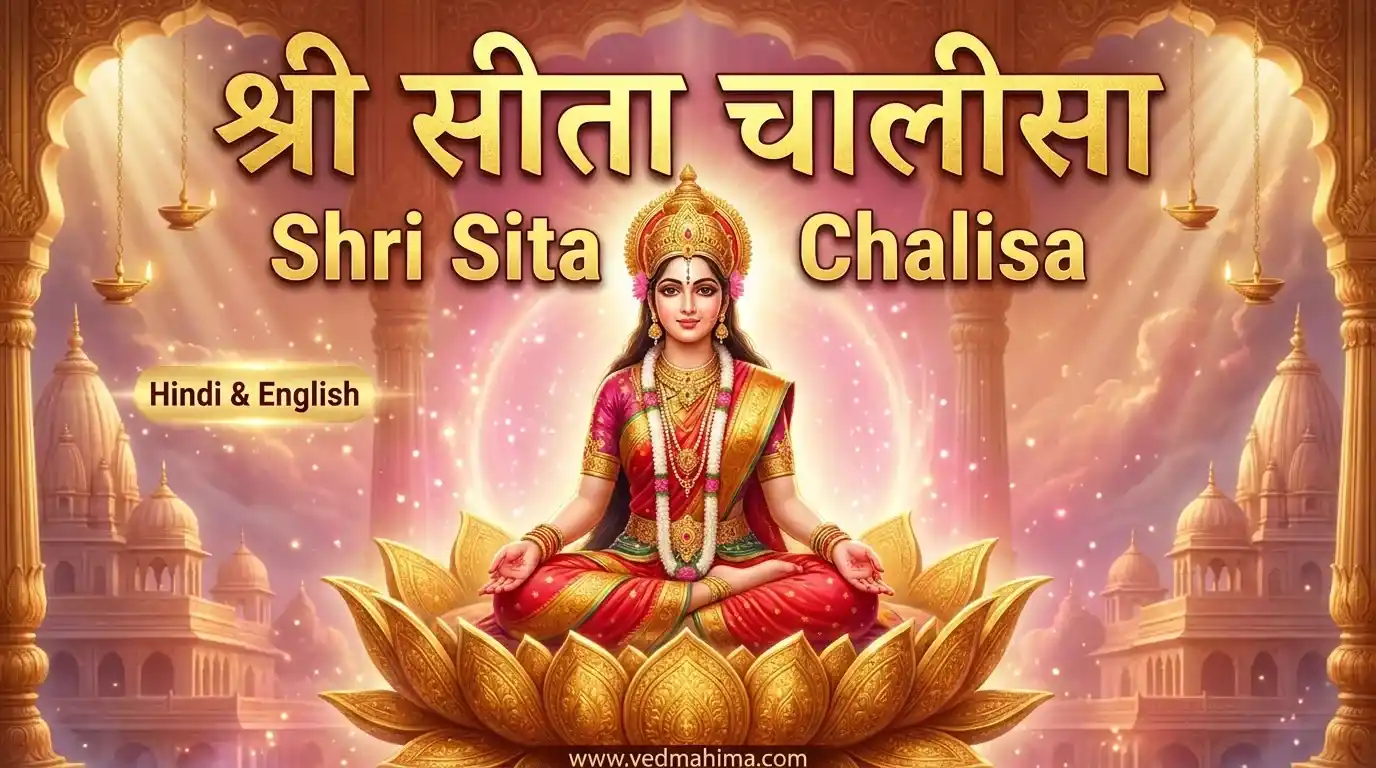
Bandau charan saroj nij,
Janak lali sukh dham.
Ram priya kirpa karen,
Sumirau aathon yam.
Kirti gatha jo padhen,
Sudharain sagare kaam.
Man mandir basa karen,
Dukh bhanjan Siya Ram.
॥ Chaupai ॥
Ram priya Raghupati Raghurai,
Baidehi ki kirat gai.
Charan kamal bandon sir nai,
Siya Sursari sab paap nasai.
Janak dulari Raghav pyari,
Bharat Lakhan Shatrughan vari.
Divya dhara son upji Sita,
Mithileshwar bhayo neh atita.
Siya roop bhayo manwa ati,
Rachyo swayamvar Janak mahipati.
Bhari Shiv dhanu khinchai joi,
Siya jaymaal sajihain soi.
Bhupati narapati Ravan sanga,
Nahin kari sake Shiv dhanu bhanga.
Janak nirash bhaye lakhi karan,
Janamyo nahin avanimochi taran.
Yah sun Vishwamitra muskae,
Ram Lakhan muni sheesh navae.
Aagya pai uthe Raghurai,
Isht dev guru hiyahin manai.
Janak suta Gauri sir nava,
Ram roop unke hiy bhava.
Marat palak Ram kar dhanu lai,
Khand khand kari patkin bhu pai.
Jai jaikar hui ati bhari,
Anandit bhaye sabai nar nari.
Siya chali jaymaal sambhale,
Mudit hoy griva mein dale.
Mangal baaj baje chahun ora,
Pare Ram sang Siya ke fera.
Lauti baraat Avadhpur aai,
Teeno matu karain noraai.
Kaikeyi kanak bhavan Siya dinha,
Matu Sumitra godahi linha.
Kaushalya sut bhent diyo Siya,
Harakh apar bhaye Sita hiya.
Sab vidhi baanti badhai,
Rajtilak kai yukti sunai.
Mand mati Manthara adain,
Ram na Bharat rajpad pain.
Kaikeyi kop bhavan ma gaili,
Vachan pati son apnei gahili.
Chaudah baras kop banvasa,
Bharat rajpad dehi dilasa.
Aagya mani chale Raghurai,
Sang Janaki Lakshman bhai.
Siya Shri Ram path path bhatkai,
Mrig Marichi dekhi man atkai.
Ram gaye maya mrig maran,
Ravan sadhu banyo Siya karan.
Bhiksha kai mis lai Siya bhagyo,
Lanka jai daravan lagyo.
Ram viyog son Siya akulani,
Ravan son kahi karkash bani.
Hanuman Prabhu laaye anguthi,
Siya chudamani dihin anuthi.
Ashtsiddhi navnidhi var pava,
Mahaveer Siya sheesh navava.
Setu bandhi Prabhu Lanka jiti,
Bhakt Vibhishan son kari priti.
Chadhi viman Siya Raghupati aaye,
Bharat bhrat Prabhu charan suhae.
Avadh Naresh pai Raghav se,
Siya Maharani dekhi hiy hulse.
Rajak bol suni Siya van bheji,
Lakhanlal Prabhu baat saheji.
Valmiki muni ashray dinyo,
Lav-Kush janm wahan pai linha.
Vividh bhanti gun shiksha dinhin,
Donuh Ramcharit rat linha.
Larikan kai suni sumadhur bani,
Ram Siya sut dui pahichani.
Bhool mani Siya wapas laaye,
Ram Janaki sabahi suhae.
Sati pramanikta kehi karan,
Vasundhara Siya ke hiy dharan.
Avani suta avani ma soi,
Ram Janaki yahi vidhi khoi.
Pativrata maryadit mata,
Sita sati navaun matha.
॥ Doha ॥
Janaksuta avanidhia,
Ram priya lavmata.
Charankamal jehi ur basai,
Sita sumirai prata.
About Shri Sita Chalisa
The first verses introduce her as Ram Priya and Baidehi, whose glory the hymn sings, and the Ganga-like (Sursari) remover of all sin. She is the dear daughter of Janak and beloved of Ram, and the sister-in-law of Bharat, Lakshman and Shatrughan. She was born of the divine earth, and Mithila''s king loved her beyond measure. As she grew, Janak arranged her swayamvar.
The swayamvar is told in detail. Janak announced that whoever could string the heavy Shiv dhanu would receive Sita''s garland. Many kings, including Ravan, could not even break the bow, and Janak despaired that no hero had been born on the earth. Vishwamitra smiled, Ram and Lakshman bowed to the sage, and Ram took permission, thought of his deities and guru, and went forward. Sita bowed to Gauri and Ram''s form settled in her heart. In a moment Ram lifted the bow and broke it to pieces on the ground, shouts of victory rose, Sita walked with the garland and placed it around his neck, auspicious music played, and they took the wedding rounds (see the Ram Chalisa).
The next part is Ayodhya and the exile. The Chalisa says the three mothers welcomed the couple, Kaikeyi gave Sita a golden palace, Sumitra took her in her lap and Kaushalya gave her gifts. Then came the news of the coronation. The foolish Manthara interfered, Kaikeyi went to the anger-chamber and claimed her promise: fourteen years of exile for Ram and the throne for Bharat. Ram obeyed and left with Janaki and Lakshman. In the forest Sita saw the Maricha deer, Ram went after the illusory deer, and Ravan, disguised as a sage, took Sita away in the name of alms and went to Lanka. Separated from Ram, Sita was in grief, and she answered Ravan in harsh words.
Hanuman then brings Ram''s ring, and Sita gives him her chudamani, blessing him with the eight siddhis and nine treasures (see the Hanuman Chalisa). Ram builds the bridge, conquers Lanka and befriends Vibhishan. They return in the Pushpak vimaan, Bharat welcomes them, and Sita is welcomed with joy as maharani. Then a washerman''s remark sends Sita to the forest, Lakshman carrying out the order. Sage Valmiki gives her shelter, where Lav and Kush are born. He teaches them and they learn the Ramcharit by heart. Hearing their sweet voices, Ram recognises his sons, and Sita is brought back. The end of her story is told briefly: Mother Earth took Sita back into her heart, and the Chalisa closes by bowing to the chaste and dignified mother.
Devotees read it on Sita Navami, Vivah Panchami and Navratri for patience, strength in hardship and family peace. These are matters of faith. The story also holds honest questions that tradition itself discusses, so please read it with care and respect.
❓ Frequently Asked Questions
Question: Who is Mata Sita, and how does the Chalisa introduce her?
Answer: The Chalisa calls her Janak Lali (Janak''s dear daughter), Ram Priya, Baidehi and Janaki. It says she was born from the divine earth (dharti) and that King Janak of Mithila loved her beyond measure. Tradition regards her as a form of Lakshmi (see the Lakshmi Chalisa).
Question: What is the swayamvar story in this Chalisa?
Answer: It says Janak announced that whoever could string the heavy Shiv dhanu would receive Sita''s garland. Kings, including Ravan, could not even break it, and Janak became hopeless. Vishwamitra smiled, Ram took permission from his guru, Sita bowed to Gauri, and Ram lifted the bow and broke it into pieces (see the Ram Chalisa).
Question: How does the Chalisa describe the exile and Sita''s abduction?
Answer: It says Manthara misled Kaikeyi, who claimed her boon: fourteen years of exile for Ram and the throne for Bharat. Ram went with Sita and Lakshman. Ravan, disguised as a sage, took Sita in the name of alms while Ram chased the golden deer, and he carried her to Lanka.
Question: What role does Hanuman play in the Chalisa?
Answer: It says Hanuman brought Ram''s ring and Sita gave him her chudamani (head jewel), and that Sita blessed him with the eight siddhis and nine treasures (see the Hanuman Chalisa). Ram then built the bridge, conquered Lanka and befriended Vibhishan.
Question: What does the Chalisa say about Valmiki, Lav and Kush?
Answer: It says that after a washerman''s words, Sita was sent to the forest, found shelter in sage Valmiki''s ashram and gave birth to Lav and Kush. Valmiki taught them, and they learned the Ramcharit by heart. When Ram heard their sweet voices, he recognised his sons.
Question: When should the Sita Chalisa be recited?
Answer: Early morning or evening worship, and on Sita Navami (Vaishakh Shukla Navami, also called Janaki Navami), Vivah Panchami (Margashirsha Shukla Panchami) and Navratri. It is read for patience, family harmony and steadiness in hard times.