Shri Janaki (Sita) Ji Ki Aarti
Purity, Sacrifice, Love, Patience, Compassion, Strength, Devotion
🙏 Devotional
🔥 Powerful
📿 Daily Prayer
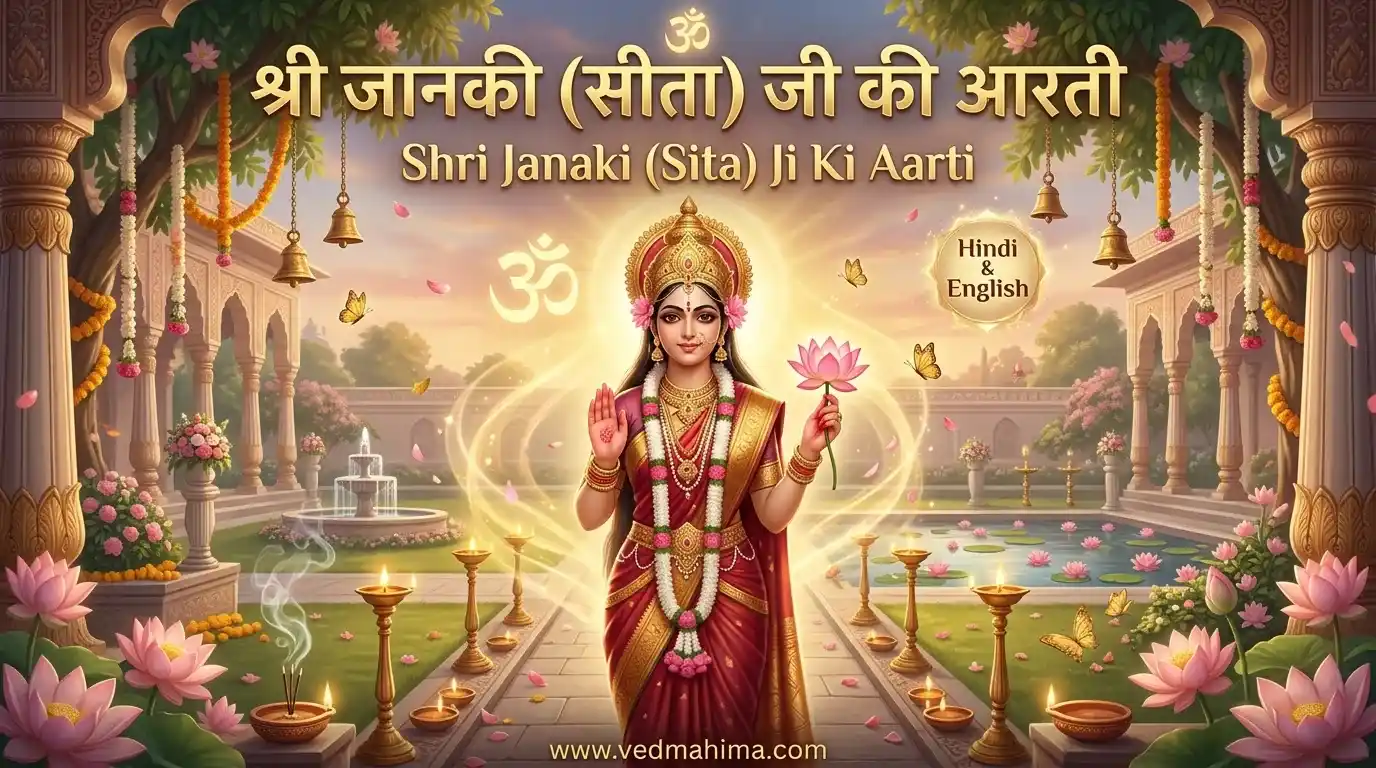
॥ Aarti ॥
Aarti Shri Janak-Dulari Ki,
Sita Ji Raghuvar-Pyari Ki.
Aarti Shri Janak-Dulari Ki.
Jagat-Janani Jag Ki Vistarini,
Nitya Satya Saket-Viharini,
Param Dayamayi Deenoddharini,
Maiya Bhaktan-Hitkari Ki.
Aarti Shri Janak-Dulari Ki.
Sati Shiromani Pati-Hit-Karini,
Pati-Seva Hit Van-Van Charini,
Pati-Hit Pati-Viyog-Svikarini,
Tyag-Dharm-Murti-Dhari Ki.
Aarti Shri Janak-Dulari Ki.
Vimal-Kirti Sab Lokan Chhayi,
Naam Let Paavan Mati Aayi,
Sumirat Katat Kasht Dukhdayi,
Sharanagat-Jan-Bhay-Hari Ki.
Aarti Shri Janak-Dulari Ki.
Aarti Shri Janak-Dulari Ki,
Sita Ji Raghuvar-Pyari Ki.
Aarti Shri Janak-Dulari Ki.
Jagat-Janani Jag Ki Vistarini,
Nitya Satya Saket-Viharini,
Param Dayamayi Deenoddharini,
Maiya Bhaktan-Hitkari Ki.
Aarti Shri Janak-Dulari Ki.
Sati Shiromani Pati-Hit-Karini,
Pati-Seva Hit Van-Van Charini,
Pati-Hit Pati-Viyog-Svikarini,
Tyag-Dharm-Murti-Dhari Ki.
Aarti Shri Janak-Dulari Ki.
Vimal-Kirti Sab Lokan Chhayi,
Naam Let Paavan Mati Aayi,
Sumirat Katat Kasht Dukhdayi,
Sharanagat-Jan-Bhay-Hari Ki.
Aarti Shri Janak-Dulari Ki.
🙏 ॥ Thus completed ॥ 🙏
The Hindi text has been compiled based on original and authentic sources. If there is any difference,
error, or inconsistency between the Hindi and English versions, the Hindi text shall be considered the
authoritative version. If there are any errors or copyright-related concerns regarding this content,
please contact us.
📜 प्रामाणिक स्रोत:
📖 पारंपरिक लोकप्रचलित पाठ
About Shri Janaki (Sita) Ji Ki Aarti
Shri Janaki Sita Ji Ki Aarti is a profoundly moving devotional hymn dedicated to Mother Sita, the eternal consort of Lord Rama and the ultimate symbol of purity, strength, and sacrifice in Hinduism. The lyrics beautifully address Her as the Cosmic Mother (Jagat-Janani) who expands the universe, yet resides eternally in the divine spiritual realm of Saket. It honors Her multifaceted glory—not just as King Janak's beloved daughter or Lord Rama's heart, but as a merciful savior of the downtrodden (Deenoddharini).
The philosophical foundation of this hymn centers on the unmatched ideal of "Tyag" (renunciation) and "Dharma" (righteous duty). It poignantly recalls how Mother Sita happily chose the hardships of the forest to serve Her husband, and later bore the immense pain of separation for the sake of societal righteousness. The text emphasizes that merely taking Her name purifies the intellect (Paavan Mati) and removes all deep-seated sorrows. Singing this hymn brings a deep sense of peace, stability, and emotional resilience, enveloping the household in Mother Sita's protective, maternal grace.
The philosophical foundation of this hymn centers on the unmatched ideal of "Tyag" (renunciation) and "Dharma" (righteous duty). It poignantly recalls how Mother Sita happily chose the hardships of the forest to serve Her husband, and later bore the immense pain of separation for the sake of societal righteousness. The text emphasizes that merely taking Her name purifies the intellect (Paavan Mati) and removes all deep-seated sorrows. Singing this hymn brings a deep sense of peace, stability, and emotional resilience, enveloping the household in Mother Sita's protective, maternal grace.