Shri Grishneshwar Jyotirlinga Temple
Shree Grishneshwar Jyotirlinga Temple Darshan Guide
🙏 Devotional
🔥 Powerful
📿 Daily Prayer
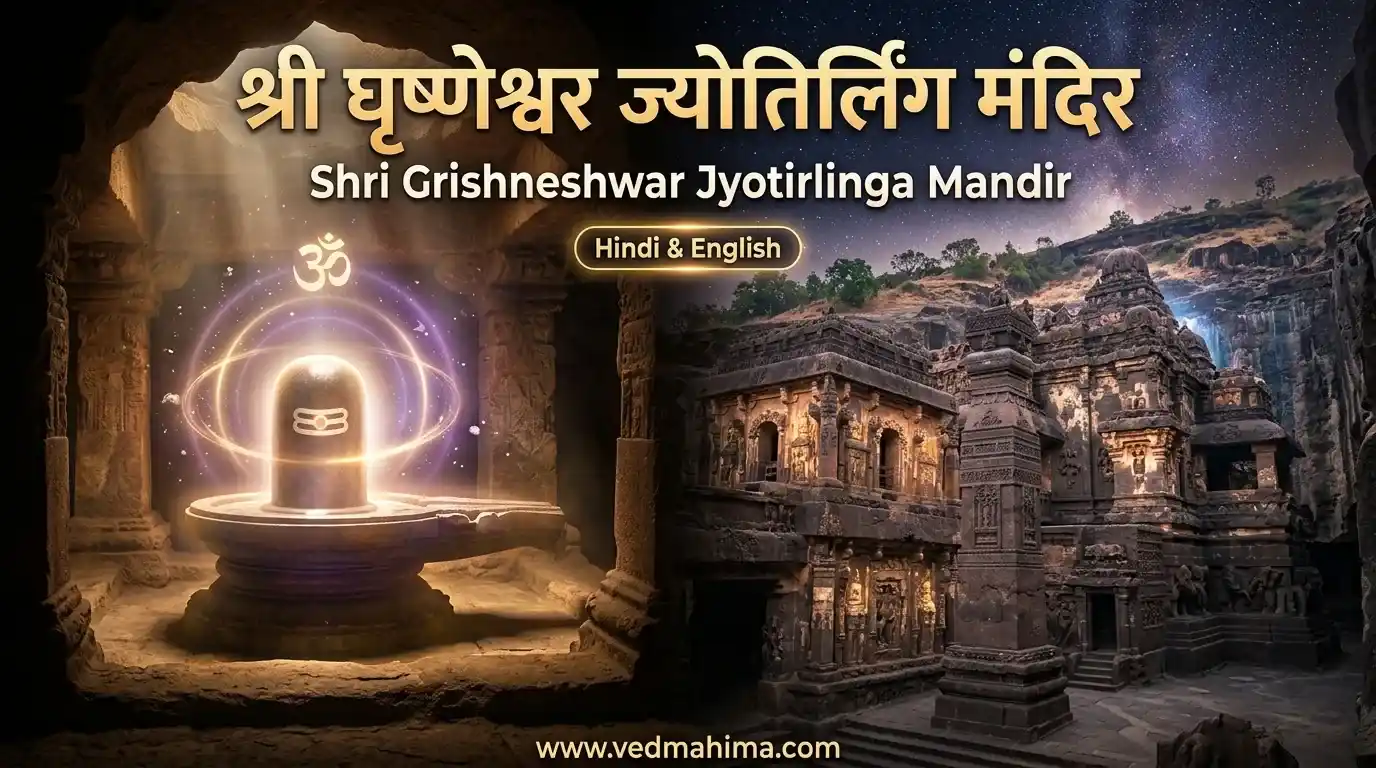
॥ Temple Overview & Divine Glory ॥
Shree Grishneshwar Jyotirlinga Temple, located in Verul village near Ellora Caves in Maharashtra, holds an exceptionally sacred status as the final and twelfth destination in the divine Jyotirlinga pilgrimage. Lord Shiva is worshipped here as Grishneshwar—the Ultimate Lord of Compassion and Healing, symbolizing the infinite grace that restores shattered lives, grants progeny to the childless, and purifies deep-rooted planetary bondages. According to the Shiva Purana, the primary lingam manifested out of a divine lake to restore the life of a dead child, answering the unyielding devotion of a pious woman named Ghushma. Scripturally, a single devout glance (Darshan) of Grishneshwar completely eliminates lifetime misfortunes, dissolves intense inner friction, and bestows permanent spiritual tranquility upon the soul.॥ Key Spiritual & Structural Aspects ॥
* The Miracle of Ghushma: The temple is intimately connected to the Shivalaya lake, where Ghushma used to immerse her hand-made clay lingams. The core stone stands as a living testament to her pure, unwavering devotion.* Exquisite Red Sandstone Structure: Unlike many ancient temples that underwent massive modern concrete additions, Grishneshwar beautifully preserves its classic structural integrity, built using vibrant, durable red volcanic basalt and sandstone.
* The Direct Sparsh Darshan: A highly unique feature of Grishneshwar is that devotees are allowed to go right down into the core sanctum to personally touch the holy stone lingam with their bare foreheads, establishing a direct physical-spiritual connection with Mahadev.
* The Holy Courtyard Enclosure: The inner complex features a magnificent stone-carved Nandi Mandapa and heavy pillars depicting various incarnations of Lord Vishnu and cosmic forms of Shiva, keeping the ancient architectural energy entirely intact.
॥ The Ritualistic Cycle: Divine Daily Aartis ॥
The spiritual administration at Grishneshwar operates under strict traditional Vedic guidelines, welcoming millions of walking pilgrims annually:1. Mangala Aarti (05:30 AM): The beautiful pre-dawn ritual where the sacred gates open, and the primary deity is dynamically awakened with large brass camphor plates amidst heavy Vedic chanting.
2. Jal & Dudh Abhishek (06:00 AM - 12:00 PM): The continuous morning window where general devotees are permitted to personally offer holy water, pure cow milk, and fresh bilva leaves onto the stone lingam.
3. Maha Bhog Aarti (12:00 PM): The grand mid-day worship where traditional Maharashtrian naivedya is offered to Grishneshwar Swamy, after which the sanctum closes briefly for afternoon cleaning.
4. Sandhya Maha Aarti (07:00 PM): The breathtaking evening twilight worship. The entire inner hall glows with oil lamps as priests swing multi-layered fire plates in perfect rhythm with heavy brass bells and drums.
5. Shayan Aarti & Closure (09:00 PM - 09:30 PM): The final musical prayers of the night, establishing a serene atmosphere before the core sanctum gates are securely locked for the night.
॥ Darshan Tickets, Bookings & Paid Passes Guide ॥
The temple trust ensures structured movement through organized paths and fast-track token systems:* General Darshan Queue (Cost: FREE / Nil): Entering the main temple complex and viewing the holy lingam from the outer hall is completely free of cost for all walking pilgrims.
* VIP / Fast-Track Darshan Pass (Cost: ₹100 - ₹200): For elderly travelers, families with young children, or those facing tight schedules, fast-track special entry tokens can be purchased directly at the official administrative counters inside the temple courtyard.
* Strict Dress Code for Men (Garbhagriha Entry): To step inside the primary core sanctum and touch the lingam, men must strictly remove their upper garments (shirts/vests) and enter bare-chested wearing a traditional Dhoti or clean lower wrap. Women must wear decent traditional attire like Sarees or Salwar Suits.
॥ Deep Architectural Marvel & Layout ॥
The structural layout of Grishneshwar exhibits a stunning combination of South Indian and Maratha styles of architecture. Rebuilt in the 18th century by the legendary queen Ahilyabai Holkar, the temple features a unique five-tier Shikhara (spire) adorned with intricately carved miniature sculptures of various Hindu deities. The path leading to the sanctum is tight yet beautifully ventilated, managed by heavy basalt pillars that absorb the sound of continuous chanting, creating an intensely meditative vibrational field inside the main hall.॥ Major Festivals Celebrated ॥
* Maha Shivaratri: The absolute peak of celebrations at Grishneshwar. The entire village of Verul turns into a massive fair, with continuous 24-hour special pujas performed as millions converge on the site.* Shravan Month Mondays: Held during July-August, featuring elaborate daily evening flower and leaf decorations (Shringar) that attract thousands of ecstatic devotees from across Central India.
॥ How to Reach Grishneshwar Temple ॥
Grishneshwar is situated smoothly along the major tourist highway near Chhatrapati Sambhajinagar (Aurangabad), featuring direct nationwide transit access routes:* By Air (Flights): The nearest operational domestic airport is Chhatrapati Sambhajinagar Airport (IXU), situated approximately 35 kilometers away. It has direct regular flights connecting to Mumbai, Delhi, and Hyderabad. Visitors can comfortably charter private AC cars to reach the temple complex in under 45 minutes.
* By Train (Railways): Chhatrapati Sambhajinagar Railway Station (AWB) is a major station well-connected to Mumbai, Pune, Nagpur, and Hyderabad via superfast express networks. The temple is located just 30 kilometers from the station, and local cabs and tourist buses ply continuously 24/7.
* By Road (Highways): Wide, clean national highways smoothly connect Grishneshwar to Shirdi (approx. 105 km) and Pune. Regular state-run MSRTC buses and private AC sleeper coaches run frequently from the central bus stand directly to the Verul / Ellora Caves stop.
🙏 ॥ Thus completed ॥ 🙏
The Hindi text has been compiled based on original and authentic sources. If there is any difference,
error, or inconsistency between the Hindi and English versions, the Hindi text shall be considered the
authoritative version. If there are any errors or copyright-related concerns regarding this content,
please contact us.
📜 प्रामाणिक स्रोत:
📖 सार्वजनिक रूप से उपलब्ध स्रोत
📖 आधिकारिक मंदिर रिकॉर्ड
📖 सरकारी पोर्टल
📖 सत्यापित ऑनलाइन संदर्भ
About Shri Grishneshwar Jyotirlinga Temple
The historical roots of Shree Grishneshwar Jyotirlinga Temple are deeply tied to the ancient descriptions found in the Shiva Purana and the Padma Purana. According to scriptural chronicles, the region was once a beautiful valley near the Sahyadri mountains. A pious woman named Ghushma, who was an ardent devotee of Lord Shiva, lived here. She followed a strict ritual of making 101 clay lingams every single day, worshipping them with deep devotion, and immersing them in a nearby lake. Due to family jealousy, Ghushma's own stepson was brutally killed, and his body was thrown into the same lake. When Ghushma went to immerse her clay lingams the next morning, completely untroubled and fully surrendered to Shiva's will, her son miraculously walked out of the lake alive and fully restored. At that exact moment, Lord Shiva manifested in a massive pillar of cosmic light from the lake. Answering Ghushma's compassionate plea to protect future generations, Mahadev established his eternal presence at the site under the divine name Grishneshwar (or Ghushmeshwar), guaranteeing absolute healing to all who visit. Across historical centuries, the temple suffered heavy damage and destruction during the early medieval invasions of the Deccan region. However, the sacred site was repeatedly revived by various Maratha rulers who recognized its immense spiritual significance. The first major reconstruction was carried out in the 16th century by Maloji Bhosale, the grandfather of the legendary Maratha king Chhatrapati Shivaji Maharaj, who discovered the hidden source of the underground spring near the ruins. The definitive golden chapter in the temple's architectural history was written in the 18th century by Maharani Ahilyabai Holkar of Indore. Known for her massive pan-Indian temple restoration efforts, she completely rebuilt the structure using the finest red volcanic stones, designed the multi-tiered spire, and established the current administrative and ritual guidelines. Today, the temple stands proudly as a protected monument and an active, vibrant center of national faith, managed carefully by a dedicated local temple board to ensure its ancient heritage and distinct spiritual purity endure forever.