Shri Shukra Chalisa
Shukra Dosh Nivaran, Shukravar upay, wealth, marital harmony, beauty and comfort
Shri Ganpati Guru Gauri,
Shankar Hanumat keenh.
Binvaun Shubh Phal Den Hari,
Mud Mangal Deen.
॥ Chaupai ॥
Jayati Jayati Shukra Dev Dayala,
Karat Sada Jan Pratipala.
Shwetambar, Shwet Varan, Shobhit,
Mukh Mand, Chandan Hiy Lobhit.
Sundar Ratnajatit Aabhushan,
Priyahim Madhur, Sheetal Suvasan.
Sapt Bhuj, Shobha Nidhi Lavanya,
Karat Sada Jan, Mangal Kaarya.
Mangalmay, Sukh Sada Sawarath,
Deen Dayalu, Kripa Nidhi Paarath.
Shubhra Swachh, Ganga Jal Jaisa,
Darshan Se, Harshaaye Man Aisa.
Tribhuvan, Maha Mangal Kaari,
Deenan Hit, Kripa Nidhi Saari.
Dev Daanav, Rishi Muni Bhaktan,
Kasht Mitaavan, Bhanjan Jagatan.
Mohbaari, Manhar Hiyara,
Sarv Vidhi Sukh, Saukhya Phulaara.
Karat Krodh, Chapal Bhuj Dhaari,
Kasht Nivaaran, Sant Dukhaari.
Shubhra Varn, Tanu Mand Suhaana,
Kasht Mitaavan, Harshit Naana.
Dusht Haran, Sujanan Hitkaari,
Sarv Baadha, Nivaaran Nyaari.
Sur Patihim, Prabhu Kripa Vilaasin,
Kasht Nivaaran, Shubhra Suvaasin.
Ved Puraan, Pathat Jan Swami,
Manharan, Mohbaari Kaami.
Sapt Bhuj, Ratnajatit Maala,
Kasht Nivaaran, Shubh Phalshaala.
Sukh Rakshak, Sarv Sukh Daata,
Sarv Kaamna, Phal Daata.
Maanav Krit, Paap Hare Prabhu,
Sarv Baadha, Nivaaran Raghu.
Rog Nivaaran, Dukh Harankaar,
Sarv Vidhi, Shubh Phal Denekaar.
Naman Sakal, Sur Nar Muni Karte,
Vrat Upaasak, Dukh Haran Karte.
Sharanaagat, Kripa Nidhi Soi,
Jan Rakshak, Mohe Dukh Hoi.
Shuddh Bhaav, Se Jo Nit Gaave,
Sarv Sukh, Param Pad Paave.
Vrindavan Mein, Mandir Nirmit,
Jahaan Shuddh Bhaktan, Sada Sharanaagat.
Sant Janan Ke, Kasht Mitaavat,
Bhav Bandhan Se, Sahaj Chhudaavat.
Sakal Kaamna, Poorn Karaavat,
Mohbhang, Bhavsaagar Taraavat.
Jayati Jayati, Kripa Nidhaan,
Shukra Dev, Shri Vishva Viddhaan.
Pranvaun, Naath Sakal Gun Saagar,
Vividh Vighn Haran, Sukhdaayak.
Sur Muni Janan, Ati Priya Swami,
Shubhra Varn, Roop Manhaari.
Jai Jai Jai, Shri Shukra Dayala,
Karahun Kripa, Bhav Bandhan Taala.
Dhyaan Dharat, Jan Hou Sukhari,
Kripa Drishti, Shaanti Hitkaari.
Adham Kaayar, Subuddhi Sudhaaro,
Moh Nivaaran, Kasht Nivaaro.
Lakshmipati, Shubh Phal Daata,
Sant Janan, Dukh Bhanjan Raata.
Jai Jai Jai, Kripa Nidhi Shukra,
Karahun Kripa, Harahun Sab Dukh.
Pranvaun Naath, Sakal Gun Saagar,
Vividh Vighn Haran, Sukhdaayak.
Roop Tej Bal, Sampann Sada,
Shaanti Daayak, Jan Sukh Daata.
Tribhuvan Mein, Mangal Karatu,
Sarv Baadha, Harta Shukra.
Maanav Krit, Paap Hare Prabhu,
Sarv Baadha, Nivaaran Raghu.
Rog Nivaaran, Dukh Harankaar,
Sarv Vidhi, Shubh Phal Denekaar.
Pranvaun Naath, Sakal Gun Saagar,
Vividh Vighn Haran, Sukhdaayak.
Dhyaan Dharat, Jan Hou Sukhari,
Kripa Drishti, Shaanti Hitkaari.
Jai Jai Jai, Kripa Nidhi Shukra,
Karahun Kripa, Harahun Sab Dukh.
Namo Namo Shri Shukra Suhaave,
Sarv Baadha, Kasht Mitaave.
Yah Chalisa, Jo Nit Gaave,
Sukh Sampatti, Param Pad Paave.
About Shri Shukra Chalisa
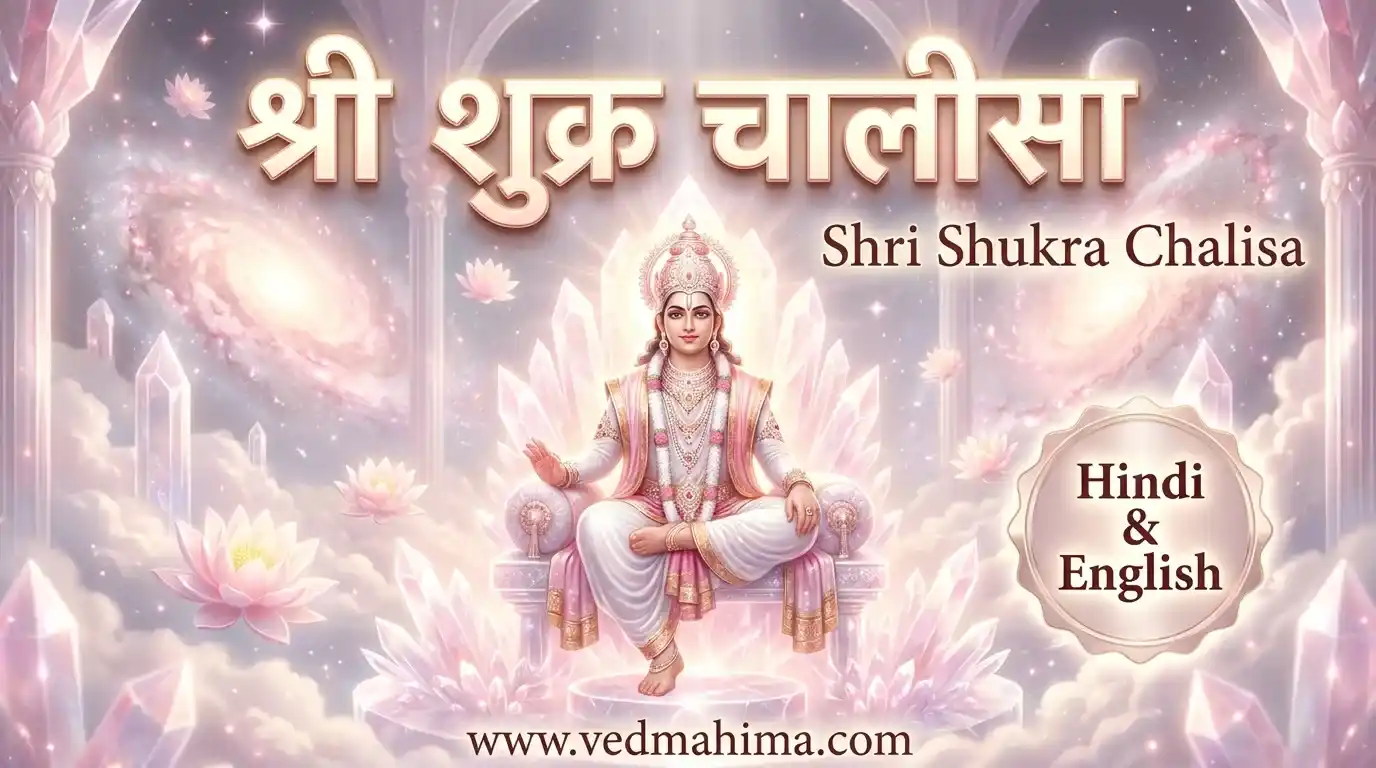
The hymn first paints his form. He is described in white garments (shwetambar) with a white complexion, sandalwood on his chest, beautiful jewelled ornaments and a sweet, cool, fragrant presence. The verses call him sapt-bhuj (seven-armed), a treasure of grace and beauty (shobha nidhi lavanya), and pure and clear like the water of the Ganga, saying that his darshan gladdens the mind. He is addressed as merciful to the poor (deen dayalu), a treasure of compassion, and a protector of saints, gods, demons, sages and devotees alike.
The main body of the Chalisa is a prayer. Again and again the verses ask Shukra Dev to remove suffering (kasht nivaaran), to heal illness (rog nivaaran), to wash away the sins committed by humans (maanav krit paap) and to clear away all obstacles. They ask him to release devotees from the bonds of worldly existence (bhav bandhan), to fulfil every wish, and to grant happiness and a good end. One verse humbly asks him to improve the intellect of the weak and timid (adham kaayar, subuddhi sudhaaro). He is also invoked as Lakshmipati, the one who gives auspicious results. Some verses are repeated as a refrain, a common feature of devotional hymns that also makes the Chalisa easier to remember and chant.
Devotees read it mainly for Shukra dosh nivaran. In astrology a weak or afflicted Venus is traditionally linked with friction in marriage and relationships, lack of comfort, financial strain and loss of charm. People also recite it hoping for success in art, music, fashion, beauty and luxury-related work. These are matters of belief and should not replace practical effort or medical and legal advice.
The traditional practice is to recite it on Friday morning after a bath, in white clothes, on a white seat, and then offer mishri or kheer and donate white items to the needy. Many practitioners see in this a reminder that enjoyment of comfort and beauty is best balanced with simplicity, gratitude and generosity.
❓ Frequently Asked Questions
Question: Who is Shukra Dev and what does he represent in Vedic astrology?
Answer: Shukra Dev is the planet Venus, one of the Navagrahas, associated with love, marriage, beauty, art, comfort and wealth. According to tradition he is the son of Maharishi Bhrigu and the guru of the Daityas, known as Shukracharya. The Chalisa itself does not narrate this story and is a hymn of praise and prayer.
Question: How does this Chalisa describe the form of Shukra Dev?
Answer: It describes him in white garments with a white complexion, sandalwood on his chest, jewelled ornaments and a cool, fragrant presence. It calls him sapt-bhuj (seven-armed), pure like Ganga water, and says his darshan gladdens the mind.
Question: What are the signs of a weak Shukra in a horoscope, and how does the Chalisa relate to them?
Answer: Astrology traditionally links a weak or afflicted Venus with friction in marriage and relationships, a lack of comfort and financial strain. Devotees recite this Chalisa for Shukra dosh nivaran because it prays for removal of sorrow, illness and obstacles and for the grant of happiness and prosperity.
Question: What troubles does the Chalisa pray to be removed?
Answer: The verses ask Shukra Dev to remove kasht (suffering), rog (illness), the sins committed by humans (maanav krit paap) and all obstacles, and to free devotees from the bonds of worldly existence (bhav bandhan).
Question: What is the Shukravar upay to go with this Chalisa?
Answer: On Friday, wear white clothes, sit on a white seat and recite the Chalisa, then offer mishri, kheer or white sweets as prasad and donate white items such as clothes or food to the needy.
Question: When is the best time to recite the Shukra Chalisa?
Answer: Friday (Shukravar) is considered the most suitable day, preferably in the morning after a bath, with a clean and calm mind.