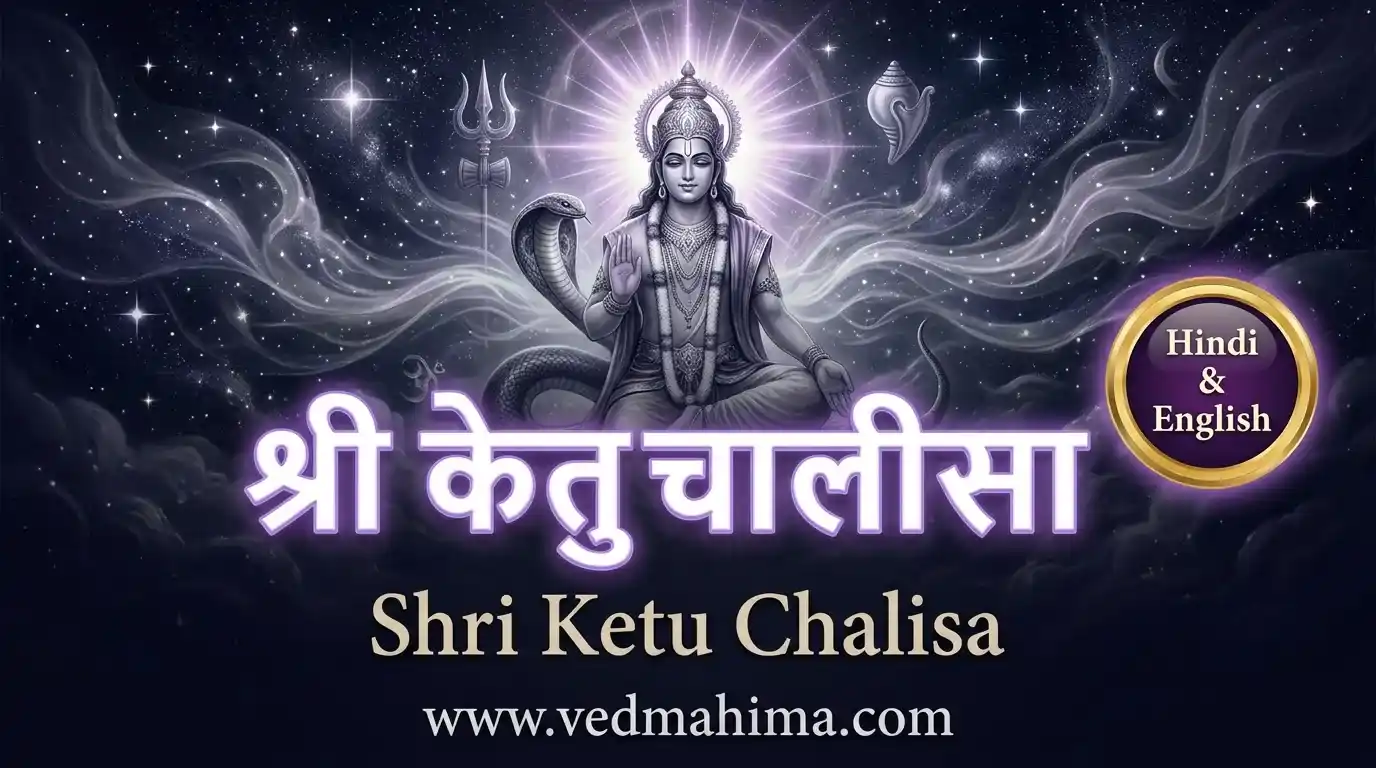
Shri Ketu Chalisa
Ketu Mahadasha, Kaal Sarp Dosh, Ketu graha shanti, detachment and moksha, Tuesday and Saturday paath vidhi
Namo Namo Shri Ketu Sukhkari,
Kasht Haro Santap Hamare.
Jayati Jayati Shri Ketu Maharaja,
Bhav Bandhan Se Sabko Traja.
Jayati Jayati Ketu Dev Dayala,
Sada Bhaktan Ke Sankat Hara.
Ketu Dev Chhaya Grah Jane,
Sabhi Grahon Ka Dosh Mitane.
Sir Kata Par Dhad Na Chhoda,
Amrit Paan Kiya Sant Moda.
Rahu Ketu Sangram Machaya,
Devtaon Ko Bhi Daraya.
Bhanu Gras Chandra Ko Dhaya,
Sabhi Grahon Par Prabhav Dikhaya.
Ketu Grah Dusht Narak Sansara,
Sabhi Sankaton Ko Door Bhagane Wala.
Ketu Dev Ki Mahima Bhari,
Sabhi Grahon Mein Ketu Nyare.
Ketu Grah Ka Prabhav Hatave,
Sabhi Janon Ko Sukh Dilave.
Kaal Sarp Dosh Bhi Tare,
Ketu Chalisa Jo Jan Gave.
Ketu Grah Ke Mantra Jape Jo,
Jeevan Mein Sab Sukh Pave So.
Shatru Se Jo Bhaybheet Hove,
Ketu Dev Ka Dhyan Dharave.
Ketu Dev Ki Sharan Jo Aave,
Sabhi Kashton Se Mukti Pave.
Ketu Dev Ka Dhyan Lagave,
Jeevan Mein Sukh Shanti Pave.
Ketu Dev Ka Yash Gave,
Sabhi Sankat Door Bhagave.
Bhakti Bhav Se Ketu Dev Ko,
Jo Bhi Bhakt Sumire Man Mein.
Sabhi Sankat, Kasht Mitave,
Ketu Dev Kripa Barsave.
Ketu Dev Ki Sharan Jo Aave,
Jeevan Mein Sabhi Sukh Pave.
Ketu Dev Ka Yash Gave,
Sabhi Sankat Door Bhagave.
Kripa Drishti Ketu Dev Ki,
Jo Bhi Bhakt Man Mein Dhyave.
Ketu Dev Ke Charanon Mein,
Sabhi Bhakt Sheesh Navave.
Ketu Dev Ki Mahima Nyari,
Sabhi Grahon Mein Ketu Bhari.
Sarpakar Ketu Dev Ka,
Jo Bhi Bhakt Sumire Man Mein.
Ketu Grah Ka Dosh Mitave,
Sabhi Janon Ko Sukh Dilave.
Kripa Drishti Ketu Dev Ki,
Sabhi Bhakton Ko Sukh Pave.
Ketu Dev Ka Dhyan Dharave,
Jeevan Mein Sukh Shanti Pave.
Ketu Dev Ka Yash Gave,
Sabhi Sankat Door Bhagave.
Bhanu Chandra Jo Ketu Grase,
Sabhi Grahon Par Ketu Base.
Ketu Dev Ki Mahima Nyari,
Sabhi Grahon Mein Ketu Bhari.
Sarpakar Ketu Dev Ka,
Jo Bhi Bhakt Sumire Man Mein.
Ketu Grah Ka Dosh Mitave,
Sabhi Janon Ko Sukh Dilave.
Bhanu Chandra Jo Ketu Grase,
Sabhi Grahon Par Ketu Base.
Ketu Dev Ki Mahima Nyari,
Sabhi Grahon Mein Ketu Bhari.
Sarpakar Ketu Dev Ka,
Jo Bhi Bhakt Sumire Man Mein.
Ketu Grah Ka Dosh Mitave,
Sabhi Janon Ko Sukh Dilave.
Bhanu Chandra Jo Ketu Grase,
Sabhi Grahon Par Ketu Base.
Ketu Dev Ki Mahima Nyari,
Sabhi Grahon Mein Ketu Bhari.
Sarpakar Ketu Dev Ka,
Jo Bhi Bhakt Sumire Man Mein.
About Shri Ketu Chalisa
The story behind Ketu comes from the Puranas. During Samudra Manthan, the demon Swarbhanu drank the nectar of immortality, and Vishnu in his Mohini form cut him with the Sudarshan Chakra. The head became Rahu and the body became Ketu (see the Rahu Chalisa and the Vishnu Chalisa). The Chalisa only recalls this in its line that the head was cut but the body was not abandoned and that nectar was drunk, and in its picture of Rahu and Ketu fighting and frightening even the gods.
What the verses describe is Ketu''s role. They call him a shadow planet who removes the faults of all the planets, a remover of sorrow and a protector of devotees, and say that his glory is great among all the planets. They say that Ketu, with Rahu, affects the Sun and the Moon, which is how eclipses are explained in myth, and that he is serpent-formed. Scientifically an eclipse comes from the shadows of the Moon and the Earth, and Rahu and Ketu mark the points where the Moon''s path crosses the Sun''s path (see the Surya Chalisa and the Chandra Dev Chalisa).
Most of the later verses are a prayer and are repeated like a refrain, and several of them are close to lines in the Rahu Chalisa, since the two planets share one story. They say that one who chants it is freed from Kaal Sarp Dosh, that one who chants Ketu mantras finds happiness, that one afraid of enemies should meditate on Ketu, and that those who take refuge in him are freed from all troubles and find peace. It is best read as a simple, steady prayer.
In the Vimshottari system, Ketu Mahadasha lasts 7 years. Devotees recite the Chalisa on Tuesdays or Saturdays, often along with donation of a blanket or black sesame, and with prayer to Lord Ganesha. A well-known Ketu temple is Keezhperumpallam near Poompuhar in Tamil Nadu, and Srikalahasti in Andhra Pradesh is known for Rahu-Ketu dosha worship. These are matters of astrological belief, which astrologers read differently, so use the Chalisa for calm and do not make big life decisions out of fear. For real anxiety or distress, please also speak to a doctor or counsellor.
❓ Frequently Asked Questions
Question: Who is Ketu in Vedic astrology?
Answer: Ketu is a shadow planet (chhaya graha) and one of the Navagrahas. In astrology it is the south lunar node and is associated with detachment, spirituality, mystery and moksha. The Chalisa calls him a remover of the faults of all planets and a protector of devotees in trouble.
Question: How are Rahu and Ketu related?
Answer: According to the Puranas, the demon Swarbhanu drank the nectar and Vishnu cut him in two. The head is Rahu and the body is Ketu (see the Rahu Chalisa and Vishnu Chalisa). They always sit opposite each other in a chart, 180 degrees apart. The Chalisa recalls the line that the head was cut but the body was not left.
Question: Why does the Ketu Chalisa share lines with the Rahu Chalisa?
Answer: Because the two planets share one story and one axis. Several verses of this Chalisa are repeated as a refrain and are close to lines in the Rahu Chalisa, with the name changed. It is best read as a simple, steady prayer rather than a story.
Question: Does Ketu cause eclipses?
Answer: The Chalisa says that Ketu, with Rahu, affects the Sun and the Moon. In astronomy, eclipses are caused by the shadows of the Moon and the Earth, and Rahu and Ketu mark the points where the Moon''s path crosses the Sun''s path. Myth and science are two separate explanations.
Question: How long is Ketu Mahadasha, and what is Kaal Sarp Dosh?
Answer: In the Vimshottari system Ketu Mahadasha lasts 7 years. Kaal Sarp Dosh is the astrological belief that all planets sit on one side of the Rahu-Ketu axis. The Chalisa says that one who sings it is freed from this dosha. This is a matter of belief, and astrologers differ on how serious it is.
Question: When and how should the Ketu Chalisa be recited?
Answer: Tuesday or Saturday, in the evening or at night, with a lamp lit. The tradition suggests donating a blanket or black sesame seeds. Many devotees also pray to Lord Ganesha (see the Ganesh Chalisa), who is traditionally linked with Ketu.