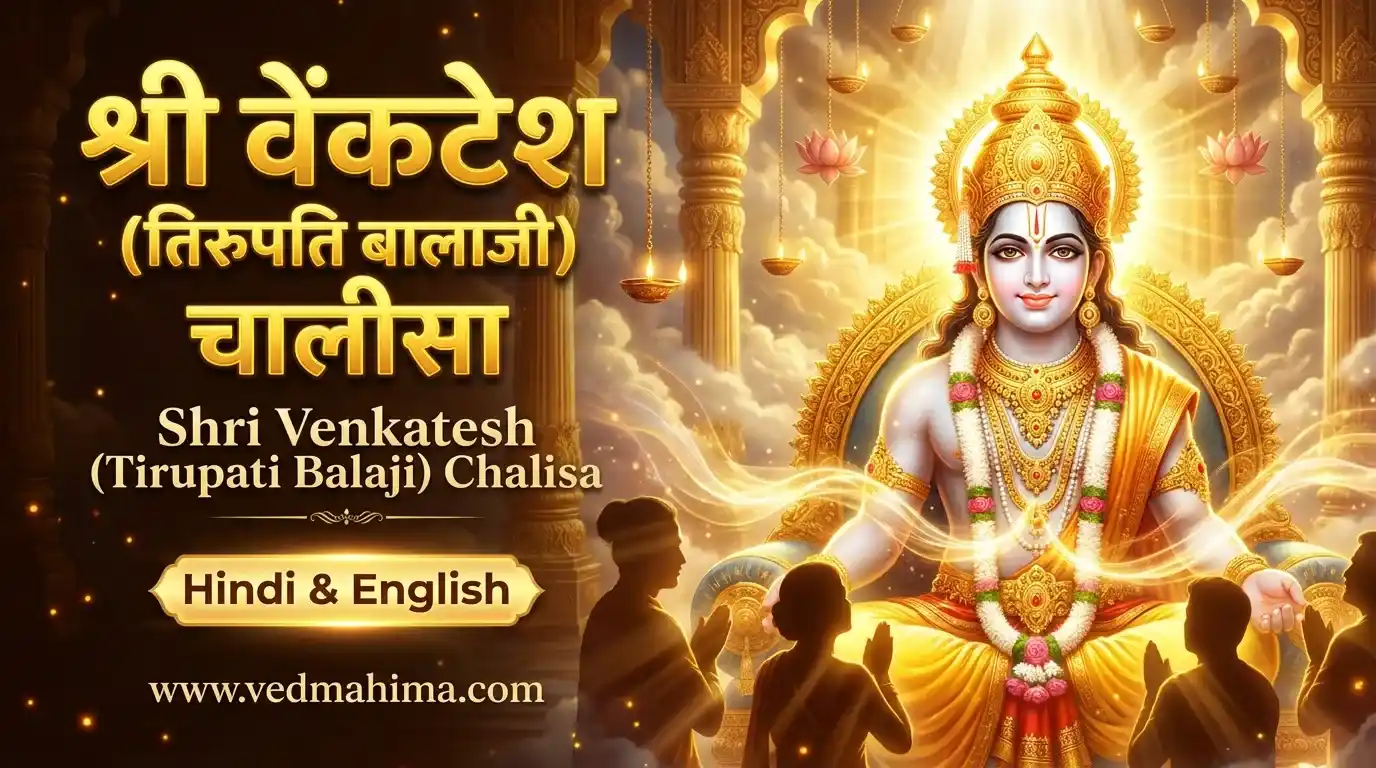
Shri Venkatesh (Tirupati Balaji) Chalisa
Tirupati Balaji blessings, wish fulfillment, laddu prasad significance, wealth, liberation from sins
Ramanuj Padkamal Ka,
Man Mein Dhar Kar Dhyan.
Shrinivas Bhagwan Ka,
Karen Vimal Gun Gaan.
Tirupati Ki Mahima Badi,
Gaate Ved-Puran.
Kaliyug Mein Pratyaksh Hain,
Venkatesh Bhagwan.
॥ Chaupai ॥
Jai Shri Venkatesh Karuna Kar,
Shrinivas Swami Sukh Sagar.
Jai Jai Tirupati Dham Nivasi,
Akhil Lok Swami Avinashi.
Jai Shri Venkatesh Bhagwana,
Karuna Sagar Kripa Nidhana.
Saptagiri Sheshachal Vaasi,
Tirupati Parvat Shikhar Nivasi.
Shri Darshan Mahima Ati Bhaari,
Aate Nit Lakhon Nar Naari.
Dev Rishi Gandharv Jagaate,
Suprabhat Sab Mil Kar Gaate.
Sakal Srishti Ke Praani Aaven,
Suprabhat Shubh Darshan Paaven.
Vishwaroop Darshan Sukhkaari,
Shrivigrah Ki Shobha Bhaari.
Ved Puran Shastra Yash Gaaven,
Ati Durlabh Darshan Batlaaven.
Jin Par Prabhu Kripa Karte Hain,
Unko Yah Darshan Milte Hain.
Maha Vishnu Shrimannarayan,
Bhakton Ke Karaj Saarayan.
Sheshachal Par Sada Viraje,
Shankh Chakra Kar Sundar Saaje.
Abhay Hast Ki Mudra Pyari,
Safal Kaamna Karti Saari.
Venkatesh Prabhu Tirupati Bala,
Sharanagat Rakshak Pratipala.
Shrivaikunth Lok Nij Taj Kar,
Shri Swami Pushkarini Tat Par.
Bhakt Karya Karne Ko Aaye,
Kaliyug Mein Pratyaksh Kahaaye.
Swami Teerth Punyaprad Paavan,
Snaan Matra Sab Paap Nashavan.
Jo Ismein Karte Hain Snaan,
Unko Milta Punya Mahaan.
Pratham Yahan Darshan Adhikaari,
Shri Varah Swami Sukhkaari.
Pehle Darshan Inka Karke,
Bhu-Varah Ko Pratham Sumir Ke.
Shri Venkatesh Charan Chit Dharna,
Shrinivas Ke Darshan Karna.
Venkatesh Sam Is Kaliyug Mein,
Anya Dev Nahi Is Jag Mein.
Pehle Bhi Nahi Hua Kahin Hai,
Aage Ho Yah Satya Nahi Hai.
Om Namah Shri Venkatbala,
Bhaktjano Ke Tum Rakhwala.
Bhakt Jahan Aganit Nit Aate,
Sona Chaandi Nakad Chadhaate.
Shraddha Se Kar Hundi Seva,
Seva Se Paate Sab Meva.
Shrinivas Ki Sundar Murti,
Manokamna Karti Purti.
Darshan Kar Harshit Sab Tan Man,
Sundar Sukhad Sushobhit Darshan.
Divya Madhur Sundar Prasad Hai,
Laddu Amrit Divya Swaad Hai.
Mahaprasad Divya Jo Paate,
Unke Paap Sabhi Kat Jaate.
Mahima Ati Prasad Ki Bhaari,
Mittati Bhav Badhaayen Saari.
Kesar-Chandan Yut Charanamrit,
Divya Sugandhit Prabhu Ka Teerth.
Teerth-Prasad Bhakt Jo Paate,
Aavagaman Mukt Ho Jaate.
Chaurasi Mein Phir Nahi Aate,
Jo Prasad Laddu Ka Paate.
Sukh Sampatti Vanchhit Phal Paave,
Phir Vaikunth Lok Mein Jaave.
Ven Ka Arth Paap Batlaya,
Kat Ka Arth Kaat De Maya.
Maya Paap Kaatne Wala,
Venkatesh Prabhu Tirupati Bala.
Shrinivas Vishnu Avtaara,
Mahima Jaanat Hai Jag Saara.
Jo Yah Shri Chalisa Gaave,
Sakal Padarath Jag Ke Paave.
Shabd Pushp Shri Charan Chadhaakar,
Kare Prarthana Bhakt Gadadhar.
॥ Doha ॥
Jai Jai Shri Tirupati-Pati,
Shrinivas Bhagwan.
Karo Siddh Sab Kaamna,
Swami Kripa Nidhaan.
About Shri Venkatesh (Tirupati Balaji) Chalisa
This holy Chalisa beautifully describes the divine glory of the Seven Sacred Hills (Saptagiri) of Tirumala, the spiritual importance of taking a holy dip in the Swami Pushkarini sacred tank, and the traditional practice of first seeking blessings from Sri Bhu Varaha Swamy — who, according to temple tradition, holds the first right of darshan — before devotees proceed to Lord Venkateswara himself.
A particularly cherished verse of the Chalisa explains the meaning of his very name: "Ven" is said to mean sin, and "kat" to mean cutting away, making Venkatesh literally "the one who cuts away sin and illusion." The hymn also glorifies the significance of the world-famous Tirupati Balaji Laddu Mahaprasadam — believed to erase the sins of those who partake in it with devotion and free them from the endless cycle of birth and death (the "chaurasi lakh yoni"), eventually guiding them toward Vaikuntha, Lord Vishnu''s eternal abode.
In Hindu belief, Lord Venkateshwara is regarded as the living and visible (pratyaksh) deity of the Kali Yuga, who readily blesses devotees with compassion and fulfills sincere prayers. Reciting the Shri Venkatesh Chalisa with faith, devotion, and a pure heart is believed to invoke the divine grace of Lord Balaji, bringing peace, prosperity, spiritual strength, and protection from life''s challenges.
Regular recitation of the Shri Venkatesh Chalisa is believed to remove obstacles, reduce the effects of past karmas, eliminate poverty and financial difficulties, and bless devotees with success, good health, happiness, and family harmony. According to Hindu tradition, chanting it on Thursdays, Saturdays, Ekadashi, Vaikuntha Ekadashi, and during the annual Brahmotsavam festival is considered especially auspicious and spiritually rewarding.
❓ Frequently Asked Questions
Question: Why is it customary to visit Bhu Varaha Swamy before Lord Venkateswara at Tirupati?
Answer: The Chalisa states that Sri Varaha Swamy holds the first right of darshan at Tirumala, and devotees traditionally seek his blessings first before approaching Lord Venkateswara, as this order is considered scripturally proper.
Question: What is the deeper meaning of the name "Venkatesh" according to this Chalisa?
Answer: The Chalisa explains that "Ven" means sin and "kat" means to cut away, so Venkatesh literally means the one who destroys sin and illusion (maya) for his devotees.
Question: Why is the Tirupati laddu prasadam considered so significant?
Answer: The Chalisa states that devotees who receive this divine laddu mahaprasadam have their sins erased and are freed from the cycle of birth and death (chaurasi), eventually attaining Vaikuntha.
Question: What is Swami Pushkarini, mentioned in this Chalisa?
Answer: It is described as the sacred temple tank at Tirumala; a holy dip here is believed to wash away all sins and grant great spiritual merit (punya).
Question: Why is Lord Venkateshwara called "pratyaksh" (visible/present) in Kali Yuga?
Answer: The Chalisa declares that no deity in this age is equal to Venkateshwara, who is believed to be directly and visibly present at Tirupati, readily fulfilling his devotees'' sincere prayers.
Question: When should the Venkatesh Chalisa be recited?
Answer: Every morning after waking, or on Saturdays after lighting a ghee lamp, is considered most auspicious, with special significance during Ekadashi and Brahmotsavam.


