Shri Brihadeshwar Temple Thanjavur
Shree Brihadeshwar Temple Thanjavur Darshan Guide
🙏 Devotional
🔥 Powerful
📿 Daily Prayer
॥ Temple Overview & Divine Glory ॥
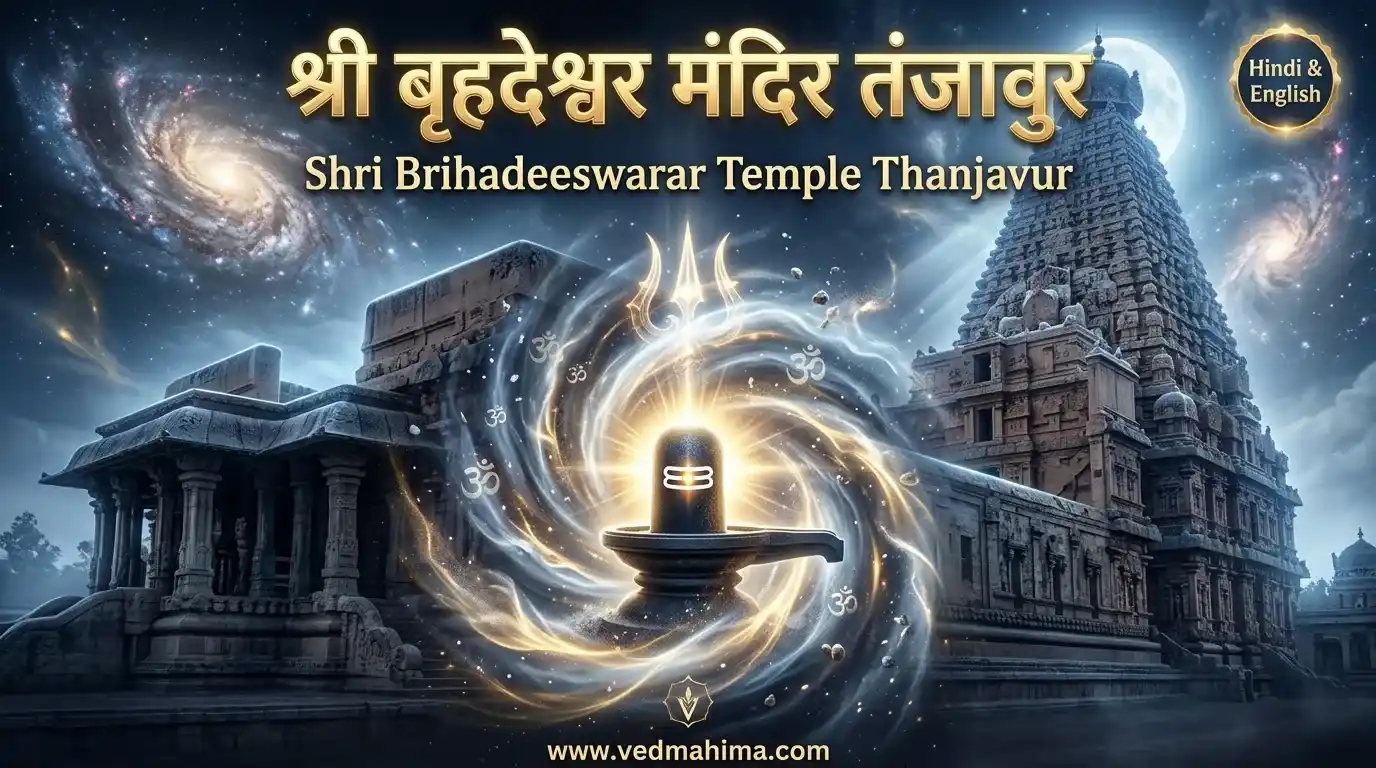
Shri Brihadeeswarar Temple, universally acclaimed as Peruvudaiyar Kovil and Rajarajeswaram, stands as a colossal monument of devotion on the banks of the sacred Cauvery delta in Thanjavur, Tamil Nadu. Built entirely of premium granite by the legendary Chola Emperor Raja Raja Chola I between 1003 and 1010 AD, this more than 1000-year-old architectural marvel is a UNESCO World Heritage Site and an supreme pillar of South Indian Shaivism. The temple is dedicated to Lord Shiva, worshipped here as Brihadeeswara (The Great Lord). The inner sanctum houses one of the largest monolithic Shiva Lingams in the world, carved out of a single massive rock, radiating immense cosmic and spiritual energy. Revered as an outstanding example of Dravidian architecture, the temple is an intense vortex of spiritual liberation. Taking a complete Darshan of the massive Lingam and walking through the grand multi-pillared mandapams is believed to clear deep-rooted past karmas, eliminate obstacles, and bestow immense physical vitality, professional success, and ultimate salvation.॥ Key Spiritual & Structural Aspects ॥
* The Dravidian Architecture & Monolithic Kumbam: The temple is built completely from interlocking granite stones without using any mortar. The main temple tower, known as the Vimana, rises majestically to a height of 66 meters (216 feet) and is topped by a massive single-stone dome (Kumbam) weighing a staggering 80 tons, an extraordinary feat of medieval engineering.* The Shadowless Wonder: A brilliant architectural marvel of the Chola craftsmen ensures that at noon during any season, the shadow of the main Vimana spire never falls on the ground, creating a mystical and divine visual effect for devotees.
* The Colossal Monolithic Nandi: Guarding the entrance of the sanctum is a massive monolithic statue of Nandi (the divine bull), measuring about 13 feet high and 16 feet long, carved elegantly out of a single granite stone, which continues to grow in size naturally according to local belief.
* Ancient Chola Frescoes & Inscriptions: The walls surrounding the sanctum sanctorum are adorned with vibrant, thousand-year-old Chola fresco paintings depicting various manifestations of Lord Shiva. Hundreds of detailed Tamil and Sanskrit inscriptions etch the temple history, administrative details, and royal grants permanently into stone.
॥ The Actual Ritualistic Cycle: Authentic Daily Pujas & Schedules ॥
The daily worship protocol at the Thanjavur Brihadeeswarar Temple follows ancient Shaiva Agama traditions with absolute royal court grandeur. The established public and spiritual windows are:1. Ushakkala Puja (06:00 AM): The highly auspicious first morning prayer where the temple doors open and the sacred deities are awakened. Basic offerings of fresh milk and flowers are made to the Lord.
2. Kalasandhi Puja (09:00 AM): The secondary morning ritual where detailed Abhishekam (ritualistic bath) is performed for the Shiva Lingam using holy water, milk, curd, and honey, accompanied by sacred Vedic chants.
3. Uchikala Puja (12:00 PM): The primary noon worship where a grand royal feast (Maha Naivedyam) containing traditional rice, lentils, and sweets is offered to Brihadeeswara. The temple gates close at 12:30 PM for afternoon rest.
4. Sayaratchai Puja (06:00 PM): The evening reopening ritual marked by the spectacular twilight Aarti. The entire sanctum is lit with oil lamps, accompanied by the deep ringing of traditional brass bells and blowing of conches.
5. Arthajama Puja & Night Lock (08:30 PM - 09:00 PM): The final night ritual where the Lord is offered scented milk, special prayers are chanted for universal peace, and the inner sanctum doors are locked for the night.
॥ Detailed Code of Conduct & Pilgrimage Guidelines ॥
* Strict Dress Code Mandate: To preserve the profound spiritual sanctity and historical decorum of this ancient living temple, all visiting devotees must dress in traditional, modest attire. Men must wear a traditional Dhoti (Veshti), Mundu, or standard Kurta with formal trousers. Women must wear a traditional Saree, Half-Saree, or a decent Salwar-Kameez with a compulsory Dupatta. Modern casuals like shorts, ripped jeans, miniskirts, sleeveless tops, or tight-fitting clothes are strictly prohibited inside the main temple premises.* Mobile Phone & Camera Regulations: While photography of the majestic external architecture and complex courtyards is allowed for tourists and pilgrims, taking photographs or recording videos inside the inner sanctum (Garbhagriha) is strictly prohibited. Devotees must keep their mobile phones on silent mode to maintain absolute peace during the Darshan.
* Footwear Protocol: All shoes, sandals, and footwear must be completely removed and kept at the designated shoe locker stand located right before entering the outer fort walls (Keralantakan Gopuram).
॥ Major Festivals Celebrated In Colossal Scale ॥
* The Maha Shivaratri Festival: This marks the absolute peak of spiritual celebration at Brihadeeswarar Temple during February–March. The temple remains open throughout the night, holding four separate elaborate dynamic Kala Pujas and grand Abhishekams attended by lakhs of global devotees.* Chithirai Brahmotsavam: Celebrated for 18 days during the Tamil month of Chithirai (April–May), featuring spectacular daily chariot processions of the deities through the historic streets of Thanjavur and grand cultural dance festivals inside the courtyard.
* Raja Raja Chola Sathaya Vizha: The annual birth anniversary celebration of the great Emperor Raja Raja Chola I, held under the star Sathayam in October–November. The entire temple is illuminated with thousands of lamps, and special grand Abhishekam is performed to the main deity.
॥ Comprehensive Routing Guide: How to Reach Thanjavur Dham ॥
* By Air (Detailed Flight Route): The nearest commercial airport is Tiruchirappalli International Airport (TRZ), located approximately 61 kilometers west of Thanjavur. It connects major national cities like Chennai, Mumbai, and Bengaluru, as well as international destinations. From Trichy airport, pilgrims can easily hire private luxury cabs or pre-paid air-conditioned taxis that travel via the smooth Tiruchirappalli-Thanjavur National Highway (NH-83) in about 1 to 1.5 hours.* By Train (Detailed Railway Network): Thanjavur Junction (TJ) is a highly central and well-connected railway station. It receives regular superfast expresses, daily passenger trains, and high-speed connections from Chennai, Madurai, Tiruchirappalli, Coimbatore, Bengaluru, and Kochi. The railway station is situated just 4 kilometers away from the Brihadeeswarar Temple, with 24/7 availability of auto-rickshaws, local buses, and private taxis.
* By Road (Detailed Highway Navigation): Thanjavur is exceptionally well-connected through an extensive network of national and state highways, including NH-83 and NH-36. The Tamil Nadu State Transport Corporation (TNSTC) and multiple private travels run a continuous fleet of ultra-luxury AC Volvo, sleeper, and express buses from Chennai, Bengaluru, Madurai, and Tiruchirappalli directly to the Thanjavur central bus stand.
🙏 ॥ Thus completed ॥ 🙏
The Hindi text has been compiled based on original and authentic sources. If there is any difference,
error, or inconsistency between the Hindi and English versions, the Hindi text shall be considered the
authoritative version. If there are any errors or copyright-related concerns regarding this content,
please contact us.
📜 प्रामाणिक स्रोत:
📖 सार्वजनिक रूप से उपलब्ध स्रोत
📖 आधिकारिक मंदिर रिकॉर्ड
📖 सरकारी पोर्टल
📖 सत्यापित ऑनलाइन संदर्भ
About Shri Brihadeshwar Temple Thanjavur
The celestial history of Brihadeeswarar Temple is tied to the golden age of the Chola Dynasty. Emperor Raja Raja Chola I envisioned building a monumental cathedral-temple to celebrate the cosmic power of Lord Shiva and the supreme glory of his empire after receiving a divine command in his dream. The construction began in 1003 AD and was completed perfectly in 1010 AD, establishing the temple as the powerhouse of religious and economic life in medieval South India. Historically, the temple retained its sanctity through changing times; after the Cholas, the Pandya kings, the Vijayanagara rulers, and the Maratha kings added beautiful sub-shrines and separate mandapams inside the complex without disturbing the original structure. In the 8th to 11th centuries, it stood as a center for classical arts like Bharatanatyam and Carnatic music. Despite ancient geopolitical shifts, the temple stood resilient and today remains the absolute jewel of Dravidian architecture and global Shiva consciousness.