Shri Padmanabhaswamy Temple Trivandrum
Sree Padmanabhaswamy Temple Trivandrum Darshan Guide
🙏 Devotional
🔥 Powerful
📿 Daily Prayer
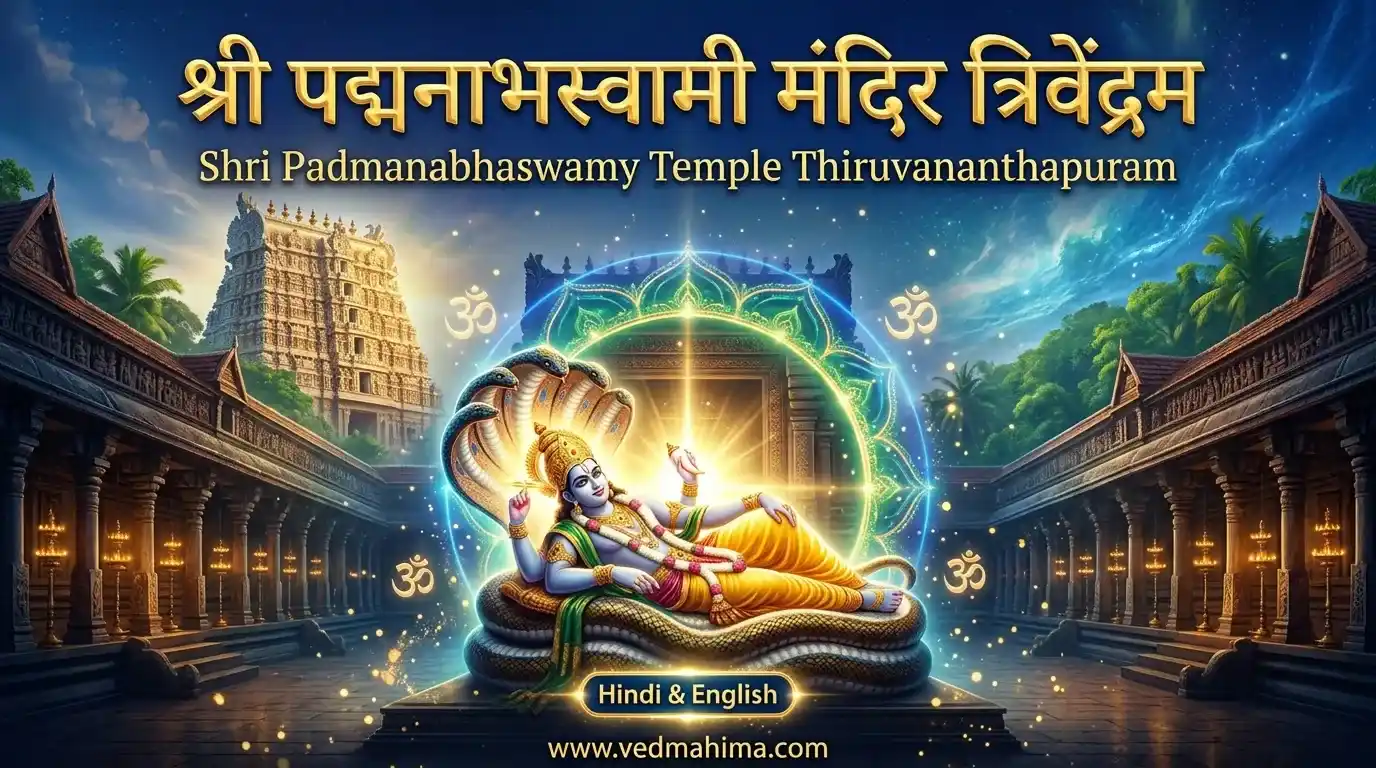
॥ Temple Overview & Divine Glory ॥
Sree Padmanabhaswamy Temple, situated in the heart of Thiruvananthapuram, Kerala, stands as the wealthiest spiritual institution and one of the most enigmatic maha-kshetras in human history. Mentioned extensively in the ancient Puranas and the Sangam literature, this divine citadel is dedicated to Lord Vishnu reclining in the Anantha Shayanam posture—the cosmic sleep of creation—upon the multi-headed serpent king, Anantha Shesha. The temple is the ultimate heart of the Kingdom of Travancore, where the ruling monarchs formally abdicated their absolute power in 1750 AD through the historic Thrippadi Danam, declaring themselves as Padmanabha Dasas (servants of the Lord) and ruling the state as trustees. The core energetic grid of the temple is incredibly potent, containing ancient subterranean secret vaults (Kallaras) filled with thousands of tons of ancient gold, diamonds, and royal artifacts. Worshipped as one of the 108 Divya Desams, Padmanabhaswamy represents the absolute peak of Vaikuntha consciousness on earth. Catching a single glimpse of the Lord through the triple stone doors of the sanctum is a reality-shifting experience believed to permanently dissolve deep soul-level poverty, bestow immense material abundance, grant administrative wisdom, and ensure liberation from the wheel of rebirth.॥ Key Spiritual & Structural Aspects ॥
* The Majestic Chera-Pandyan Architecture: The temple architecture is a breathtaking fusion of the indigenous Kerala wooden style and the Dravidian stone masonry of the Pandya Dynasty. The primary highlight is the monumental 100-foot-tall, 7-tiered Gopuram adorned with thousands of intricate stone sculptures depicting epic Puranic episodes.* The Miracle Ananthasayana Idol: The principal deity is a massive 18-foot-long magnificent idol, constructed using a highly specialized ancient mixture known as Katu-Sarkara-Yogam (a complex combination of 12,008 sacred Shaligram stones, herbal resins, and holy soil). Because of this unique organic composition, regular water abhishekams are strictly prohibited to prevent structural wear.
* The Triple-Door Darshan Mechanics: Due to the gigantic scale of the reclining Lord, devotees can view the form only through three distinct stone doors. The first door offers a view of the face and the protective hood of Anantha; the second door reveals the chest, the lotus stalk emerging from the navel with Lord Brahma, and the sacred Shiva Lingam below the hand; the third door showcases the lotus feet.
* The Grand Corridor of 365 Pillars: The temple features the spectacular Navagraha Mandapa and a monumental stone corridor supported by 365 and a quarter intricately carved granite pillars. Each pillar features uniquely sculpted figures of deep historical significance that completely puzzle modern structural engineers.
॥ The Actual Ritualistic Cycle: Authentic Daily Pujas & Schedules ॥
The daily ritual cycle at this royal temple is stringently governed by the centuries-old traditional mandates of the Tharananallur Tantric Family. The timeline requires absolute precision and operates within these specific public windows:1. Nirmalya Darshan (03:15 AM - 04:15 AM): The highly auspicious first morning opening where the heavy wooden doors open to the sound of traditional conch shells. Devotees witness the colossal reclining deity adorned with the previous day's garlands in a beautifully candle-lit environment.
2. Usha Puja & Pratah Darshan (05:15 AM - 06:15 AM): The morning transition phase where primary milk and floral offerings are presented by the chief priests (Namboodiris). Public lines move rapidly during this pristine hour.
3. Pantheeradi Puja & Midday Windows (08:30 AM - 12:00 PM): The highly dynamic mid-morning phase where multiple internal secret rituals are performed. The temple closes strictly for afternoon rest at 12:00 PM after the grand Ucha Puja food offering.
4. Malarthasna & Evening Reopening (05:00 PM - 06:30 PM): The evening operational phase where the temple reopening is accompanied by traditional percussion instruments. Devotees gather to witness the shifting shadows across the granite pillars.
5. Deeparadhana & Athazha Puja (06:30 PM - 07:20 PM): The ultimate spiritual phase of the day where hundreds of traditional oil lamps are lit across the gold-plated flagstaff (Dhwaja Stambha). The temple securely closes its massive outer gates for the night at 07:20 PM.
॥ Detailed Code of Conduct & Pilgrimage Guidelines ॥
* The Uncompromising Strict Dress Code: Sree Padmanabhaswamy Temple follows the most rigorous, mandatory traditional dress code in India. Men must wear a traditional simple Mundu or Dhoti around their waist, and their upper torso must remain completely bare; wearing shirts, t-shirts, vests, or trousers is strictly illegal inside the inner fort. Women must wear a traditional Saree, Mundum Neriyathum, or a proper long skirt and blouse. Young girls can wear half-sarees. Wearing Salwar-Kameez, churidars, pants, or western casuals is fully banned. Dhotis are available for rent or purchase outside the entry gates to wrap over contemporary clothes.* Absolute Ban on Electronics & Valuables: To ensure maximum security over the legendary treasure vaults and maintain spiritual sanctity, all electronic items including mobile phones, smartwatches, cameras, power banks, and heavy leather belts must be deposited at the official temple locker counters before entering the physical scanning lines.
* Exclusive Entry for Hindus: In strict compliance with centuries-old traditional royal temple edicts, entry inside the core architectural boundary is permitted exclusively to those practicing the Hindu faith. Non-Hindu national and international tourists are required to submit a signed declaration of faith at the executive office to seek special entry permission.
॥ Major Festivals Celebrated In Colossal Scale ॥
* The Bi-Annual Alpashy & Painkuni Festivals: Celebrated grandly during October-November and March-April respectively, these 10-day mega-festivals feature massive processions. The highlight is the spectacular Aarattu (holy bath ritual) where the Royal Maharaja of Travancore walks fully on foot with a golden sword to escort the divine idols to the nearby Shangumugham Beach for a ceremonial dip in the Arabian Sea.* The Monumental Lakshadeepam (Festival of One Lakh Lamps): Held once every six years, this represents the absolute pinnacle of visual and spiritual grandeur at Trivandrum. The entire massive stone structure is systematically covered with exactly 100,000 traditional clay oil lamps, transforming the complex into a living mountain of golden flame.
* Navaratri Music Festival: A spectacular cultural event where the royal deities of Saraswathi Amman are brought from Padmanabhapuram Palace in a grand traditional march, followed by world-class classical music concerts inside the Navaratri Mandapam.
॥ Comprehensive Routing Guide: How to Reach Padmanabhaswamy Dham ॥
* By Air (Detailed Flight Route): The closest aviation hub is Thiruvananthapuram International Airport (TRV), located remarkably close—just 4 kilometers west of the temple complex. It operates frequent direct international flights to the Middle East and major domestic flights to New Delhi, Mumbai, Bengaluru, and Chennai. Taxis, auto-rickshaws, and local transit buses are continuously available right outside the terminal gate arrivals.* By Train (Detailed Railway Network): The primary railway intersection is the Thiruvananthapuram Central Railway Station (TVC), located just 2 kilometers away from the temple fort entry. It is one of the biggest railway hubs in South India, directly hosting high-speed Vande Bharat Express, Rajdhani, and long-distance superfast trains from all corners of India. Shared autos and app-cabs connect the station to the West Fort area within 5 minutes.
* By Road (Detailed Highway Navigation): Thiruvananthapuram is connected smoothly via National Highway 66 (connecting Mumbai to Kanyakumari). The Kerala State Road Transport Corporation (KSRTC) operates an intense network of luxury low-floor AC buses and long-distance interstate sleeper buses from Bengaluru, Chennai, and Kochi directly to the Thiruvananthapuram Central Bus Station, located opposite the railway hub.
🙏 ॥ Thus completed ॥ 🙏
The Hindi text has been compiled based on original and authentic sources. If there is any difference,
error, or inconsistency between the Hindi and English versions, the Hindi text shall be considered the
authoritative version. If there are any errors or copyright-related concerns regarding this content,
please contact us.
📜 प्रामाणिक स्रोत:
📖 सार्वजनिक रूप से उपलब्ध स्रोत
📖 आधिकारिक मंदिर रिकॉर्ड
📖 सरकारी पोर्टल
📖 सत्यापित ऑनलाइन संदर्भ
About Shri Padmanabhaswamy Temple Trivandrum
The historical origin of the Sree Padmanabhaswamy Temple is hidden deep within the layers of ancient antiquity, with primary mentions found in the Bhagavata Purana and Padma Purana. According to legend, the great sage Vilvamangalathu Swamiyar was blessed with the vision of Lord Vishnu at this spot, where the Lord transformed Himself into a colossal tree-sized form before shrinking to the current 18-foot length to accommodate the sage's worship. Historically, the temple was managed by the Ettara Yogam (a council of eight and a half trustees) alongside local feudal lords known as Ettuveetil Pillamar. In the early 18th century, the visionary King Anizham Thirunal Marthanda Varma crushed the rebellious lords, consolidated the modern Kingdom of Travancore, and completely rebuilt the temple using 4,000 stone masons. In 1750 AD, he legally surrendered the entire kingdom to Lord Padmanabha, making the deity the permanent king and establishing the royal lineage as humble caretakers. Modern excavations revealing centuries of untouched gold reserves in the temple's underground chambers have fully verified its historic role as the protected imperial treasury of the royal state.