Shri Badrinath Temple Uttarakhand
Shree Badrinath Temple Chamoli Darshan Guide
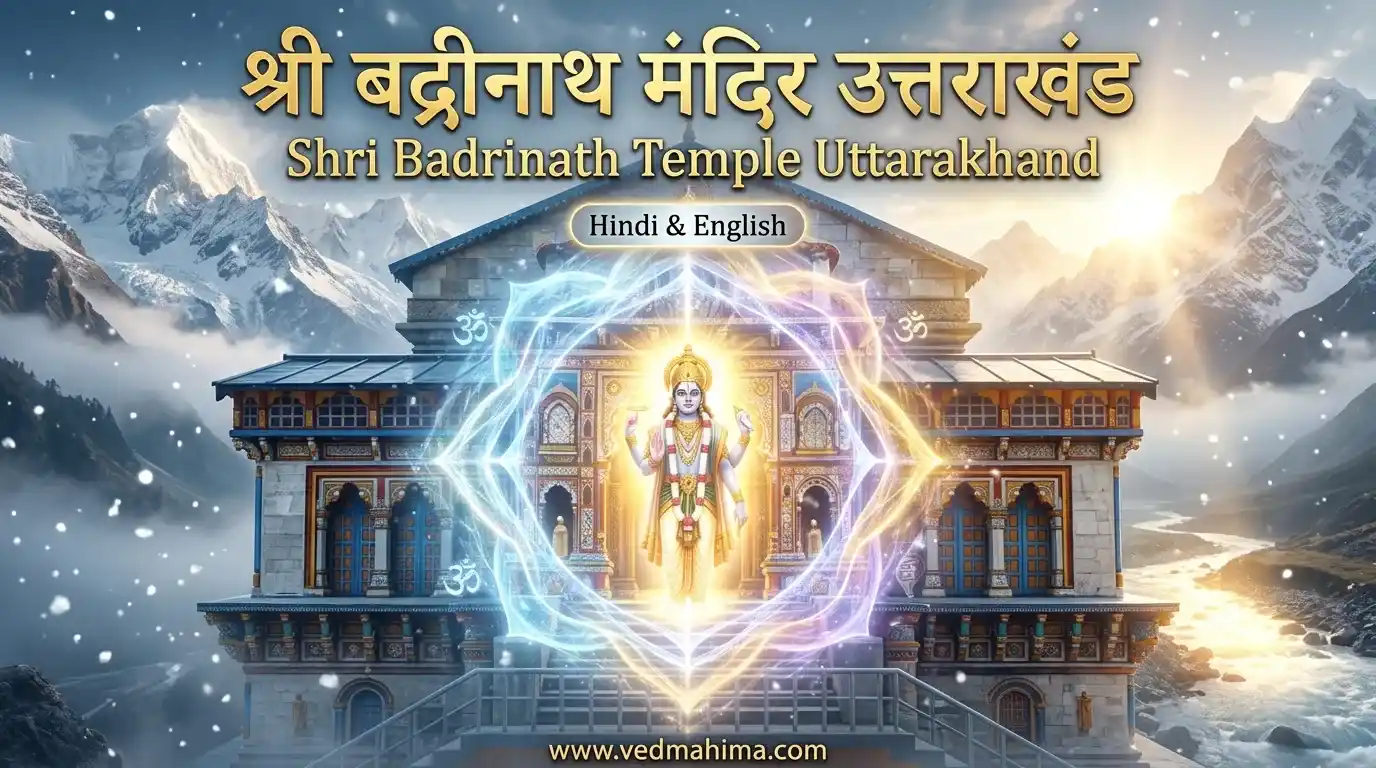
* Bright Visual Architecture: Unlike typical stone temples, Badrinath features a distinctively vibrant, multi-colored main facade reminiscent of Buddhist viharas. The grand structural gateway (Singh Dwara) leads into three main halls: the Garbhagriha (sanctum), Darshan Mandap, and Sabha Mandap.
* The Mighty Neelkanth Peak: Standing tall right behind the temple complex is the towering, snow-clad Neelkanth Peak, often called the 'Garhwal Queen,' which reflects the first golden rays of dawn in a breathtaking celestial spectacle.
* The Ancient Badri Tree Legend: The region was historically a vast forest of wild berries (Badri). According to the Puranas, Goddess Lakshmi transformed herself into a massive Badri tree to shelter Lord Vishnu from the harsh Himalayan blizzards during his thousands of years of deep penance.
1. Maha Abhishek & Morning Puja (04:30 AM - 06:30 AM): A deeply sacred, exclusive ritual where the deity is uncovered and washed with pure milk, curd, honey, and saffron water under powerful Vedic chants. Devotees can book special tickets to witness this spectacular window.
2. Kapur Aarti & Public Darshan (06:30 AM - 12:00 PM): The main gates open for the general public after the morning rituals, accompanied by the grand lighting of camphor lamps.
3. Bhog Aarti & Afternoon Closure (12:00 PM - 03:00 PM): The Lord is offered a rich traditional feast consisting of pure local grains, lentils, and sweets, after which the sanctum gates close for afternoon rest.
4. Evening Reopening & Special Pujas (03:00 PM - 06:00 PM): The temple reopens for continuous public lines and specific group rituals like Vishnu Sahasranama text recitations.
5. The Grand Geet Govind Shayan Aarti (06:30 PM - 09:00 PM): The breathtaking final evening prayer where the dynamic stanzas of Jayadeva's Geet Govind are melodiously sung. The deity is covered in woolens and fresh flowers before the gates close for the night.
* Absolute Ban on Mobile Cameras & Electronics: Carrying or operating mobile phones, digital cameras, video recorders, or electronic tablets inside the core temple complex and the main inner sanctum (Garbhagriha) is a strict legal offense. All electronic devices must be completely turned off or kept safely tucked inside pockets or bags. Photography of the central idol is an absolute taboo, and violators face immediate confiscation of gear.
* Mandatory Chardham Yatra Biometric Registration: It is legally mandatory for every traveling pilgrim to complete the official Uttarakhand Govt Char Dham Registration online or at physical verification kiosks in Rishikesh/Haridwar before proceeding to Badrinath. Carry physical printouts of your registration slips and a valid Government Photo ID throughout the journey.
* High-Altitude Health Precautions: Due to the thin air and low oxygen levels at 10,000 feet, pilgrims with a history of asthma, cardiac conditions, or respiratory issues must consult a physician before travelling. Carry a personal medical kit containing essential mountain medicines, portable oxygen canisters, and sufficient heavy winter woolens, as weather changes drastically in minutes.
* Badri Kedar Festival: A grand 8-day socio-cultural and spiritual extravaganza organized by the tourism board in the month of June/July, showcasing ancient folk dances, classical bhajan performances, and deep theological seminars.
* The Kapat Chalan Closing Ceremony (Mata Murti Utsav): Held in mid-November, this highly ritualistic ceremony marks the winter closure. An unbroken ghee lamp (Akhand Jyoti) is lit to remain burning for the next six months while the deity is wrapped in a wool blanket woven by local girls, and the seat of worship shifts down to Joshimath.
* By Train (Detailed Railway Network): The primary and nearest functional railway junctions are Yog Nagari Rishikesh (YNRK) and Haridwar Junction (HW), located about 295 kilometers away. These stations are excellently linked via direct superfast and express trains from New Delhi, Kolkata, and Mumbai. Outside the Rishikesh railway station, pilgrims have access to massive fleets of government-authorized shared tourist jeeps, direct mountain buses run by GMOU, and private luxury cabs that ply daily up the mountains.
* By Road (Detailed Highway Navigation): Badrinath is connected via the smoothly maintained All-Weather National Highway 7 (NH-7). If driving personally from New Delhi-NCR, the standard 525 km route follows NH-58/NH-7 through Meerut, Roorkee, Haridwar, Rishikesh, and then weaves through the iconic five holy confluences (Panch Prayag: Devprayag, Rudraprayag, Karanprayag, Nandprayag, and Vishnuprayag) up to Joshimath and Badrinath. Due to unpredictable mountain terrain, driving on these highways is strictly prohibited by local authorities from 08:00 PM to 05:00 AM for passenger safety.
⏰ Best Time
The perfect months to visit Badrinath are from May to June and September to October. Visiting in the peak monsoon months of July and August should be avoided due to heavy landslides on mountain highways.
🛕 Temple Information
Shri Badrinath Temple, Badrinath Puri, Chamoli District, Uttarakhand - 246422
Temple Seasonal Duration: Open only from late April/May to mid-November.
Daily Operating Hours:
Morning Window: 04:30 AM - 12:00 PM
Maha Abhishek Puja: 04:30 AM - 06:30 AM
Afternoon Closure: 12:00 PM - 03:00 PM
Evening Window: 03:00 PM - 09:00 PM
Shayan Aarti & Closure: 09:00 PM
*Note: Timings can fluctuate based on extreme weather conditions or high seasonal footfalls.
🔗 Related Trending Mandir
About Shri Badrinath Temple Uttarakhand
The origin of Badrinath Dham is deeply rooted in the golden eras of Satyug. According to scriptural texts, the divine sages Nar and Narayan (reincarnations of Lord Vishnu) performed thousands of years of severe austerities at this spot for cosmic welfare. In the early Vedic era, the temple site remained a natural sanctuary. In the 8th century AD, the great philosopher-saint Adi Shankaracharya discovered the holy idol of Lord Badrinath lying submerged inside the Narad Kund pool of the Alaknanda River, where it had been hidden to protect it from invaders. He formally excavated the idol, established its worship, and built the first structured temple. Over the centuries, the kings of the Garhwal Kingdom expanded the temple structure and provided vast land revenues for its maintenance. Despite facing multiple severe avalanches and earthquakes over the centuries, the temple was consistently rebuilt and reinforced, notably by the rulers of Scindia and Holkar dynasties, standing today as an immortal monument of pure spiritual resilience.