Shri Bhabanipur Shakti Peeth Bangladesh
Shri Bhabanipur Shakti Peeth Bogra Bangladesh Complete Yatra Guide
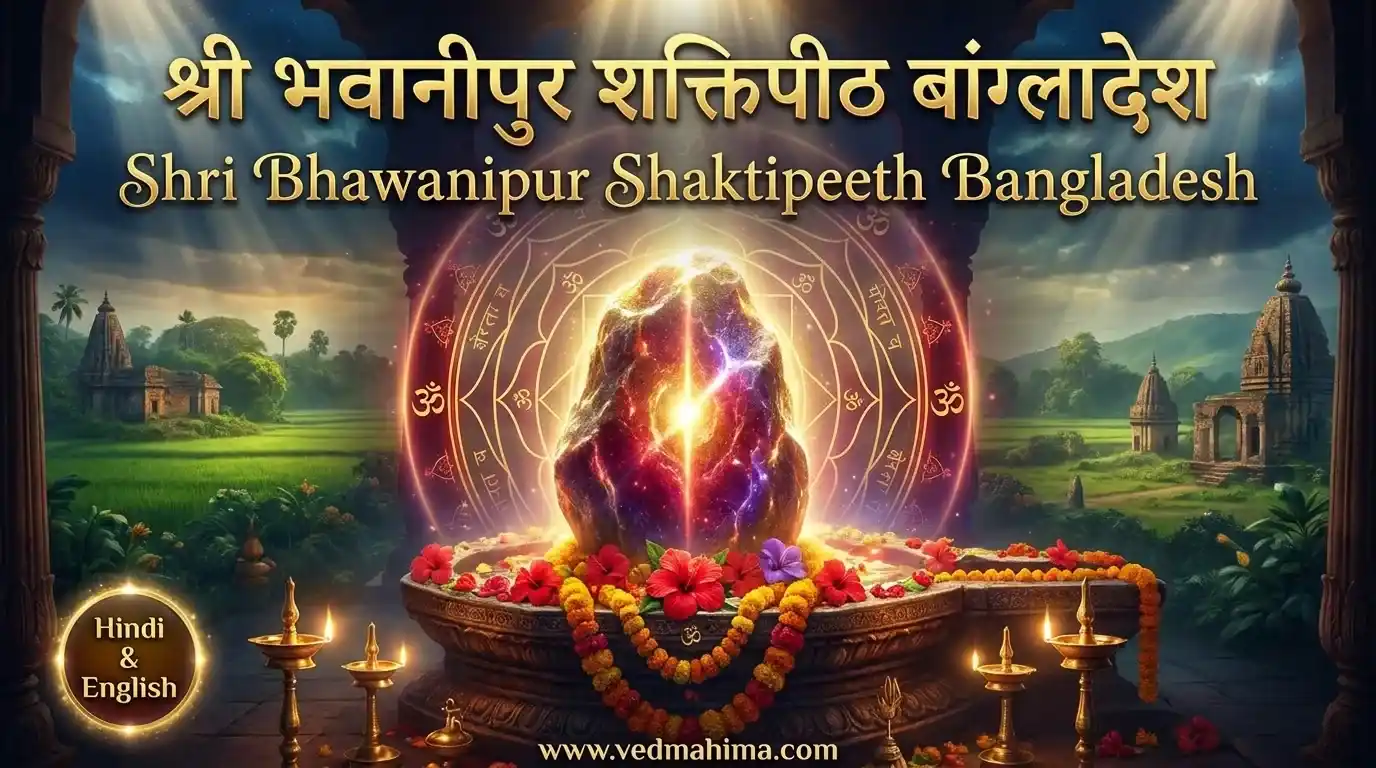
* The Penance of Goddess Aparna: The name of the central deity, Aparna, directly references a state of supreme spiritual intensity where a seeker renounces even the consumption of fallen leaves during meditation. By choosing this name, the Goddess established this peetha as an ultimate ground for advanced asceticism, inner stillness, and self-realization.
* The Divine Mystery of Shakta Conch Seller (Shakha-Pukur): A widely cherished and structurally certified regional miracle tells of a poor travelling conch-shell bangle seller who was resting near the temple's sacred pond. A young, extraordinarily beautiful girl emerged from the waters and requested a pair of conch bangles (Shakha), directing him to collect the payment from the temple priest. When the priest and the merchant rushed back to the pond, the Goddess manifested momentarily from the center of the water body, wearing the bangles. Since that historic day, the pond has been revered as Shakha-Pukur, a site of absolute wish-fulfillment.
* The Restoration by Rani Bhabani: During the medieval period, the legendary and highly philanthropic queen of Natore, Rani Bhabani, received a divine command in her dreams. She extensively patronized the shrine, expanding its boundaries and constructing massive structural supports to keep the ancient traditions alive.
* The Grand Maghi Purnima Yatra & Mela: The absolute peak of religious fervor takes place during the Maghi Purnima festival (occurring in February). During this auspicious lunar phase, the silent village tracks of Bhabanipur are transformed into a massive sea of crimson and saffron flags. Over two hundred thousand pilgrims traveling long distances from far-off districts of Bangladesh, alongside international devotees arriving from West Bengal, Assam, and Tripura, converge in highly coordinated caravans. A massive traditional village fair (Mela) is set up across the surrounding fields, showcasing indigenous handicrafts, spiritual books, and traditional instruments.
* The Deep-Awakening Navratri Celebrations: During both the Sharad Navratri and Chaitra Navratri, the temple undergoes a spectacular visual transformation. The entire landscape is illuminated with thousands of traditional earthen oil lamps. Continuous, high-pitched chanting of the Durga Saptashati and specific Shakta stotrams are performed by a conclave of Vedic scholars from dawn until late midnight, creating an intense spiritual vibration that can be felt across the entire Karatoya basin.
* The Shakha-Pukur Snan and Shankha Offering Ritual: A deeply emotional and unique ritual aspect of the Mahotsav is the Maha Shakha-Pukur Snan. Thousands of married women perform a ritual dip in the sacred pond to pray for the longevity of their families. Following the bath, a unique ritual offering of traditional white conch shell bangles (Shakha) and vermilion is made directly to the holy waters of the pond, replicating the ancient myth of the Goddess's manifestation.
* The Communal Peace & Cultural Assembly: A highly remarkable feature of the Bhabanipur festival is its status as a grand symbol of inter-community harmony. Local rural communities, irrespective of their backgrounds, actively participate in running logistics, setting up food distribution centers (Annakoot), and managing pilgrim lines. The festival ground hosts traditional folk devotional music performances, preserving the raw, pristine cultural bond of rural Bengal.
* By Road (Dhaka-Bogra National Highway Axis): The primary method to reach the shrine is via the modern Dhaka-Bogra Highway. Pilgrims can book private air-conditioned luxury coaches from Dhaka (leaving from Kalyanpur or Gabtoli terminals) heading towards Bogra. You must disembark at the Sherpur Upazila Bus Stand (which is roughly 220 km away from Dhaka and takes about 5 hours across a smooth highway). From Sherpur town, the sacred temple in Bhabanipur village is located a short 12 km drive away via local pre-booked tourist auto-rickshaws or private taxicabs.
* By Rail Network (Bogra Railway Station): The historic district town of Bogra houses a major regional railway station well connected to Rajshahi, Khulna, and Dhaka. Premium trains run regularly on this route. From Bogra railway station, pilgrims can cross over via local highway transit networks directly to Sherpur and proceed to the temple base.
* By Air Transit (Regional Airport Connectivity): For international and long-distance national travelers, flying into the Hazrat Shahjalal International Airport in Dhaka is the primary step. From Dhaka, travelers can choose premium private car rentals or direct luxury buses to complete the journey to Bogra/Sherpur in absolute comfort within a few hours.
⏰ Best Time
The perfect and most comfortable seasonal window to undertake the pilgrimage to Bhabanipur Shakti Peeth is from October to March. During these cooler autumn and winter months, the heavy monsoon floods of the Karatoya River basin subside completely, offering excellent weather for road journeys. Visiting during the winter Maghi Purnima allows pilgrims to experience the absolute ritual majesty of the shrine.
🛕 Temple Information
Shri Bhabanipur Shakti Peeth Temple, Village: Bhabanipur, Upazila: Sherpur, District: Bogra, Rajshahi Division, Bangladesh - 5840
[ Open Daily Throughout the Year ]
• Main Temple Access Gates Open: 06:00 AM
• Inner Sanctum Aparna Devi Darshan: 06:30 AM to 01:00 PM
• Temple Closed for Traditional Bhog & Rest: 01:00 PM to 03:30 PM
• Afternoon Reopening & Darshan: 03:30 PM to 08:30 PM
• Daily Evening Vaman Bhairav Aarti & Deepam: 06:30 PM
• Main Gates Close for Night: 09:00 PM
🔗 Related Trending Mandir


About Shri Bhabanipur Shakti Peeth Bangladesh
The historical ancient ancestry of Bhabanipur Peeth is deeply intertwined with the ancient administrative systems of Bengal and the glorious rule of the Pala and Sena dynasties. Over several centuries, it remained a paramount center for internal Kundalini practices and classical Tantric literature. During the early colonial era, the Natore royal family provided massive protection and financial support. Even after the partition of 1947 and the geopolitical shifts of the region, the temple's structural setup and sacred daily rituals have been completely preserved and protected by the local Shri Bhabanipur Shakti Peeth Managing Committee, ensuring that the eternal flame of Maa Aparna continues to shine undiminished through ages.