Shri Char Dham Teerth Vrindavan
Shri Char Dham Teerth Vrindavan Darshan Guide
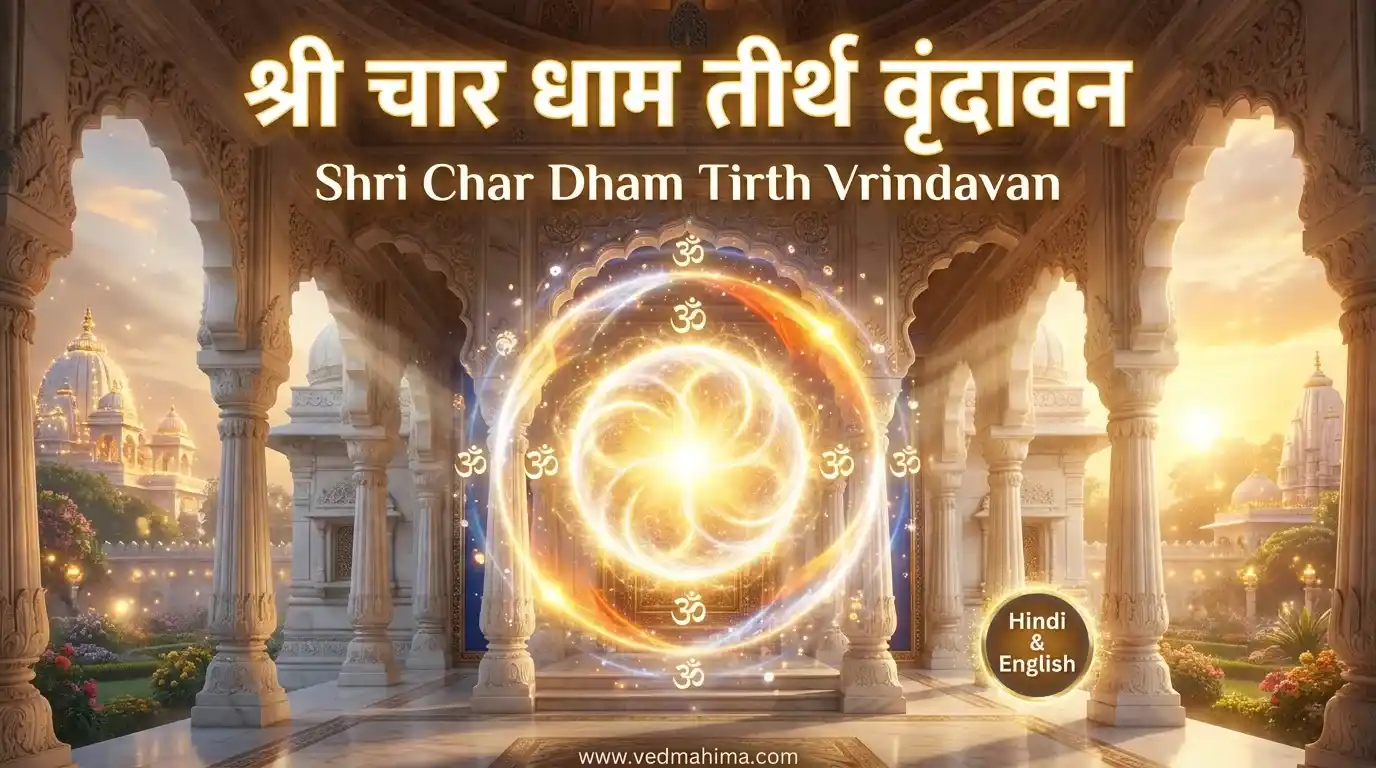
* The Monumental Shikhars & Facades: The architectural template features distinct structural towers (Shikhars) built over each individual sanctum, specifically mimicking the original heritage templates. The tapering Dravidian architecture of Rameshwaram transitions seamlessly into the soaring Kalinga style of Jagannath Puri and the classical Nagara peaks of Badrinath and Dwarka, providing an incredible cross-geographical visual catalog.
* The Giant Lord Shiva Monolith: A breathtaking visual anchor within the landscaped manicured courtyards is a colossal, life-like seating statue of Lord Shiva, painted in a beautiful meditative azure-white hue. Water continuously channels from the matted locks of the deity into a beautifully designed artificial stone pool, mimicking the divine descent of the holy river Ganga.
* The Traditional Chhappan Bhog Culture: Following the exact ritualistic templates of the original dhams, the temple complex features a highly synchronized culinary offering schedule. It dynamically transitions from the special rice offerings of Puri to the specific daily dry fruit configurations of Badrinath, distributing highly sacred Mahaprasad continuously to global pilgrims.
1. Mangala & Shringar Aarti (06:00 AM - 06:30 AM): The grand morning twilight awakening ritual. All four inner sanctums are simultaneously illuminated. The deities are gently awakened with traditional Vedic chants, beautifully adorned in fresh silk robes, and presented with initial morning milk offerings amidst thunderous rhythmic ringing of brass bells.
2. Bhog & Midday Aarti (12:00 PM - 12:30 PM): The grand midday royal feast offering. A highly rich assortment of pure vegetarian dishes, traditional regional sweets, and fresh dairy products is offered simultaneously across the four altars, reflecting the diverse culinary cultures of India, followed by a brief afternoon rest closure.
3. Sandhya Twilight Aarti (06:30 PM - 07:15 PM): The spectacular evening illumination assembly. The entire outer courtyard is beautifully illuminated, and multiple tiers of camphor and ghee lamps are rhythmically waved by the priests. Devotees participate in loud choral singing of Vishnu Sahasranama and Krishna stotras, projecting intense protective vibrations.
4. Shayan Aarti (08:30 PM - 09:00 PM): The final night ritual. Soothing devotional lullabies and classical stotras are chanted to ease the deities into celestial rest before the primary heavy outer doors are securely locked for the night.
* Jagannath Rath Yatra: Organized in perfect synchronization with the world-famous festival of Puri, the temple trust coordinates a spectacular mini-Rath Yatra within the Vrindavan complex. The wooden deities of Lord Jagannath are placed on a beautifully decorated wooden chariot and pulled by thousands of ecstatic singing pilgrims through the paved complex tracks.
* Janmashtami & Krishna Janmashtami: Given its sacred location in Vrindavan, the birth anniversary of Lord Krishna is celebrated with immense structural devotion, featuring grand flower decorations, midnight abhishekams, and the distribution of thousands of kilograms of traditional sweets.
* By Air (Flights): The nearest international gateway is the Indira Gandhi International Airport (DEL) in New Delhi, situated approximately 155 kilometers away. It is seamlessly connected via the high-speed 6-lane Yamuna Expressway, allowing travelers to reach the temple gates in under 2.5 hours. Alternatively, the upcoming Noida International Airport at Jewar is located even closer. Prepaid highway taxis and premium luxury interstate coaches run non-stop from the arrival terminals.
* By Train (Railways): The primary rail anchor is the Mathura Junction Railway Station (MTJ), located barely 10 kilometers away from the temple complex. Mathura is a major central rail hub operating fast Vande Bharat, Shatabdi, and Rajdhani express lines coming from New Delhi, Mumbai, and Chennai. Local eco-friendly e-rickshaws, shared auto-rickshaws, and app-based cabs run continuously from the station exits directly to the temple highway entrance.
* By Road (Highways): The temple sits prominently on the main Chatikara-Vrindavan Link Road, right off National Highway 19 (Delhi-Agra Highway). Regular luxury Volvo air-conditioned sleeper buses from New Delhi (Anand Vihar), Jaipur, and Lucknow stop directly at the Chatikara intersection, from where the temple is just a short walk away. Massive, well-maintained smart parking lots are integrated directly outside the main gates, allowing private luxury vehicles to drive right up to the site without entering the congested heritage core lanes of inner Vrindavan.
⏰ Best Time
The best time to visit the Shri Char Dham Teerth is between October and March when the weather in the Braj region is beautifully cool and highly comfortable for walking around the open-air complexes. Visiting during the grand celebrations of the Jagannath Rath Yatra (June/July) or Maha Shivratri (February/March) provides an exceptionally vibrant and culturally rich experience.
🛕 Temple Information
Shri Char Dham Teerth, Chatikara-Vrindavan Road, Near Multi-Level Parking, Vrindavan, Mathura District, Braj Region, Uttar Pradesh - 281121
Complex Open: Daily 06:00 AM - 12:30 PM & 04:00 PM - 09:00 PM
Morning Mangala & Shringar Aarti: 06:00 AM
Midday Rajbhog Aarti: 12:00 PM
Doors Closed (Afternoon Rest): 12:30 PM - 04:00 PM
Evening Phase Reopens: 04:00 PM
Evening Sandhya Aarti: 06:30 PM
Shayan Aarti (Complex Closes): 08:30 PM
info@chaardham.in
https://www.chaardham.in
🔗 Related Trending Mandir
About Shri Char Dham Teerth Vrindavan
The history of Shri Char Dham Teerth Vrindavan is a beautiful contemporary saga of spiritual innovation and visual philanthropy, envisioned to make India's highest pilgrimages accessible to all. Built in the early 21st century by a dedicated religious trust backed by prominent saints and wealthy dynamic devotees, the shrine was specifically conceptualized to solve a major cultural challenge. Recognizing that millions of elderly, infirm, or economically underprivileged Sanatani devotees could never physically complete the traditional all-India geographical Char Dham circuit due to extreme distances and extreme weather, the founders spent years consulting architects and traditional craftsmen to create highly authentic and scaled replicas of the four supreme seats of worship. Completed and formally opened to the global public with extensive multi-day Vedic yagyas and continuous saint assemblies, this unified dham has rapidly evolved into one of the most heavily visited modern landmarks on the primary Vrindavan transit artery.