Shri Dwarkadhish Temple Mathura
Shri Dwarkadhish Temple Mathura Darshan Guide
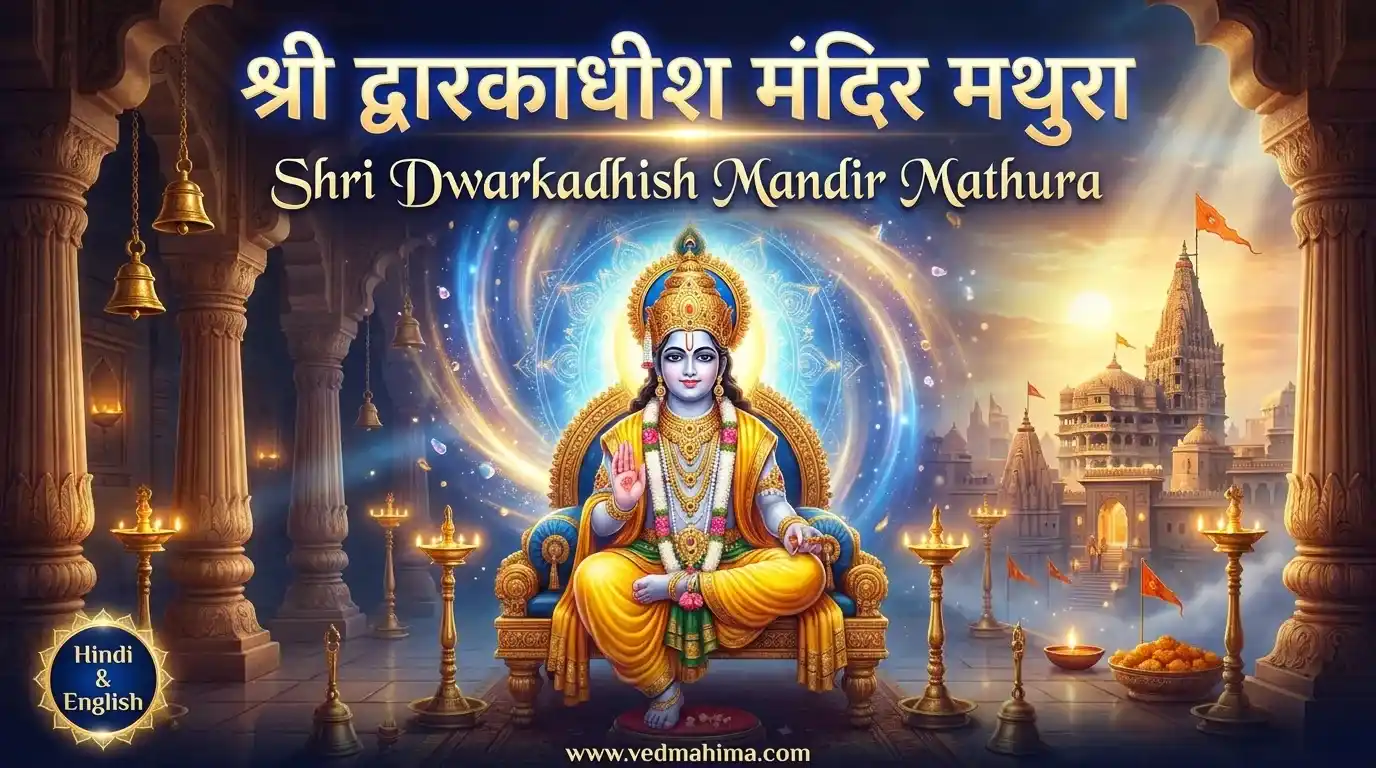
* Exquisite Rajasthani Architecture: The temple is a brilliant, highly sophisticated example of Maru-Gurjara and traditional Rajasthani architectural styles. Built using premium quality pink and red sandstone, it features massive carved pillars, beautifully sculpted arches, and a grand double-story indoor courtyard displaying intricate ceiling frescoes that illustrate the divine pastimes (Leelas) of Lord Krishna.
* The Golden Hindola (Swing) Festival: During the highly auspicious monsoon month of Shravan, the inner courtyard is transformed into a royal amphitheater. The deity is placed on an exceptionally grand, heavy golden and silver swing (Hindola), and the entire temple is decorated in lush, vibrant green floral formats, drawing millions of international travelers.
* The Proximity to Holy Yamuna: Sitting directly adjacent to the historic Vishram Ghat, the temple maintains an intimate energetic bond with the sacred river Yamuna. Pilgrims traditionally take a purifying dip at the ghat or perform the deep morning Yamuna Aarti before walking through the heritage lanes to enter the majestic temple gates.
1. Mangala Aarti (06:30 AM - 07:00 AM in Summer / 07:00 AM - 07:30 AM in Winter): The auspicious morning awakening. The royal doors open to the melodious chanting of Haveli Sangeet and traditional string instruments, greeting the Lord as he wakes up in his celestial chamber.
2. Shringar & Gwal Aarti (07:45 AM - 08:15 AM in Summer / 08:15 AM - 08:45 AM in Winter): The royal ornamentation ceremony. The King of Dwarka is systematically decorated in his daily royal robes, crown, and specific weapons, followed by a brief milk and dry fruit offering.
3. Rajbhog Aarti (11:00 AM - 11:30 AM in Summer / 11:30 AM - 12:00 PM in Winter): The grand midday royal feast. A rich, delicious assortment of pure vegetarian delicacies, traditional Braj sweets, and milk products is presented to the Lord, followed by a mandatory afternoon closure for the deity's rest.
4. Utthapan & Sandhya Aarti (04:45 PM - 06:15 PM in Summer / 04:15 PM - 05:45 PM in Winter): The spectacular evening twilight assembly. The temple gates reopen amidst a massive influx of chanting devotees, featuring the waving of multi-tiered brass lamps and heavy incense sticks by chief priests.
5. Shayan Aarti (07:00 PM - 07:30 PM in Summer / 06:30 PM - 07:00 PM in Winter): The final night ritual. Soothing classical lullabies are sung by hereditary musicians to ease the Lord into deep rest before the heavy silver-plated doors are securely locked for the night.
* Braj Ki Holi & Jhanki Mahotsav: Mathura's famous Holi is celebrated here with immense royal dignity. The priests sprinkle natural herbal colors, aromatic gulal, and pure saffron water over the crowds from the balconies, accompanied by energetic live performances of traditional Haveli Sangeet.
* Yamuna Chhath & Diwali: Marking the divine descent of River Yamuna, the temple and adjacent Vishram Ghat are illuminated with tens of thousands of traditional oil lamps (Diyas), creating an unearthly, heavenly spectacle on the water ripples.
* By Air (Flights): The nearest international and domestic gateway is the Indira Gandhi International Airport (DEL) in New Delhi, located approximately 165 kilometers away, which links directly to Mathura via the high-speed Yamuna Expressway. Alternatively, the upcoming Noida International Airport at Jewar is located much closer. Safe airport taxis and luxury interstate buses run continuously from the terminals.
* By Train (Railways): The city is anchored by the Mathura Junction Railway Station (MTJ), a massive central rail hub intersecting major national rail lines. It is seamlessly connected via high-speed Vande Bharat, Shatabdi, and superfast lines from New Delhi, Mumbai, and Kolkata. Eco-friendly e-rickshaws and auto-rickshaws are available immediately at the station gates to drop pilgrims directly near the temple periphery lanes (approx. 3.5 km away).
* By Road (Highways): Mathura sits prominently off the National Highway 19 (Delhi-Agra Highway) and the 6-lane Yamuna Expressway. Regular luxury air-conditioned Volvo coaches run non-stop from New Delhi, Agra, Jaipur, and Lucknow to the central Mathura Bus Stand. Private luxury vehicles can smoothly access the outer city corridors, using designated smart parking areas near the Yamuna riverfront periphery.
⏰ Best Time
The best time to visit the Shri Dwarkadhish Temple is between October and March when the weather in the Braj region is beautifully cool and comfortable for navigating the heritage lanes. Visiting during the grand celebrations of Krishna Janmashtami (August/September), the golden Hindola festival (July/August), or the royal Braj Holi (March) offers the most culturally rich and spiritually ecstatic experience.
🛕 Temple Information
Shri Dwarkadhish Temple, Raja Dhiraj Bazar, Near Vishram Ghat, Mathura, Uttar Pradesh - 281001
Summer Timings (April to September):
Morning Phase: 06:30 AM - 11:30 AM (Mangala: 06:30 AM, Shringar: 07:45 AM, Rajbhog: 11:00 AM)
Evening Phase: 04:45 PM - 07:30 PM (Utthapan: 04:45 PM, Evening Aarti: 06:00 PM, Shayan: 07:00 PM)
Winter Timings (October to March):
Morning Phase: 07:00 AM - 12:00 PM (Mangala: 07:00 AM, Shringar: 08:15 AM, Rajbhog: 11:30 AM)
Evening Phase: 04:15 PM - 07:00 PM (Utthapan: 04:15 PM, Evening Aarti: 05:30 PM, Shayan: 06:30 PM)
🔗 Related Trending Mandir
About Shri Dwarkadhish Temple Mathura
The history of Shri Dwarkadhish Temple Mathura is a brilliant chronicle of 19th-century devotion and royal patronage. While Mathura has been the sacred seat of Lord Krishna worship for millennia, many of its ancient temples were destroyed during foreign invasions, including the Mughal era. In the early 19th century, during the Maratha and British transition periods, Seth Gokul Das Parikh, a deeply religious person who served as the Prime Minister and Chief Treasurer of the Gwalior State under Maharaja Daulat Rao Scindia, resolved to construct a grand temple dedicated to the royal form of Lord Krishna in his home region. In 1814 AD, he acquired the sacred land adjacent to Vishram Ghat and commissioned top architects and artisans from Rajasthan to build this architectural marvel. The beautiful black marble deity of Lord Dwarkadhish was formally consecrated with grand Vedic ceremonies, and the management was subsequently handed over to the descendants of the Vallabhacharya Pushtimarg lineage, who have meticulously preserved its rich Haveli traditions to this day.