Gangotri Temple Uttarkashi
Gangotri Temple Uttarkashi Complete Char Dham Yatra Guide
🙏 Devotional
🔥 Powerful
📿 Daily Prayer
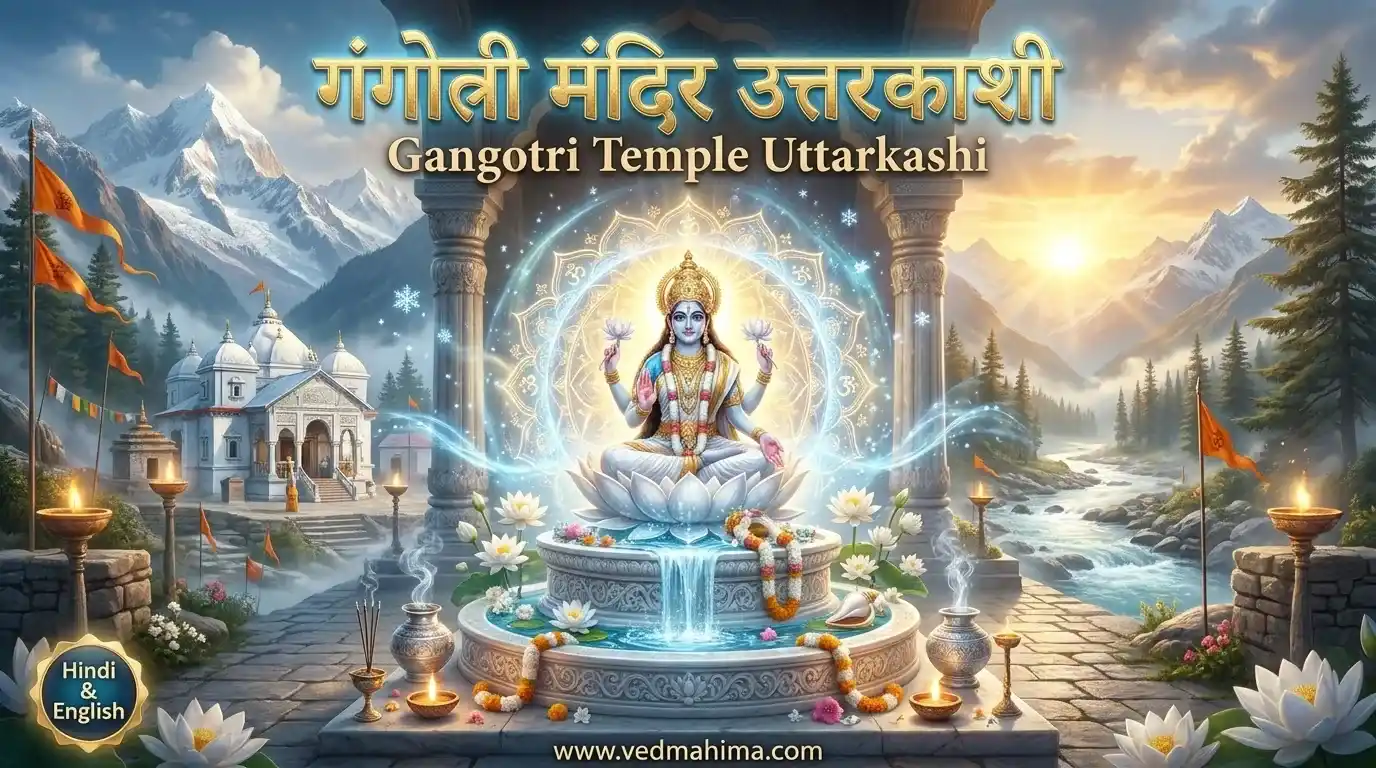
॥ Temple Overview & Divine Glory ॥
The sacred Gangotri Temple, perched at a majestic altitude of 3,100 meters (10,200 feet) amidst the snow-capped peaks of the Greater Himalayas in Uttarkashi district, Uttarakhand, is the spiritual epicenter of the holy river Ganga's earthly descent. Situated on the pristine banks of the Bhagirathi River, this white granite marvel marks the legendary spot where the celestial river first touched the mortal realm to cleanse the cosmos. The temple radiates a powerful, ethereal vibration of absolute purity and cosmic detachment. It is not merely a mountain shrine; it is the secondary gateway of the revered Chota Char Dham Yatra where lakhs of devotees journey through rugged terrains to witness the origin of India's spiritual identity. The air here vibrates with the roar of the cascading river and the continuous chanting of Vedic mantras by Semwal priests. Devotees hold an unshakeable belief that taking a holy dip in the freezing waters of the Bhagirathi and offering prayers to Maa Ganga dissolves lifetime sins, purifies the ancestral lineage, cures existential fears, and leads the soul towards ultimate liberation (Moksha).॥ Key Spiritual & Structural Aspects ॥
* The Pristine White Architecture: Built in the early 18th century, the temple features a classical North Indian Katyuri and Nagara style, constructed entirely using white granite and marble blocks. Standing 20 feet high, the structure is crowned with multiple shikharas and gold-plated pinnacles that gleam against the backdrop of towering pine forests and rugged peaks.* The Enshrined Goddess: Inside the small, gold-adorned inner sanctum (Garbhagriha) sits the highly revered silver idol of Goddess Ganga, flanked by idols of Goddess Yamuna, Lakshmi, Saraswati, King Bhagirath, and Sage Jahnu, all radiating a peaceful, divine energy.
* The Bhagirath Shila: Located just a few meters from the main temple is the sacred 'Bhagirath Shila', a massive rock slab where King Bhagirath is believed to have performed intense penance for 5,500 years to convince Lord Shiva to cushion Ganga's thunderous descent within his matted hair.
* The Surya Kund & Gauri Kund: Located right below the temple complex are spectacular natural rock formations where the Bhagirathi river cuts deep into the granite mountains. Surya Kund features a massive natural rock carving where the morning sun rays reflect beautifully, while Gauri Kund houses a deep, boiling-pot waterfall formation.
* The Submerged Shiva Lingam: Visible only during the late autumn months when the water level recedes, this natural rock Shiva Lingam is submerged right under the river water near the temple. It marks the precise spot where Lord Shiva sat to capture the river in his locks.
॥ The Actual Ritualistic Cycle: Authentic Daily Chants & Schedules ॥
The daily spiritual schedule at Gangotri Temple is managed with strict mountain discipline by the local Semwal Pujari Samiti, operating within these precise operational windows during the open season:1. The Dawn Awakening & Mangala Aarti (06:00 AM - 06:30 AM): The temple gates open amidst the echo of traditional mountain horns and brass bells. The priests perform the formal awakening of the Goddess, followed by the morning snanam of the deity and the first Mangala Aarti, attended by early-morning pilgrims.
2. Rajbhog Abhishekam & General Darshan (06:30 AM - 02:00 PM): Throughout the morning, continuous public darshan is allowed. Priests perform elaborate Vedic chanting while offering fresh milk, honey, and gangajal to the deities. Traditional bhog consisting of local mountain grains and sweets is offered before midday closing.
3. Midday Solitude Closure (02:00 PM - 03:00 PM): The inner sanctum doors are closed for one hour to allow the deity to rest and for internal maintenance of the shrine by the priests.
4. Afternoon Darshan Window (03:00 PM - 07:00 PM): The gates reopen for afternoon pilgrims. Devotees line up to receive the charanamrit and offer dry fruits, sacred clothes, and coconuts at the main threshold.
5. The Grand Sandhya Ganga Aarti (07:45 PM - 08:30 PM): The absolute highlight of the day. Hundreds of oil lamps are lit as the priests wave multi-layered brass lamps facing the Bhagirathi river and the deity. The grand chanting of the Ganga Stotra creates a profoundly mystical atmosphere across the valley before the final complex closing at 09:30 PM.
॥ Detailed Code of Conduct & Strict Security Guidelines ॥
* Mandatory Yatra Registration: All visitors must hold a valid Char Dham Yatra biometric or digital registration slip issued by the Uttarakhand Tourism Department. Security checkpoints at Uttarkashi and Bhaironghati check these slips meticulously.* Acclimatization & Medical Advice: Due to the high altitude of 10,200 feet, visitors are strictly advised to rest and acclimatize at Uttarkashi or Harsil before heading to the temple. Carrying portable oxygen cylinders and personal warm clothing is highly recommended as temperatures can drop suddenly even in summer.
* Strict Environmental Ban on Plastics: The entire Gangotri valley is an ecologically sensitive zone. Carrying single-use plastic bottles, polythene bags, or littering near the river banks is strictly banned and heavily fined by the local administration.
* Photography & Electronics Decorum: Photography and videography are strictly prohibited inside the inner sanctum of the temple. Visitors can use cameras and mobile phones in the outer courtyard and river ghats responsibly without disturbing meditating saints.
* Footwear Rules: Footwear must be taken off and safely deposited at the designated shoe counters located near the entry steps before entering the main stone temple courtyard.
॥ Major Festivals & Seasonal Transitions ॥
* The Grand Akshaya Tritiya Opening: The temple gates open every year on the auspicious day of Akshaya Tritiya (April-May). The idol of Maa Ganga is brought in a colorful palanquin procession from her winter home in Mukhba village, accompanied by army bands and thousands of dancing devotees.* Ganga Dussehra: Celebrated with massive spiritual fervor in May-June, marking the day Ganga officially touched the earth. Special grand abhishekams and overnight prayers are held, attracting continuous crowds of saints and scholars.
* The Bhai Dooj Winter Closing: On the day of Bhai Dooj (October-November, right after Diwali), the temple gates are formally sealed for the harsh winter months amidst heavy snowfall. The deity is then brought down to Mukhba village for the winter worship cycle.
॥ Comprehensive Routing Guide: How to Reach Gangotri Dham ॥
* By Air (Detailed Flight & Heli Route): The nearest aviation hub is the Jolly Grant Airport (DED) in Dehradun, located roughly 250 kilometers away, operating regular flights to Delhi, Mumbai, and Bengaluru. From Dehradun, pilgrims can hire private AC luxury SUVs taking roughly 8 to 9 hours via NH 34. Alternatively, government-approved helicopter services run daily from Sahastradhara Helipad (Dehradun) directly to Harsil Helipad, located just 25 kilometers away from the temple.* By Train (Detailed Railway Network): The primary railway head is the Rishikesh / Yog Nagari Rishikesh Railway Station (RKSH), situated roughly 234 kilometers south. Rishikesh is well-connected to major Indian cities. From the station exit, regular pre-paid taxis, shared jeeps, and Uttarakhand State Transport (GMOU) buses operate early every morning directly via the scenic mountain routes of Tehri and Uttarkashi.
* By Road (Detailed Highway Navigation): Gangotri is directly accessible by a well-maintained motorable mountain highway (National Highway 34). The route passes through scenic spots like Rishikesh, Chamba, Uttarkashi, and Bhatwari. Private luxury coaches, tourist cabs, and state transport buses run heavily throughout the operational season from Haridwar and Rishikesh.
🙏 ॥ Thus completed ॥ 🙏
The Hindi text has been compiled based on original and authentic sources. If there is any difference,
error, or inconsistency between the Hindi and English versions, the Hindi text shall be considered the
authoritative version. If there are any errors or copyright-related concerns regarding this content,
please contact us.
📜 प्रामाणिक स्रोत:
📖 सार्वजनिक रूप से उपलब्ध स्रोत
📖 आधिकारिक मंदिर रिकॉर्ड
📖 सरकारी पोर्टल
📖 सत्यापित ऑनलाइन संदर्भ
About Gangotri Temple Uttarkashi
The historical origin of the physical Gangotri Temple building dates back to the early 18th century when the legendary Gorkha Commander Amar Singh Thapa of Nepal constructed the first formal temple structure over the sacred spot to honor Maa Ganga. Before this stone temple was built, ancient sages and pilgrims offered prayers in the open air right on the holy Bhagirath Shila rock. Later, in the 19th century, the royal family of Jaipur sponsored a major structural renovation and reconstruction project to enlarge the granite shrine and reinforce its stone pavilions against heavy winter snow damage, giving it the grand layout seen today under the care of the Semwal Brahmin community.