Har Ki Pauri Haridwar
Har Ki Pauri Haridwar Darshan & Ganga Aarti Guide
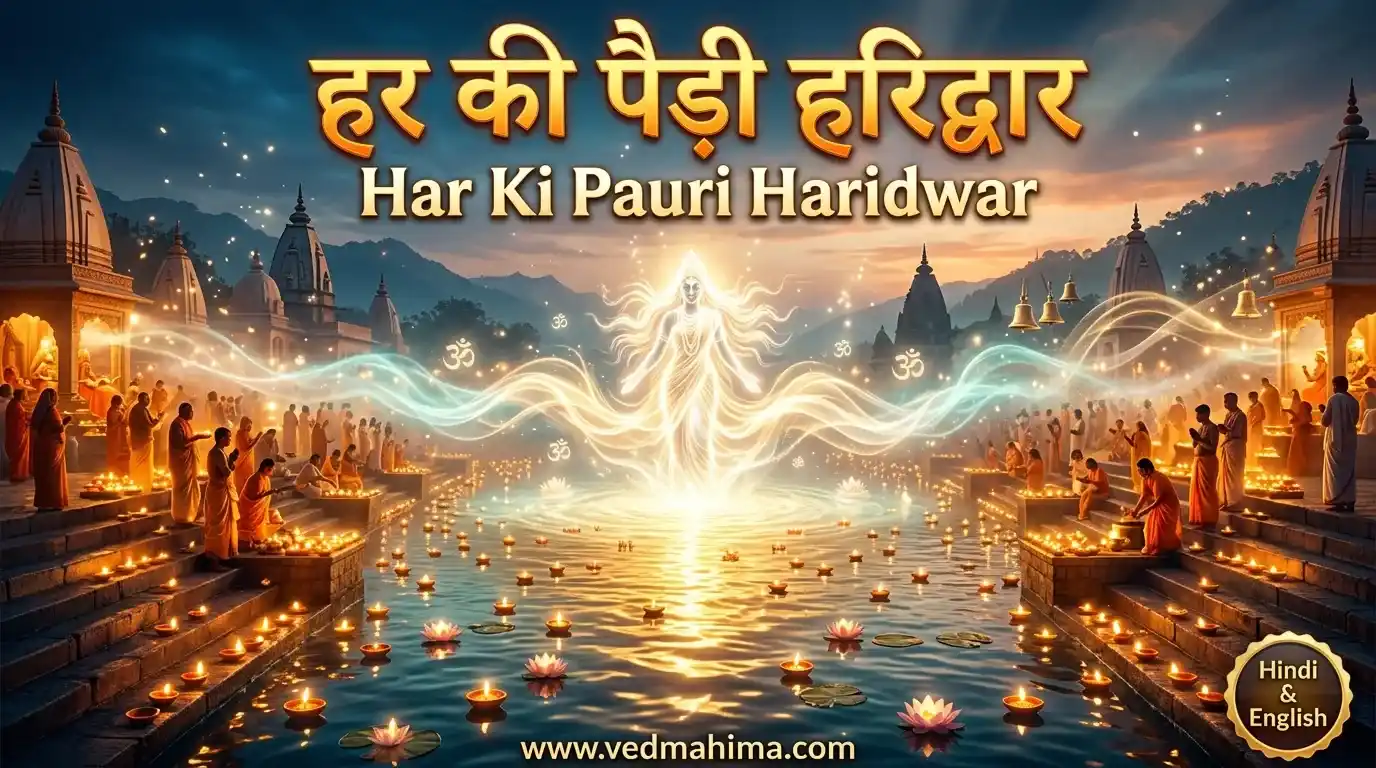
* The Divine Footprint: Enshrined inside a small historical structure at the ghats, the impression of Lord Vishnu's footprint remains a center of deep meditation and daily milk offerings by the local priests.
* Historic Clock Tower & Bridges: The majestic ghat infrastructure is interconnected by massive concrete and iron bridges built over centuries, featuring the iconic heritage Clock Tower (Raja Birla Tower) standing tall amidst the roaring currents.
* The Gateway to Gods: Haridwar historically serves as the mandatory initial baseline or gateway before pilgrims ascend into the high-altitude Char Dham circuit (Yamunotri, Gangotri, Kedarnath, and Badrinath).
1. Pratah Ganga Aarti (05:00 AM - 06:00 AM Summer / 06:00 AM - 07:00 AM Winter): The spectacular morning dawn prayer performed as the sun rises over the Nilgiri hills, accompanied by ancient Vedic chanting and large silver lamps.
2. Sandhya Ganga Aarti (06:30 PM - 07:30 PM Summer / 05:30 PM - 06:30 PM Winter): The world-renowned evening twilight ceremony. Dozens of priests stand on the platforms swinging massive, multi-tiered brass lamps, while thousands of emotional devotees release small leaf-boats carrying oil lamps (Diyas) and marigold flowers into the roaring river currents, turning the entire water body into a golden mirror.
* Photography & Drone Videography Regulations: While general photography using mobile phones is allowed on the open public ghats for personal memories, capturing close-up photographs or recording digital videos of devotees performing holy bathing rituals is strictly prohibited to respect personal privacy. Operating commercial drones or recording professional video inside the immediate Brahmakund arena during the live evening Aarti hours is completely banned without written security clearance from the Ganga Sabha and local police.
* Footwear, Safety Chains, and Current Caution: Footwear of any kind must be strictly removed and deposited at the designated shoe-stands situated near the entry bridges before stepping onto the clean stone steps of the ghats. Because the Ganga river flows with exceptionally high velocity and deep currents at Har Ki Pauri, pilgrims must strictly hold on to the heavy iron safety chains and underwater railings installed along the steps. Children and elderly travelers should never venture into the deep water columns or attempt to swim across the open channels.
* Prohibitions on Plastics & Soaps: Using chemical soaps, shampoos, or washing clothes inside the holy river water is a punishable offense under environmental and religious laws. Additionally, the entire Har Ki Pauri complex is a strict plastic-free zone; pilgrims are requested to use biodegradable leaf-baskets or copper vessels for offerings.
* Somvati Amavasya & Ganga Dussehra: Celebrated with intense devotion, drawing over a million pilgrims in a single day. Ganga Dussehra commemorates the exact day when Goddess Ganga descended from heaven to Earth, making a holy bath on this day exceptionally auspicious.
* Kanwar Yatra (Sacred Monsoon Pilgrimage): During the Hindu month of Shravan (July-August), millions of saffron-clad Shiva devotees (Kanwariyas) walk barefoot for hundreds of kilometers to collect the holy water from Har Ki Pauri, carrying it in decorated bamboo structures (Kanwars) to offer at their local Shiva temples.
* By Train (Detailed Railway Network): The central railway station is Haridwar Junction (HW), positioned just 1.5 kilometers south of Har Ki Pauri. Haridwar Junction is a major railway network hub of northern India, excellently connected via direct high-speed superfast trains, including the Vande Bharat Express, Shatabdi Express, and luxury Jan Shatabdis from New Delhi, Dehradun, Amritsar, Kolkata, and Mumbai. From outside the station complex, pilgrims have instant 24/7 access to eco-friendly electric auto-rickshaws, traditional cycle-rickshaws, and private taxis that drop you near the main peripheral entry barriers of the ghats in less than 5 to 10 minutes.
* By Road (Detailed Highway Navigation): Haridwar features exceptional, direct multi-lane highway connectivity with all major North Indian states. If driving personally from New Delhi-NCR, one can follow the highly smooth, multi-lane National Highway 334 (NH-334) via Meerut, Muzaffarnagar, and Roorkee, completing the comfortable 210-kilometer road journey in approximately 4 to 4.5 hours. Furthermore, the Uttarakhand State Road Transport Corporation (UTC) and private deluxe operators run a continuous, massive fleet of premium Volvo, air-conditioned sleeper, and standard interstate buses departing every 15 minutes from Delhi's ISBT Kashmiri Gate and central terminals in Meerut and Dehradun directly to the central Haridwar Bus Stand, located adjacent to the railway station.
⏰ Best Time
The absolute best time to visit Har Ki Pauri is from October to March when the weather is delightfully cool, making it perfect to attend the evening aartis comfortably. Visiting during Kartik Purnima or Ganga Dussehra offers an immensely vibrant look into absolute Hindu spiritual devotion.
🛕 Temple Information
Har Ki Pauri Ghat, Near Kushavarta Ghat, Haridwar City, Uttarakhand - 249401
Ghat Timings: Open 24 Hours Daily for Holy Bathing.
Morning Ganga Aarti Timings:
Summer: 05:00 AM - 06:00 AM
Winter: 06:00 AM - 07:00 AM
Evening Ganga Aarti Timings:
Summer: 06:30 PM - 07:30 PM
Winter: 05:30 PM - 06:30 PM
*Note: Exact Aarti timings change daily by a few minutes based on the local panchang sunrise and sunset tables.
🔗 Related Trending Mandir
About Har Ki Pauri Haridwar
The majestic and ancient history of Har Ki Pauri flows alongside the very origin of the cosmic world and solar lineages. According to Hindu Puranas, during the Satyug, the ancient King Bhagiratha performed thousands of years of extreme penance to bring the celestial river Ganga down from heaven to earth to liberate the ashes of his 60,000 ancestors. This precise spot, Har Ki Pauri, became the holy site where Ganga touched the plains, blessed by Lord Brahma and Lord Vishnu. Centuries later, in the 1st century BC, the legendary Emperor Vikramaditya of Ujjain constructed the first formal, stone-carved steps (ghats) at this site to commemorate the absolute spiritual memory of his brother, Bhartrihari, who had spent decades meditating as an ascetic along the rugged cliffs of the Ganga. For hundreds of years, the site was protected by local ascetics and Kings. In the early 16th century, the historic battlefield general Raja Man Singh of Amber renovated the ghats and restructured the water flow channels. Later, in the early 20th century, industrialist and philanthropist Raja Birla expanded the steps and constructed the iconic heritage clock tower that stands today. Har Ki Pauri remains an eternal powerhouse of pure faith, outlasting empires and remaining the ultimate symbol of spiritual rejuvenation.