Shri Krishna Janmabhoomi Temple Mathura
Shri Krishna Janmabhoomi Temple Mathura Darshan Guide
🙏 Devotional
🔥 Powerful
📿 Daily Prayer
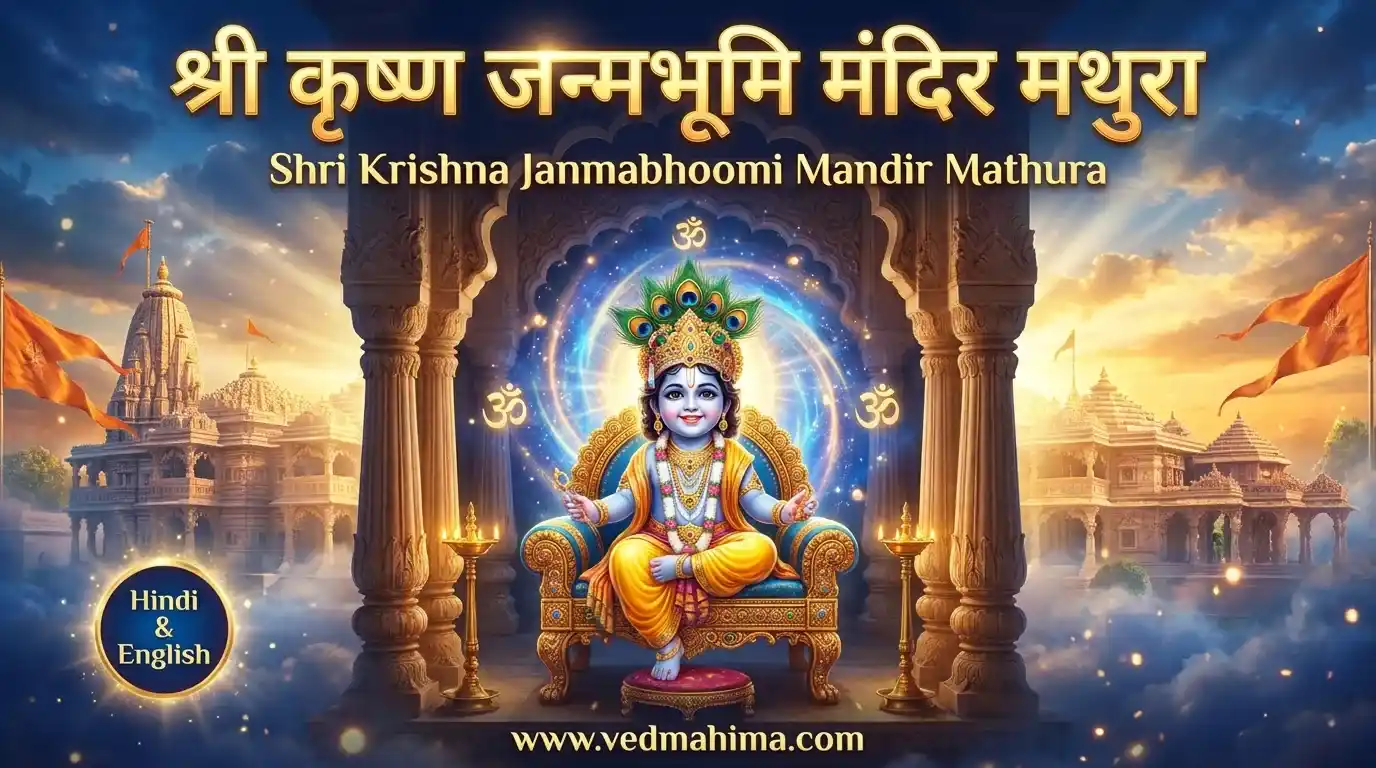
॥ Temple Overview & Divine Glory ॥
Shri Krishna Janmabhoomi Temple stands as one of the most spiritually profound, historically monumental, and scripturally vibrant pilgrimage hubs of Sanatan Dharma. Located deeply in the heart of the ancient, sacred city of Mathura, Uttar Pradesh, India, this holy shrine marks the absolute, exact geological birthplace of Lord Krishna, the eighth incarnation of Lord Vishnu. Revered across global coordinates as the land of divine love, cosmic playful pastimes (Leelas), and spiritual liberation, the temple complex is structurally erected directly over the remains of the ancient subterranean prison cell (Garbha Griha) where Lord Krishna manifested himself on the dark eighth night of Bhadrapada Krishna Paksha in the Dwapara Yuga. Born to Vasudeva and Devaki while they were brutally chained by the tyrannical demon king Kansa, Lord Krishna's divine descent was designed to eradicate cosmic evil forces and re-establish absolute righteousness. A deeply rooted scriptural belief dictates that entering this high-frequency energy vortex and acquiring a pure-hearted glimpse (Darshan) of the divine Janmabhoomi deity completely cleanses the mortal soul, breaks the chains of material illusions (Maya), and bestows ultimate spiritual bliss.॥ Key Spiritual & Structural Aspects ॥
* The Subterranean Garbha Griha: The absolute spiritual epicenter of the entire complex is the original, stone-walled subterranean prison cell. Preserved meticulously beneath a grand platform, it houses a sacred white marble pavilion marking the exact spot where Yashoda-Nandan manifested, radiating intense, palpable protective vibrations that draw millions of weeping and chanting devotees.* The Majestic Keshavdeva Temple: Positioned prominently within the complex, this towering architectural structure features magnificent, intricately carved stone pillars and a grand assembly hall. It houses the enchanting deities of Sri Krishna alongside Radharani, displayed in royal, breathtaking silk garments and ancient gold configurations.
* The Sublime Bhagavata Bhavan: A monumental architectural addition inside the complex, this grand multi-story temple features exceptionally beautiful, life-like ceiling frescoes and wall paintings depicting the complete cosmic lifecycle and chronological pastimes of Lord Krishna from the Srimad Bhagavatam. It holds five individual sanctums dedicated to various celestial expansions.
* The Sacred Potra Kund: Located immediately outside the primary temple gates, this massive, stepped historic water tank holds deep scriptural gravity. According to sacred lore, this is the holy water body where Vasudeva and Devaki washed the baby garments of infant Sri Krishna immediately following his birth before he was miraculously transported across the Yamuna river to Gokul.
॥ The Detailed Divine Ritual & Aarti Cycle ॥
The spiritual and daily administrative timeline of the Janmabhoomi complex is systematically executed under strict historical customs, adapting precisely across seasonal variations:1. Mangala Aarti (05:00 AM - 05:30 AM): The deeply moving early morning awakening ritual. The inner sanctums resound with the synchronization of heavy temple bells, traditional conch blowing, and the chanting of Gopala stotras, filling the morning air with high-frequency spiritual alignments.
2. Shringar & Makhan Bhog Aarti (08:00 AM - 08:30 AM): The beautiful ornamentation ceremony. The deities are adorned in vibrant, fresh seasonal costumes, and a traditional offering of pure white butter (Makhan) and crystallized sugar (Mishri) is presented to the Lord.
3. Grand Midday Bhog Aarti (12:00 PM - 12:15 PM): The afternoon royal feast assembly, featuring an array of pure vegetarian delicacies, traditional Braj sweets, and dairy products, following which the temple gates close for mandatory afternoon deity rest.
4. Sandhya Evening Aarti (06:00 PM - 06:30 PM): The spectacular twilight worship. Multi-tiered brass oil lamps are rhythmically waved by the chief priests amidst trance-inducing mass singing of Krishna chalisa and the thunderous beats of traditional nagada drums.
5. Shayan Evening Aarti (09:00 PM - 09:30 PM): The final night ritual where soothing devotional couplets are sung to put the Lord of the universe into celestial rest before the primary heavy security gates are safely locked for the night.
॥ Deep Architectural Landscape & Layout ॥
The sprawling Shri Krishna Janmabhoomi complex is designed as a highly secured, massive fortress-like structure capable of managing intense pedestrian high-volume footfalls. Built in the classic North Indian temple structural format, it utilizes high-grade red sandstone and white marbles. The complex features broad, open paved courtyards flanked by well-shaded walkways to shield walking travelers from intense summer heat. Security systems are heavily integrated into the layout, requiring pilgrims to pass through advanced scanning systems. The complex neatly accommodates a grand open-air theater used for traditional Rasleela performances, a comprehensive administrative block managed by the trust, and well-maintained public utility systems designed to ensure high-volume transit comfort.॥ Major Festivals Celebrated ॥
* Shri Krishna Janmashtami: The ultimate, unparalleled cosmic festival celebrating the birth anniversary of Lord Krishna. The entire complex is decorated with millions of exotic fresh flowers and brilliant electrical illuminations, transforming Mathura into a literal heaven. Millions of international pilgrims stay awake until midnight to witness the grand institutional Abhishek with milk, honey, and saffron.* Braj Ki Holi (Lathmar & Chappan Bhog Holi): Spanning across multiple weeks in the spring season, the Janmabhoomi temple becomes a vibrant sea of natural colors, herbal gulal, and flower petals, hosting traditional musical assemblies where historical folk songs of Radha-Krishna are sung live by specialized musicians.
* Radhashtami & Govardhan Puja: Marked with immense structural devotion, featuring the creation of a massive mountain of pure vegetarian food offerings (Annakut) presented to the deity, drawing global travelers and saints from across the world.
॥ How to Reach Shri Krishna Janmbhoomi Mathura ॥
Mathura is a highly accessible spiritual destination, comprehensively connected to national networks via advanced transit systems:* By Air (Flights): The closest international and domestic gateway is the Indira Gandhi International Airport (DEL) in New Delhi, located approximately 160 kilometers away, which is connected via the high-speed Yamuna Expressway. Alternatively, the upcoming Noida International Airport at Jewar is much closer. From the airport hubs, high-grade prepaid taxis and luxury inter-city buses run non-stop directly to Mathura.
* By Train (Railways): The city is directly anchored by the Mathura Junction Railway Station (MTJ), a massive and highly efficient central rail hub intersecting major north, south, east, and west train lines. It is seamlessly connected via high-speed Vande Bharat Express, Shatabdi, and superfast lines coming from New Delhi, Mumbai, Chennai, and Kolkata. Eco-friendly e-rickshaws and auto-rickshaws run 24/7 from the station gates directly to the temple gates, which are merely 3 kilometers away.
* By Road (Highways): Mathura is Exceptionally linked via the world-class 6-lane Yamuna Expressway and the National Highway 19 (Delhi-Agra Highway). Regular luxury air-conditioned Volvo coaches run continuously from New Delhi, Agra, Jaipur, and Lucknow to the primary Mathura Inter-State Bus Stand. Private luxury vehicles can smoothly access the city, using the multi-tier secure smart parking lots near the outer perimeter of the temple zone.
🙏 ॥ Thus completed ॥ 🙏
The Hindi text has been compiled based on original and authentic sources. If there is any difference,
error, or inconsistency between the Hindi and English versions, the Hindi text shall be considered the
authoritative version. If there are any errors or copyright-related concerns regarding this content,
please contact us.
📜 प्रामाणिक स्रोत:
📖 सार्वजनिक रूप से उपलब्ध स्रोत
📖 आधिकारिक मंदिर रिकॉर्ड
📖 सरकारी पोर्टल
📖 सत्यापित ऑनलाइन संदर्भ
About Shri Krishna Janmabhoomi Temple Mathura
The history of Shri Krishna Janmabhoomi is an epic, tumultuous saga of thousands of years of unyielding faith, repeated demolitions, and glorious resurrections. According to scriptural accounts, the first grand temple over the divine prison cell was constructed by Lord Krishna's great-grandson, King Vajranabha, around 5,000 years ago. Historically, the second magnificent temple was built here during the golden reign of the Gupta Empire around 400 AD, which was later brutally destroyed and looted by Mahmud of Ghazni in 1017 AD. The temple was resurrected to even greater heights during the reign of King Vijayapala Deva in 1150 AD, only to be demolished again by Sikandar Lodi in the 16th century. In the early 17th century, Orchha ruler King Bir Singh Deo built a colossal temple costing millions of gold coins, which was subsequently completely razed to the ground by Mughal Emperor Aurangzeb in 1669 AD, who constructed the Shahi Eidgah Mosque over a portion of its plinth. In modern history, the sacred land was rightfully acquired post-independence through the relentless efforts of Mahamana Madan Mohan Malaviya, leading to the establishment of the present magnificent structure completed in 1982.