Shri Mahamaya Devi Temple Ratanpur Chhattisgarh
Shri Mahamaya Devi Temple Ratanpur Complete Yatra Guide
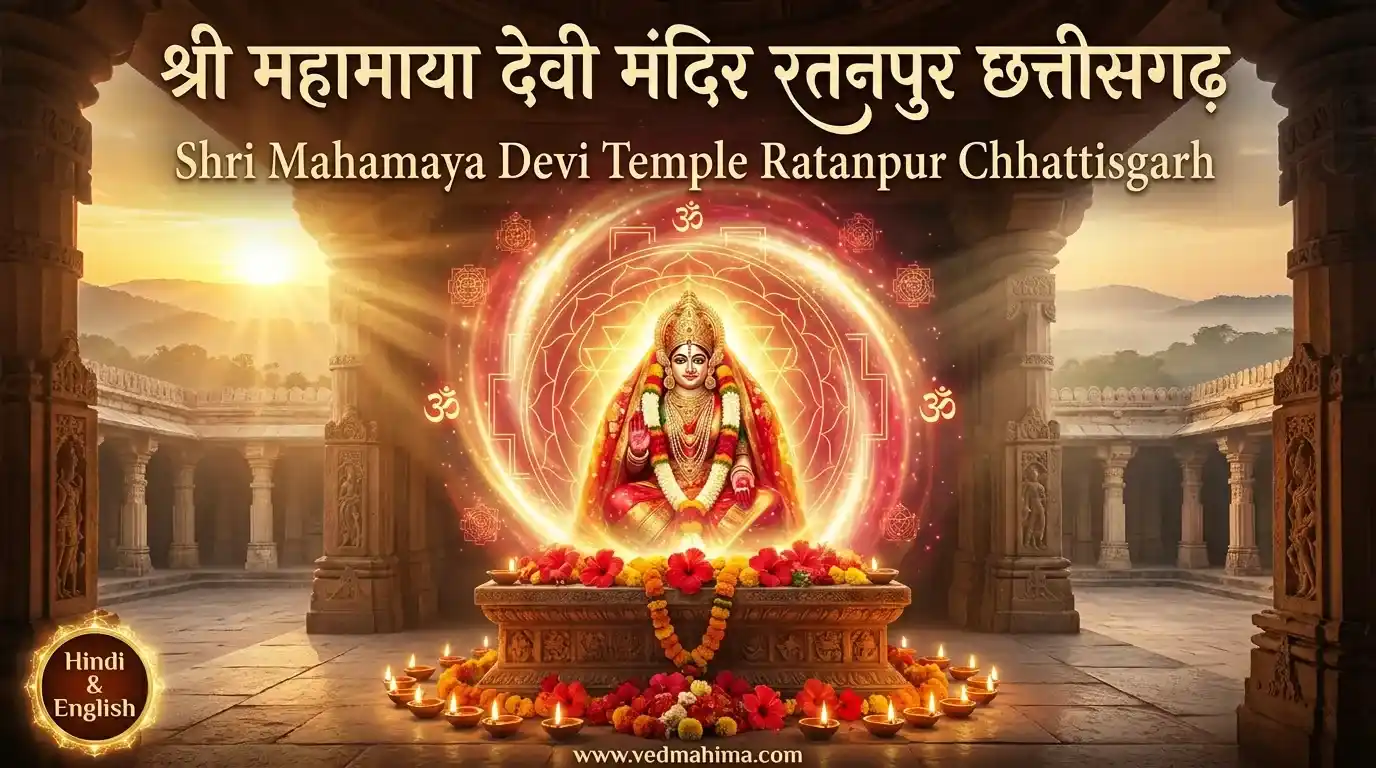
* The Vision of King Ratandev I: In the 11th century, King Ratandev I of the Kalachuri Dynasty was on a hunting expedition in the dense forests of the region. As night fell, he rested under a banyan tree near a local water body. In his deep sleep, he witnessed a blinding, cosmic illumination and saw the court of Goddess Mahamaya operating right in the wilderness. Awakened by this divine vision, he shifted his imperial capital to Ratanpur and commissioned the structural creation of this magnificent temple.
* The Fusion of Lakshmi and Saraswati: The stone layout of the main deity is unique across the subcontinent. It is traditionally believed that the rock formation represents the unified absolute powers of Maha Lakshmi (ruling the frontal material plain) and Maha Saraswati (ruling the rear spiritual plain), providing seekers with the ultimate balance of cosmic abundance and supreme wisdom.
* The Protection of Dakshin Kosala: Ancient texts indicate that the continuous tantric stabilizing rituals performed at this peetha served to protect the borders of the central Indian plateau from negative foreign invasions, cementing the shrine's status as a geo-spiritual powerhouse.
* The Phenomenal Akhand Jyoti Kalash Tradition: The most unique, grand, and world-renowned feature of the Ratanpur Mahotsav is the lightning of the Akhand Jyoti Kalash during both Sharad Navratri (September/October) and Chaitra Navratri (March/April). Tens of thousands of oil and ghee lamps (exceeding 25,000 individual lamps) are lit on behalf of pilgrims from across the globe. Massive, specialized multi-story halls inside the temple complex are dedicated solely to housing these burning flames. A highly trained team of temple volunteers works round-the-clock, walking carefully through the heated aisles to manually feed oil and ghee to the lamps, ensuring that not a single flame flickers or dies out during the entire 9-day period.
* The Grand Navratri Processions & Chandi Path: During the nine sacred nights, the quiet town of Ratanpur is flooded with over a million pilgrims. The air continuously echoes with the high-pitched collective chanting of the Durga Saptashati and special Tantric stotrams by a conclave of Vedic scholars. The temple stays open almost 24 hours a day to accommodate the massive queues of barefoot travelers who walk hundreds of kilometers from Raipur, Bilaspur, and neighboring states.
* The Maha-Aarti and Saptami Sringar: On the midnight of Maha-Saptami, the grand structural decoration (Sringar) of the deity is performed using ancient gold ornaments belonging to the royal Kalachuri treasury. This is followed by the Maha-Aarti, where multi-tiered brass lamps filled with camphor are waved before the Goddess. The energetic resonance created by the simultaneous sounding of massive temple drums and brass bells during this aarti is said to induce spontaneous meditative states in seekers.
* The Vijayadashami Visarjan Ritual: The conclusion of the festival on Dussehra involves a majestic ritual procession where the sacred sprouts of barley (Jawara) grown in the temple shadow are taken out in a grand musical caravan and ceremonially submerged in the historic ponds of Ratanpur, symbolizing the cyclic return of cosmic creative energy to the earth element.
* By Road (Bilaspur-Ambikapur National Highway NH-130): Ratanpur is located directly on National Highway NH-130. It is situated just 25 km north of Bilaspur city. Excellent, frequent public and private bus services, as well as air-conditioned taxis, run continuously between Bilaspur and Ratanpur, making it a smooth 30 to 40-minute road drive across a beautifully canopy-lined national highway axis.
* By Rail Network (Bilaspur Junction - BSP): Bilaspur Junction is one of the largest, busiest, and most critical railway junctions of the South East Central Railway zone. It is directly connected via high-speed premium trains (like Rajdhani and Vande Bharat) to Mumbai, Kolkata, Delhi, Chennai, and Hyderabad. From Bilaspur railway station, pilgrims can easily hire pre-paid tourist cabs directly to the temple steps.
* By Air Transit (Bilaspur & Raipur Airports): The closest regional domestic airport is Bilasa Devi Kevat Airport (PBF) in Bilaspur (Chakarbhatha), which operates flights connecting to major regional cities. For national and international connectivity, the Swami Vivekananda International Airport (RPR) in Raipur is located approximately 140 km away. From Raipur airport, luxury tourist taxis can be booked to reach Ratanpur via a smooth 2.5-hour expressway drive.
⏰ Best Time
The ideal and most refreshing seasonal window to visit the Mahamaya Temple in Ratanpur is from October to March. During these winter months, the weather of Chhattisgarh remains highly pleasant, making it easy to explore the town's historical ruins and stay in long festival lines. To experience the ultimate energetic majesty, planning the trip during the Sharad Navratri festival is highly recommended.
🛕 Temple Information
Shri Mahamaya Devi Temple, National Highway 130, Ratanpur Town, Bilaspur District, Chhattisgarh, India - 495442
[ Open Daily Throughout the Year ]
• Main Temple Access Gates Open: 05:00 AM
• General Darshanam Timings: 05:30 AM to 01:00 PM
• Closed for Traditional Bhog & Rest: 01:00 PM to 02:30 PM
• Afternoon Reopening & Darshanam: 02:30 PM to 09:30 PM
• Daily Morning Maha Aarti: 06:00 AM
• Daily Evening Shringar Maha Aarti: 07:30 PM
• Note: During Navratri, the temple remains open for 24 hours continuously.
🔗 Related Trending Mandir






About Shri Mahamaya Devi Temple Ratanpur Chhattisgarh
The historic antiquity of Ratanpur is deeply intertwined with the ancient administrative systems of Central India and the long glorious rule of the Kalachuri Dynasty. Ratanpur served as the stable capital of the kingdom for several centuries. The temple received massive royal patronage, land grants, and villages from successive kings, which are documented in several stone copper plate inscriptions. Even after the collapse of the monarchy and the arrival of Maratha rule under the Bhonsles of Nagpur, the temple underwent structural restorations. Today, the entire management, absolute security, and massive social welfare setups are flawlessly handled by the Shri Mahamaya Devi Mandir Trust Ratanpur, ensuring that the prehistoric rituals of Dakshin Kosala remain preserved for generations to come.