Shri Pashupatinath Temple Nepal
Shri Pashupatinath Temple Nepal Darshan Guide
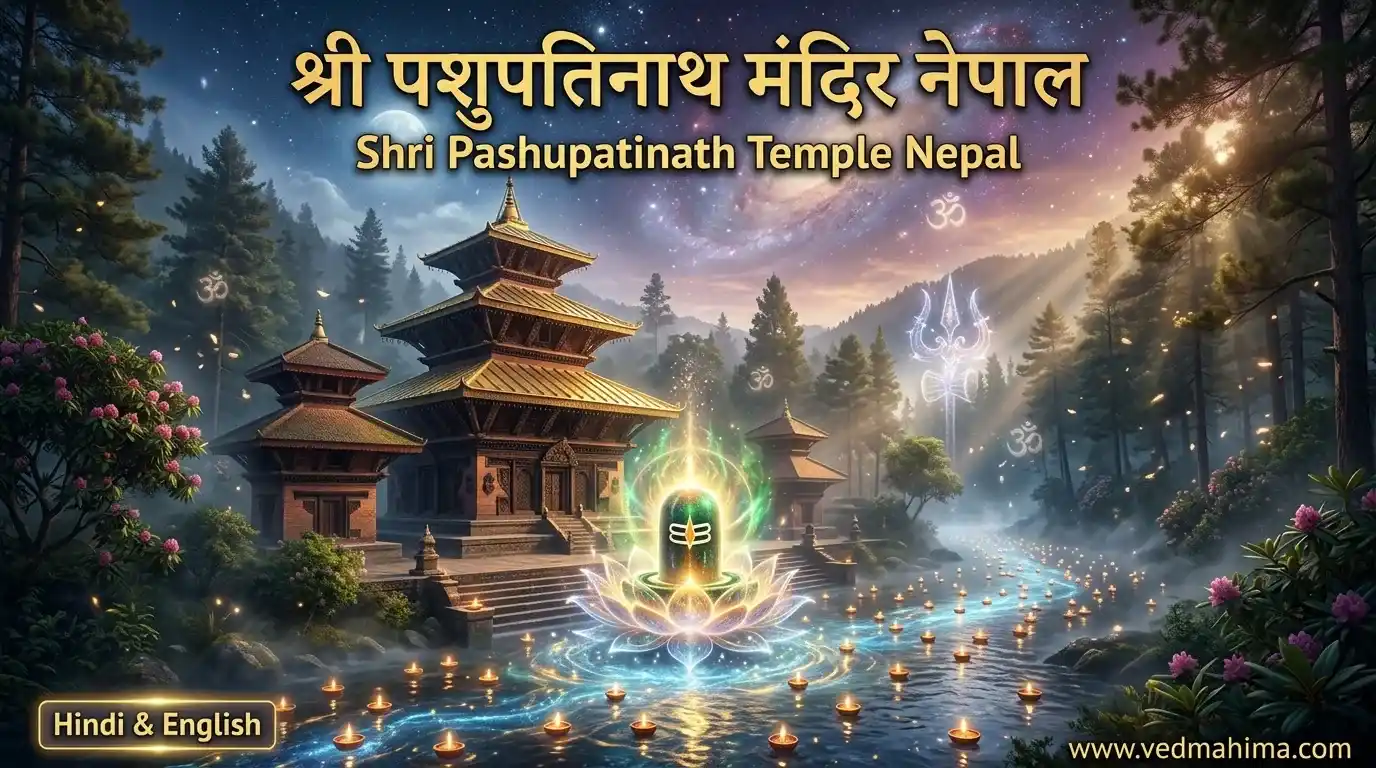
* The Mandatory Kedarnath Premise: According to ancient scriptural traditions, the pilgrimage to Lord Shiva’s celestial bull form begins at Pashupatinath and concludes at Kedarnath. When Mahadev took the form of a divine bull, his head and face manifested here at Pashupatinath, while the hump and hind section appeared in the Garhwal Himalayas of Kedarnath. Scriptural rules dictate that a devotee must first seek the blessings of the divine countenance (face) at Pashupatinath before worshipping the sacred torso at Kedarnath to complete their spiritual journey.
* The Sprawling Metropolis of Shrines: The vast precinct encompasses an incredible total of 518 smaller temples, open-air stone shrines, traditional ashrams, and historic monuments. The western bank of the river holds the main golden pagoda temple, while the eastern bank across the Bagmati River is adorned with hundreds of small stone votive shrines (Pancha Dewal) and stone terraces that offer a spectacular panoramic view of the entire holy complex.
* The Holy Bagmati River & Arya Ghat: Flowing directly adjacent to the main pagoda, the Bagmati River is considered intensely sacred. Its banks house the historic Arya Ghat, the prominent open-air Hindu cremation site of Nepal. The constant, daily sight of smoking funeral pyres running parallel to grand temple celebrations provides a profound, raw meditative realization of the transience of human life and the eternal nature of the soul.
* The South Indian Bhatta Tradition: In a beautiful display of cross-border spiritual unity dating back centuries, the head priests (Bhattas) of Pashupatinath are strictly appointed from Vedic Brahmana scholars belonging to Southern India (Karnataka). This unbroken tradition ensures that the complex daily rituals and secret tantric pujas are maintained at the highest levels of scriptural accuracy and purity.
1. Morning Abishek & Puja (05:00 AM to 09:00 AM): The temple doors open at dawn, and the Bhattas perform elaborate bathing rituals of the four-faced deity using milk, honey, curd, and pure ghee, followed by the offering of fresh Bilva leaves.
2. General Open Darshan (09:00 AM to 12:00 PM): The time when the inner courtyard fills with pilgrims from all walks of life arriving to perform personal prayers and receive sacred marks from the priests.
3. Mid-Day Shringar & Closure (12:00 PM to 05:00 PM): The deity is heavily adorned with beautiful silks and royal ornaments. The main doors are subsequently closed for afternoon rest.
4. The Grand Bagmati Evening Aarti (06:00 PM onwards): A mesmerizing, internationally famous ritual conducted on the riverbanks opposite the main temple. Hundreds of devotees sit on the stone stairs as massive multi-layered oil lamps are rhythmically waved by white-robed priests, accompanied by powerful chanting of Shiva Stotras, beating drums, and traditional conch shells.
* Dress Code & Leather Prohibition: All items made of genuine leather (including belts, wallets, camera cases, and shoes) are strictly forbidden inside the temple perimeter. Devotees must dress in modest, traditional attire before entering the holy zones.
* Entry Fees & Passes: Entry into the overall complex is completely free for citizens of SAARC countries (India, Bangladesh, etc.). For international Western tourists, a nominal conservation fee is collected at the entry gates, which funds the upkeep of this vast UNESCO heritage site.
* Teej Festival: A grand festival celebrated primarily by Hindu women clad in vibrant red sarees, who line up for miles to pray at the temple for marital bliss and the long life of their partners.
* Bala Chaturdashi: An emotional annual festival where thousands of families scatter seven types of holy grains (Satbyaj) across the Slesh Mantak forest path within the complex to clear the ancestral karmic paths of their deceased relatives.
* By Air (International Flights): The closest aviation hub is the Tribhuvan International Airport (KTM) in Kathmandu, located a mere 2 to 3 kilometers away from the temple complex. Regular direct international flights connect Kathmandu to major cities like New Delhi, Mumbai, Bangkok, Kuala Lumpur, and Dubai. From the airport terminal, visitors can reach the temple gates within 10 minutes via local prepaid taxis or hotel shuttles.
* By Road (Cross-Border Buses): For travelers coming from India, regular direct luxury buses operate between Gorakhpur (Uttar Pradesh) or Patna (Bihar) straight to Kathmandu. Alternatively, private cars can enter Nepal via the Raxaul-Birgunj or Sunauli border crossings and smoothly travel up the scenic Tribhuvan Highway directly into the Kathmandu Valley.
⏰ Best Time
The best time to visit Pashupatinath Temple is from October to March, when the weather in Kathmandu is pleasant, clear, and ideal for exploring. To witness the profound spiritual energy, visiting during the evening between 5:30 PM and 7:30 PM is highly recommended to attend the spectacular Bagmati Ganga Aarti.
🛕 Temple Information
Pashupatinath Area Development Trust (PADT), Gaushala, Kathmandu, Nepal - 44600
Temple Gates Open: 04:00 AM
Morning Rituals & Darshan: 05:00 AM - 12:00 PM
Gates Closed for Afternoon: 12:00 PM - 05:00 PM
Evening Open Darshan: 05:00 PM - 09:00 PM
World-Famous Bagmati Aarti: 06:00 PM - 07:30 PM
Inner Sanctum Closes: 09:00 PM
🔗 Related Trending Mandir
About Shri Pashupatinath Temple Nepal
The origin of Shri Pashupatinath Temple is steeped in deep Vedic antiquities and Puranic legends. According to the Nepal Mahatmya, Lord Shiva once fled Varanasi and took the form of a golden deer to rest in the lush Slesh Mantak forest of Kathmandu. When the gods found him and caught him by his antlers, the horn broke into pieces, and Shiva manifested there as a radiant Lingam. Over centuries, the site became a major tantric and Shaivite pilgrimage center. The main current pagoda structure was reconstructed in the 17th century CE by King Bhupatindra Malla after the older structure was damaged by termites. It remains the supreme center of national heritage and protective spiritual energy for the entire kingdom of Nepal.